

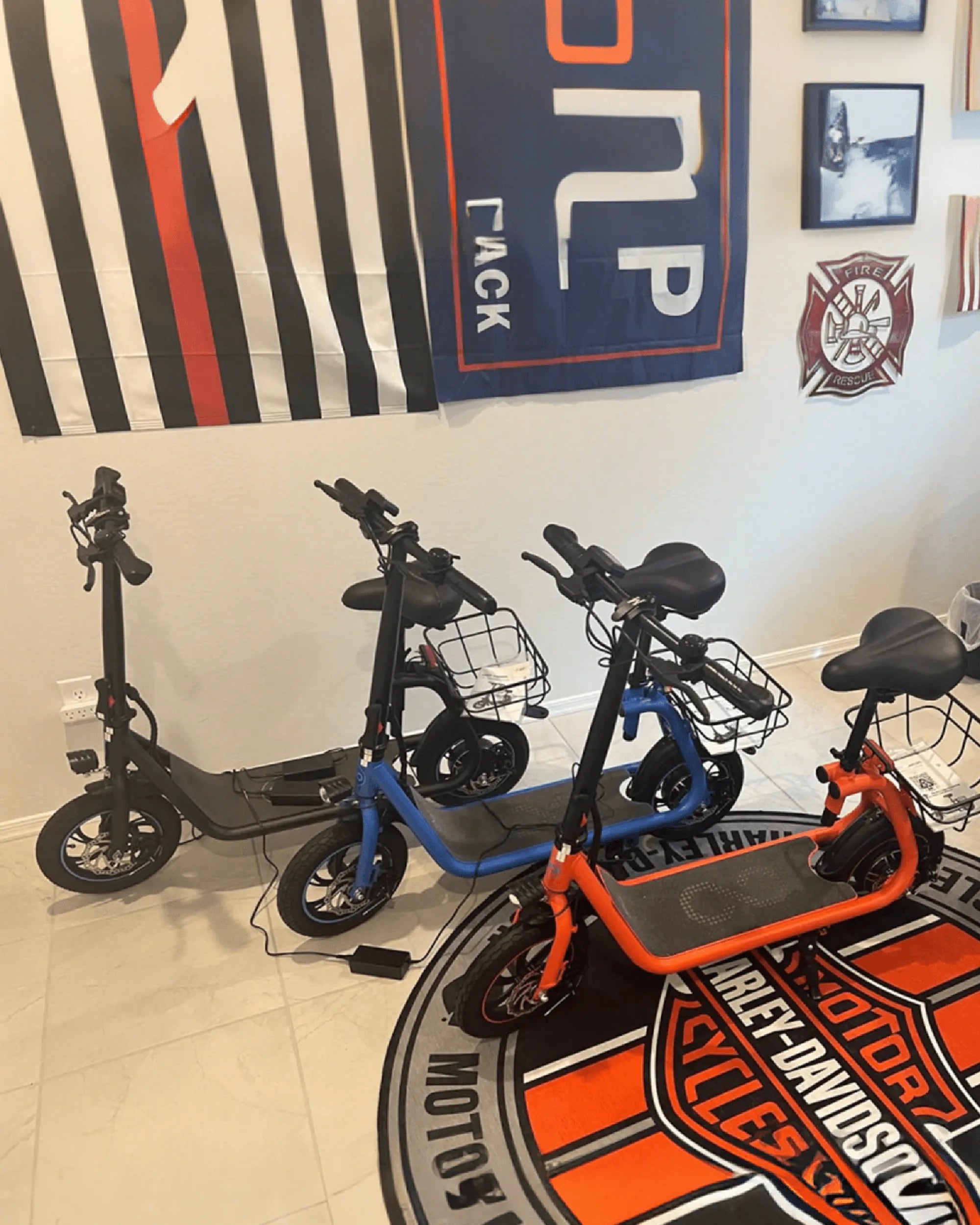
Finding the Perfect First E-Bike for Your 11-Year-Old
Selecting an ebike for 11 year old boy is a significant milestone, blending the thrill of new independence with serious parental responsibility. It's about more than just a cool gift; it's choosing a vehicle that must be safe, appropriately sized, and manageable for a growing pre-teen. This guide will walk you through every critical consideration, from motor power and braking systems to frame geometry and riding etiquette.
Our goal is to provide a data-driven, factual roadmap to help you make an informed decision. You'll learn how to assess your child's readiness, understand the technical specifications that matter most, and identify the features that ensure both fun and safety. The right e-bike can unlock longer family adventures, build confidence, and foster a lifelong love of cycling.
Navigating this market requires moving beyond basic features to understand how design impacts a young rider's experience. We'll analyze key metrics and compare them against the developmental stage of an average 11-year-old boy. This foundation will help you filter through options and focus on bikes that offer genuine value and security.
Ultimately, the perfect e-bike should grow with your child, offering adjustable components and scalable power. It should be a tool for building responsibility, not just a toy. With the correct approach, an e-bike becomes an investment in outdoor activity and developmental growth.
Why an E-Bike Can Be a Great Choice for an 11-Year-Old
An e-bike offers distinct advantages over a traditional bicycle for a child on the cusp of adolescence. The primary benefit is extended range and reduced fatigue, allowing your child to keep pace on family rides or explore further in their neighborhood without becoming overly tired. This electric assist can make cycling more accessible and enjoyable, especially in areas with hills.
Furthermore, an e-bike can serve as a powerful motivator. The joy and sense of freedom that come with assisted riding often translate into a greater willingness to spend time outdoors and away from screens. It's not about replacing physical activity; a pedal-assist e-bike still requires pedaling, but it levels the playing field on challenging terrain.
For an 11-year-old boy, this can also be an introduction to basic mechanics and responsible ownership. Learning to care for the battery, perform simple maintenance checks, and understand the technology fosters a sense of accountability. It bridges the gap between a child's bike and more advanced personal transportation.
Data from family cycling groups indicates that children using appropriately spec'd e-bikes participate in longer, more frequent rides. This consistent activity promotes physical health, spatial awareness, and traffic safety education in a controlled, engaging way. The key is ensuring the e-bike's capabilities are carefully matched to the rider's maturity and skill level.
Key Safety Features to Prioritize (The Non-Negotiables)
Safety is the paramount concern when evaluating any ebike for 11 year old boy. The core features that demand scrutiny are the motor and speed control, braking system, overall stability, and integrated safety elements. Compromising on these aspects is not an option for a young, developing rider.
A reliable, multi-point braking system is essential. While coaster brakes (pedal-backwards to brake) are simple, hydraulic or mechanical disc brakes offer superior, consistent stopping power in all weather conditions, which is critical for safety. Look for bikes with brakes that are appropriately sized for a child's hand strength and leverage.
Stability is determined by frame geometry, wheel size, and weight distribution. A lower center of gravity and a wheelbase that isn't overly long contribute to predictable handling. The frame should be constructed from lightweight but durable aluminum, not heavy steel, to make the bike manageable when the motor is off.
Finally, integrated safety features like bright LED lights (front and rear), reflectors, and a loud bell or horn are mandatory. These make the rider visible and audible to others. Parents should also consider adding aftermarket safety gear, but a well-designed e-bike will include these fundamentals from the start.
Understanding Power & Speed Limits
The motor's power output, measured in watts (W), and its maximum assisted speed are the most critical technical specs. For an 11-year-old, a motor in the 250W to 350W range is typically sufficient and manageable. Higher wattage motors (500W+) deliver torque and speed unsuitable for this age group and should be avoided.
Equally important is a configurable speed limiter. The ideal ebike for 11 year old boy should allow parents to cap the maximum assisted speed, often between 10-15 mph (16-24 km/h), via a password-protected app or physical controller. This allows you to start with a conservative limit and increase it incrementally as your child's skill and judgment improve.
It's also vital to understand the type of pedal assist. A torque-sensor system that provides assistance proportional to how hard the child pedals is more intuitive and safer than a cadence sensor that provides a jarring, full-power surge with each pedal rotation. Smooth, predictable power delivery is key to building confidence.
Battery safety is part of the power equation. A certified battery pack from a reputable brand is non-negotiable. It should have built-in protection against overcharging, short-circuiting, and thermal runaway. This is where brands with stringent certifications provide essential peace of mind.
The Gyroor Advantage: Designed with Young Riders in Mind
When evaluating brands for a youth e-bike, Gyroor's engineering philosophy aligns closely with the needs of young riders and concerned parents. As a leader trusted by over 100,000 riders, Gyroor integrates safety and durability into its design process, making it a strong contender for your child's first e-bike.
A cornerstone of this advantage is the use of UL-certified battery packs across their lineup. These batteries undergo rigorous testing for over 500 charge cycles, ensuring long-term reliability and, most importantly, safety from electrical faults. This certification is a benchmark not all brands meet.
Furthermore, Gyroor models often feature IPX5 water-resistant designs. This rating means the electrical components can withstand water jets from any direction, protecting the bike from puddles, light rain, and casual washing. For an 11-year-old boy who might not always avoid wet conditions, this durability is a significant practical benefit.
Combined with a reliable 1-year warranty covering the frame, motor, and battery, Gyroor provides a package that reduces long-term ownership risk. Their focus on robust construction and proven electrical components means the bike is built to handle the learning curve and occasional rough treatment inherent to a young rider.
Choosing the Right Fit: Sizing and Adjustability
A perfectly sized e-bike is fundamental to safety and control. An ill-fitting bike is harder to handle, especially at low speeds or when stopping. The primary measurement is the stand-over height: your child should be able to stand over the top tube with both feet flat on the ground and 1-2 inches of clearance.
For most 11-year-old boys, wheel sizes of 20 inches or 24 inches are appropriate. A 20" wheel bike offers great maneuverability and a lower stand-over height, ideal for riders between 4'5" and 5' tall. A 24" wheel bike is better for taller children, around 4'10" to 5'4", providing a more stable ride for longer limbs.
Adjustability is crucial for growth. Look for a quick-release seat post clamp that allows for easy height adjustment and an adjustable stem or handlebars that can be raised as your child grows. This extendable fit can add 1-2 years of usable life to the e-bike, improving its long-term value.
The bike's weight is another sizing factor. A lightweight aluminum frame is essential. If the bike is too heavy, your child will struggle to maneuver it without power, making it dangerous in situations where they need to quickly put a foot down or lift it onto a curb. The motor should assist the ride, not compensate for a clumsy, overweight frame.
Teaching Responsible E-Bike Ownership & Riding Etiquette
Introducing an e-bike requires a phased educational approach. Start in a completely safe, controlled environment like an empty parking lot or quiet cul-de-sac. Have your child practice mounting, dismounting, starting, stopping, and turning using only the pedals, with the motor assist turned off initially.
Once basic bike control is mastered, introduce the lowest level of pedal assist. Focus on how it feels, emphasizing smooth starts and stops. Practice using the brakes to cut motor power—a feature on all quality e-bikes. This foundational training ensures the rider, not the machine, is always in command.
Riding etiquette and legal knowledge are mandatory. Teach your child to always yield to pedestrians, use hand signals, obey all traffic signs, and assume drivers do not see them. Familiarize yourself with local laws regarding e-bikes: age restrictions, helmet laws (always enforce one regardless of law), and where they are permitted (sidewalks, bike paths, roads).
Ownership lessons include safe battery charging—never overnight or unattended, using only the provided charger—and basic maintenance. Show them how to check tire pressure weekly, inspect brakes for wear, and keep the chain clean and lubricated. This fosters respect for the machine and understanding of its operation.
Parent FAQ: Your Top Questions Answered
Q1: Is my 11-year-old boy ready for an e-bike?
A: Readiness depends on maturity and skill, not just age. A good candidate is a child who already rides a conventional bicycle confidently, understands basic road safety, demonstrates good judgment, and can follow instructions. They should also be physically strong enough to handle the bike's weight if the battery dies.
Q2: What's a safe speed for an 11-year-old on an e-bike?
A: A maximum assisted speed of 10-15 mph (16-24 km/h) is widely considered appropriate. Starting at the lower end of this range is prudent. The ability to limit speed via parental controls is a critical feature. Remember, higher speed increases stopping distance and the severity of any potential accident.
Q3: How far can he ride on a single charge?
A>Range varies based on battery capacity, assist level, rider weight, and terrain. A typical youth e-bike with a 36V, 7.8Ah battery may offer 15-25 miles of range on low assist. Teach your child to monitor the battery indicator and return home with a reserve, avoiding total discharge which can strain the battery.
Q4: Are e-bikes dangerous compared to regular bikes?
A: The risks are different, not inherently greater. The added weight and speed potential require more skill to manage. However, with a properly limited, well-designed bike and comprehensive training, the risk can be managed effectively. The key is respecting the e-bike as a vehicle, not a toy.
Q5: What maintenance is required?
A: Regular maintenance includes checking tire pressure, ensuring brakes are responsive and pads are not worn, keeping the chain clean and lubricated, and checking all bolts for tightness. The electrical system requires little maintenance but the battery should be stored in a cool, dry place and charged periodically if not used for extended periods.
Is my child ready for an e-bike?
Use this checklist to assess readiness: Can they ride a standard bike confidently, including looking over their shoulder without swerving? Do they consistently wear a helmet without being reminded? Do they understand and obey stop signs and traffic signals? Can they judge the speed and distance of cars? Are they responsible with other valuable possessions? If you answer "yes" to most, they are likely a good candidate.
How do we maintain the e-bike?
Create a simple weekly checklist: 1) Tire Pressure (use a gauge, inflate to PSI on tire sidewall), 2) Brake Test (squeeze levers, ensure they stop wheel spin and aren't mushy), 3) Bolt Check (handlebars, seat post, wheels), 4) Clean chain and apply lubricant monthly. For the battery, avoid full discharges; charge after rides and store at 50-80% charge if not used for weeks.
What about battery life and range?
Battery lifespan is measured in charge cycles. A quality UL-certified battery, like those from Gyroor, retains significant capacity for 500+ cycles. Real-world range is less than advertised. On high assist with hills, range can halve. Teach your child to use lower assist on flats and reserve higher power for hills. Always factor in a 20% safety buffer on planned ride distance.
Comparison of Key E-Bike Considerations for an 11-Year-Old
| Feature | Ideal Specification | Why It Matters | Red Flag / What to Avoid |
|---|---|---|---|
| Motor Power | 250W - 350W | Provides adequate assist for hills without excessive torque or speed. | Motors over 500W; too powerful for safe control. |
| Max Assisted Speed | Configurable, 10-15 mph max | Allows parental control; matches developing reflexes and judgment. | Fixed speeds over 20 mph; no ability to limit speed. |
| Braking System | Mechanical or Hydraulic Disc Brakes | Consistent, powerful stopping in all weather conditions. | Coaster brakes only; rim brakes in wet climates. |
| Frame & Wheel Size | 20" or 24" wheels; Aluminum frame | Correct geometry for control; lightweight for manageability. | Adult-sized frames (26"+ wheels); heavy steel frames. |
| Battery Certification | UL, CE, or equivalent certified | Ensures safety from fire/electrical hazard; indicates quality cells. | No stated certification; generic "Lithium-ion" only. |
| Adjustability | Quick-release seat post, adjustable stem | Allows bike to fit properly as child grows over 1-2 years. | Fixed seat height; non-adjustable components. |
Launching a Lifetime of Adventure
Choosing the right ebike for 11 year old boy is a decision that blends practicality with the promise of adventure. By prioritizing certified safety features, appropriate power limits, and a proper fit, you provide a platform for responsible independence. This vehicle can expand your child's world, encourage physical activity, and teach valuable lessons in mechanics and safety.
The journey begins with education—for both parent and child. A well-planned introduction, clear rules, and consistent practice in safe environments lay the groundwork for years of enjoyable riding. The e-bike is a tool, and like any tool, its safety and utility depend on the knowledge and habits of the user.
Investing in a reputable brand with a track record of safety and durability, such as Gyroor with its UL-certified batteries and robust warranties, offers long-term peace of mind. It ensures that the technology supporting your child's adventure is as reliable as the training you provide.
Ready to explore models that match these critical safety and sizing guidelines? Begin your search with a brand that designs with young riders in mind. Browse the full Gyroor collection at gyroorboard.com to find an e-bike that empowers safe, confident, and unforgettable rides for your growing adventurer.
E-Bike Fat Tire Type: The Ultimate Guide to All-Terrain Capability and Comfort
Toddler Scooter: The Ultimate Guide to First Rides & Developmental Play