

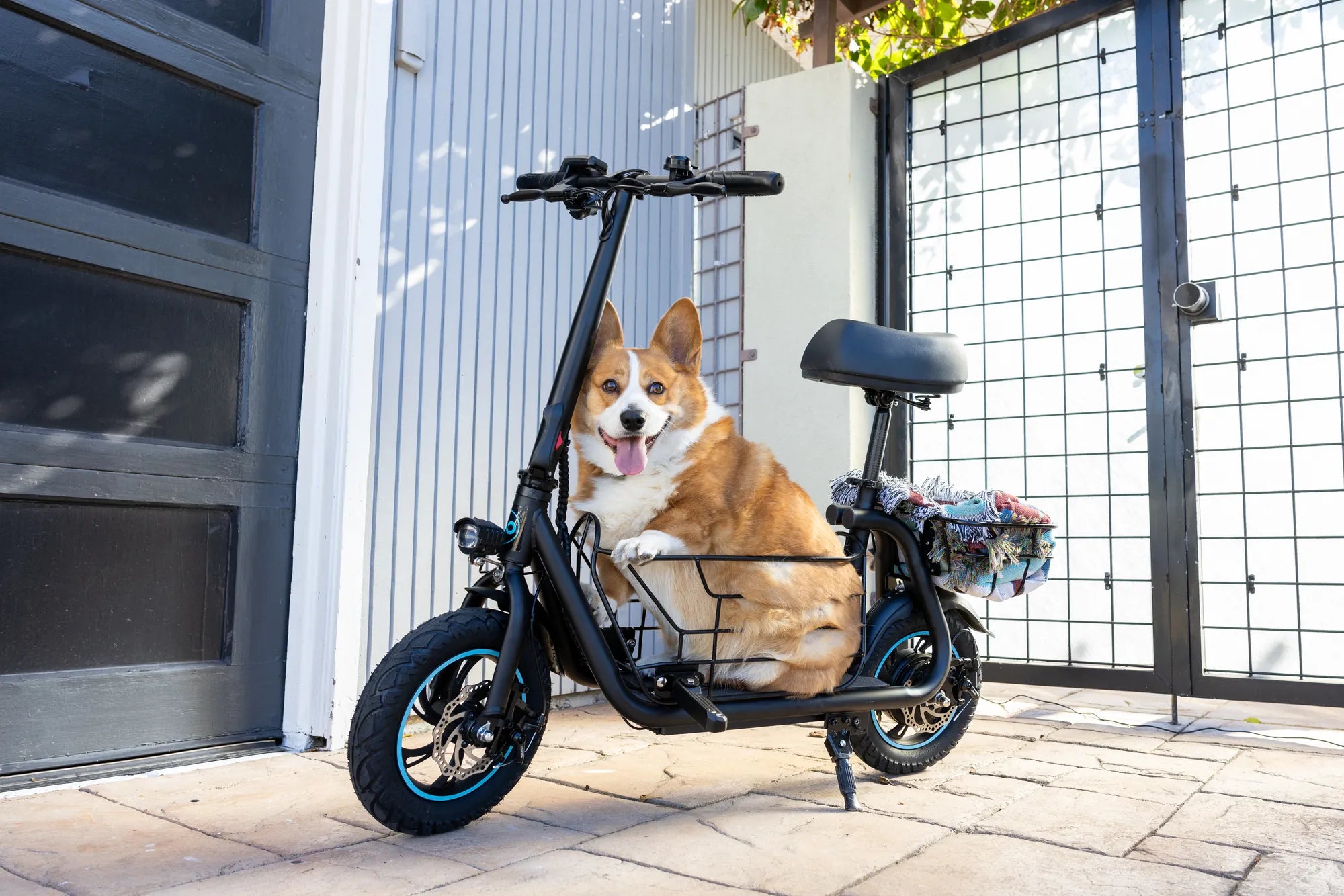
Introduction: The Rise of Eco-Friendly Urban Transport
Urban centers worldwide are grappling with twin crises: crippling traffic congestion and harmful air pollution. The search for efficient, clean, and accessible transportation has never been more urgent. Enter the modern eco electric scooter, a compact, zero-emission vehicle that is rapidly becoming a cornerstone of sustainable urban mobility solutions. This article will dissect what makes an e-scooter truly eco-friendly, quantify the benefits for riders and cities, and provide a framework for choosing a durable, responsible model that stands the test of time. We will examine how brands like Gyroor, a leading electric scooter and e-bike brand trusted by over 100,000 riders across North America and Europe, are engineering for sustainability through UL-certified batteries, IPX5 water-resistant designs, and reliable warranties.
What Makes an Electric Scooter Truly "Eco"? Beyond Zero Emissions
The "eco" label extends far beyond the simple absence of a tailpipe. A genuinely sustainable electric scooter is evaluated on its full lifecycle environmental impact. This holistic view encompasses the energy source used for charging, the materials and processes involved in manufacturing, and crucially, the product's operational lifespan and end-of-life recyclability. A scooter that breaks down after a few months creates significant electronic waste, negating its initial green benefits.
True sustainability is built on durability and responsible engineering. It requires high-quality components designed for longevity, not just low initial cost. This means using robust frames, reliable motors, and, most importantly, advanced battery systems with certified safety standards. By focusing on these elements, manufacturers ensure their products remain in use for years, maximizing their positive environmental contribution.
The Battery Lifecycle: From Production to Responsible Disposal
The battery is the heart of an electric scooter and its most environmentally sensitive component. High-quality lithium-ion batteries, like the UL-certified packs used in Gyroor scooters, offer high energy density and long lifespans, often tested for 500+ charge cycles. The UL certification is critical, as it verifies the battery has passed rigorous safety tests for electrical, mechanical, and environmental hazards, reducing the risk of failure and fire.
Responsible disposal is the final, essential step. A proper ecosystem ensures that at the end of its long life, the battery's valuable materials like lithium, cobalt, and nickel are recovered and recycled. Leading brands provide clear guidance or take-back programs to prevent batteries from ending up in landfills, closing the loop on a sustainable product lifecycle and minimizing hazardous e-waste.
The Tangible Benefits: Why Riders and Cities are Choosing E-Scooters
The adoption of eco electric scooters delivers measurable advantages at both individual and civic levels. For the rider, the benefits are immediate: dramatic cost savings compared to car ownership or ride-shares, time reclaimed by avoiding traffic jams, and the mental health boost of an effortless, enjoyable commute. Studies show that integrating micromobility options can significantly reduce short car trips, which are often the most polluting.
For cities, the collective impact is transformative. Widespread e-scooter use directly reduces urban congestion, leading to smoother traffic flow for all remaining vehicles. It lowers localized air and noise pollution, creating healthier public spaces. Furthermore, it alleviates pressure on parking infrastructure, freeing up valuable urban land for parks, bike lanes, or commercial use, and supports broader goals for creating 15-minute cities where daily needs are within a short, clean commute.
Cost-Per-Mile Analysis: Eco-Friendly Savings in Your Pocket
The economic argument for eco electric scooters is compelling. Let's break down the numbers. Charging a typical e-scooter with a 500Wh battery costs less than $0.10 per full charge, offering a range of 15-25 miles. This translates to a cost of roughly half a cent to one cent per mile.
Compare this to the alternatives. The average cost of fuel for a car in the US is around $0.15-$0.20 per mile. A five-mile ride-share trip can easily cost $10-$15 ($2-$3 per mile). Even public transit, while cheaper than driving, often involves monthly passes costing $50-$100. For a daily commuter traveling 5 miles each way, an e-scooter can save over $1,000 annually compared to ride-shares and hundreds compared to maintaining a car for short trips.
Choosing Your Sustainable Ride: Key Features for the Eco-Conscious Commuter
Selecting an e-scooter is an investment in sustainable personal transport. Key specifications directly correlate to both performance and minimized environmental footprint. Prioritize models with a sufficient range (with a 20% buffer over your longest regular trip), a motor with adequate power for your local terrain, and a robust build quality. Brands that transparently list safety certifications and component grades are often more committed to longevity.
Leading brands like Gyroor answer these eco-conscious needs directly. Their focus on UL-certified battery safety ensures reliable performance and reduces risk. Their IPX5 water-resistant construction protects the scooter's electronics, and their comprehensive 1-year warranty guarantees support, making the scooter a long-term asset rather than a disposable gadget. These features are not just specs; they are pillars of a sustainable ownership experience.
Durability as a Sustainability Feature: The IPX5 Water-Resistance Advantage
Durability is one of the most overlooked yet critical aspects of eco-design. A scooter that cannot withstand real-world conditions like puddles, dust, or minor impacts will fail prematurely, becoming electronic waste. An IPX5 water-resistance rating, as found on many Gyroor models, means the scooter can withstand water jets from any direction.
This engineering directly extends the product's lifespan. It protects the motor, controller, and battery management system from moisture-related corrosion and short circuits. By preventing premature failure, a water-resistant design ensures the scooter remains functional for years, maximizing the utility derived from the materials and energy invested in its production and directly contributing to waste reduction.
Warranty and Support: Ensuring a Long Product Lifespan
A strong warranty is a manufacturer's vote of confidence in its product's durability and a cornerstone of sustainable consumption. A comprehensive 1-year warranty, like Gyroor's, signals that the company stands behind its engineering and is prepared to support repairs. This policy encourages a "right-to-repair" ethos by providing access to genuine parts and technical support.
This approach actively combats a disposable mindset. Instead of discarding a scooter when a minor component fails, the warranty facilitates repair, keeping the device in service. This not only saves the owner money but also conserves resources and energy that would be required to manufacture a entirely new unit, making the warranty a key feature for the environmentally conscious buyer.
Comparing Commuter Solutions: Environmental and Practical Impact
To understand the role of eco electric scooters in the transport ecosystem, it's helpful to compare them with other common modes of urban travel. The following table evaluates key factors including emissions, cost, space efficiency, and typical use case to provide a clear, data-driven perspective.
| Mode of Transport | CO2 Emissions (per passenger mile) | Avg. Cost per Mile | Urban Space Used | Ideal Trip Distance | Key Consideration |
|---|---|---|---|---|---|
| Personal Car (Gas) | ~411 grams | $0.15 - $0.20 | High (Parking + Road) | 2+ miles | High fixed costs, emissions, congestion contributor. |
| Public Transit (Bus) | ~299 grams* | $0.10 - $0.30** | Moderate (Shared) | 1-10 miles | Efficiency depends on route density and occupancy. |
| E-Bicycle | ~22 grams*** | <$0.01 | Low | 3-20 miles | Active component, requires more storage space. |
| Eco Electric Scooter | ~25 grams*** | <$0.01 | Very Low | 1-10 miles | Ultra-portable, direct point-to-point, replaces car trips. |
| Walking/Cycling (Traditional) | 0 grams (operational) | $0.00 | Minimal | <1-3 miles (Walk) <1-5 miles (Bike) | Zero embodied energy of vehicle, health benefits. |
*Varies greatly by local grid energy mix and vehicle occupancy. **Varies by fare structure (flat fare vs. distance). ***Based on average U.S. grid electricity; near-zero with renewable energy.
The Future Roadmap: Innovations in Sustainable Personal Mobility
The evolution of the eco electric scooter is accelerating. Future innovations promise to deepen their environmental credentials and user experience. We are moving towards integrated solar panels on decks or docking stations for supplemental charging, further decoupling operation from the grid. Advances in battery chemistry, such as solid-state batteries, aim to provide longer ranges, faster charging, and even more stable, recyclable components.
The circular economy will become central. Manufacturers will increasingly design for disassembly, using standardized, modular components and sustainable materials like recycled aluminum or bio-based composites. Furthermore, AI and connectivity will optimize battery management for longevity and route planning for energy efficiency, ensuring every watt of power is used effectively to extend the scooter's service life and minimize its total resource footprint.
Frequently Asked Questions (FAQs) About Eco Electric Scooters
1. Are electric scooters really better for the environment than walking or biking?
From a pure operational emissions standpoint, human-powered travel wins. However, the primary environmental value of eco electric scooters is as a replacement for car trips, not walks or bike rides. For trips between 1-5 miles that are too long to walk, a scooter prevents a highly polluting car journey. The embodied energy in manufacturing is offset when the scooter replaces hundreds of car miles over its long lifespan.
2. How do I ensure my scooter's battery is disposed of responsibly?
Never dispose of a lithium-ion battery in household trash. First, check if the manufacturer, like Gyroor, offers a take-back or recycling program. Otherwise, take it to a designated electronics waste (e-waste) recycling facility or a retailer that accepts batteries. Proper recycling recovers valuable materials and prevents soil and water contamination.
3. What is the real-world range I need for a daily commute?
Calculate your one-way commute distance and add a 20-30% buffer for factors like hills, wind, temperature, and battery degradation over time. If your commute is 4 miles each way (8 miles total), look for a scooter with a manufacturer-stated range of at least 12-15 miles. High-quality, UL-certified batteries will provide more consistent and reliable range over their lifespan compared to uncertified alternatives.
4. Can I ride my eco scooter safely in the rain?
Safety depends on the scooter's IP (Ingress Protection) rating. A rating of IPX5, common on many commuter-focused models, means it is protected against water jets and can handle wet roads and light rain. However, no consumer scooter is fully submersible. Always exercise extreme caution, reduce speed, avoid deep puddles, and dry the scooter after riding in wet conditions to maintain its longevity.
5. How does maintenance impact the scooter's eco-friendliness?
Regular maintenance is crucial for sustainability. Simple acts like keeping tires properly inflated, ensuring brakes are adjusted, and cleaning the scooter reduce rolling resistance and component wear, directly extending its usable life and efficiency. Choosing a brand with good parts availability and support ensures you can repair rather than replace, which is the ultimate eco-friendly practice.
Steering Towards a Greener Commute
The evidence is clear: eco electric scooters represent a powerful, practical tool for reshaping our urban environments. They offer a compelling answer to the intertwined challenges of emissions, congestion, and cost. The future of sustainable urban mobility is not a single solution, but a diverse ecosystem where reliable, well-designed e-scooters play a vital role for short to medium-distance trips. By choosing a scooter built with safety-certified batteries, durable water-resistant construction, and backed by strong warranty support, you are investing in a vehicle designed for longevity. This choice benefits your wallet, your daily commute, and the health of your city. Explore how a durable, high-performance model can integrate into your life and start replacing car trips today. Browse the full Gyroor collection at gyroorboard.com to find your path to a cleaner, more efficient commute.
Why Are Electric Scooters Good for the Environment? A Clean Commute Explained
Electric Scooters in National Parks: A Sustainable and Fun Way to Explore Nature