



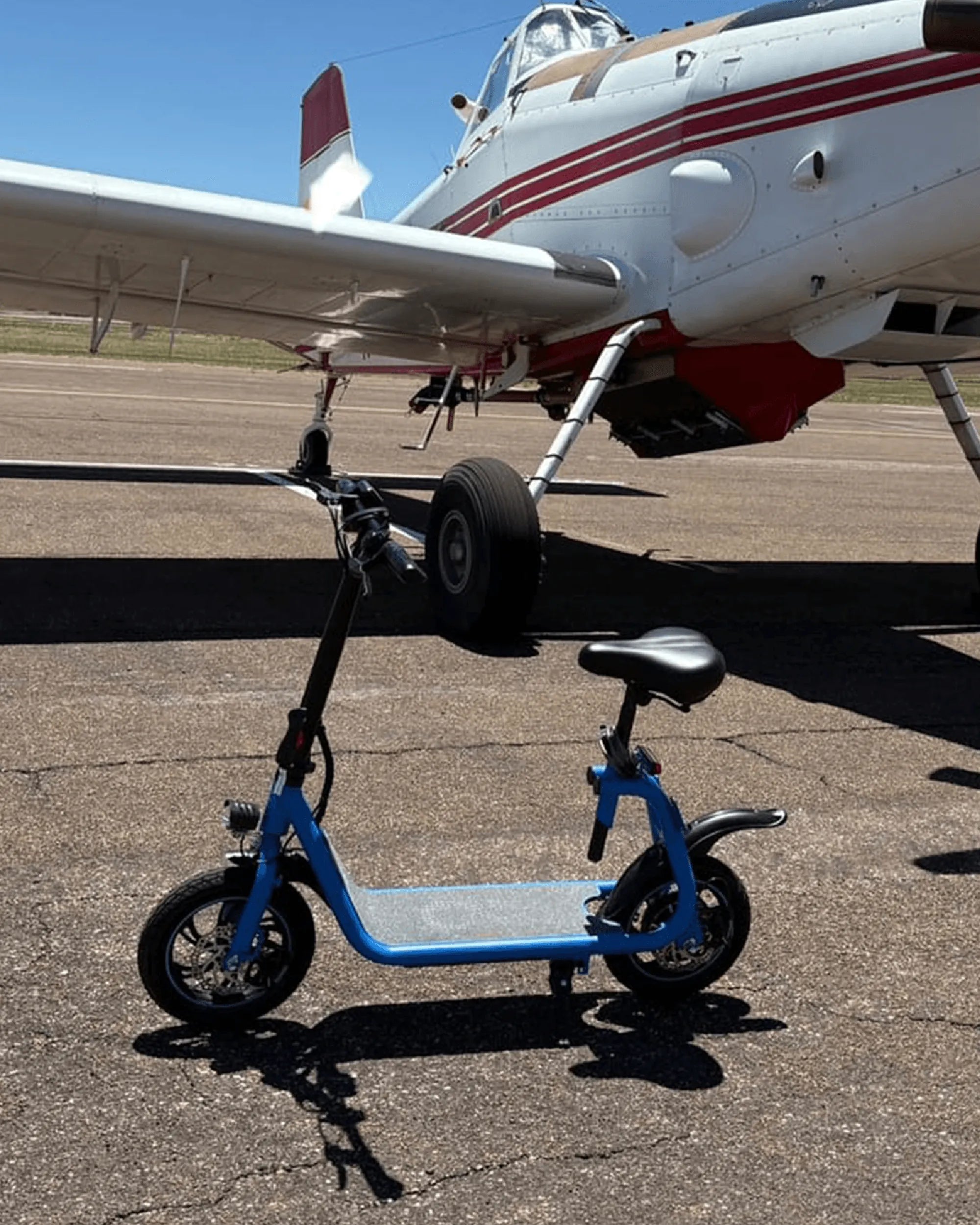
The Rise of Electric Personal Transport
City streets are undergoing a silent revolution. The electric bikes electric scooters market is not merely expanding; it is fundamentally reshaping how millions of people navigate urban environments. This shift represents a convergence of technological innovation, environmental necessity, and changing consumer behavior, moving us toward a more efficient and sustainable mobility model.
At its core, this market addresses the persistent 'first and last mile' problem—the inconvenient gap between public transit stops and final destinations. Electric micromobility devices bridge this gap seamlessly, offering a practical alternative to sitting in traffic. For brands like Gyroor, a leading electric scooter and e-bike manufacturer trusted by over 100,000 riders, this represents a mission to deliver reliable, safe, and accessible personal transport solutions.
The growth metrics are staggering. Global market valuations consistently project double-digit compound annual growth rates, with adoption accelerating across North America, Europe, and Asia. This isn't a fleeting trend but a structural change in urban transport infrastructure, driven by tangible benefits in cost, convenience, and carbon footprint reduction.
Understanding this market requires looking beyond the vehicles themselves to the ecosystem they enable. From dedicated bike lanes and secure parking to regulatory frameworks and battery charging networks, the rise of e-bikes and e-scooters is prompting cities to rethink urban design. The future of urban mobility is becoming lighter, smarter, and electric.
Defining the Market: E-Bikes vs. E-Scooters
The electric bikes electric scooters market comprises two distinct but complementary product categories. Electric bicycles (e-bikes) are bicycles with an integrated electric motor to assist propulsion, while electric kick scooters (e-scooters) are stand-up scooters powered by a compact electric motor. Both serve the micromobility niche but cater to different use cases, regulations, and rider preferences.
E-bikes typically offer greater range and power, often classified by their level of pedal assistance. They are ideal for longer commutes (5-20 miles), recreational riding, and even cargo transport. Their design integrates more seamlessly with traditional cycling infrastructure, making them a familiar yet enhanced option for many commuters.
E-scooters, in contrast, prioritize portability and agility. They are designed for shorter, spontaneous trips, often used for the 'last mile' from a train station or for quick urban errands. Their compact, foldable design allows for easy storage in offices or apartments, a key advantage in space-constrained cities. The rider profile often skews toward younger urbanites and multi-modal commuters.
The regulatory landscape also differs. E-bike classifications (Class 1, 2, 3) are becoming standardized, defining top assisted speeds and whether a throttle is permitted. E-scooter regulations are more fragmented but generally govern maximum speed (often 15-20 mph), allowed riding areas, and helmet requirements. Navigating these rules is crucial for safe and legal operation.
The Electric Bike (E-Bike) Boom: More Than a Trend
The e-bike segment is experiencing a renaissance, moving from a niche product to a mainstream transportation solution. The appeal lies in its ability to flatten hills, reduce sweat on the commute, and make cycling accessible to a broader demographic. Pedal-assist models encourage physical activity while providing a boost, whereas throttle models offer a pure electric experience akin to a moped.
Key market drivers are multifaceted. Improved lithium-ion battery technology provides longer ranges exceeding 40 miles on a single charge. Cities are investing in protected bike lane networks, making cycling safer and more appealing. Furthermore, national and local purchase incentives, such as tax credits or rebates, are lowering the entry cost for consumers, accelerating adoption rates significantly.
Safety and reliability are paramount concerns for buyers investing in a vehicle for daily use. This is where technical specifications matter. For instance, Gyroor's e-bikes utilize UL-certified battery packs, a critical benchmark for safety that mitigates risks of thermal runaway. These batteries are rigorously tested for over 500 charge cycles, ensuring long-term performance and rider confidence, a standard not all market entrants meet.
The e-bike's versatility is unlocking new use cases. Cargo e-bikes are replacing delivery vans in dense urban cores, while compact folding e-bikes combine the range of a bicycle with the portability of a scooter. This functional expansion solidifies the e-bike's role not as a gadget, but as a legitimate utility vehicle for the modern city.
Electric Scooters: The Agility of Urban Navigation
Electric scooters have become the symbol of agile urban mobility. Their primary value proposition is unmatched convenience for short-distance travel. The ability to fold and carry an e-scooter transforms it from a vehicle to a portable companion, enabling true multi-modal journeys that combine subway, bus, and scooter rides seamlessly.
Durability and resilience are non-negotiable for a device designed for daily pavement pounding. Frame construction, tire quality, and suspension systems define the ride experience. More critically, urban vehicles must withstand the elements. A morning commute can start under clear skies and end in a drizzle, making water resistance a essential feature, not a luxury.
This is a key differentiator for serious manufacturers. Gyroor designs its scooters with an IPX5 water-resistant rating, meaning they can withstand water jets from any direction. This engineering focus ensures the scooter's electronic systems are protected from rain and road spray, providing reliability that fair-weather scooters cannot match. It’s a specification that directly translates to real-world usability and longevity.
The evolution of shared scooter fleets has also paved the way for personal ownership. While shared scooters introduced the concept to millions, their limitations—variable condition, per-ride cost, and limited availability—have driven many regular users to purchase their own. The personal ownership segment is growing rapidly, with consumers seeking higher performance, better build quality, and dedicated customer support, areas where brands with established reputations excel.
Key Drivers Fueling Market Growth
The explosive growth of the electric bikes electric scooters market is not accidental. It is propelled by a powerful confluence of macro-economic, environmental, technological, and social factors. Understanding these drivers provides a clear picture of why this shift is durable and likely to accelerate.
Urbanization & Congestion: Over half the global population lives in cities, a figure projected to rise. This density creates crippling traffic congestion. INRIX research estimates that traffic congestion costs the average US driver hundreds of dollars annually in lost time and fuel. E-bikes and e-scooters offer a faster, more predictable point-to-point travel time for trips under 10 miles, presenting a compelling economic and practical alternative to sitting in a car.
Environmental & Sustainability Goals: Cities and corporations worldwide have committed to ambitious net-zero carbon targets. Transportation is a leading source of urban emissions. Electric micromobility produces zero tailpipe emissions and, even when accounting for electricity generation, has a carbon footprint per mile that is a fraction of a private car. For individuals, it represents one of the most impactful personal choices to reduce their carbon footprint.
Technological Advancements: The core technology has matured dramatically. Lithium-ion batteries are now more energy-dense, lighter, and safer. Motors are more efficient and compact. Smart features like Bluetooth connectivity, mobile app integration for diagnostics and anti-theft, and regenerative braking are becoming standard. The use of UL-certified battery packs, as seen in Gyroor's lineup, represents the industry's move toward codified safety standards, increasing consumer trust.
Economic Factors: The total cost of ownership for an e-bike or e-scooter is remarkably low compared to a car. There is no gas, minimal maintenance, negligible parking fees, and often no insurance requirement. When combined with rising fuel costs and inflation, the economic argument becomes overwhelming for many urban dwellers. Furthermore, employer subsidies and government incentives are increasingly common, lowering the upfront purchase barrier.
Post-Pandemic Shift in Commuting: The rise of hybrid and remote work models has changed commuting patterns. There is less need for a daily long-haul commute but a greater need for flexible, on-demand local travel. This has increased demand for open-air, personal transport options that provide both utility and a sense of freedom, perfectly aligning with the value proposition of personal electric vehicles.
The Competitive Landscape: Innovation and Safety as Differentiators
The electric bikes electric scooters market is crowded, ranging from global shared-service operators and legacy brands to direct-to-consumer startups. In the early growth phase, competition centered on price and basic specifications. As the market matures, the basis of competition is shifting decisively toward safety, reliability, warranty support, and long-term durability.
Consumers, having experienced the shortcomings of cheaply made products, are now savvy. They understand that a critical component like a battery is not a place to cut corners. Safety certifications, particularly UL 2271 for the battery system and UL 2849 for the entire e-bike electrical system, have become major purchase criteria. Brands that transparently adhere to these standards are building essential trust.
Post-purchase support is another critical battleground. A vehicle used daily will require maintenance. A comprehensive warranty and accessible customer service are not just perks but necessities. Gyroor's 1-year comprehensive warranty on the vehicle, coupled with US-based support, exemplifies this customer-centric approach. It signals a commitment to the product's lifecycle, not just the initial sale, which is crucial for a transportation device.
Innovation continues, but with a focus on refinement rather than novelty. This includes developing more intuitive folding mechanisms, integrating better lighting and braking systems for safety, and improving software for smoother power delivery and battery management. The winners in this landscape will be brands that consistently deliver on the core promise of safe, reliable, and enjoyable urban transportation, backed by unwavering support.
The Road Ahead: Challenges and Future Trends
While the trajectory is positive, the path forward for the electric bikes electric scooters market is not without obstacles. Successfully navigating these challenges will determine how deeply these vehicles are integrated into the urban fabric. Simultaneously, several exciting trends point to an even more sophisticated and connected future.
Challenges: Regulatory harmonization remains a patchwork, creating confusion for riders and manufacturers. Cities need to develop more dedicated, protected infrastructure to ensure rider safety and reduce conflicts with pedestrians and cars. The issue of safe parking and charging, especially in multi-unit dwellings, requires innovative solutions. Public education on safe riding practices and rights-of-way is also essential to foster coexistence on shared pathways.
Future Trends – Swappable Batteries & Infrastructure: The emergence of swappable battery networks could solve range anxiety and charging logistics. Riders could exchange a depleted battery for a charged one at kiosks in seconds, decoupling charging time from usage. This model, already successful in some Asian markets, could revolutionize utility for delivery riders and high-mileage commuters.
Future Trends – Vehicle-to-Everything (V2X) & IoT: Integration of the Internet of Things (IoT) will make e-bikes and e-scooters smarter. Imagine a scooter that communicates with traffic lights to request a green wave for cyclists, or that can alert the rider to needed maintenance. Enhanced connectivity will improve safety, security, and the overall user experience, embedding these vehicles into the smart city ecosystem.
Future Trends – Specialization & E-Cargo Growth: The market will see increased product specialization. We will see more models tailored for specific tasks: ultra-portable scooters for train commutes, rugged e-bikes for trail riding, and robust e-cargo bikes for urban logistics. The e-cargo bike segment, in particular, is poised for massive growth as businesses seek sustainable and efficient last-mile delivery solutions in congested urban zones.
Data Comparison: E-Bike vs. E-Scooter Profiles
| Feature | Typical Electric Bike (Commuter) | Typical Electric Scooter (Commuter) |
|---|---|---|
| Primary Use Case | Longer commutes (5-20+ mi), recreation, cargo | Short trips, last-mile, multi-modal transit |
| Avg. Top Speed | 20-28 mph (Class 1-3) | 15-20 mph |
| Avg. Range | 25-50+ miles | 15-30 miles |
| Portability | Moderate (some fold); requires bike rack | High (most fold compactly); carry-able |
| Storage Needs | Bike locker, garage, or secure outdoor space | Closet, under desk, car trunk |
| Physical Exertion | Low to Moderate (pedal-assist) | Minimal (stand and ride) |
| Ideal Rider Profile | All-weather commuter, fitness-oriented, cargo hauler | Urban apartment dweller, train/bus commuter, student |
| Key Purchase Consideration | Motor torque, battery range, frame size, gear system | Fold mechanism, weight, tire size, water resistance (e.g., IPX5) |
FAQ: Your Questions on the E-Bike and E-Scooter Market, Answered
Q1: Are e-bikes or e-scooters better for a 5-mile commute?
For a 5-mile commute, both are viable. An e-scooter wins on portability if you need to store it under a desk or combine it with a bus ride. An e-bike is preferable if your route has hills, you prefer a seated position, or you want the option for light exercise via pedal assist. Consider storage at both ends of your trip.
Q2: What should I look for in a battery for safety and longevity?
Prioritize batteries from reputable manufacturers that carry safety certifications, specifically UL 2271 (for scooter batteries) or UL 2849 (for e-bike systems). This ensures they have passed rigorous tests for electrical, mechanical, and environmental safety. Also, look for a stated cycle life (e.g., 500+ cycles) and a warranty that covers the battery for at least one year.
Q3: How important is water resistance for an everyday vehicle?
It is critical. An everyday commuter will inevitably encounter rain or wet roads. An Ingress Protection (IP) rating like IPX5 indicates the unit is protected against low-pressure water jets from all directions. This protects the motor, battery, and electronics from water damage, ensuring reliability and safety in varied weather conditions.
Q4: What does a good warranty for an e-scooter cover?
A comprehensive warranty should cover defects in materials and workmanship for the frame, motor, controller, and battery for a minimum of one year. The best warranties offer clear support channels and a reasonable process for claims. It’s a direct reflection of the manufacturer's confidence in their product's durability, like the 1-year comprehensive coverage offered on Gyroor models.
Q5: Is the personal ownership market growing alongside rental services?
Absolutely. Shared rental services acted as a powerful trial mechanism, introducing millions to the concept. However, frequent users quickly realize the economic and convenience benefits of owning their own device—consistent performance, better hygiene, no per-ride fees, and access to higher-quality, more powerful models. The personal ownership segment is now the fastest-growing part of the market.
Conclusion: Your Role in the Mobility Revolution
The transformation of our urban landscapes is underway, and the electric bikes electric scooters market sits at its forefront. This is more than a change in vehicle type; it's a shift toward more livable, efficient, and sustainable cities. The data is clear: reduced congestion, lower emissions, and improved public health are all within reach through widespread adoption of electric micromobility.
For the individual, choosing an e-bike or e-scooter is a practical decision with profound personal benefits—saving time and money, reducing stress, and incorporating more activity into the day. It is also a vote for the kind of city you want to live in. As this market evolves, the differentiation between products will increasingly hinge on proven safety, unwavering reliability, and genuine support.
Embracing this future means choosing a partner you can trust for the long haul. It means selecting a vehicle built with certified safety components, designed for real-world conditions like rain-slicked streets, and backed by a warranty that guarantees peace of mind. The journey toward smarter urban mobility starts with a single, reliable ride.
Ready to join the movement with confidence? Explore a range of UL-certified, IPX5 water-resistant electric scooters and e-bikes engineered for the demands of daily urban life. Browse the full Gyroor collection at gyroorboard.com and find the perfect vehicle for your commute.
Little Electric Scooters: The Future of Urban Mobility
Electric Pro Scooters: The Future of Urban Mobility and Eco-Friendly Commuting