


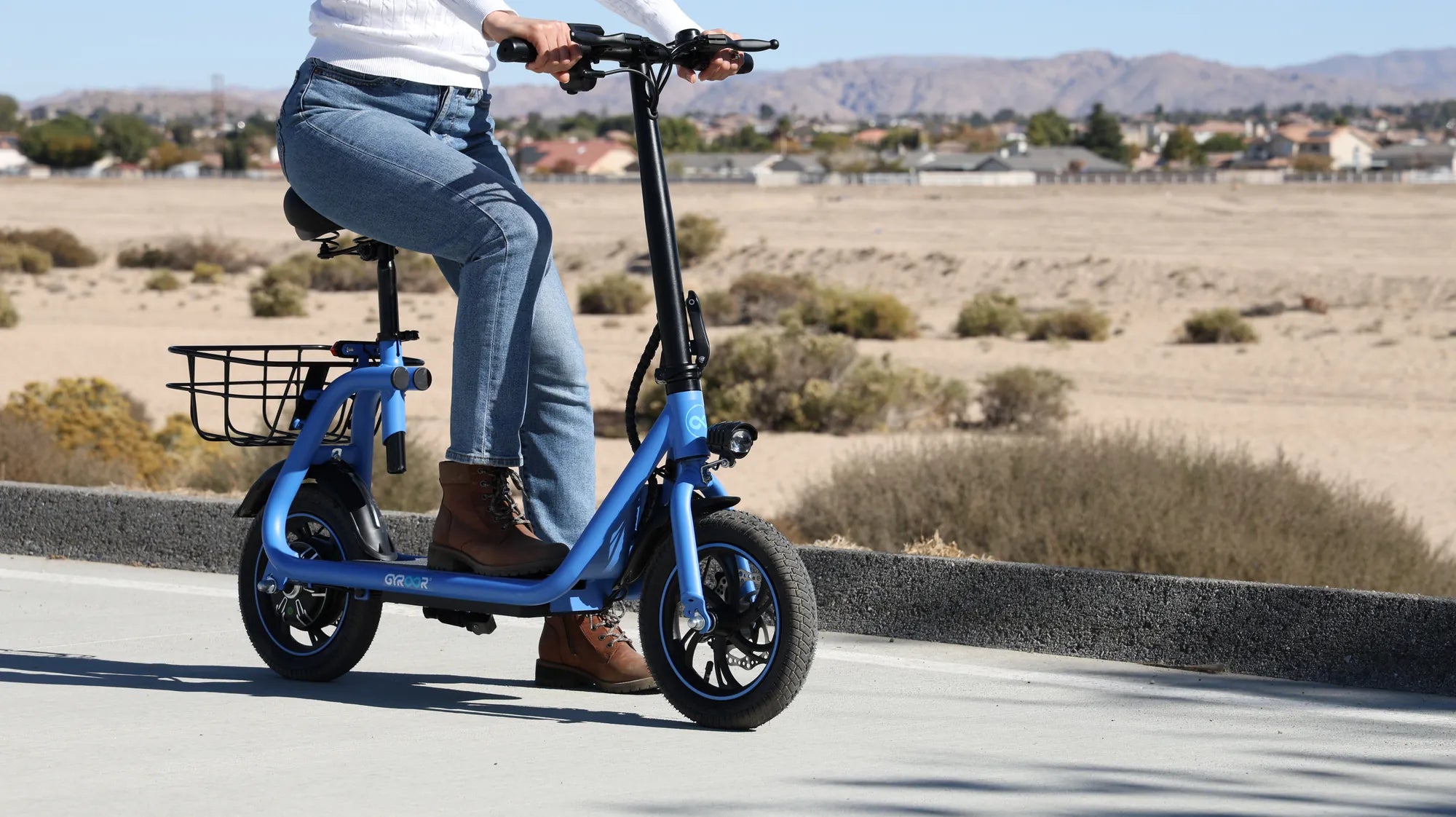
Introduction to Electric Folding E-Bikes
An electric folding ebike is a transformative piece of personal transportation engineered for the modern urban environment. It combines pedal-assist electric power with a compact, foldable frame, creating a space-saving and versatile solution for daily commutes and errands. This category directly addresses the needs of city dwellers, apartment residents, and anyone who navigates mixed-mode travel involving public transit or limited storage space.
You will learn how to evaluate the critical specifications that separate a good folding e-bike from a great one. We will dissect motor performance, real-world battery range, and the durability features that ensure long-term reliability. Furthermore, we will examine how leading brands like Gyroor integrate safety and trust into their designs, offering riders peace of mind alongside performance.
The appeal is clear: conquer hills with ease, avoid traffic snarls, and never worry about bike theft or storage again. This guide provides the data-driven insights you need to make an informed purchase decision. We will move beyond marketing claims to focus on the tangible features that impact your daily ride.
Key Benefits of Choosing a Folding E-Bike
The electric folding ebike is not merely a novelty; it solves specific, common urban mobility challenges. Its design philosophy centers on adaptability, allowing it to fit seamlessly into varied lifestyles and living situations. The core advantages translate into tangible time savings, reduced stress, and enhanced freedom of movement.
For the daily commuter, it eliminates the anxiety of finding a secure bike rack. For the apartment resident, it solves the storage dilemma in tight spaces. For the multi-modal traveler, it bridges the gap between home, transit, and final destination effortlessly. These benefits collectively redefine what convenient urban transport can be.
Ultimate Space Efficiency and Portability
The defining feature of an electric folding ebike is its collapsible frame. A well-designed model can fold down in seconds to a footprint often smaller than a standard suitcase. Typical folded dimensions range from approximately 30" x 20" x 15", allowing it to be tucked under a desk, in a closet corner, or in a car trunk without issue.
Weight is a crucial factor in true portability. Most quality models weigh between 40 to 65 pounds. Lighter frames, often constructed from aluminum alloy, make carrying the bike up a flight of stairs or onto a train more manageable. The best designs include carrying handles or wheels to aid in transport when folded.
This space efficiency liberates riders from dependency on external infrastructure. You are no longer constrained by the availability or security of public bike racks. The ability to bring your valuable investment indoors is a primary benefit that protects your asset and simplifies your routine.
Seamless Multi-Modal Commuting
The electric folding ebike is the ultimate tool for solving the "first and last mile" problem. It extends the practical radius of any transit hub. You can ride to the train station, fold your bike, board without hassle, then unfold and ride the final leg to your office. This integrated approach makes longer commutes feasible and efficient.
It also provides unparalleled flexibility for urban errands. Navigating dense traffic and searching for parking becomes a problem of the past. You can ride directly to your destination, fold your bike, and bring it inside a store or café. This seamless transition between riding and carrying is a game-changer for daily logistics.
For those who drive part of their commute, the folding e-bike can remain in the trunk, ready to deploy when parking is scarce or expensive. This multi-modal capability makes the electric folding ebike one of the most adaptable vehicles for complex urban journeys.
Enhanced Flexibility for Storage and Security
Security is a major concern for any bicycle owner, especially expensive electric models. The folding capability directly mitigates theft risk. By allowing you to store the bike indoors at home, work, and at destinations, it is rarely left unattended in public spaces, which are prime targets for thieves.
Indoor storage also protects the bike from the elements. Constant exposure to rain, sun, and extreme temperatures can degrade components, electronics, and the battery over time. Keeping your electric folding ebike in a controlled environment significantly extends its lifespan and maintains its appearance.
This flexibility is invaluable for those living in apartments, condos, or homes with limited garage or yard space. The bike can stand vertically in a hallway closet or lie flat under a bed. This practical benefit often outweighs all others for city residents.
Critical Features to Evaluate Before You Buy
Selecting the right electric folding ebike requires careful analysis of its specifications and construction. Performance, comfort, and longevity are determined by a set of key components. A data-driven approach ensures you match the bike's capabilities to your specific needs, terrain, and commuting distance.
Advertised claims can be misleading. Understanding what lies beneath the marketing—the quality of the battery cells, the robustness of the folding mechanism, the type of braking system—is essential for a satisfactory long-term ownership experience. This section provides a practical checklist for your evaluation.
Motor Power and Performance (250W vs. 500W+)
Motor wattage is a primary determinant of an e-bike's hill-climbing ability and acceleration. A 250W motor is common and often legally classified as a "pedelec" in many regions, allowing for broader access to bike paths. It provides ample assistance for flat to moderately rolling urban terrain, making commutes sweat-free.
For riders facing steeper hills, carrying cargo, or desiring more robust acceleration, a 500W or 750W motor is recommended. The increased power provides a noticeable boost in torque, making challenging inclines feel manageable. It's important to check local regulations, as higher-wattage motors may have speed or usage restrictions.
The motor's placement also matters. Hub motors (in the front or rear wheel) are common and offer a simple, direct drive. Mid-drive motors, which power the bike's chain, often provide better weight distribution and more natural riding dynamics but can increase cost and complexity.
Battery Range and Charging Considerations
Battery range is arguably the most scrutinized, yet most variable, specification. Advertised ranges (e.g., 25-50 miles per charge) are achieved under ideal laboratory conditions. Real-world range is affected by rider weight, terrain, wind, tire pressure, and the level of pedal assist used.
A conservative rule is to expect 60-70% of the advertised range in mixed urban use. For a reliable 20-mile round-trip commute, look for a bike with an advertised range of at least 35 miles. Battery capacity, measured in Watt-hours (Wh), is a more reliable comparator than voltage alone; a higher Wh rating generally indicates a longer potential range.
Charging convenience is key. Look for a removable battery that can be charged separately from the bike. This allows you to secure the bike while charging the battery indoors at your desk or home. It also facilitates battery replacement if needed. Safety is paramount; insist on a battery with reputable safety certifications. Gyroor, for instance, uses UL-certified lithium-ion battery packs in its models, tested for over 500 charge cycles, ensuring both performance and safety.
Build Quality, Weight, and Fold Mechanism
The frame is the bike's backbone. Aluminum alloy is the standard for quality folding e-bikes, offering an excellent strength-to-weight ratio. The design of the folding joints and latches is critical; they must be robust, intuitive to operate, and secure when locked in the riding position. A wobbly or complicated fold mechanism ruins the experience.
Total weight impacts portability directly. While lighter is better for carrying, weight often correlates with battery size and motor power. Evaluate the trade-off: a 45-pound bike with a smaller battery may be easier to lift but might not suit a longer commute. Test the folded package to see if it includes handles or wheels for rolling.
The folding process should be simple, quick, and require no tools. A good mechanism allows the bike to be folded and unfolded in under 30 seconds. Look for designs that keep cables internal or properly managed to prevent pinching during the fold. The latch should have a positive, audible click when engaged for riding.
Durability and Ride Assurance
Ride quality on urban roads depends on tire size and suspension. Smaller wheels (16" or 20") enhance compactness when folded but can feel less stable over large potholes than larger 26" wheels. Many folding e-bikes use wider, air-filled tires (often 2" to 4" wide) which provide inherent cushioning and stability.
Suspension systems, whether a front fork or seat post suspension, add comfort on rougher pavement but also add weight and potential maintenance points. For most city streets, a quality air-filled tire may provide sufficient comfort without the need for complex suspension.
Braking performance is non-negotiable for safety. Disc brakes, whether hydraulic or mechanical, offer superior stopping power and consistency in all weather conditions compared to traditional rim brakes. Given the added weight and speed of an e-bike, reliable brakes are essential. Furthermore, for all-weather commuting, a water-resistant rating is crucial. Gyroor designs its electric folding ebikes with an IPX5 water-resistant rating, protecting critical components from rain and splashes, offering riders true peace of mind for daily use.
Gyroor Folding E-Bikes: Engineered for Trusted Performance
In a market filled with options, Gyroor has established itself as a brand built on the pillars of safety, reliability, and rider-centric design. Trusted by over 100,000 riders across North America and Europe, Gyroor's approach to the electric folding ebike category focuses on integrating proven performance with essential safeguards that reduce ownership risk.
Gyroor's product development prioritizes the critical features discussed. For example, their models utilize high-torque motors suited for urban hills, paired with integrated, UL-certified battery packs for safety and range confidence. The folding mechanisms are designed for one-step operation and structural rigidity, ensuring the bike feels solid when unfolded for riding.
A key differentiator is the comprehensive 1-year warranty backed by US-based customer support. This coverage extends to the motor, battery, controller, and frame, reflecting confidence in the product's durability. For a rider investing in a primary commute vehicle, this warranty provides significant long-term security that many competitors do not match.
Models like the Gyroor C3 exemplify this philosophy. It features a robust 500W motor, a removable Samsung/LG cell battery for an extended range, and a compact fold. More importantly, it incorporates the brand's standard IPX5 water resistance and the trusted UL-certified battery system. This combination of performance specs and foundational safety features positions Gyroor as a prudent choice for discerning riders.
Making the Right Choice: Folding E-Bike vs. Alternatives
Choosing personal electric transport involves weighing trade-offs between portability, comfort, and performance. The electric folding ebike sits in a unique niche, but understanding how it compares to its closest alternatives clarifies its ideal use case. This comparative analysis helps finalize your decision based on your primary needs.
Folding E-Bike vs. Standard E-Bike
A standard, non-folding e-bike typically offers advantages in ride stability and often, battery capacity. Its larger frame can accommodate a bigger battery, potentially offering longer range. The wheelbase is longer, and the larger wheels (usually 26" or 700c) provide a smoother ride over bumps and better high-speed stability.
The electric folding ebike trades some of that inherent stability for transformative portability and storage benefits. The folding e-bike's compact size is its superpower, enabling the multi-modal and indoor storage scenarios that a standard e-bike cannot. For the urban commuter with space constraints or a need to combine with public transit, this trade-off is overwhelmingly worthwhile.
Folding E-Bike vs. Electric Scooter
Electric scooters are the champions of ultra-portability. They are generally lighter, fold even smaller, and are simpler to carry. They excel at very short "last-mile" trips where you need to cover a mile or two quickly and have minimal storage.
The electric folding ebike, however, provides superior comfort and practicality for longer distances. The seated riding position is far less taxing over a 5-mile commute. The larger air-filled tires and often included suspension handle poor road conditions better than small scooter wheels. The pedal-assist function also extends range significantly and provides a backup if the battery depletes. For commutes over 3 miles, or for riders seeking exercise options, the folding e-bike is the more versatile and comfortable choice.
| Feature | Folding E-Bike | Standard E-Bike | Electric Scooter |
|---|---|---|---|
| Primary Advantage | Portability & Multi-Modal Use | Ride Stability & Range | Ultimate Compactness & Simplicity |
| Ideal Commute Distance | 3-15 miles | 5-30+ miles | 1-5 miles |
| Storage Needs | Minimal (Fits indoors) | Substantial (Garage/Rack) | Minimal (Fits under desk) |
| Rider Comfort | Good (Seated, often suspended) | Excellent (Full-size geometry) | Fair (Standing, small wheels) |
| Weather/ Terrain Handling | Good (Larger tires, IP rating) | Best (Largest tires) | Poor (Small wheels, low clearance) |
Frequently Asked Questions (FAQ)
Q: Are folding e-bikes suitable for tall or heavy riders?
A: Yes, but specifications must be checked carefully. Look for models with an adjustable seat post and handlebar stem to accommodate taller riders. Weight capacity is crucial; most quality folding e-bikes support riders between 220 to 300 pounds. Always verify the manufacturer's stated maximum load limit, which includes the rider and any cargo.
Q: How long does the folding and unfolding process take?
A>With practice, a well-designed electric folding ebike can be folded or unfolded in 15 to 30 seconds. The key is a simple, one-step or two-step mechanism that doesn't require tools. Models with a central folding latch and quick-release levers for the handlebar and seat post are typically the fastest. It's worth practicing the sequence a few times to build muscle memory.
Q: Can I ride a folding e-bike in the rain?
A>Riding in light to moderate rain is generally safe for e-bikes with proper water-resistant ratings. This is where a specification like Gyroor's IPX5 rating becomes critical, as it certifies protection against water jets from any direction. However, you should avoid submerging the bike, through deep puddles. After a wet ride, it's good practice to wipe the bike down, especially the chain and brakes.
Q: Is the 1-year warranty offered by Gyroor standard in the industry?
A>No, a comprehensive 1-year warranty covering the battery, motor, and frame is a significant differentiator and not an industry standard. Many brands offer shorter warranties (e.g., 6 months) or limited coverage that excludes key components like the battery. Gyroor's warranty reflects a commitment to product durability and customer support, reducing long-term ownership risk.
Q: How do I maintain an electric folding ebike?
A>Maintenance is similar to a regular bicycle with added care for the electrical system. Keep the chain lubricated, tire pressures correct, and brakes adjusted. Periodically check that all folding latches and bolts are tight. Avoid high-pressure water sprays when cleaning. Store the battery in a cool, dry place, and avoid fully depleting it before recharge. Following the manufacturer's guidelines is essential.
Conclusion: Unlocking a Smarter Commute
The electric folding ebike represents a logical evolution in urban transportation, merging the freedom of cycling with the practicality demanded by modern city life. Its value proposition is clear: efficient, sweat-free mobility that adapts to your space and journey, not the other way around. The ideal model is one that balances sufficient motor power and battery range with a reliable, intuitive fold and durable construction.
Prioritizing features that ensure safety and longevity is paramount. This means seeking out verified components like UL-certified batteries, robust IP-rated water resistance, and reliable braking systems. These are not just specs; they are investments in reliable daily performance and personal safety.
When selecting your electric folding ebike, choose a brand that stands behind its product with strong warranties and customer support. Brands like Gyroor have built trust by engineering these safeguards into their vehicles, offering riders the confidence to integrate an e-bike fully into their daily routine. Explore the engineering and peace of mind built into every model.
Ready to transform your commute? Browse the full Gyroor collection, featuring UL-certified, IPX5 water-resistant electric folding ebikes backed by a 1-year warranty, at gyroorboard.com.
Ebike Tire Tube: The Complete Guide to Sizes, Replacement & Maintenance
Best Ebike for Women 2025: The Complete Guide to Finding Your Perfect Ride