


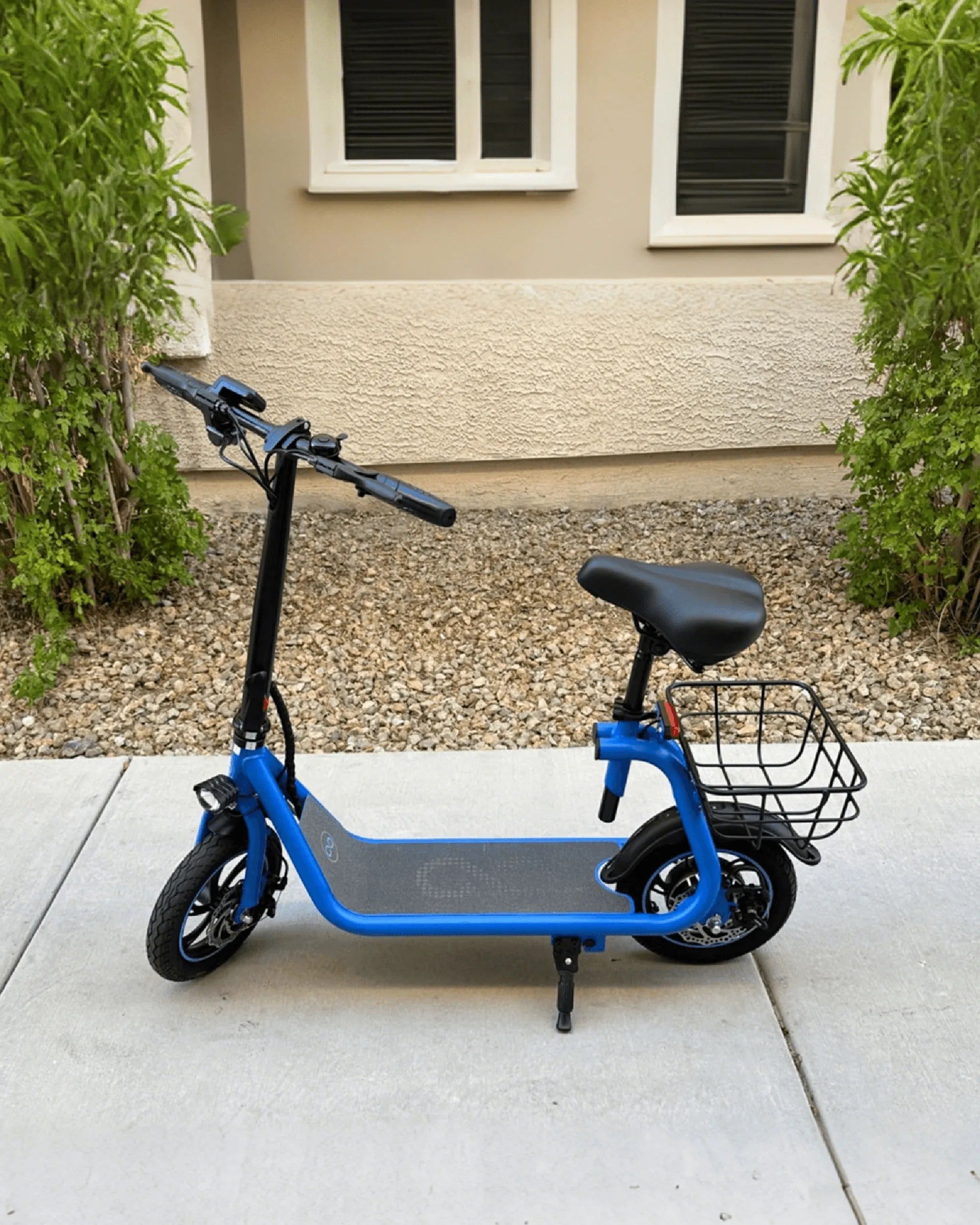
The Rise of Electric Motor Scooters in the UK
Urban mobility in the United Kingdom is undergoing a quiet revolution. As city centres grapple with congestion charges, rising fuel costs, and a collective push towards net-zero targets, a practical solution has gained remarkable traction: electric motor scooters for adults UK. These compact, efficient vehicles are redefining the daily commute for thousands, offering a blend of personal freedom, cost-effectiveness, and environmental responsibility that traditional transport often lacks. This guide will equip you with all the knowledge required to navigate this evolving landscape, from legal frameworks to technical specifications.
The appeal is multifaceted. For the urban commuter, an e-scooter transforms a 30-minute bus journey into a 10-minute direct ride, bypassing traffic entirely. Environmentally conscious riders appreciate the zero direct emissions and minimal energy consumption. Financially, the savings compared to car ownership, public transport fares, or ride-hailing services are substantial and calculable.
This shift is supported by the emergence of brands committed to quality and safety, such as Gyroor. As a leading electric scooter and e-bike brand trusted by over 100,000 riders across North America and Europe, Gyroor represents the move towards reliable, certified personal mobility solutions designed for real-world use. Choosing a reputable brand is not just about performance; it's a critical decision for long-term safety and value.
Understanding UK E-Scooter Laws & Regulations
The legal status of privately owned electric scooters in the UK is the single most important factor for any prospective buyer. As of now, it is illegal to ride a privately owned e-scooter on public roads, pavements, cycle lanes, or bridleways. They are classified as Personal Light Electric Vehicles (PLEVs) and are subject to the same laws as motor vehicles, requiring registration, insurance, and a driving licence, but they cannot currently meet these requirements.
The only legal place to use a privately owned e-scooter is on private land with the landowner's permission. This stark regulation contrasts sharply with the government-sanctioned rental e-scooter trials operating in dozens of designated towns and cities across the UK. These rental schemes are legal on public roads (except motorways) and in cycle lanes because they are insured by the operators, and the scooters themselves are limited to 15.5 mph.
This dichotomy creates a complex landscape. The widespread use of private scooters continues, but it carries the risk of a £300 fixed-penalty notice and six points on a driving licence. The government is actively reviewing this legislation, with many expecting a regulated framework for private e-scooters to emerge, potentially mirroring the rental trial rules on speed and power.
For responsible riders, this means future-proofing your purchase. Selecting a scooter from a brand like Gyroor, known for UL-certified batteries and robust build quality, is an investment in a product that will likely meet future safety and performance standards. Rider responsibility—wearing a helmet, respecting pedestrians, and understanding the current law—is paramount.
Key Features for a UK Adult E-Scooter
Selecting the right electric motor scooter requires matching its specifications to your commuting needs and the UK's unique environment. Not all scooters are created equal, and understanding core features will ensure you get a capable, durable machine.
Motor Power and Hill Climbing Ability
Motor power, measured in watts (W), directly impacts acceleration and hill-climbing prowess. For the rolling hills and frequent inclines found in many UK towns, a minimum of 350W is recommended. A 500W motor provides confident performance for most adult riders, even on steeper gradients. Torque is equally important; it's the rotational force that gets you moving from a stop and powers you uphill.
Underpowered scooters will struggle, requiring you to kick-push on hills and potentially draining the battery rapidly. Brands like Gyroor engineer their motors to deliver consistent torque, ensuring reliable performance in varied urban topographies, from the streets of Bristol to the avenues of Edinburgh.
Battery Range and Real-World Performance
Advertised range figures are typically achieved under ideal laboratory conditions. Real-world range is affected by rider weight, terrain, temperature, wind, and riding style. A scooter advertised for 25 miles may reliably deliver 15-18 miles for a 75kg rider in a city with hills.
For a typical UK commute, a realistic range of 15-20 miles is a practical target, allowing for a round trip with a safety buffer. The battery's quality is critical. Gyroor's use of UL-certified battery packs, tested for over 500 charge cycles, ensures not only safety but also long-term capacity retention, meaning the scooter's range remains consistent for years.
Build Quality, Tyres, and Braking Systems
UK roads and weather demand resilience. A sturdy aluminium alloy frame is standard for good scooters. Suspension (spring or hydraulic) dramatically improves comfort on cobbled streets and potholed roads. Tyre choice is crucial: pneumatic (air-filled) tyres offer superior shock absorption and grip, especially on wet surfaces, but require maintenance; solid tyres eliminate punctures but provide a harsher ride.
Braking is non-negotiable for safety. A combination braking system is ideal. Electronic (e-brake) and regenerative braking help slow the scooter and recoup some energy, while a physical disc or drum brake provides powerful, reliable stopping power in all conditions, essential for UK stop-start traffic and sudden showers.
Portability and Daily Practicality
A commuting scooter must be portable. Weight matters when carrying it onto a train, up stairs, or storing it under a desk. Models between 13-16kg offer a good balance of sturdiness and liftability. A fast, secure folding mechanism is essential. Look for a design that folds neatly, often latching to prevent it from unfolding accidentally, making it easy to store in a flat or the boot of a car.
Why Safety & Certification Matter
Beyond performance, the foundational aspect of any personal transport device is safety. This extends from the integrity of its components to the after-sales support backing it.
The Critical Importance of UL-Certified Batteries
The battery is the heart of an e-scooter and its greatest potential risk if poorly made. Incidents involving faulty lithium-ion batteries highlight the danger. UL certification (from Underwriters Laboratories) is a globally recognised safety standard. It means the battery pack has undergone rigorous testing for electrical, mechanical, and environmental safety, including overcharge, short circuit, and crush tests.
Choosing a scooter with a UL-certified battery, like those used in Gyroor models, is the single most effective way to mitigate fire risk. It's not just about avoiding danger; these batteries are built to last, maintaining their capacity over hundreds of charges, which protects your investment.
Water Resistance for the British Climate
Riding in the UK inevitably means encountering rain and damp roads. The Ingress Protection (IP) rating indicates a device's resistance to solids and liquids. An IPX5 rating, as found on Gyroor scooters, means the unit is protected against water jets from any direction. This level of protection allows you to confidently ride in light rain and on wet roads, safeguarding the scooter's critical electronics from moisture damage. It is a essential feature for reliable year-round commuting.
Warranty and Reliable After-Sales Support
A strong warranty is a sign of manufacturer confidence. A comprehensive 1-year warranty covering the motor, battery, and controller, like Gyroor's, provides significant peace of mind. It ensures that any manufacturing defects will be addressed, protecting what is a substantial purchase. Accessible customer service and available spare parts (like tyres, brake pads, and chargers) are equally important for long-term ownership, ensuring your scooter remains operational for years.
Gyroor E-Scooters: Engineered for the Demanding Commuter
Gyroor's product philosophy aligns directly with the needs of the UK adult commuter. By focusing on core engineering principles, they deliver scooters that prioritise safety, durability, and real-world performance.
Built for Reliability and All-Weather Resilience: The combination of IPX5 water resistance and robust frame construction means a Gyroor scooter is built to handle daily commutes regardless of a sudden shower or damp autumn morning. This resilience translates to long-term reliability and lower maintenance costs.
Safety as a Core Design Principle: From the foundational use of UL-certified battery packs to the implementation of responsive dual braking systems, safety is integrated, not an afterthought. This proactive approach minimises risks associated with battery failure and provides the rider with confident stopping power.
The Gyroor Ownership Advantage: Owning a Gyroor means more than just a powerful motor or good range. It's the security of a 1-year warranty, the knowledge that your battery meets the highest safety standards, and the support of a brand with a proven track record across two continents. This holistic package reduces the stress of ownership and enhances the daily commuting experience.
The Eco-Friendly & Economic Impact
Switching to an electric scooter presents a compelling case on both environmental and personal finance grounds.
Environmentally, e-scooters produce zero tailpipe emissions. Charging from the UK grid, which is increasingly renewable, results in a tiny carbon footprint compared to any petrol vehicle. A typical e-scooter uses about 1.5 kWh to charge fully. If your 5-mile commute replaces a car journey, you could save approximately 1.8 kg of CO2 per day. Over a year, that's a significant personal contribution to cleaner air and reduced congestion.
Economically, the savings are stark. The table below compares approximate annual costs for different transport modes for a 5-mile each-way commute in a city like London.
| Transport Mode | Estimated Annual Cost* | Notes |
|---|---|---|
| Private E-Scooter | £50 - £100 | Purchase cost amortised over 3 years, plus electricity. |
| Public Transport (Bus/Tube) | £1,200 - £1,800 | Based on London travelcard zones 1-3. |
| Petrol Car | £1,500 - £2,500+ | Fuel, insurance, tax, parking, congestion charge. |
| Ride-Hailing (e.g., Uber) | £3,000+ | Two trips per day, 5 days a week. |
*Costs are illustrative estimates. The low running cost of an e-scooter, coupled with minimal maintenance (tyres, brakes), makes it the most economical choice by a wide margin after the initial purchase.
FAQ: Your Electric Scooter Questions Answered
Q: Can I legally ride my own e-scooter to work in the UK?
A: Currently, no. It is illegal to ride a privately owned e-scooter on public roads, pavements, or cycle lanes. They are only legal on private land with permission. Your commute would be illegal and could result in a fine and penalty points.
Q: How much does it cost to charge an e-scooter?
A>Very little. With a typical battery capacity of 0.5 kWh, a full charge costs less than 15p at the current UK electricity price cap. This translates to a cost per mile of well under 1p.
Q: Is insurance required for a private e-scooter?
A>While not a legal requirement for use on private land, it is highly advisable to have third-party liability insurance if you do ride there. This can often be added to home insurance policies. If legislation changes to allow road use, insurance will likely become mandatory.
Q: How do I maintain my scooter, especially in winter?
A>Regularly check tyre pressure (for pneumatic tyres), ensure bolts are tight, and keep the scooter clean, particularly the braking surfaces. After riding on wet or salty roads, wipe it down with a damp cloth to prevent corrosion. Store it in a dry place and avoid charging it immediately if it's very cold.
Q: What's the difference between a rental trial scooter and one I buy?
A>Rental scooters are speed-limited to 15.5 mph and are geo-fenced. Private scooters can often reach higher speeds (20-25 mph), have more powerful motors, better batteries, and more features. However, rental scooters are currently the only legal option for public road use in trial areas.
Your Next Step Towards Smarter Urban Mobility
The journey towards integrating an electric motor scooter into your life hinges on informed choices. Understanding the current UK legal framework is the essential first step, followed by a meticulous evaluation of safety features, real-world performance, and brand integrity. The potential benefits—dramatic cost savings, a reduced carbon footprint, and liberating personal mobility—are substantial.
As urban transport evolves, positioning yourself with a reliable, well-engineered vehicle from a trusted brand like Gyroor is a forward-thinking move. Their commitment to UL-certified safety, weather-resistant design, and comprehensive support provides a foundation for confident and sustainable commuting, ready for whatever the future of UK regulation holds.
Ready to explore models that combine performance with paramount safety? Browse the full Gyroor collection at gyroorboard.com to discover e-scooters engineered for the demands of modern life.
Electric Scooters Around Town: The Future of Urban Mobility
Are There Electric Scooters in San Francisco? Exploring the Scooter Scene