

Introduction: Reclaiming Independence with Electric Mobility
For many seniors, a gradual decline in mobility can quietly erode independence, making simple errands, social visits, or enjoying the outdoors a challenge. Traditional solutions often feel limiting or impractical. Electric Motor Scooters for Seniors: A Safe and Convenient Mobility Solution represent a modern, empowering alternative. These vehicles are not toys; they are sophisticated personal transportation devices designed to restore freedom.
This guide will provide a detailed examination of why electric scooters are an ideal choice for older adults. We will analyze critical safety features, comfort factors, and how to select the perfect model for your lifestyle. With a focus on reliable engineering from trusted brands like Gyroor, we aim to equip you with the knowledge to choose a scooter that offers confidence, convenience, and a renewed sense of autonomy.
Why Electric Scooters are an Ideal Choice for Senior Riders
Electric scooters address the core mobility challenges faced by seniors with elegant efficiency. The primary benefit is the elimination of physical strain. Walking long distances or pedaling a bicycle can be taxing on joints and cardiovascular health. An electric scooter provides effortless propulsion at the push of a throttle or twist of a grip, allowing seniors to travel farther without fatigue.
Beyond ease of use, these scooters offer unparalleled convenience for daily tasks. Trips to the local grocery store, pharmacy, or community center become simple and enjoyable rather than logistical hurdles. This convenience directly supports an active, engaged lifestyle, which is crucial for mental and physical well-being.
Furthermore, modern electric scooters are engineered for intuitive operation. Controls are typically simple: an accelerator, a brake (often both electronic and mechanical), and sometimes a speed selector. There is no complex gear-shifting or clutch operation. This simplicity reduces the learning curve significantly, making them accessible even for those who are not technologically inclined.
Finally, electric scooters are a cost-effective and eco-friendly transportation solution. Compared to the ongoing costs of car ownership (insurance, fuel, maintenance) or ride-sharing services, the cost per mile on an electric scooter is minimal. They produce zero direct emissions, contributing to cleaner air in local communities.
Key Safety Features Seniors Should Prioritize
Safety is the paramount concern when selecting any mobility device. Not all scooters are created equal, and specific features are non-negotiable for senior riders. First and foremost is battery safety. Insist on models with UL-certified battery packs. This certification means the battery has undergone rigorous testing for electrical, mechanical, and fire safety, drastically reducing risks of malfunction. Gyroor, for instance, equips all its models with UL-certified batteries tested for over 500 charge cycles.
The braking system is your primary safety mechanism. A dual-brake system—combining an electronic brake (which engages when you release the throttle) and a physical disc or drum brake—provides redundant stopping power. This is essential for controlled, safe stops, especially on slight inclines.
Visibility is critical. A bright front headlight, a prominent rear brake light, and side reflectors are mandatory for being seen by others, particularly in low-light conditions. Some advanced models, including several from Gyroor, also feature integrated turn signals, further enhancing communication with traffic.
Stability is provided by the scooter's physical design. Look for a wide, anti-slip deck for secure footing, a low center of gravity, and larger wheel diameters (8.5 inches or more). Larger wheels roll over cracks and small obstacles more smoothly than tiny wheels, providing a more stable and comfortable ride. A robust suspension system also absorbs shocks from uneven pavement.
Comfort and Convenience Considerations
Comfort directly impacts how often and how far you'll use your scooter. Adjustable handlebars allow you to set a riding position that doesn't strain your back or shoulders. For seated models, a well-padded, ergonomically shaped seat is essential, preferably with a backrest for full support.
The ride quality is heavily influenced by the suspension and tires. Pneumatic (air-filled) tires and spring or hydraulic suspension work together to cushion bumps, making journeys over sidewalk seams and minor road imperfections much smoother. This is vital for those with back or joint sensitivities.
Practical features enhance daily usability. An easy-to-read digital display shows speed, battery level, and riding mode. Integrated storage, such as a rear rack or a front basket, is invaluable for carrying groceries, a handbag, or a small pet. Finally, consider the charging process: a removable battery is a major convenience, allowing you to charge the battery indoors without bringing the entire scooter to an outlet.
Choosing the Right Electric Scooter: A Senior-Friendly Guide
Selecting the perfect scooter involves matching the vehicle's capabilities to your specific needs and environment. Start by defining your primary use case. Will you be using it primarily for short neighborhood errands on smooth sidewalks, or do you need to tackle park paths with mild gravel or grass? Your answer determines the necessary wheel size, tire type, and motor power.
Next, calculate your required range. Most scooters list a maximum range, but real-world range is affected by rider weight, terrain, and speed. A good rule is to choose a scooter whose stated range is at least 50% more than your longest typical round trip. This ensures you never risk running out of power and accounts for battery aging.
Weight capacity and portability are interconnected factors. Always check the manufacturer's maximum weight rating and choose a model that exceeds your weight with a margin of safety. For portability, if you need to lift the scooter into a car trunk or carry it up a few steps, a lightweight, foldable model is key. If it will mostly be used from your garage and stored there, a heavier, more stable cruiser-style scooter may be preferable.
Finally, consider the control interface and assistive features. Some seniors prefer a thumb throttle, others a twist grip. Some models offer cruise control for longer, straight stretches. Test different styles if possible, or read detailed reviews to understand the user experience.
Standing vs. Seated Scooters: Which is Best for You?
This fundamental choice depends on your balance, stamina, and trip duration. Standing scooters (traditional kick-style e-scooters) are generally lighter, more compact when folded, and easier to maneuver in tight spaces. They require the rider to maintain a standing posture, engaging core muscles for balance. They are ideal for shorter trips (under 30 minutes) for seniors with good balance and lower-body strength.
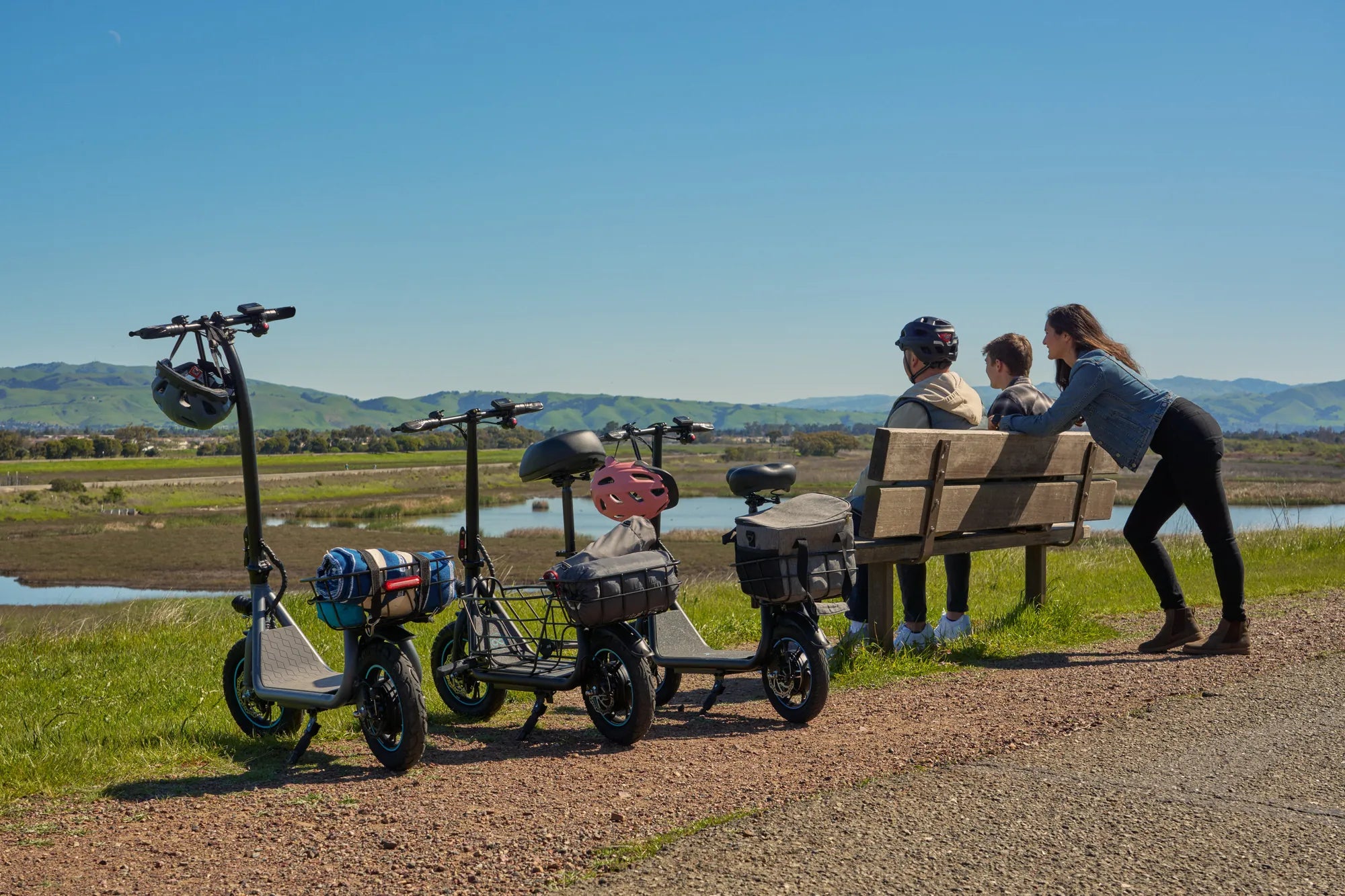
Seated scooters encompass e-bikes with bicycle-style seats and moped-style scooters. They offer a completely different proposition: the comfort of sitting. This eliminates fatigue on the legs and feet, making them suitable for much longer journeys. They inherently offer greater stability due to a lower center of gravity and a wider wheelbase. They are the best choice for seniors who may have balance concerns, plan on longer recreational rides, or simply prefer the comfort of a seat.
There are also hybrid models that offer a removable seat, providing flexibility. You can use the seat for longer trips and remove it for quick, standing errands if you wish. This table summarizes the key differences:
| Feature | Standing Scooter | Seated Scooter / E-Bike |
|---|---|---|
| Primary Posture | Standing | Sitting |
| Typical Weight | Lighter (30-50 lbs) | Heavier (50-70+ lbs) |
| Portability | High (often foldable) | Moderate to Low |
| Trip Comfort Duration | Short to Medium (10-30 min) | Long (30 min to several hours) |
| Stability | Requires active balance | High, due to seated position |
| Best For | Short errands, multi-modal transport (bus/train), those with good balance | Leisure rides, longer commutes, shopping trips, those preferring maximum comfort & stability |
Gyroor Scooters for Seniors: Engineered for Confidence
When safety and reliability are non-negotiable, choosing a brand with a proven track record is crucial. Gyroor has established itself as a leader in personal electric mobility, trusted by over 100,000 riders. For seniors, their engineering philosophy directly addresses key concerns. The foundation of their safety is the UL-certified battery system, providing peace of mind against electrical hazards—a critical feature often overlooked in cheaper models.
Durability and all-weather capability are ensured by an IPX5 water-resistant rating. This means the scooter can withstand water jets from any direction, making it safe to ride in light rain, through puddles, or in morning dew without worrying about immediate damage to electrical components. This reliability in various conditions is essential for a device meant for daily use.
Gyroor designs with user experience in mind. Models feature bright LED lighting systems for visibility, responsive dual braking systems, and wide, textured decks for secure footing. Their range includes both agile standing scooters for the active senior and comfortable seated e-bikes for those desiring leisurely, stable rides. The 1-year comprehensive warranty and accessible U.S.-based customer support provide a long-term safety net, ensuring help is available if needed.
This combination of certified safety, robust construction, and thoughtful design makes Gyroor scooters a standout choice for seniors seeking a safe and convenient mobility solution they can depend on for years. It transforms the scooter from a simple vehicle into a reliable partner for independence.
Riding Safely: Essential Tips and Best Practices
Owning a well-engineered scooter is the first step; riding it responsibly is the second. Always wear a helmet. It is the single most effective piece of safety gear, protecting against head injuries in the event of a fall. Consider additional gear like knee and elbow pads, especially when first learning.
Start your riding journey in a safe, controlled environment. An empty parking lot or a quiet residential street is perfect. Practice starting, stopping, turning, and using the brakes at low speeds until the controls become second nature. Gradually increase your comfort level before venturing onto busier paths.
Before every ride, perform a quick pre-ride check. Ensure tires are properly inflated, test that brakes are engaging firmly, verify that front and rear lights are working, and confirm the battery has adequate charge. This simple 60-second routine can prevent most mechanical issues.
Obey all local traffic laws and regulations. Understand where you are permitted to ride—this varies by city and can include bike lanes, multi-use paths, or sidewalks (often with speed restrictions). Be predictable: signal your intentions, avoid sudden swerves, and maintain a conservative speed appropriate for the environment and your skill level. Remember, you are sharing the space with pedestrians, cyclists, and sometimes vehicles.
Frequently Asked Questions (FAQ)
Q1: Are electric scooters difficult to learn to ride?
No. Most seniors find them very intuitive to learn. The controls are simple, and the electric motor provides smooth, predictable acceleration. Starting in a safe, open area and practicing for 30-60 minutes is usually sufficient to gain basic confidence. The key is to start slow.
Q2: How far can I typically go on a single charge?
Range varies significantly by model, battery size, rider weight, terrain, and speed. Entry-level models may offer 10-15 miles, while premium models can achieve 25-40 miles on a single charge. For most seniors running local errands, a scooter with a 15-20 mile real-world range is often more than sufficient.
Q3: Is it safe to ride in light rain or on wet pavement?
With a scooter that has an adequate water-resistance rating (like IPX5), it is generally safe. However, exercise increased caution. Wet pavement reduces tire traction, so brake earlier and more gently, avoid sharp turns, and steer clear of painted road markings and metal surfaces like manhole covers, which become very slippery.
Q4: What is the weight limit for most scooters?
Weight limits typically range from 220 lbs (100 kg) for lighter models to 300 lbs (136 kg) or more for heavy-duty commuter or seated models. It is imperative to choose a scooter whose maximum weight capacity exceeds your body weight to ensure structural integrity, performance, and safety.
Q5: Where am I allowed to ride (sidewalks, bike lanes, roads)?
Laws vary by city, county, and state. As a general rule, electric scooters are often treated similarly to bicycles. They are commonly allowed in bicycle lanes and on roads with speed limits under 35 mph. Sidewalk riding is frequently prohibited or restricted to very low speeds (e.g., walking pace) to protect pedestrians. Always check your local municipal regulations before riding.
Conclusion: Embracing a New Chapter of Freedom
An electric motor scooter is more than a gadget; it's a key to maintaining an active, independent, and joyful lifestyle. By carefully selecting a model that prioritizes certified safety, rider comfort, and reliable performance, you can confidently reclaim the freedom to explore your community, connect with friends, and complete daily tasks with ease. The investment in a quality scooter from a reputable brand like Gyroor is an investment in your autonomy and quality of life.
Don't let mobility challenges define your horizons. Explore the possibilities and find the perfect electric companion to match your spirit of adventure. Browse the full Gyroor collection, featuring UL-certified, senior-friendly models, at gyroorboard.com.
Buy Electric Riding Scooters: The Ultimate Guide to Choosing the Best One
Does Portland Have Electric Scooters? Exploring the City's Micromobility Options