

Introduction: The Rise of Electric Two-Wheelers
Urban mobility is at a breaking point. Gridlocked streets, soaring fuel prices, and scarce parking are daily frustrations for millions. Public transit, while essential, often lacks the flexibility for last-mile connections. A quiet revolution on two wheels is providing the answer. Electric motorcycles and scooters: the future of urban mobility is not a distant promise; it's a present-day reality reshaping how we navigate our cities.
These vehicles offer a direct, personal, and efficient alternative to the car-centric status quo. They bypass traffic, reduce commuting costs by over 90% compared to cars, and produce zero tailpipe emissions. For brands like Gyroor, a leading electric scooter and e-bike manufacturer trusted by over 100,000 riders, this shift is built on a foundation of safety, reliability, and thoughtful engineering, making advanced urban mobility accessible to a broad audience.
The Core Advantages: Why Electric Motorcycles & Scooters Are Winning Cities
The case for electric two-wheelers is built on a compelling trifecta of economic, practical, and environmental benefits. They are not merely alternatives to cars or buses; they represent a fundamentally smarter way to move through dense urban environments, reclaiming time and money while reducing one's carbon footprint.
Unbeatable Efficiency and Low Operating Costs
The cost-per-mile advantage of electricity over gasoline is staggering. Charging an electric scooter costs pennies compared to refueling a car. A typical commute might cost under $0.10 in electricity versus several dollars in gas.
Maintenance is equally minimal. Electric drivetrains have far fewer moving parts than internal combustion engines. There are no oil changes, spark plugs, or complex transmission systems to service. Primary upkeep involves tire pressure, brake pads, and ensuring the battery is cared for—a significant long-term saving.
Additional savings compound from reduced insurance premiums, the frequent elimination of parking fees (as e-scooters can use bicycle infrastructure), and exemption from congestion or toll charges in many cities. The total cost of ownership makes a compelling financial argument.
Navigating Congestion and Parking with Ease
Traffic congestion is not just an inconvenience; it's a massive economic and personal time drain. Electric motorcycles and scooters provide agile mobility, filtering through stalled traffic where legal and safe, turning a 45-minute car crawl into a 15-minute breeze.
Parking, a perpetual urban headache, becomes trivial. A scooter or motorcycle can be parked in a fraction of the space required for a car, often for free at bike racks or in designated motorcycle spots. This door-to-door convenience is a game-changer for daily commutes and urban errands.
The Silent, Zero-Emission Commute
Beyond personal benefit, the shift to electric has a profound civic impact. Every electric two-wheeler on the road directly reduces local air pollutants like nitrogen oxides and particulate matter, contributing to cleaner, healthier city air.
They also drastically reduce noise pollution. The near-silent operation of a quality electric motor creates quieter neighborhoods and a more pleasant urban soundscape, moving us away from the constant roar of combustion engines.
Key Considerations When Choosing Your E-Ride
Selecting the right electric motorcycle or scooter requires moving beyond marketing claims to understand core specifications. Matching performance, safety, and build quality to your specific needs ensures a satisfying and long-lasting ownership experience.
Range, Speed, and Power: Matching Performance to Your Needs
Range anxiety is a common concern, but it's easily addressed with proper planning. Assess your longest regular trip and add a 30-40% buffer for real-world conditions like hills, wind, and rider weight. For most urban commutes under 10 miles, a scooter with a 20-30 mile real-world range is sufficient.
Motor power, measured in watts (W), determines acceleration and hill-climbing ability. For flat city streets, a 350W-500W motor is adequate. For hilly terrain or heavier riders, 500W+ is recommended. Top speed should align with local laws and your comfort level, with many commuter models capping at 20-30 mph.
Safety and Reliability as Non-Negotiables
Safety is paramount. The battery is the most critical component; insist on UL-certified battery packs, like those used by Gyroor, which undergo rigorous testing for stability and fire resistance over 500+ charge cycles.
Braking systems should be robust. A combination of disc braking and electronic regenerative braking offers superior stopping power and energy recapture. Bright LED headlights, taillights, and turn signals are essential for visibility. A reliable 1-year comprehensive warranty, as offered by leading brands, is a baseline indicator of manufacturer confidence in their product's durability.
Build Quality and Weather Resistance
A scooter is a vehicle, not a toy. Look for a sturdy frame, typically from aluminum alloy, that can handle urban potholes. The Ingress Protection (IP) rating indicates resistance to dust and water. An IPX5 rating, standard on Gyroor models, means the scooter is protected against water jets from any direction, making it fully capable of handling wet roads and rain showers.
Tire quality is also crucial. Air-filled (pneumatic) tires generally offer a smoother ride and better traction than solid tires, especially on uneven surfaces.
Electric Two-Wheeler Comparison Guide
| Vehicle Type | Best For | Typical Range | Typical Top Speed | Key Considerations |
|---|---|---|---|---|
| Electric Kick Scooter | Last-mile commute, short urban trips, multi-modal transit | 15-25 miles | 15-20 mph | Portability, weight, folding mechanism. Ideal for combining with bus/train. |
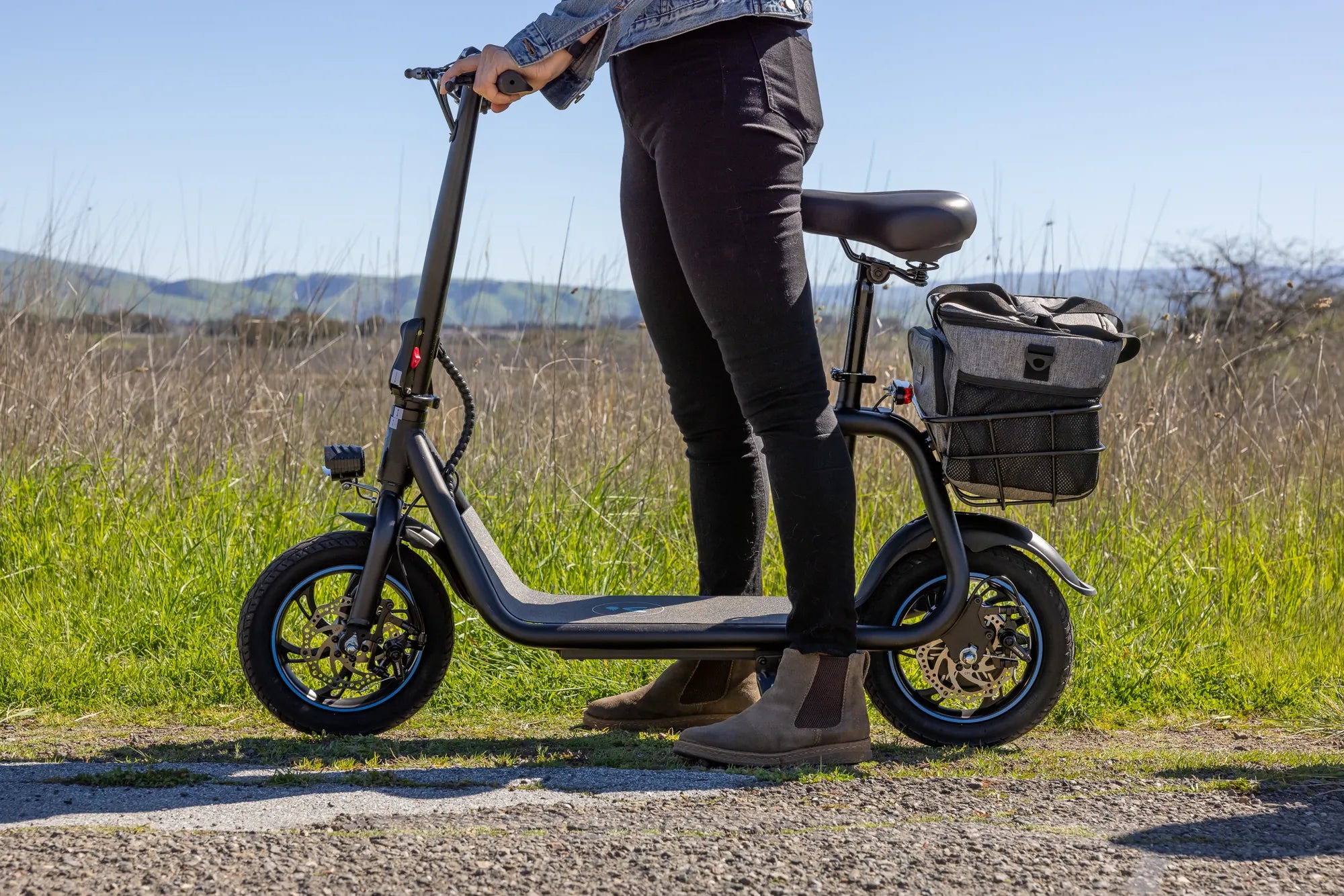
| Electric Moped-Style Scooter | Dedicated urban commuting, longer errands | 25-45 miles | 20-30 mph | Seat comfort, storage, higher power motor. Often requires registration/insurance. |
| Electric Motorcycle | High-speed commuting, suburban travel, enthusiast riding | 70-150+ miles | 55+ mph | Motorcycle license required, higher cost, advanced features (ABS, multiple riding modes). |
The Road Ahead: Technology and Infrastructure Trends
The evolution of electric motorcycles and scooters: the future of urban mobility is accelerating, driven by rapid technological advancements and supportive infrastructure development. These trends promise to make electric two-wheelers even more convenient, integrated, and powerful.
Battery Evolution and Swapping Networks
Battery technology is progressing toward higher energy density, meaning more range in a smaller, lighter pack. Faster charging systems are also emerging, reducing downtime. Perhaps the most transformative trend is the growth of battery-swapping networks, particularly in Asia and now piloting in Western cities.
These networks allow riders to exchange a depleted battery for a fully charged one in seconds at a kiosk, eliminating range anxiety and the need for private charging access—a major boon for apartment dwellers.
Smart Connectivity and Integrated Mobility
Modern e-rides are becoming connected devices. Smartphone apps provide real-time diagnostics, battery status, GPS tracking for anti-theft, and ride history. This connectivity is the foundation for integrating personal electric vehicles into broader Mobility-as-a-Service (MaaS) platforms.
Future apps could plan a seamless trip combining an e-scooter ride to a train station, the train journey, and a final leg on a shared e-bike, with a single payment and unlock system.
Making the Switch: A Practical Guide for New Riders
Adopting an electric two-wheeler is straightforward with a bit of preparation. Addressing legal, financial, and safety considerations upfront ensures a smooth and confident transition to this new mode of transport.
Understanding Local Laws and Licensing
Regulations are the most critical first step and vary wildly. Generally, lower-speed e-scooters (under 20 mph) may be classified similarly to bicycles, not requiring a special license, insurance, or registration. Higher-speed e-mopeds and e-motorcycles almost always require vehicle registration, insurance, and a motorcycle license or endorsement.
Always check your specific city, county, and state/provincial laws regarding where you can ride (bike lanes, roads, sidewalks), helmet requirements, age restrictions, and equipment mandates (lights, bells).
The Total Cost of Ownership Breakdown
Let's compare a typical scenario. The upfront cost of a quality commuter e-scooter from a brand like Gyroor is an investment, but the ongoing costs are minimal. A simplified 5-year comparison shows the stark difference.
- Electric Scooter: Upfront cost + ~$120 electricity + minimal maintenance.
- Compact Car: Car payment/ depreciation + $6,000+ in fuel + $2,000+ insurance + maintenance + parking fees.
- Public Transit: Annual passes can cost $1,000-$1,500 per year, with less flexibility.
Gear Up: Essential Safety Equipment
Your safety gear is non-negotiable, regardless of legal minimums. A certified helmet (DOT, ECE, or Snell) is the single most important piece of equipment. Full-face helmets offer the best protection.
Always wear durable gloves to protect your hands in a fall, a sturdy jacket (riding-specific or reinforced), long pants, and over-ankle footwear. Eye protection (a helmet visor or goggles) is essential to shield from debris. Be visible; consider adding reflective elements to your gear or bike.
Conclusion: Your Next Commute, Reimagined
The evidence is overwhelming. Electric motorcycles and scooters: the future of urban mobility offer a smarter, cleaner, and more efficient way to reclaim your time, your money, and your city. They are a practical solution to the complex problems of congestion and pollution, providing tangible personal benefits today. This isn't just about a new vehicle; it's about adopting a more intelligent and sustainable urban lifestyle.
Brands like Gyroor are pioneering this future by engineering vehicles that prioritize the rider's safety and reliability with features like UL-certified batteries, IPX5 water resistance, and robust warranties. The journey toward better urban mobility starts with a single charge. Explore how a thoughtfully designed electric scooter can transform your daily routine. Browse the full Gyroor collection at gyroorboard.com and take the first step toward a better commute.
Frequently Asked Questions (FAQ)
Q: How far can a typical electric scooter go on a single charge?
A: Real-world range for commuter models typically falls between 20-45 miles. This depends heavily on battery capacity (measured in Watt-hours), rider weight, terrain, temperature, and riding speed. Always consult real-world test reviews rather than just manufacturer estimates.
Q: Are electric scooters and motorcycles safe in the rain?
A: Models with a sufficient IP water resistance rating (IPX4 or higher) are designed for wet conditions. Gyroor's IPX5 rating, for example, means the scooter can handle water spray from all directions, making it safe for wet roads and light rain. However, avoid deep puddles, flooding, and torrential downpours, and always exercise increased caution on wet surfaces.
Q: What's more important, motor power or battery size?
A: They serve different primary functions. Battery size (Wh/Ah) is the fuel tank; it primarily determines your range. Motor power (W) is the engine; it determines acceleration, hill-climbing ability, and top speed. For urban use, prioritize a battery large enough for your round-trip commute, paired with a motor (500W+) that provides confident acceleration in traffic.
Q: Do I need a special license to ride an electric scooter?
A: Licensing laws vary dramatically by jurisdiction. In many areas, lower-speed e-scooters (often capped at 20 mph) do not require a motorcycle license. Higher-speed e-mopeds and e-motorcycles almost always do. It is your responsibility to check the specific laws in your city, county, and state/province before riding.
Q: How do I maintain my electric scooter's battery for maximum lifespan?
A: For lithium-ion batteries, avoid consistently draining it to 0% or charging to 100% for daily storage. The ideal practice is to keep it between 20% and 80% charge. Store it in a cool, dry place, away from extreme temperatures. Use only the manufacturer-provided charger. Quality batteries, like Gyroor's UL-certified packs, are tested for 500+ cycles, equating to years of reliable use with proper care.
Best Electric Scooters: Top Picks for Every Rider in 2024
Electric Scooters for Adults with Seat: The Ultimate Guide to Comfort and Convenience