



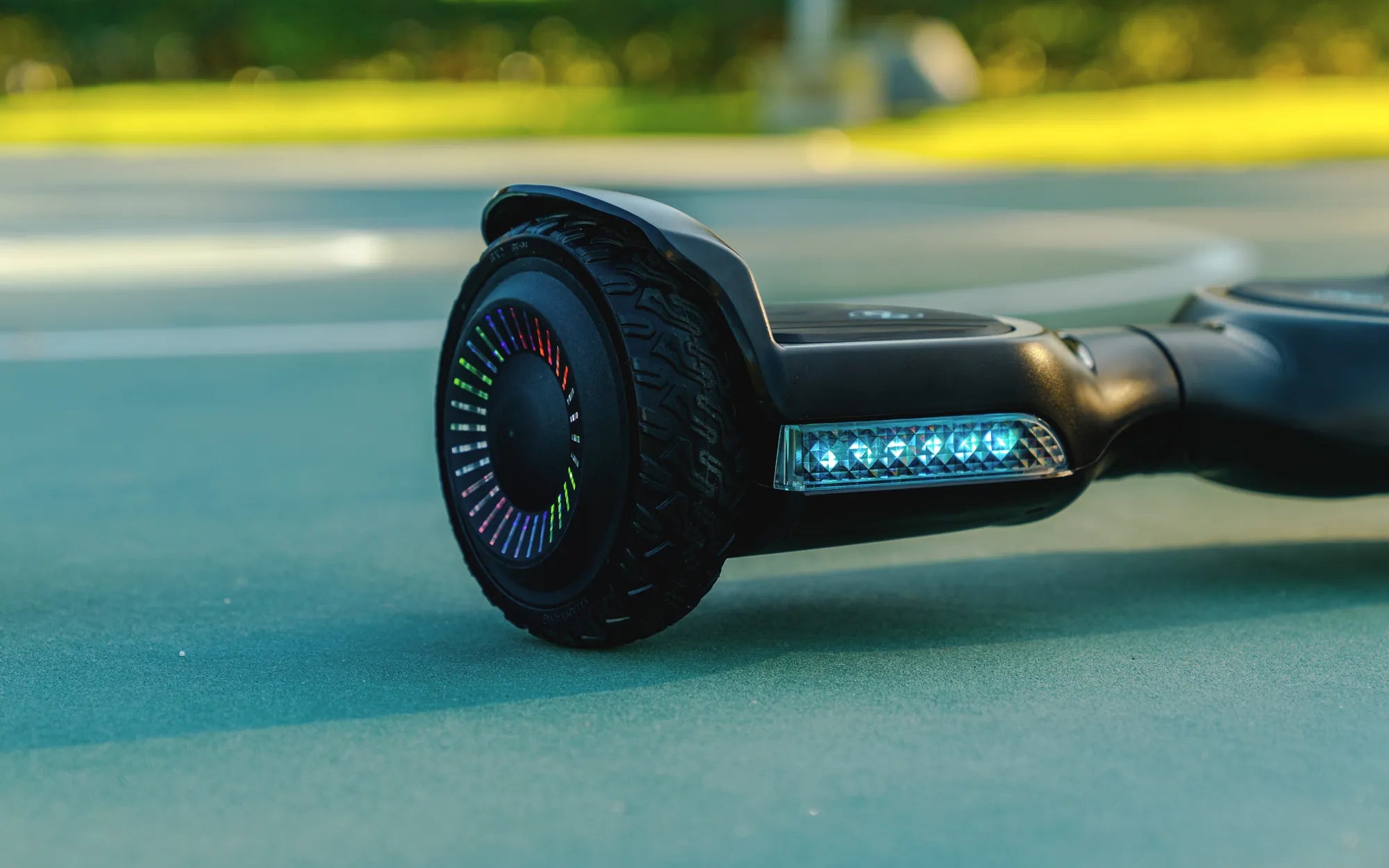
Choosing your child's first electric scooter is a significant decision that balances excitement with safety. A 10 mph electric scooter for kids represents the ideal sweet spot, offering thrilling independence while maintaining a manageable, parent-approved speed limit. This guide cuts through the marketing noise to deliver the facts, data, and safety benchmarks you need. You'll learn how to evaluate critical components, understand why certifications matter, and discover the features that ensure years of reliable fun. We'll use the engineering standards of leading brands like Gyroor—trusted by over 100,000 riders—as a benchmark for what to look for in any model.
Why a 10 mph Electric Scooter is the Perfect Choice for Kids
A 10 mph top speed is not arbitrary; it's a carefully considered threshold for developmental readiness. For children typically aged 8 to 12, this speed provides a tangible sense of adventure and autonomy without exceeding their reaction time capabilities. It's fast enough to feel exhilarating on a bike path or sidewalk but slow enough for a parent to jog alongside comfortably.
Psychologically, mastering a 10 mph electric scooter builds confidence and coordination. Physically, it demands and develops core strength, balance, and spatial awareness. This speed class effectively bridges the gap between slower, toy-grade scooters and faster, more complex models designed for teenagers and adults. It's a training ground for responsible riding.
From a safety and regulatory perspective, 10 mph often falls within acceptable limits for many local ordinances governing motorized scooters on sidewalks or bike paths. It allows kids to keep pace with a parent cycling beside them, promoting family activities. Furthermore, scooters capped at this speed typically utilize motors and batteries scaled appropriately for a child's weight, ensuring optimal performance and range.
Ultimately, a 10 mph electric scooter for kids is about controlled fun. It provides the freedom kids crave within the boundaries parents require. The key is ensuring the scooter's construction and features are robust enough to make that 10 mph ride both safe and durable, which leads us to the most critical part of your evaluation.
Key Safety Features Every Parent Must Look For
Safety is the non-negotiable foundation of any kids' vehicle. Beyond the speed cap, specific engineering and design choices separate a trustworthy product from a potential hazard. These features should be your primary filter when comparing models.
UL-Certified Batteries: The #1 Priority
The battery is the heart of the scooter and its most critical safety component. A UL 2271 certification is an absolute must. This independent standard tests the lithium-ion battery pack for electrical, mechanical, and environmental safety, including overcharge, short circuit, crush, and drop tests.
Uncertified batteries are a significant fire risk. They may use lower-quality cells, lack proper internal management systems (BMS), and have inadequate insulation. A UL-certified battery, like those used in all Gyroor scooters, has undergone rigorous testing for 500+ charge cycles, ensuring long-term stability. This certification is your single best guarantee against thermal runaway and battery failure.
Speed Modes and Parental Controls
A simple top-speed limit isn't enough. Look for scooters with multiple speed modes (e.g., 5 mph / 7 mph / 10 mph). This allows a child to start in a beginner mode, building skills and confidence before unlocking higher speeds. Parental control is essential for maintaining this structure.
Effective controls can be physical or digital. A physical key that must be inserted to activate the highest speed mode is a simple, foolproof method. Some models offer app-based controls via Bluetooth, allowing parents to set a speed limit or a geofence remotely. The goal is to give you, the parent, definitive oversight over the scooter's performance.
Braking System and Stability
Stopping power is as important as go-power. For kids, a combination braking system is often best. An electronic (e-brake) or disc brake on the front wheel provides strong, responsive stopping, while a rear fender or foot brake offers a simple, mechanical backup. This redundancy is key for safety.
Stability is determined by wheel size, deck design, and overall geometry. Larger wheels (8-inch or more) roll over cracks and debris more smoothly than tiny 5-inch wheels. A wide, textured deck gives a secure footing. A low center of gravity, achieved by placing the battery low in the deck, prevents tipping during turns. Always check the scooter's maximum weight limit to ensure a buffer beyond your child's current weight.
The Gyroor Advantage: Built for Real-World Riding
While the principles above apply universally, examining how a trusted brand implements them provides a practical blueprint. Gyroor designs its kids' electric scooters with real-world use in mind, prioritizing certified safety and durable construction that stands up to daily adventures.
Every component is selected to meet a higher standard. From the aircraft-grade aluminum alloy frame to the UL-certified battery packs, the focus is on reliability. This approach results in a product that performs consistently, ride after ride, which is crucial for maintaining safety over the scooter's lifespan. It’s engineering that respects the rigors of a child's play.
Weather-Ready with IPX5 Water Resistance
Kids ride in all conditions, and a scooter should be prepared. An IPX5 water-resistance rating is a significant durability feature. The "IP" stands for Ingress Protection, and "X5" means the scooter can withstand water jets from any direction.
In practical terms, IPX5 protection means the scooter's electrical components are sealed against splashes from puddles, wet roads, and light rain. It won't fail if caught in a sudden drizzle. This protection extends the scooter's life by preventing corrosion and short circuits caused by moisture, a common point of failure in lesser models. It allows for more spontaneous, worry-free fun.
Warranty and Support You Can Trust
A comprehensive warranty is a brand's promise. Gyroor backs its kids' scooters with a 1-year warranty on the vehicle, motor, and battery. This coverage demonstrates confidence in their product's quality and provides parents with long-term peace of mind.
Accessible customer support is equally important. The ability to speak with a knowledgeable support team in your region for troubleshooting or parts ensures your investment is protected. This level of service stands in stark contrast to anonymous brands that offer no post-purchase support, turning a minor issue into a major frustration.
Beyond Speed: Practical Factors for a Great Riding Experience
Once core safety is assured, several practical specifications determine daily enjoyment, convenience, and value. These factors influence how often and how happily the scooter will be used.
Range, Weight, and Portability
The advertised range is often a best-case scenario. For a 10 mph kids' scooter, a real-world range of 6-10 miles per charge is typical, depending on rider weight, terrain, and use of hills. This is ample for neighborhood adventures and trips to the park. Charge time usually falls between 3-5 hours.
Scooter weight directly impacts portability. A model weighing 15-20 lbs is light enough for most kids to carry up a few stairs or for a parent to lift into a car trunk. A reliable folding mechanism with a secure latch is essential for compact storage and transport. The goal is a design that doesn't become a burden.
Tire Type: Air vs. Airless (Solid)
Tire choice involves a trade-off between comfort and maintenance. Pneumatic (air-filled) tires offer superior shock absorption, providing a smoother ride over bumps and cracks. However, they are susceptible to punctures and require occasional air checks.
Airless or solid honeycomb tires are essentially puncture-proof and maintenance-free. They are more durable in this regard but can provide a slightly firmer, less cushioned ride on very rough surfaces. For most suburban sidewalks and paved paths, high-quality airless tires from a brand like Gyroor offer an excellent balance of convenience and performance.
Lighting and Visibility
Safety extends to being seen. Integrated LED lighting is a crucial feature. A bright front headlight illuminates the path ahead in low-light conditions, while a rear brake light alerts others when the child is slowing down.
Additional visibility comes from reflective decals or strips on the deck and stem. These reflect car headlights at dusk or dawn. While riding at night should be avoided for young children, these features are vital for those late afternoon rides when the sun begins to set, making the rider visible from all angles.
Parent's Checklist: Choosing the Right 10 mph Electric Scooter
Use this actionable checklist to compare models and make a confident decision. It synthesizes all critical data points into a simple evaluation framework.
| Feature Category | What to Look For | Why It Matters |
|---|---|---|
| Core Safety | UL 2271 Certified Battery, Multiple Speed Modes, Reliable Brakes (Dual Preferred), Sturdy Frame | Prevents fire hazard, allows skill progression, ensures stopping power, maintains structural integrity. |
| Durability | IPX5 Water Resistance, Quality Tire Construction (Airless or Pneumatic), Robust Folding Mechanism | Protects against weather and puddles, ensures long-lasting ride quality, secures scooter when folded. |
| Ride Quality | Appropriate Weight Limit (e.g., 150 lbs+), Wide Anti-Slip Deck, Wheel Size (8" or larger) | Provides growth room, ensures secure footing, improves stability and ride smoothness. |
| Convenience & Value | Manageable Weight (~18 lbs), Realistic Range (8+ miles), 1-Year+ Comprehensive Warranty | Easy for child to maneuver, supports extended play, protects your investment with support. |
Frequently Asked Questions (FAQs)
Q1: Is 10 mph too fast for a 10-year-old?
No, 10 mph is generally considered an appropriate and safe top speed for a responsible 10-year-old. With proper safety gear, supervised practice in a safe area, and the use of beginner speed modes, most children this age can develop the coordination and judgment to handle this speed safely. It's crucial to match the scooter to the child's maturity and experience level.
Q2: How long does the battery take to charge, and how long does it last?
A typical 10 mph scooter with a UL-certified lithium-ion battery takes 3 to 5 hours for a full charge. Battery lifespan is measured in charge cycles. A quality battery like Gyroor's, tested for 500+ cycles, can last for several years of regular use before its capacity noticeably diminishes, assuming proper care (avoiding full discharges, storing in moderate temperatures).
Q3: Can the scooter handle hills or rough pavement?
Most 10 mph scooters are designed for mild inclines commonly found in neighborhoods. The motor's wattage (look for 150W-250W) and the child's weight determine hill-climbing ability. For rough pavement, larger wheels (8-inch+) and either pneumatic or high-quality airless tires will provide a significantly smoother and more stable ride than small, hard plastic wheels.
Q4: What safety gear is absolutely necessary?
A properly fitted bicycle helmet is non-negotiable and should be worn on every ride. We strongly recommend knee pads and elbow pads, especially during the learning phase. Wrist guards are also an excellent idea, as falls often involve putting hands out to brace. High-top shoes provide better ankle support than sandals or flip-flops.
Q5: Where is it safe and legal for my child to ride?
Laws vary by city and state. Generally, sidewalks (while yielding to pedestrians), dedicated bike paths, and parks are safe starting points. Always check local ordinances regarding motorized scooters on public paths. Avoid streets with car traffic, steep hills, wet or sandy surfaces, and crowded areas. Designated, traffic-free areas like empty parking lots are ideal for initial practice.
Conclusion: Empowering Fun, Safely
Selecting the right 10 mph electric scooter for your child is an investment in their joy and development. By prioritizing verified safety certifications like UL for the battery, demanding robust construction with features like IPX5 water resistance, and choosing a brand that stands behind its product with a solid warranty, you create a framework for safe adventure. This guide has equipped you with the data-driven criteria to look beyond marketing claims and evaluate the engineering that matters. A well-chosen scooter becomes a source of confidence, outdoor activity, and family fun for years. For a range of kids' electric scooters that embody these principles of safety, durability, and controlled performance, browse the full Gyroor collection at gyroorboard.com.
How to Ride a Hoverboard for the First Time: A Beginner's Guide to Mastering Your First Ride
2 Wheeler Balancing Scooter: The Future of Personal Urban Mobility