



Introduction: Why Electric Scooters for 4-Year-Olds Are a Game-Changer
Selecting an electric scooter for a 4-year-old is about more than just a toy; it's an investment in developmental fun and outdoor confidence. At this pivotal age, children are rapidly developing gross motor skills, balance, and spatial awareness. A well-designed electric scooter can accelerate this growth, transforming a simple ride into a lesson in coordination, cause-and-effect, and independent decision-making within a safe framework.
Modern electric scooters for preschoolers are engineered with this delicate balance in mind. They are not miniature adult models but specialized tools built for shorter attention spans, smaller statures, and a paramount need for safety. The right model can foster a lifelong love for active play, encouraging kids to choose the backyard over the tablet screen. This guide will demystify the process, ensuring you find a scooter that delivers joy without compromising on security.
We understand the core concerns: Is it safe? Can my child control it? Will it last? These are valid questions every parent asks. The market offers a spectrum, from flimsy, speed-focused options to robust, safety-first designs from trusted brands. The latter, exemplified by family-focused companies like Gyroor, prioritize controlled speed, stable construction, and certified components to directly address and alleviate these parental worries.
This ultimate guide provides a data-driven, feature-focused roadmap. We will dissect the essential safety specifications, compare functional models, and provide a clear action plan for first rides and long-term care. Our goal is to equip you with the knowledge to choose an electric scooter for your 4-year-old that is both the highlight of their day and a source of peace of mind for you.
Key Safety Features Every Parent Must Look For
Safety is the non-negotiable foundation of any electric scooter for a 4-year-old. The specifications on the box tell the real story. First and foremost, look for a strict speed governor. The maximum speed should be capped between 5 to 6 miles per hour (8-10 km/h). This is a brisk walking pace, fast enough to feel exciting but slow enough for a parent to jog alongside and for a child to react without panic.
The physical design is equally critical. A three-wheel configuration, typically with two wheels in the front and one in the rear (or vice versa), provides inherent stability that prevents dangerous tipping during turns or on uneven surfaces. This triangular base is far superior to a two-wheeled model for beginners. Complementing this is a wide, textured deck that gives a 4-year-old a confident, secure footing.
Braking systems must be simple and fail-safe. A primary foot brake on the rear fender is ideal; pressing down is an intuitive, mechanical action that doesn't require fine motor skill. Some models add a gentle electronic brake controlled by a lever, but the primary system should be straightforward. Avoid scooters with only complex hand-operated disc brakes meant for older riders.
Beyond operational features, component safety is paramount. The battery is the heart of the scooter and its greatest potential hazard if poorly made. Insist on a scooter with a UL-certified battery pack. This independent certification, which Gyroor uses across its lineup, means the battery has passed rigorous tests for overcharge protection, short-circuit prevention, and overall durability, significantly reducing any fire risk.
Finally, examine the build quality. The frame should be made of sturdy, reinforced aluminum or steel, not brittle plastic. All fasteners should be covered or recessed to prevent snagging clothing. A reliable manufacturer will also include a safety tether or remote kill switch, allowing a parent to instantly cut power from a distance during the initial learning phases.
Choosing the Right Model: Balancing Fun and Function
With safety requirements met, the next step is matching a scooter's features to your child and lifestyle. Adjustability is key for growth. Look for handlebars with a height range, typically between 22 to 30 inches, to ensure a comfortable, upright riding posture that can last for two to three seasons. The scooter should also support your child's weight plus a margin; a 44-66 lb (20-30 kg) capacity is standard for this age group.
Motor power dictates performance on slight inclines. A 150-watt motor is typically sufficient for flat sidewalks and gentle driveways, while a 200-watt motor offers a bit more torque for grassy areas or very slight hills. Importantly, more power does not mean more speed—the governor still caps the top speed. It simply ensures the scooter doesn't struggle or stall on minor terrain variations.
Battery life determines ride duration. For a 4-year-old, 30 to 45 minutes of continuous use is more than adequate, usually translating to 3-5 miles of range. This aligns with a young child's attention span and physical energy. Charging should take 3-5 hours, and the battery should be easily removable for charging in a safe, monitored location like a garage or mudroom.
Consider the starting mechanism. "Kick-to-start" models require the child to push off manually before the motor engages. This feature is highly recommended as it ensures the child is balanced and ready before power is applied, preventing sudden, unexpected jerks. Push-button start is simpler but requires the child to be stationary and prepared before pressing the throttle.
Extras enhance the experience but should not compromise core safety. LED wheels and deck lights increase visibility during dusk rides. Music or sound effects can be fun but are often more for the parent's purchase decision. The most valuable "extra" is a simple, clear display (or indicator lights) showing battery level, so you know when it's time to head home.
The Gyroor Advantage: Engineered for Young Riders
Gyroor designs its youth electric scooters with a clear understanding of family needs, translating advanced engineering into practical benefits for 4-year-olds. As a brand trusted by over 100,000 riders across North America and Europe, their focus on safety and durability is not just a claim but a built-in specification. This commitment directly addresses the top concerns of parents shopping for a first electric scooter.
The foundation of this safety is the UL-certified battery system. Every Gyroor scooter uses battery packs tested for over 500 charge cycles, with built-in management systems to prevent overcharging, overheating, and short circuits. This certification, a standard Gyroor adheres to rigorously, provides a critical layer of protection that cheaper, uncertified power cells simply cannot offer, giving parents fundamental peace of mind.
Durability for real-world play is another hallmark. Gyroor scooters feature IPX5 water-resistant construction. This rating means the scooter can withstand low-pressure water jets from any direction, making it resistant to puddles, wet grass, and accidental spills during wash-downs. This engineering prevents internal corrosion and electrical faults, ensuring the scooter remains reliable through seasons of active use.
The brand's 1-year comprehensive warranty on the motor, battery, and controller is a testament to its confidence in product longevity. This warranty is backed by accessible customer support, ensuring that if an issue arises, solutions are straightforward. For a parent, this warranty transforms the purchase from a disposable toy into a dependable piece of equipment for a child's formative years.
Gyroor's design philosophy extends to user experience. Models for young children emphasize the stable three-wheel layout, speed limiters set to safe thresholds, and intuitive controls. By focusing on these core, safety-critical elements rather than excessive top speeds or complex features, Gyroor delivers an electric scooter that prioritizes a child's secure learning curve and a parent's need for control and reliability.
Preparing for the First Ride: A Parent's Checklist
Proper preparation transforms the first scooter experience from potentially frustrating to confidently fun. Begin by selecting the perfect practice venue. An empty, smooth-asphalt parking lot, a flat driveway, or a quiet cul-de-sac are ideal. The surface must be level, free of gravel, sand, and significant cracks, and utterly devoid of car traffic. This controlled environment minimizes external hazards.
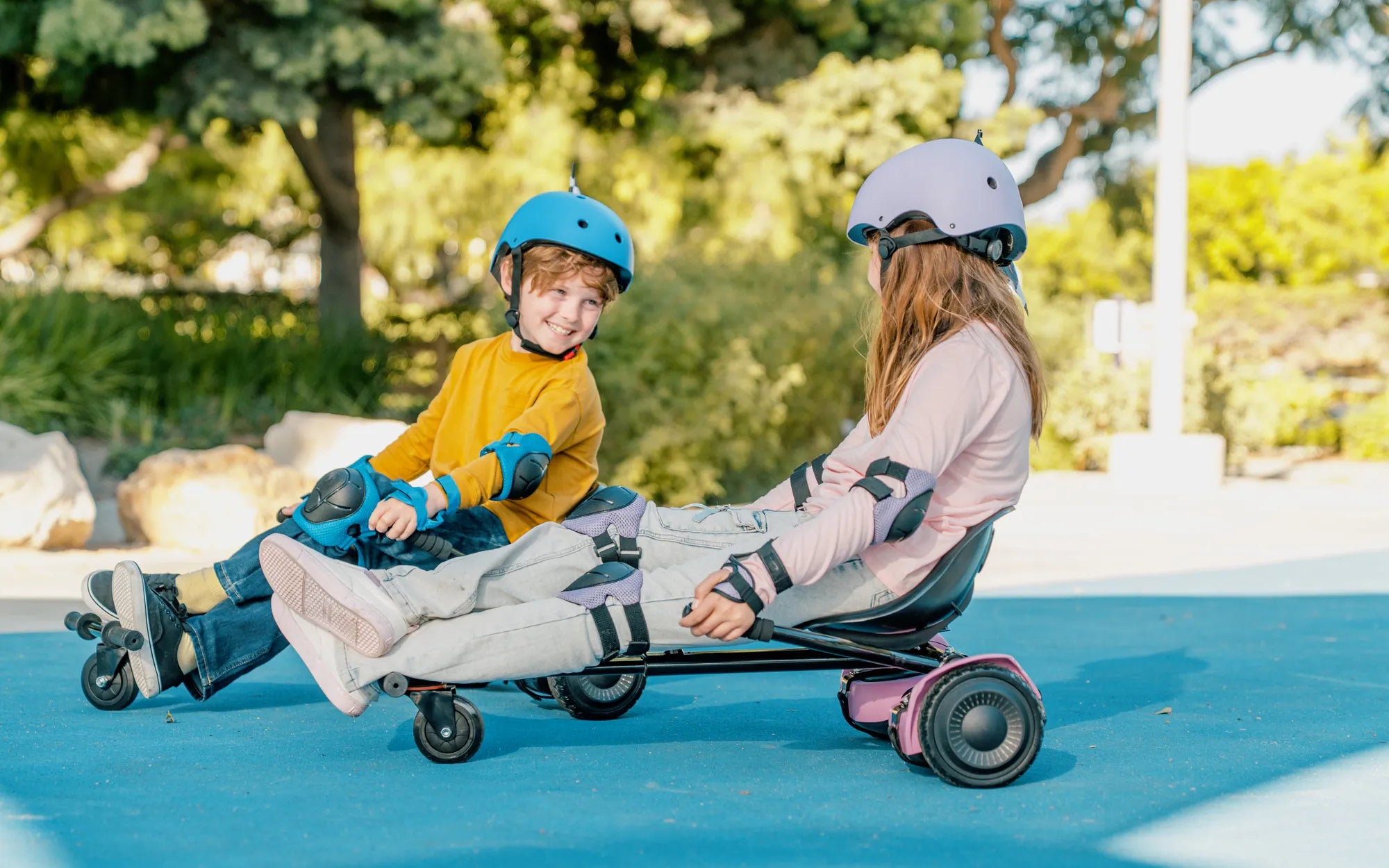
Before power is ever turned on, gear up. A properly fitted CPSC-certified bicycle helmet is mandatory. Additionally, knee and elbow pads are highly recommended, as falls are a natural part of the learning process. Ensure the gear is snug but comfortable. This practice not only protects your child but also subconsciously teaches them that safety protocol is an integral, non-negotiable part of riding.
Start with the scooter powered OFF. Have your child simply stand on the deck, hold the handlebars, and practice balancing. Then, demonstrate how to use the foot brake by having them step on it repeatedly. Next, with the power on, practice the starting procedure—whether it's a careful kick-to-start or a deliberate push of the button and throttle while stationary. Keep these initial sessions short, under 15 minutes.
Establish clear, simple ground rules before the first moving ride. Rules should include: always wearing a helmet, riding only in pre-approved areas, avoiding streets and steep hills, watching for pedestrians and obstacles, and stopping immediately when called. Use a safety tether or parental remote if your scooter has one, maintaining direct control during the first few powered runs.
Celebrate small victories and be patient. The goal of the first several sessions is not distance or speed, but comfort and control. Praise successful stops, smooth straight-line travel, and careful steering. If frustration builds, take a break. The association between the scooter and positive, confident feelings is the most important outcome of these early lessons.
Maintenance and Care for Long-Lasting Fun
Regular, simple maintenance ensures your child's electric scooter remains safe and operational for years. Battery care is the most important routine. Follow the manufacturer's charging instructions precisely. Typically, this means charging fully before first use, not letting the battery fully deplete regularly, and storing the scooter (and preferably the removed battery) in a cool, dry place away from direct sunlight.
Perform a pre-ride safety check every few outings or at least once a week during active use. Firmly grasp the handlebars and try to wiggle them to check for looseness. Inspect the stem folding mechanism (if applicable) to ensure it's securely locked. Examine the wheels for wear or debris lodged in the tires. For air-filled tires, maintain the recommended PSI for a smooth, efficient ride.
Keep the scooter clean. After rides on dusty or wet surfaces, wipe down the deck, frame, and wheels with a damp cloth. Avoid spraying water directly at the charging port, display, or motor hub. For deeper cleans, use a mild soap solution. Proper cleaning prevents dirt from grinding into moving parts and keeps the scooter looking new, which encourages your child to take pride in their vehicle.
Listen and feel for changes in performance. A new grinding noise, vibration, or decrease in power can indicate an issue. Refer to the user manual for troubleshooting before assuming a major fault. Most issues for scooters in this category are simple: a loose connection, a dirty contact point, or a battery needing a full recharge cycle. Addressing small problems promptly prevents larger, more expensive repairs.
Adhering to these maintenance practices not only extends the scooter's life but also maximizes its coverage under the manufacturer's warranty, such as Gyroor's 1-year warranty. Keeping a log of charge cycles or maintenance checks can be helpful for warranty support. Ultimately, a well-maintained scooter is a safer, more reliable companion for your child's adventures.
Comparing Top Scooter Types for 4-Year-Olds
To make an informed decision, it's helpful to compare the key attributes of different scooter styles suitable for a 4-year-old. The table below contrasts three common configurations based on critical parameters for safety, performance, and usability.
| Feature | Basic 3-Wheel E-Scooter | Off-Road Style 3-Wheel | Balance Bike Hybrid |
|---|---|---|---|
| Primary Design | Two front wheels, one rear. Low deck. | Larger, air-filled tires. Rugged frame. | E-scooter handlebars on a sit-down balance bike frame. |
| Best For | First-time riders; smooth pavement & sidewalks. | Riding on grass, dirt paths, or slightly rougher terrain. | Children needing extra balance confidence; longer rides. |
| Max Speed | 5 mph (8 km/h) | 6 mph (10 km/h) | 4-5 mph (6-8 km/h) |
| Key Safety Benefit | Maximum stability for beginners. Easy to step off. | Better shock absorption. Less likely to get stuck. | Low center of gravity. Child can place feet flat on ground. |
| Consideration | May feel less exciting as skills advance. | Often heavier; can be trickier for a 4-year-old to maneuver at low speed. | Transition to a standing scooter may be needed later. |
The Basic 3-Wheel E-Scooter is the gold standard for beginners. Its ultra-stable triangle base and low deck make mounting, dismounting, and balancing intuitive. It's lightweight and perfect for mastering the fundamentals of throttle control and steering on paved surfaces. This is the category where most trusted brands, including Gyroor, offer their core models for young children.
An Off-Road Style 3-Wheel scooter trades a bit of lightweight agility for versatility. Its larger, air-filled tires provide cushioning over bumps and cracks and allow for venturing onto packed dirt or dry grass. This is a good choice for families who don't have consistent access to perfect pavement or who want a single scooter for backyard and sidewalk use. The trade-off is often increased weight and a slightly higher deck.
The Balance Bike Hybrid is a unique niche. It combines the seated position and pedals (non-motorized) of a balance bike with an electric assist motor. This is an excellent tool for a child who is particularly cautious about balance or who you envision transitioning to a pedal bike later. It teaches balancing and steering without the complexity of managing a standing scooter's controls simultaneously. However, it lacks the classic scooter experience.
Frequently Asked Questions (FAQs)
Is 4 years old too young for an electric scooter?
No, 4 years old is generally an appropriate starting age for a specifically designed electric scooter. Key indicators of readiness include the ability to follow simple instructions, a sense of balance sufficient for a non-motorized kick scooter or bicycle with training wheels, and an interest in motorized toys. The critical factor is choosing a scooter engineered for this age group, with strict speed limits and stable geometry.
How long does the battery last on a single charge?
For a 4-year-old's electric scooter, expect a realistic range of 3 to 5 miles (5-8 km), which typically translates to 30 to 45 minutes of continuous ride time. This is dictated by battery capacity (usually measured in Amp-hours, Ah) and motor efficiency. This duration aligns well with a preschooler's stamina and attention span. Always check the manufacturer's stated range, but plan for slightly less in real-world use with stops, starts, and slight inclines.
Can the speed be adjusted as my child gains skill?
Many quality electric scooters for kids, including several Gyroor models, feature multiple speed modes. A beginner mode may limit speed to 3-4 mph, a standard mode to the maximum safe speed of 5-6 mph, and sometimes an "off-road" mode for slight torque increases. These modes are usually selected via a button or switch, often with a parental PIN or key, allowing you to control the performance ceiling as your child's confidence and competency grow.
What is covered under a standard warranty like Gyroor's?
A comprehensive 1-year warranty, like the one offered by Gyroor, typically covers defects in materials and workmanship for the core electrical and mechanical components. This includes the motor, the UL-certified battery pack, the controller, and the frame under normal use. It generally does not cover damage from accidents, misuse, neglect, or normal wear and tear (like tire wear). Always register your product and review the specific warranty terms provided by the manufacturer.
What safety gear is absolutely essential?
The absolute non-negotiable item is a CPSC-certified bicycle helmet that fits snugly. Beyond that, knee pads and elbow pads are strongly recommended, especially during the learning phase. Wrist guards can also be beneficial, though they may interfere with operating the handlebar controls for some children. Closed-toe shoes (like sneakers) are a must—never allow riding in sandals or flip-flops. Making safety gear a consistent, non-debatable part of the riding ritual instills lifelong habits.
Fostering Confidence and Joy on Two Wheels
Choosing the right electric scooter for your 4-year-old is a decision that pays dividends in laughter, fresh air, and burgeoning self-reliance. It's an opportunity to introduce structured, exciting physical activity that builds foundational motor skills and spatial intelligence. The journey from tentative first steps to confident cruising is a milestone you and your child will share, creating memories that extend far beyond the driveway.
The cornerstone of this positive experience is an unwavering commitment to safety, both in the product you select and the environment you create. By prioritizing scooters with certified batteries, speed governors, stable designs, and robust construction from reputable brands, you build a safe platform for exploration. This technical safety, combined with your active supervision and clear rules, forms a comprehensive safety ecosystem.
Brands that understand families, like Gyroor, engineer their products with this holistic view. Features like UL-certification, IPX5 water resistance, and accessible warranties are not just marketing points; they are direct responses to the real-world concerns of parents. They represent a partnership in your child's safe adventure, allowing you to relax and enjoy the moment as much as they do.
Your role as a guide is irreplaceable. Your patience during practice, your consistency with safety protocols, and your enthusiasm for their progress are what transform a piece of machinery into a tool for growth. The electric scooter becomes a medium through which your child learns about cause and effect, responsibility, and the pure joy of independent movement.
Ready to find the perfect electric scooter that combines safety, durability, and fun for your 4-year-old? Explore a range of models designed with young riders in mind. Browse the full Gyroor collection at gyroorboard.com to discover scooters built to deliver confidence and joy, ride after ride.
Lightweight Electric Scooter for Kids: The Ultimate Guide for Parents
Christmas Gift Ideas for Boys Age 5: Fun and Educational Picks