



Introduction: Choosing the Right Electric Scooter for Your Child
Selecting an electric scooter for kids age and ability is a crucial decision for modern parents. These vehicles offer more than just fun; they promote outdoor activity, independence, and the development of coordination and responsibility. However, the key to a positive experience lies in matching the scooter's specifications to your child's developmental stage. This ultimate guide will navigate you through age appropriateness, essential safety certifications, performance features, and practical usage tips to ensure you choose a scooter that delivers thrilling adventures without compromising on safety.
Understanding Age and Developmental Appropriateness
While age is a primary starting point, it should be considered alongside a child's individual maturity, coordination, and judgment. A scooter that is too powerful or complex can be intimidating and dangerous, while one that is too basic may be quickly outgrown. Generally, electric scooters are suitable for children aged 6 and up, with categories often segmented for ages 6-8, 9-12, and 13+.
For younger riders (6-8), look for models with very conservative speed limits, intuitive controls, and a low deck for easy mounting. Pre-teens (9-12) can typically handle more power and features, provided they have demonstrated responsible riding habits. Teenagers (13+) may seek performance closer to adult models, but parental oversight on speed and usage area remains vital.
Key Developmental Milestones for Riding
Before purchasing, assess your child's readiness. Essential skills include the ability to maintain balance on a two-wheeled device (often learned on a bicycle or kick scooter), understand and follow safety rules, and demonstrate quick physical reaction times, especially for braking. A child who can judge distances and anticipate obstacles is better prepared for the dynamic environment of riding an e-scooter.
Essential Safety Features and Certifications
Safety is the non-negotiable foundation of any kids' electric scooter purchase. Beyond the basic construction, specific certifications and design features are critical indicators of a product's safety pedigree. Prioritizing these elements significantly reduces the risk of accidents and malfunctions.
The Importance of UL Certification and Battery Safety
The battery is the heart of an electric scooter and its most critical safety component. UL 2272 certification is the gold standard, indicating the battery pack has passed rigorous tests for electrical, mechanical, and environmental safety, drastically reducing fire risk. Reputable brands like Gyroor use UL-certified lithium-ion battery packs, tested for over 500 charge cycles, ensuring long-term reliability and peace of mind for parents.
Braking Systems: Disc vs. Electronic vs. Foot Brakes
Effective braking is paramount. Most kids' scooters use a combination of systems. Electronic (E-brakes) engage the motor to slow down and are often paired with another physical brake. Disc brakes offer strong, consistent stopping power, ideal for higher speeds or slight inclines. Foot fender brakes (pressing down on the rear fender) are simple and reliable but may be less effective at higher speeds or in wet conditions. A dual-brake system (e.g., electronic + disc or foot brake) provides essential redundancy.
Speed Limiters and Parental Controls
Adjustable speed modes are a crucial safety feature for an electric scooter for kids age 6 to 12. Beginner modes typically limit speed to 5-7 mph (8-11 km/h), allowing a child to gain confidence. Intermediate and advanced modes can unlock speeds up to 10-15 mph (16-24 km/h) as skills improve. These controls, often managed via a simple button or app, allow the scooter to grow with the child, extending its usable life and ensuring it remains age-appropriate.
Key Performance and Durability Factors
Once safety is assured, performance features determine the scooter's capability, range, and longevity. These factors impact where and how long your child can ride, contributing directly to the value and enjoyment of the product.
Motor Power and Terrain Handling
Motor wattage, typically ranging from 100W to 250W for kids' models, determines hill-climbing ability and acceleration. A 100-150W motor is sufficient for flat sidewalks for younger, lighter riders. For older children, neighborhoods with gentle inclines, or occasional grass or packed dirt paths, a 200-250W motor provides necessary torque. Always consider your child's weight and local terrain when evaluating motor power.
Battery Life and Range: Setting Realistic Expectations
Manufacturer range claims are based on ideal conditions. Real-world range is affected by rider weight, terrain, temperature, and speed mode. A scooter advertised for 10 miles may reliably provide 6-8 miles for a child. Teach your child to monitor battery indicators and establish a routine of charging after use. For most kids, a range of 6-10 miles is ample for daily adventures.
Build Quality: IPX5 Water Resistance and Warranty
Durability is tested by daily use. An IPX5 water-resistance rating means the scooter can withstand water jets from any direction, making it safe to ride through puddles and in light rain. This protects internal electronics. Additionally, a robust frame made from aerospace-grade aluminum alloy ensures lightness and strength. A comprehensive warranty, such as Gyroor's reliable 1-year warranty, protects your investment and signals manufacturer confidence in their product's build quality.
Matching Scooter Specs to Your Child's Profile
Use the following table as a quick-reference guide to align key specifications with your child's age, size, and riding environment. This data-driven approach simplifies the decision-making process.
| Age & Skill Profile | Recommended Max Speed | Motor Power | Key Features | Best For |
|---|---|---|---|---|
| Ages 6-8 (Beginner) | 7-10 mph | 100-150W | Speed limiter, wide deck, low height, dual braking | Flat sidewalks, supervised park paths |
| Ages 9-12 (Intermediate) | 10-15 mph | 150-250W | 2-3 speed modes, brighter lights, pneumatic tires | Neighborhoods with mild hills, bike lanes |
| Ages 13+ (Advanced) | 15-20 mph | 250W+ | Suspension, longer range, enhanced braking | Longer commutes, varied terrain (with caution) |
The Non-Negotiables: Helmet and Protective Gear
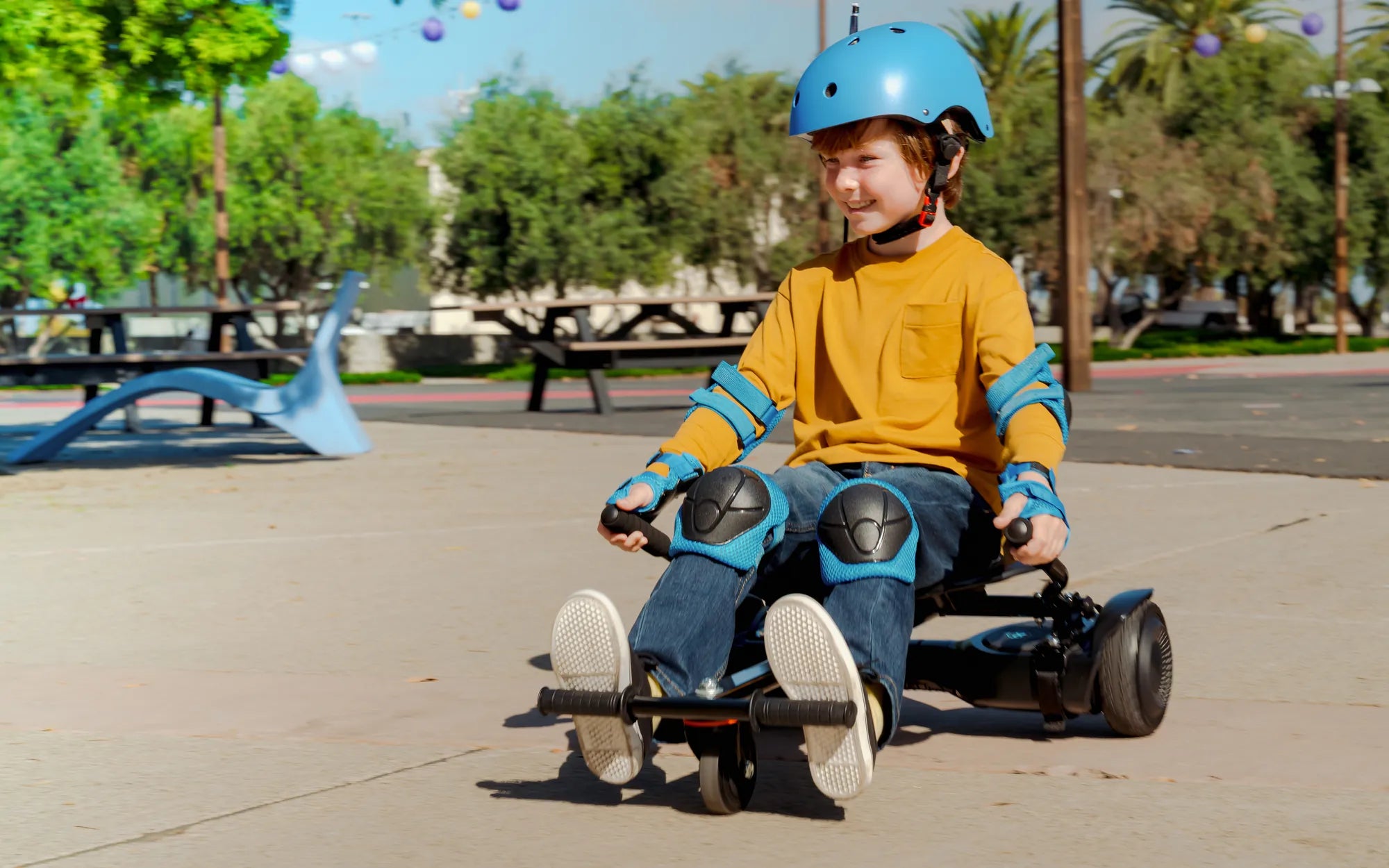
An electric scooter is incomplete without proper safety gear. A CPSC-certified helmet is an absolute requirement for every ride. It must fit snugly, sitting level on the head and covering the forehead. Elbow pads, knee pads, and gloves are highly recommended, especially for beginners. This gear can prevent the most common injuries from falls and should be treated as part of the essential scooter package.
Rules of the Road and Practice Routines
Establish clear rules before the first ride. Always check local regulations regarding where e-scooters are permitted (sidewalks, bike paths, or parks). Teach your child to always yield to pedestrians, use hand signals for turning, and avoid roads with car traffic. Start with supervised practice sessions in empty parking lots or cul-de-sacs to master starting, stopping, and turning. Consistent practice builds muscle memory and confidence, which are foundational for safe riding.
Frequently Asked Questions (FAQ)
Q: What is the best age for a child to start using an electric scooter?
A: Most children are ready around age 6 or 7, provided they have good balance, can follow instructions, and understand basic safety. Their first electric scooter for kids age 6+ should have a strict speed limiter and be used under direct supervision.
Q: How fast should a kid's electric scooter go?
A: For beginners (6-8 yrs), 7-10 mph is sufficient. Intermediate riders (9-12) can handle 10-15 mph. Speeds above 15 mph are generally for teens with significant experience. Adjustable speed settings are essential for managing this progression.
Q: Are electric scooters for kids safe?
A> When chosen appropriately for age and skill, and when paired with mandatory safety gear and parental guidance, they can be a safe activity. The key is selecting a scooter from a reputable brand with UL-certified batteries, reliable brakes, and speed controls.
Q: How do I maintain my child's e-scooter battery?
A> Avoid fully draining the battery. Charge it after use and store it in a cool, dry place. Use only the manufacturer-provided charger. For long-term storage (over a month), charge the battery to about 50-60% capacity.
Q: What should I do if the scooter has a problem?
A> First, consult the user manual for troubleshooting. Choose a brand with accessible customer support and a clear warranty. For instance, Gyroor offers US-based support and a 1-year warranty, ensuring you have help if any issues arise with components like the UL-certified battery or motor.
Empowering Safe and Fun Adventures
Choosing the right electric scooter is an investment in your child's outdoor enjoyment and developing independence. By prioritizing certified safety features like UL-approved batteries, matching performance specs to your child's age and ability, and instilling responsible riding habits, you create a framework for countless fun and secure adventures. Trusted by over 100,000 riders, brands like Gyroor exemplify this commitment through IPX5 water-resistant designs, robust construction, and reliable support. Empower your young rider with a tool built for excitement and engineered for safety. Browse the full Gyroor collection at gyroorboard.com to find the perfect model for your family's next adventure.
Easy Scooter Tricks for Kids: Fun and Safe Moves to Master
Kids Street Scooter: The Ultimate Guide to Fun and Safety