


Why the Right Kids' Electric Scooter Matters in the USA
Electric scooters have surged in popularity across American neighborhoods, parks, and sidewalks, offering children a thrilling blend of outdoor activity, independence, and practical skill development. However, the excitement must be balanced with rigorous safety standards and age-appropriate engineering. Choosing the correct electric scooter for kids in the USA is not about finding the fastest model; it's about selecting a vehicle that prioritizes controlled power, stability, and durable construction to protect young riders.
An ill-suited scooter can lead to accidents, loss of confidence, or rapid disuse. The ideal model grows with your child, offering beginner-friendly features that can be unlocked as skills improve. This guide focuses on the key decision factors for American parents, from battery certification to local riding laws. Brands like Gyroor, trusted by over 100,000 riders, build youth models with these safety fundamentals in mind, featuring UL-certified batteries and IPX5 water-resistant designs.
The goal is to empower your child with fun while giving you peace of mind. We'll navigate the essential features, compare specifications for different ages, and outline the non-negotiable rules for safe operation. Investing in the right electric scooter for kids in the USA is an investment in active, joyful, and secure childhood experiences.
Critical Safety Features You Cannot Compromise On
When evaluating an electric scooter for kids, safety features are the primary filter. These are not optional extras but foundational elements that prevent accidents and ensure long-term reliability. A safe scooter is built with quality components, has controllable performance, and includes design elements that enhance stability.
Parents must look beyond flashy looks or top-speed claims. The true markers of a safe scooter are often found in its certification, control systems, and braking mechanics. Prioritizing these features aligns with the approach of leading brands, including Gyroor, which integrates them across their youth-focused lineup.
UL-Certified Battery & Responsible Charging Practices
The battery is the heart of an e-scooter and its most critical safety component. Insist on a UL-certified battery pack, which has passed rigorous independent testing for electrical, mechanical, and fire safety. This certification is a non-negotiable safeguard against overheating, short-circuiting, and potential fire hazards, especially important for a device used by children.
Gyroor, for example, uses UL-certified batteries tested for over 500 charge cycles in all its models. Pair a certified battery with responsible charging habits. Always use the manufacturer-provided charger, charge on a hard, non-flammable surface away from bedding or curtains, and never leave the scooter charging unattended or overnight. Teach your child that the charger is for adults only.
Adjustable Speed Modes and Parental Controls
Controllable speed is essential for matching the scooter's performance to your child's skill level. Look for models with multiple speed modes (e.g., Beginner: 5-7 mph, Intermediate: 8-10 mph, Advanced: 10-12 mph). This allows a young rider to start slowly and gain confidence before accessing higher speeds.
The best parental controls go beyond a simple mode switch. Some scooters offer physical keys or PIN codes to lock the scooter or limit top speed. Others, like certain Gyroor models, connect to a smartphone app, allowing parents to set a permanent speed cap, monitor battery life, and track riding history remotely. These controls are crucial for ensuring the scooter grows with your child safely.
Braking System and Stability Design
A reliable, easy-to-activate braking system is paramount. For kids, a combination brake is often best—typically an electronic (e-brake) front brake paired with a mechanical rear disc or foot brake. The e-brake offers smooth, gradual stopping, while the mechanical brake provides stronger, direct control for quick stops.
Stability is determined by wheel size, deck size, and handlebar adjustability. Larger wheels (8-8.5 inches) handle cracks and bumps better than smaller ones. A wide, textured deck provides secure footing. Adjustable handlebars allow for a proper, upright riding posture, which improves control. A low center of gravity, achieved by placing the battery in the deck, also significantly enhances balance for young riders.
Choosing by Age and Skill Level: A Detailed Framework
Selecting the right electric scooter for kids in the USA requires matching technical specifications to your child's physical development, coordination, and riding experience. A scooter that's too powerful can be intimidating and dangerous, while one that's underpowered will be quickly outgrown. This age-bracketed framework provides clear guidelines for a safe and satisfying purchase.
The following table summarizes key specifications for different age groups, providing a quick reference for parents. This data is based on industry standards and the specifications of popular, safely designed models.
| Age Group | Skill Level | Recommended Max Speed | Wheel Size | Key Features Focus | Typical Weight Limit |
|---|---|---|---|---|---|
| 6-8 Years | Beginner | 6-8 mph | 6-8 inches | Lightweight, simple controls, slow start | 120 lbs |
| 9-12 Years | Intermediate | 10-12 mph | 8-8.5 inches | Suspension, enhanced brakes, more power | 140-160 lbs |
| 13+ Years | Advanced | 15 mph (max) | 8.5-10 inches | Longer range, robust build, app features | 160-220 lbs |
Ages 6-8: First Rides and Building Confidence (Beginner)
For this age group, the priority is safety, simplicity, and manageability. A beginner's electric scooter should have a maximum speed capped at 6-8 mph. It should be lightweight (under 20 lbs) so the child can maneuver it easily and parents can carry it if needed.
The deck should be low to the ground for easy mounting and dismounting, improving balance. Look for a "kick-to-start" feature that requires a push-off before the motor engages, teaching fundamental scooter mechanics. Simple, intuitive controls—like a single throttle button and easy brake lever—are essential. Gyroor's younger-focused models exemplify this with slow acceleration curves and stable, wide-set wheels.
Ages 9-12: Developing Skills and Exploring (Intermediate)
As children grow more confident, their scooter can offer more performance. Speeds of 10-12 mph are appropriate, provided strong parental controls are in place. Wheel size should increase to 8-8.5 inches for better stability over uneven pavement.
This is the stage where features like front or rear suspension become valuable, absorbing vibrations from rough surfaces for a smoother ride. Motor power (often 150-250W) should be sufficient for gentle hills. Braking systems must be more robust, with a focus on responsive disc or combined braking. The construction should be more durable to withstand increased use and weight, typically supporting up to 160 pounds.
Ages 13+: Responsible Riding and Longer Adventures (Advanced)
Teenagers can handle scooters with more advanced features, but the emphasis on safety and responsibility must be even stronger. A maximum speed of 15 mph is sufficient for most teen riders and aligns with many local regulations. Range becomes a key factor, with batteries offering 10-15 miles per charge enabling longer neighborhood exploration.
Build quality must be robust, with a solid aluminum frame and tires that may be air-filled for better shock absorption. Advanced features like Bluetooth app connectivity for speed tuning, trip tracking, and diagnostic checks are appealing and useful. Crucially, teens must understand and adhere to all local traffic laws and safety gear requirements.
Essential Safety Gear and Non-Negotiable Riding Rules
The safest electric scooter for kids is only one part of the equation. Proper protective gear and clearly established riding rules are equally vital to prevent injuries. Making gear mandatory from the very first ride sets a critical safety standard that becomes a non-negotiable habit.
Parents must lead by example and enforce these rules consistently. The combination of a well-chosen scooter, full protective equipment, and smart riding practices creates a comprehensive safety system for your child.
The Mandatory Safety Kit: More Than Just a Helmet
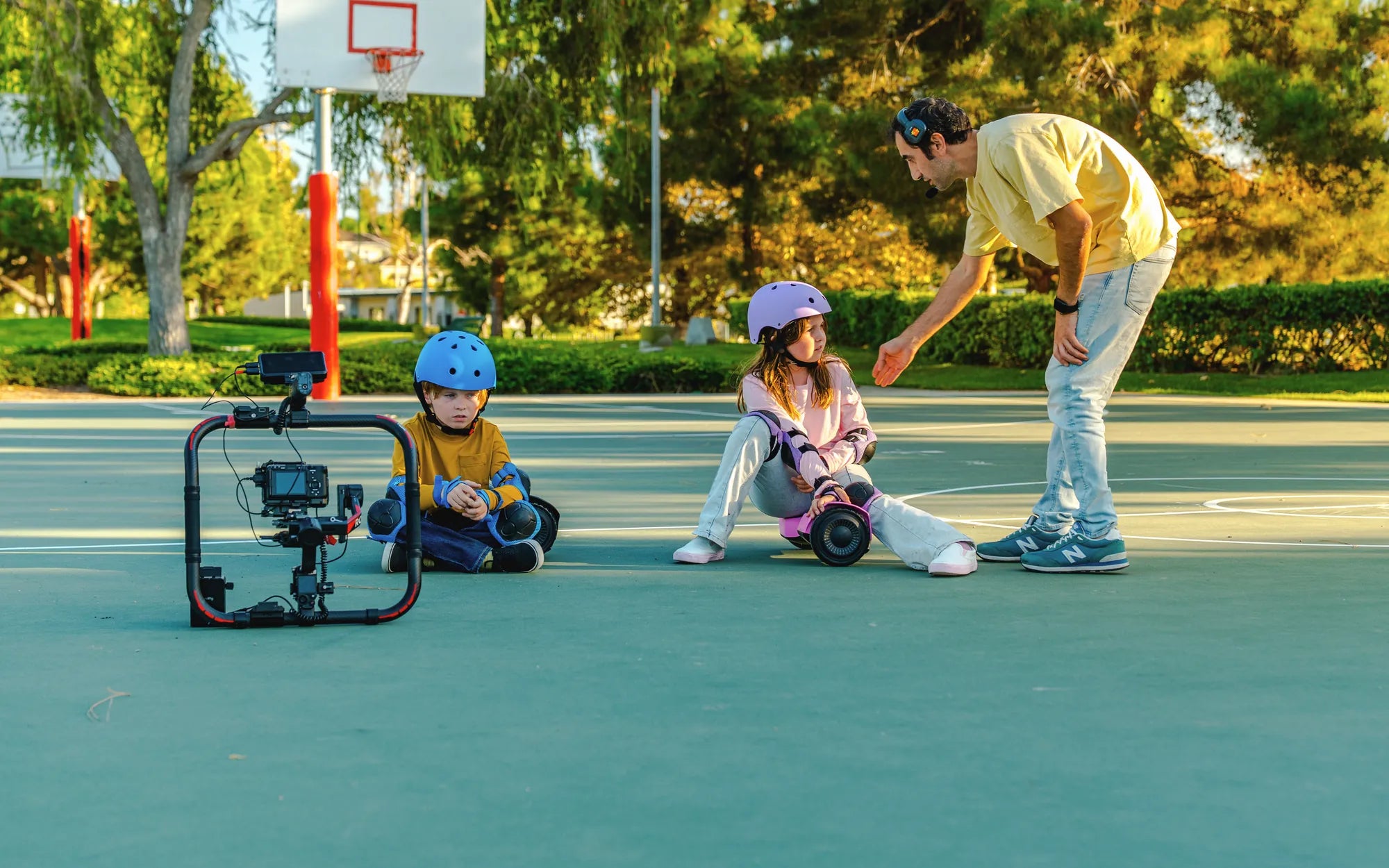
A CPSC-certified bicycle helmet is an absolute must. It should fit snugly, sitting level on the head and covering the forehead. Involve your child in choosing a helmet they like—they're more likely to wear it.
Knee pads and elbow pads are strongly recommended, especially for beginners. They protect the joints most vulnerable in a fall. Wrist guards are arguably the second most important piece of gear after a helmet, as instinct leads to putting hands out during a fall, risking serious sprains or fractures. For riding at dusk or dawn, reflective clothing or add-on LED lights for the scooter and helmet are essential for visibility.
Establishing Family Ground Rules for Safe Riding
Set clear, non-negotiable rules before the first ride. First, designate practice zones: empty parking lots, smooth driveways, or quiet cul-de-sacs. Absolutely prohibit riding on public roads, near traffic, or on wet, sandy, or gravel-covered surfaces.
Supervision is key for young riders; a parent should be present and attentive. Institute a pre-ride check: helmet and gear on, tire pressure firm, brakes working, and no loose parts. Ban headphone use to maintain auditory awareness of surroundings. Finally, establish that any violation of these rules results in the immediate loss of riding privileges. Consistency is crucial for making safety a habit.
Maintenance, Care, and Maximizing Your Warranty
Regular maintenance ensures your child's electric scooter remains safe, reliable, and fun for years. Simple weekly checks can prevent most issues. Proper care also protects your investment and ensures you get the full benefit of the manufacturer's warranty, a key indicator of a brand's confidence in its product.
Brands that stand behind their products, like Gyroor with its 1-year comprehensive warranty, provide added peace of mind. Understanding what maintenance you can do and when to seek support is part of responsible ownership.
Routine Pre-Ride Checks and Proper Cleaning
Develop a quick 60-second pre-ride checklist with your child. Check tire pressure (for air-filled tires) and look for wear or punctures. Squeeze the brake levers to ensure they engage firmly and the wheels stop completely. Check that the folding mechanism (if present) is securely locked and all bolts (handlebar, stem) are tight.
For cleaning, never use a high-pressure hose. For IPX5 water-resistant scooters like those from Gyroor, use a damp cloth with mild soap to wipe down the deck, frame, and wheels. Avoid directing water at the charging port, display, or any seams. Dry the scooter thoroughly before storing or charging. This prevents corrosion and electrical issues.
Understanding and Leveraging Your Warranty
A strong warranty is a hallmark of a quality product. Gyroor's 1-year warranty typically covers defects in materials and workmanship for the battery, motor, controller, and frame. This means if a component fails under normal use within that period, the company will repair or replace it.
To maximize your warranty, register the product online upon purchase and keep your receipt. Perform only the maintenance outlined in the manual; unauthorized modifications or repairs can void coverage. If an issue arises, contact the brand's customer support first. A brand with US-based support, like Gyroor, can often provide faster troubleshooting and resolution, making the warranty a truly valuable safety net for your purchase.
Navigating Legality and Where to Ride
The legality of riding an electric scooter for kids varies significantly by city, county, and state in the USA. There is no single federal law, making it the parent's responsibility to research local ordinances. Generally, regulations focus on where you can ride, speed limits, and age requirements.
Ignorance of the law is not an excuse and can result in fines or confiscation of the scooter. Teaching your child the rules of where they can and cannot ride is a fundamental part of responsible e-scooter ownership. This knowledge keeps them safe from legal trouble and, more importantly, from dangerous interactions with motor vehicles.
Most municipalities prohibit the use of electric scooters on public roads. The most common legal riding areas are sidewalks (though some cities ban motorized vehicles on them), bike lanes (if permitted by local law), and private property with permission. Many parks have specific paths where motorized vehicles are allowed. Always look for posted signage.
Age restrictions are common. Some areas require riders to be at least 16 years old to operate an e-scooter on public paths. For younger children, this reinforces the importance of riding on private property or in areas explicitly designated for such use. Speed limits on public paths are often capped at 15 mph, which aligns with the top speed of most advanced kids' models.
Frequently Asked Questions (FAQs)
Q1: What is the best age for a child to start using an electric scooter?
Most children develop the necessary balance, coordination, and judgment around age 6 or 7. Starting with a beginner model capped at 6-8 mph under strict supervision is recommended. The child's maturity and ability to follow safety rules are as important as their physical age.
Q2: Are electric scooters for kids safe?
When chosen appropriately for age and skill, equipped with a UL-certified battery, used with full safety gear (helmet, pads), and operated under clear rules and supervision, they can be a safe and fun activity. Safety is determined by the product's quality and the rider's responsible habits.
Q3: How long does the battery last, and what's the typical range?
Battery life depends on the model, rider weight, terrain, and speed. A quality battery lasts 2-3 years with proper care. Range varies: beginner models may offer 6-8 miles per charge, while advanced teen models can achieve 10-15 miles. Gyroor's UL-certified batteries, for instance, are tested for over 500 charge cycles.
Q4: Can it handle hills or rough pavement?
Motor power is key. Beginner scooters (100-150W) are for flat ground. Intermediate and advanced models (200W+) can handle mild hills. Suspension and larger, air-filled tires greatly improve comfort and control on rough pavement, but off-road riding is not recommended for standard kids' e-scooters.
Q5: What is the weight limit, and what happens if it's exceeded?
Weight limits (typically 120-220 lbs) are set for structural safety and performance. Exceeding them can stress the frame, reduce battery range, overpower the motor, and make braking less effective, creating a significant safety hazard. Always choose a scooter with a limit well above your child's current weight.
Q6: Where is it legal for my child to ride in the USA?
Laws vary locally. Commonly, riding is permitted on private property, in bike lanes (check local laws), and on some multi-use paths. Riding on public roads and often on sidewalks is prohibited. Always check your city's municipal code or department of transportation website for specific ordinances before riding.
Investing in Fun, Freedom, and Safety
Choosing the perfect electric scooter for kids in the USA is a meaningful decision that blends the promise of outdoor adventure with the imperative of safety. By prioritizing UL-certified batteries, adjustable speed controls, and stable design, you select a vehicle built for real-world use. Matching the scooter's specifications to your child's age and skill level ensures a positive, confidence-building experience that can grow with them.
The journey doesn't end at purchase. Equipping your child with a CPSC-certified helmet and pads, establishing firm riding rules on safe terrain, and performing simple maintenance are the responsibilities that transform a fun toy into a lasting hobby. Understanding local laws completes the picture, fostering responsible citizenship from a young age.
Brands that align with these values, offering certified components, water-resistant durability, and strong customer support, provide the trustworthy foundation every parent seeks. Gyroor exemplifies this approach, engineering its youth models with the safety features and robust warranties that allow families to focus on the fun.
Ready to find the ideal electric scooter that balances thrilling rides with unwavering safety for your child? Explore a curated selection of models designed with young riders in mind. Browse the full Gyroor collection at gyroorboard.com to discover scooters that deliver fun, freedom, and peace of mind.
Self Balancing Scooter Parts: The Ultimate Guide to Maintenance and Upgrades
E Scooter for Kids Amazon: The Ultimate Guide to Choosing the Best Ride