


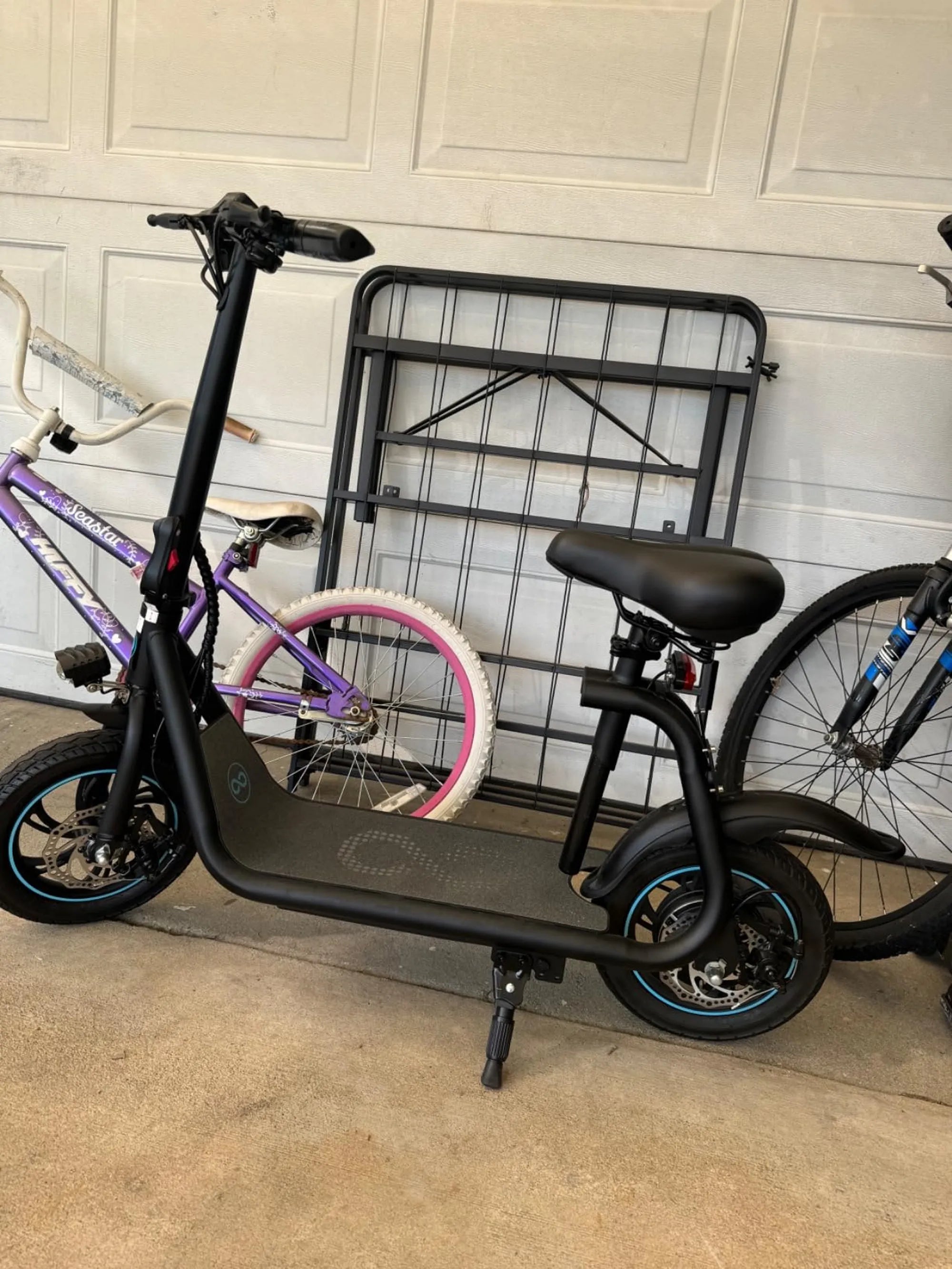
Introduction: The 45mph Threshold and a New Era of Urban Mobility
The emergence of electric scooters capable of sustained 45mph speeds marks a fundamental shift in personal urban transportation. This isn't an incremental upgrade; it's a leap into a new category. We are moving beyond the 'last-mile' solution into the realm of 'hyper-commuting,' where e-scooters become genuine car replacements for millions.
This new class of vehicle promises to collapse commute times, bypass traffic, and do so with near-zero operational cost and environmental impact. The 45mph electric scooter represents the convergence of advanced battery technology, powerful motor systems, and robust chassis design, creating a tool for practical, daily transportation over distances of 10-25 miles.
However, with great speed comes great responsibility. This guide will dissect the reality of owning and operating a 45mph electric scooter. We will explore the engineering that makes it possible, the non-negotiable safety gear required, the complex legal landscape you must navigate, and a clear-eyed analysis of whether this high-performance machine fits your life. The future of urban mobility is fast, efficient, and electric, but it must also be safe, legal, and smart.
The Engineering Behind the Speed: What Makes a 45mph E-Scooter Possible?
Reaching and maintaining 45mph requires a holistic engineering approach where every component is upgraded from a standard commuter scooter. It's a symphony of power, control, and stability, where a weakness in any single system compromises the entire experience. The core pillars are a high-output powertrain, a high-voltage, high-capacity battery, professional-grade braking, and a suspension system built for speed.
These are not toys; they are precision-engineered vehicles. Brands leading this category, like Gyroor, invest in integrating these systems seamlessly. The goal is not just raw speed but delivering that speed reliably, safely, and with the rider's confidence intact. Let's break down the key technological differentiators.
Motor & Powertrain: Dual vs. Single Motor Setups
The heart of a 45mph scooter is its motor system. While potent single motors can achieve high top speeds, dual-motor configurations have become the gold standard for performance at this tier. Dual motors, typically one in each wheel, provide superior torque for rapid acceleration from a stop and exceptional hill-climbing ability, often exceeding 30% grades.
This setup also enhances control and stability. With power distributed to both wheels, traction is improved, especially in less-than-ideal weather conditions. Many advanced models feature selectable drive modes—single motor for efficiency, dual motor for all-out performance. This coordinated system, as used in high-performance models from brands like Gyroor, ensures that the 45mph claim is not a fleeting peak but a stable, accessible speed.
Battery & Range: The Power Trade-Off
Speed consumes energy at a dramatically higher rate. Therefore, a 45mph scooter must be equipped with a substantially larger battery than its slower counterparts. We're talking about systems often exceeding 60V and 30Ah, translating to battery capacities of 1,800 Watt-hours or more. This is the fuel tank for your high-speed commute.
However, the most critical aspect is battery safety and quality. Pushing a battery to discharge at the high rates required for 45mph travel places immense stress on its cells. This is why UL-certified battery packs, a standard feature across Gyroor's lineup, are non-negotiable. These certified packs undergo rigorous testing for thermal stability, short-circuit protection, and longevity (often rated for 500+ charge cycles), ensuring safety during high-demand use.
Real-world range is a key consideration. While a manufacturer may advertise a 40-50 mile range, that is typically tested under ideal conditions at moderate speeds. At a consistent 45mph, expect real-world range to drop to between 15 and 25 miles, depending on rider weight, terrain, wind, and temperature.
Chassis, Brakes & Suspension: The Safety Triad
A frame that flexes at 45mph is terrifying. These scooters utilize reinforced aluminum or alloy frames, often with a wider deck and stem for improved stability. The suspension system is equally crucial—dual or even quadruple spring or hydraulic shock absorbers are necessary to absorb road imperfections at speed, keeping the wheels in contact with the pavement for control.
Braking is the most critical safety system. Mechanical disc brakes are insufficient. High-performance 45mph scooters must be equipped with full hydraulic disc brakes on both wheels. These offer progressive, powerful, and fade-resistant stopping power, allowing for controlled deceleration from high speed. Regenerative braking can assist, but it is a supplement, not a replacement, for physical hydraulic brakes.
Safety First: Riding a High-Performance E-Scooter Responsibly
Operating a vehicle at 45mph places you in a kinetic energy realm comparable to a motorcycle. Your safety strategy must evolve accordingly. Responsible riding is a three-part equation: the inherent safety features of the scooter itself, the protective gear you wear, and the disciplined practices you adopt. Neglecting any one of these components significantly increases risk.
This isn't about fear; it's about respect for the machine and the environment. A 45mph electric scooter is a tool for efficient mobility, and like any powerful tool, it requires knowledge and the right equipment to use it effectively and safely. Your gear is your last line of defense, and your riding discipline is your first.
Essential Gear for the 45mph Rider
A bicycle helmet is categorically inadequate. The minimum standard for head protection is a full-face mountain biking helmet. The strongly recommended standard is a DOT-certified full-face motorcycle helmet. This protects not just the top of your head but your jaw and face in the event of a forward-impact fall.
Your gear checklist is non-negotiable: A full-face helmet, motorcycle-grade gloves (with palm sliders), a durable jacket (motorcycle or padded motocross), knee and elbow pads, and sturdy, closed-toe shoes. High-visibility elements on your gear or a reflective vest are also wise for urban riding. This gear protects against abrasion (road rash) and impact forces.
The Scooter's Safety Suite: Beyond Speed
Before you even put on your gear, inspect your scooter's built-in safety features. Lighting is paramount: a bright, focused headlight (800+ lumens) to see and be seen, a always-on taillight, and integrated turn signals are essential for communicating with traffic. Hydraulic disc brakes, as mentioned, are mandatory.
Tire choice matters deeply. Wide, pneumatic (air-filled) tires, typically 10 inches or larger, provide the necessary grip, shock absorption, and stability at speed. Solid tires are unsafe for this performance tier. Finally, a robust IP rating for water and dust resistance is crucial for all-weather reliability. An IPX5 rating, like that found on Gyroor models, means the scooter can withstand sustained water jets, making it safe to ride in rain.
Navigating the Legal Landscape: Where Can You Legally Ride 45mph?
The legal framework for electric scooters is a complex, often contradictory patchwork of local, state, and federal regulations. For 45mph models, this complexity increases exponentially. In most jurisdictions, the law has not caught up with the technology. You, the rider, are responsible for knowing and obeying the laws where you ride. Ignorance is not a defense and can result in fines, impoundment, or worse.
The core legal principle is vehicle classification. Most traffic codes define vehicles by their maximum capable speed, not the speed you choose to ride. This single factor determines where you can ride, what you need to operate it, and what rules you must follow.
Classifying Your Ride: Moped vs. E-Scooter Laws
In the vast majority of U.S. states and European countries, any electric scooter capable of exceeding 28-30mph is automatically classified as a moped or motor-driven cycle. This classification triggers a host of requirements that do not apply to slower, 'shared-scooter' type vehicles.
These requirements commonly include: A valid driver's license (not just a learner's permit), vehicle registration with the DMV, license plates, liability insurance, and adherence to all traffic laws applicable to motorcycles (e.g., no use of bicycle lanes or paths). Some localities may even require a specific motorcycle endorsement. Always check your state's Department of Motor Vehicles website and your city's municipal code before purchasing or riding a 45mph scooter on public roads.
Responsible Riding Practices for Urban Environments
Legal compliance is the baseline; responsible riding is the standard. Plan your route in advance using apps that show bike lanes and road types. Even if classified as a moped, using dedicated bike lanes (where legally permitted) or quieter residential streets is often safer than main arterials. Always obey all traffic signals, stop signs, and posted speed limits.
Ride defensively and predictably. Assume cars do not see you. Use your turn signals well in advance. Maintain a safe following distance. Never ride under the influence of alcohol or drugs. Your behavior on the road not only keeps you safe but also shapes public perception of this new mode of transport, paving the way for more sensible regulations.
The Practical Commuter: Is a 45mph E-Scooter Right for You?
This is the crucial decision point. The allure of high speed is powerful, but it must be matched with a genuine use case. A 45mph electric scooter is a significant investment, both financially and in terms of the responsibility it demands. A clear-eyed analysis of your needs, commute, and local infrastructure will determine if this is your ideal vehicle or if a slower, more portable model would serve you better.
Consider this not just as a purchase, but as adopting a new commuting system. It involves planning for charging, gear storage, route safety, and understanding the total cost beyond the sticker price. Let's analyze the key factors.
Use Case Analysis: Who Benefits Most?
The ideal user for a 45mph electric scooter is a suburban commuter with a one-way trip distance between 8 and 20 miles. They have access to a safe route that may include a mix of bike lanes, slower urban streets, and potentially shorter stints on roads with speed limits of 35-45mph. They have a secure place to charge at both ends of their journey (home and office).
Conversely, this scooter is likely overkill for someone with a 3-mile commute in a dense, congested downtown core with a 25mph speed limit. It is also a poor fit for those who rely heavily on multi-modal transport (e.g., bus + scooter) due to its significant weight (often 70-100 lbs) and reduced portability.
Total Cost of Ownership & Investment Protection
The initial purchase price for a quality 45mph scooter ranges from $1,500 to $3,000+. Compare this to the ongoing costs of car ownership. The 'fuel' cost is mere cents per charge. There is no insurance *for the vehicle* in the traditional sense, though rider insurance is recommended and any required registration is a minimal annual fee. Maintenance costs are low but should include periodic brake fluid changes, tire replacements, and suspension checks.
This is where warranty and brand reputation become paramount. A high-performance scooter is a complex machine. A strong, comprehensive warranty is your financial protection. Gyroor, for example, backs its performance models with a 1-year warranty covering the frame, motor, battery, and controller, supported by U.S.-based customer service. This ensures access to genuine parts and expert support, protecting an investment that is meant to last for years.
Comparative Analysis: 45mph Scooter vs. Alternatives
To understand the value proposition, it's helpful to directly compare a 45mph electric scooter with common alternatives for urban and suburban commuting.
| Feature / Vehicle | 45mph Electric Scooter | Standard E-Scooter (20mph) | Compact Electric Car | Public Transit |
|---|---|---|---|---|
| Avg. Commute Speed (Urban) | 25-40 mph | 12-18 mph | 10-30 mph (traffic dependent) | 10-20 mph |
| Typical Max Range | 15-25 mi (at speed) | 15-20 mi | 100+ mi | N/A (Network) |
| Parking & Storage | Extremely Easy | Extremely Easy | Difficult/Costly | N/A |
| Upfront Cost | $$ ($1,500-$3,000+) | $ ($500-$1,200) | $$$$ ($20,000+) | $ (Fare) |
| Operating Cost (/mi) | $0.01 - $0.03 | $0.005 - $0.015 | $0.10 - $0.15 (electric) | $0.20 - $0.50 (fare) |
| Legal/Admin Hurdles | Moderate-High (License, Reg., Ins. possible) | Low (Often unregulated) | High (License, Reg., Ins. mandatory) | None |
| Primary Best Use Case | Medium-distance suburban commute | Last-mile / Short urban trips | Long-distance, all-weather, cargo/passenger needs | Dense urban core travel |
Frequently Asked Questions (FAQ) About 45mph Electric Scooters
Q: Are 45mph electric scooters safe?
A: They can be as safe as the rider and the engineering allow. A scooter built with quality components—UL-certified batteries, hydraulic brakes, robust frame—provides a stable, reliable platform. The rider must then complete the safety equation with full protective gear and responsible, legal riding practices. The machine alone does not guarantee safety.
Q: How far can I really go on a single charge at top speed?
A: Expect a 40-50% reduction from the manufacturer's advertised range, which is usually tested at a steady 15-20mph. A scooter advertised for 40 miles will likely achieve 15-25 miles when ridden consistently at 45mph, depending on factors like rider weight, hills, wind, and temperature.
Q: Do I need a license or insurance to ride one?
A: This is location-specific but increasingly likely for a 45mph model. In many U.S. states, it will be classified as a moped, requiring a standard driver's license, and potentially registration and liability insurance. You must check your specific state and local laws. Never assume the rules for slower rental scooters apply.
Q: Can I ride a 45mph scooter in the bike lane?
A: Typically, no. Once a scooter is classified as a moped or motor vehicle due to its speed capability, it is usually prohibited from bicycle lanes and paths. You are required to ride in the road, obeying all traffic laws as a motor vehicle. Local ordinances can vary, so verification is essential.
Q: What happens if my high-speed scooter needs repair?
A: This highlights the critical importance of purchasing from an established brand with a strong support network. A reputable company like Gyroor offers a comprehensive 1-year warranty and provides access to genuine parts and knowledgeable customer service. Avoid 'no-name' brands where repair could mean sourcing obscure parts yourself or the scooter becoming a paperweight.
Q: Are these scooters suitable for riding in the rain?
A: With proper preparation, yes. The scooter must have a high IP water resistance rating (IPX5 or higher is recommended). The rider must adjust their technique: reduce speed, increase following distance, avoid painted road markings and metal surfaces, and be extra cautious on turns. Even with a good rating, avoid deep puddles which can damage electronics.
Conclusion: Embracing a Faster, Smarter Commute
The 45mph electric scooter is more than a thrilling gadget; it is a legitimate, transformative tool for urban and suburban mobility. It offers a compelling solution to traffic congestion, high transportation costs, and environmental impact for a significant segment of commuters. The future it represents is one of efficiency, agility, and personal freedom.
Adopting this future requires a mature and informed approach. Success hinges on three pillars: investing in and using comprehensive safety gear without exception, taking full responsibility for understanding and complying with your local legal framework, and choosing your vehicle wisely. Opt for a brand that prioritizes safety-certified components like UL-certified batteries, professional-grade hydraulic brakes, and robust construction, backed by a clear warranty and reliable customer support.
This is how we build a sustainable and thrilling mobility future—not just with faster vehicles, but with smarter, more responsible riders. The road ahead is fast. Make sure you're prepared to ride it safely and legally. Explore the engineering and commitment to safety behind high-performance electric mobility. Browse the full Gyroor collection at gyroorboard.com to see models built for the future of commuting.
Compare Razor Electric Scooters: Find the Best Ride for You
Top 10 Electric Scooters in India 2024: Best Picks for Eco-Friendly Commuting