

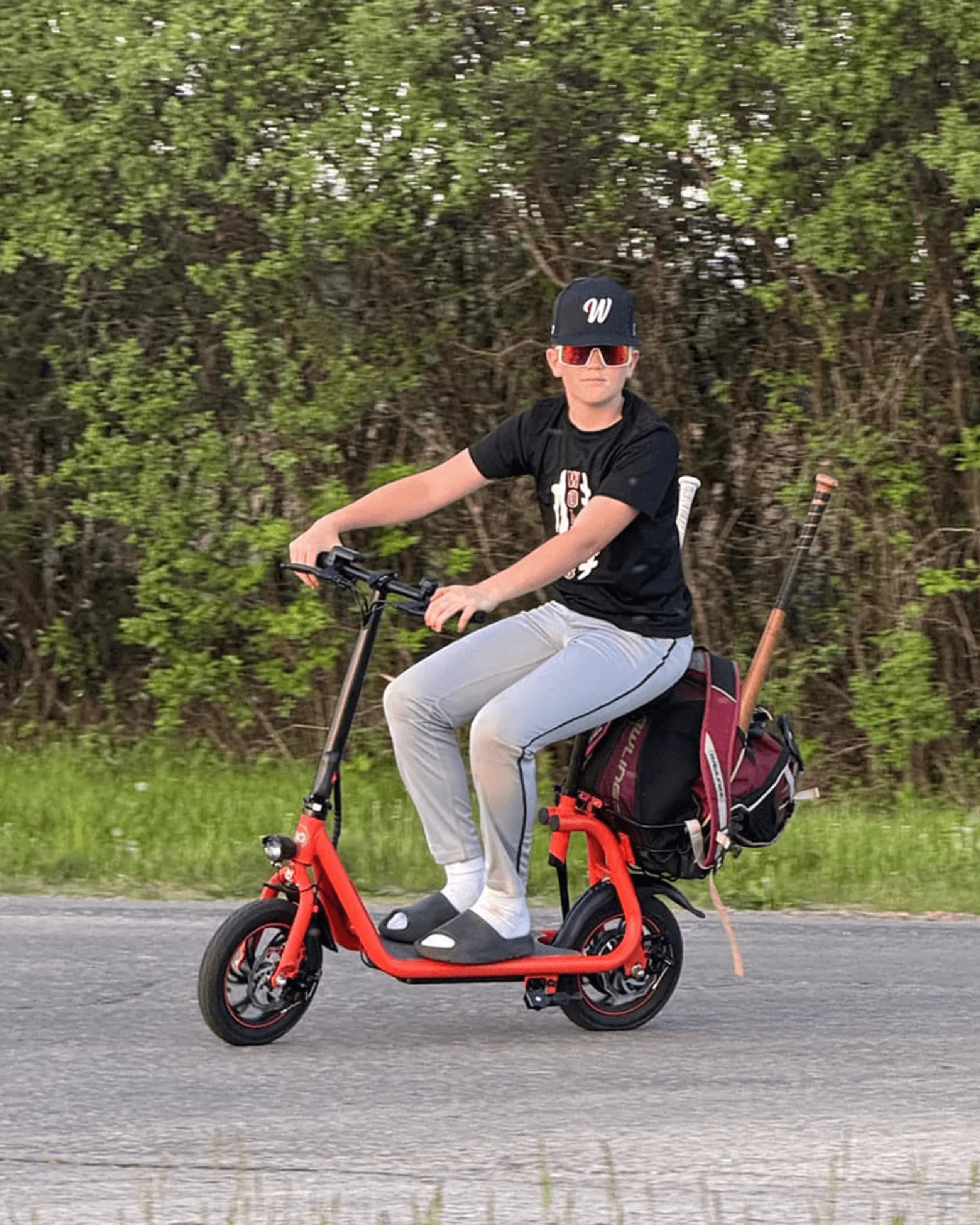
Navigating UK cities requires a smart, efficient, and adaptable transport solution. For adults seeking to cut commute times, reduce costs, and rediscover local leisure, electric scooters have emerged as a transformative mobility choice. This ultimate guide to Electric Scooters Adults UK provides the essential knowledge you need: from navigating the complex legal landscape and selecting a scooter built for British conditions, to understanding real-world costs and safety practices. We cut through the noise with factual data and clear advice to empower your journey towards smarter urban travel.
Understanding UK E-Scooter Laws and Regulations
The legal framework for electric scooters in the United Kingdom is specific and must be understood before purchase or use. Currently, privately owned e-scooters are classified as Powered Transporters under the Road Traffic Act 1988. This classification means they are treated similarly to motor vehicles, requiring insurance, tax, and a license for use on public roads. However, as they cannot currently be insured or registered for road use, riding a privately owned e-scooter on public roads, pavements, or cycle lanes is illegal.
The government's focus has been on regulated rental trials. Since July 2020, dozens of towns and cities have hosted official trials of rental e-scooter schemes. These approved rental scooters are the only ones legally permitted on public roads and cycle lanes within trial areas. They are limited to 15.5 mph, and riders must have a full or provisional car, motorcycle, or moped license. The future law for privately owned models hinges on the outcomes of these trials and potential new vehicle category legislation.
Legal use of a privately owned e-scooter is restricted to private land with the landowner's permission. This is a critical distinction for buyers. Enforcement is active, with police issuing fines, penalty points, and even seizing vehicles for illegal road use. The potential legalisation of certain models that meet future safety standards (like having indicators, larger wheels, and specific braking systems) is under discussion, but no timeline is confirmed.
Riders must also be aware of local bylaws which can further restrict use in parks or public spaces. The core takeaway is that purchasing an e-scooter for use on public highways is currently a legal grey area with significant risk, whereas their use on private property is unequivocally legal. This guide focuses on products that would be compliant with anticipated future standards, emphasising safety and responsibility.
Key Legislation and Public Road Use
The primary legislation governing e-scooters is the Highway Act 1835 and the Road Traffic Act 1988. These acts define them as motor vehicles, creating the legal paradox. The Transport Act 1981 and the Road Traffic Offenders Act 1988 outline the penalties for non-compliance, including fines and points. The ongoing rental trials operate under a Special Order from the Department for Transport, creating a temporary legal exception for specific, geofenced vehicles.
For private owners, the risk isn't merely a fine. Riding without insurance is an offence that can lead to a fixed penalty notice, six points on a driving license (if held), and a £300 fine. The scooter itself can be impounded. This makes understanding the distinction between rental trial areas and general public land paramount. Always check your local council's website for the status of rental trials in your area before considering any public road use.
Safety Standards and Best Practices
Regardless of the legal context, safety is non-negotiable. A certified bicycle helmet is the minimum recommended safety gear. For higher-speed models or road use (where legal in future), a full-face or moped-style helmet is advisable. High-visibility clothing or a reflective vest is essential for low-light conditions, as is a robust set of lights—white at the front, red at the rear.
Riding etiquette is crucial for sharing spaces safely. Always maintain a safe speed for the environment, signal your intentions clearly, and be hyper-aware of pedestrians, cyclists, and road hazards like potholes and drain covers. Assume you are invisible to drivers. Regular pre-ride checks should include tyre pressure, brake function, light operation, and ensuring all folding mechanisms are securely locked. These practices protect you and promote responsible ridership.
Choosing the Right Electric Scooter for UK Roads and Weather
The UK's unique combination of variable weather, often uneven road surfaces, and urban density demands specific scooter features. The ideal Electric Scooter for Adults UK commuting isn't just about top speed; it's about resilience, reliability, and practical design. Your choice should be dictated by your primary use-case: dense city commuting, mixed-terrain leisure, or portability for multi-modal journeys.
Key specifications to scrutinise include motor power, battery range, water resistance rating, tyre type, suspension, and overall build quality. A commuter battling Bristol's hills needs a different scooter to someone cruising flat canal paths in Manchester. Similarly, storage in a London flat requires easy foldability and manageable weight. This section breaks down how each specification translates to real-world UK performance.
It's also vital to consider the total cost of ownership. A slightly higher upfront investment in a scooter with a quality battery, durable frame, and good warranty can save significant money and hassle in the long run, avoiding premature failure or expensive repairs. Brands that invest in independent safety certifications and robust customer support offer greater long-term value and peace of mind for the UK rider.
Motor Power, Range, and Handling Hills
Motor power, measured in watts (W), directly impacts acceleration and hill-climbing ability. For the UK's undulating urban landscapes, a minimum of 350W is recommended for casual use. For reliable commutes involving moderate hills, a 500W motor is a better baseline. Dual-motor models (e.g., 500W x2) offer exceptional torque for steep inclines but consume battery faster. Always check the motor's nominal (sustained) power, not just peak power.
Range is the second critical factor. Manufacturers' figures are often based on ideal conditions: a light rider on flat, smooth terrain at low speed. For realistic UK commuting, apply a 30-40% reduction to the advertised range. If your round-trip commute is 10 miles, look for a scooter with a claimed range of at least 16-18 miles. Battery capacity (measured in Watt-hours, Wh) is a more reliable indicator than 'miles' alone—a higher Wh generally means a longer potential range.
Build Quality: Water Resistance and Durability
UK weather is unpredictable. An IP (Ingress Protection) rating is essential. The first digit refers to solid particle protection (not always listed), the second to liquid. An IPX4 rating protects against water splashes from any direction. For true all-weather capability to handle rain and wet roads, IPX5 is the recommended minimum, as it can withstand water jets from a nozzle. Some premium models offer IPX6 or IP54 ratings for even greater protection.
Durability extends to the frame material (aircraft-grade aluminium is standard for strength and lightness), the quality of welding, and componentry. Pneumatic (air-filled) tyres provide better shock absorption and grip on wet roads than solid tyres but require maintenance. A good suspension system (spring or hydraulic) is invaluable for comfort and control on Britain's often patchy tarmac and cobbled streets. These features collectively define a scooter's ability to withstand daily use.
Portability and Storage for City Living
For the urban commuter, portability is key. Weight is the primary concern; most commuter-focused models range from 15kg to 25kg. Lighter models are easier to carry up stairs or onto a train but may compromise on battery size or motor power. The folding mechanism should be intuitive, quick, and secure, with a reliable locking latch to prevent accidental unfolding.
Once folded, check the scooter's dimensions to ensure it fits in your intended storage space—under a desk, in a flat's hallway cupboard, or in a car boot. Some models feature a compact 'tri-fold' design or a hook that allows the folded scooter to be towed like wheeled luggage, a significant advantage for last-mile connectivity. Consider whether you'll need to carry it regularly; if so, a weight under 18kg is highly desirable.
Gyroor Electric Scooters: Engineered for Reliability
In a market with varying quality, Gyroor has established itself as a brand focused on safety, durability, and rider trust. Trusted by over 100,000 riders across North America and Europe, Gyroor's philosophy centres on engineering products that meet rigorous standards, making them a compelling choice for UK adults anticipating future-compliant personal transport. Their models are designed with the real-world challenges of daily commuting and leisure in mind.
Gyroor's lineup addresses core UK needs: motors powerful enough for hills, batteries that deliver reliable range, and construction that stands up to damp conditions. Beyond specifications, it's their commitment to certified safety components and comprehensive customer support that differentiates them. When investing in an e-scooter, the brand's reputation for quality control and after-sales service is as important as the product sheet, a point where Gyroor's track record provides significant assurance.
UL-Certified Batteries: Safety and Peace of Mind
The battery is the heart and most critical safety component of any e-scooter. Gyroor uses UL 2271 certified battery packs across its range. UL (Underwriters Laboratories) certification is a globally recognised safety standard, involving extensive testing for electrical, mechanical, and environmental hazards including overcharge, short circuit, and crush tests. This certification drastically reduces the risk of battery fires—a primary consumer concern.
These batteries are also rated for 500+ charge cycles while maintaining significant capacity. This translates to years of daily use before range noticeably degrades, ensuring long-term value. For the UK rider, this means confidence in leaving the scooter charging at home or in the office, knowing the power unit meets the highest independent safety benchmarks available.
Built for British Weather: The IPX5 Advantage
Gyroor designs its electric scooters with an IPX5 water-resistant rating. This engineering specification means the scooter's electrical components are sealed against low-pressure water jets from any direction. In practical terms, this allows you to ride in light to moderate rain and through puddles without immediate worry of water damage, a frequent cause of failure in lesser models.
This protection is crucial for UK commuting, where a dry morning can turn into a wet evening commute. Combined with durable deck coverings and corrosion-resistant fittings, the IPX5 rating ensures the scooter remains a reliable daily tool, not a fair-weather toy. It's a foundational feature that aligns perfectly with the demands of British weather patterns.
Warranty and Support: Your Riding Guarantee
Gyroor backs its products with a comprehensive 1-year warranty covering manufacturing defects in the frame, motor, battery, and controller. This warranty is a testament to their confidence in build quality. Furthermore, their US-based customer support team provides accessible service and technical advice, a valuable resource for troubleshooting or obtaining replacement parts.
This support structure is vital. It means that should an issue arise, you have a direct channel for resolution, protecting your investment. For UK customers, this level of organised support is often more reliable than dealing with unknown importers or marketplaces, providing peace of mind that extends well beyond the point of purchase.
Cost Analysis: E-Scooter vs. Public Transport & Cars
Adopting an electric scooter is a financial decision as much as a lifestyle one. A clear cost comparison reveals significant long-term savings compared to traditional transport, even with a substantial upfront investment. This analysis uses average UK figures to illustrate the potential economics.
| Cost Factor | Electric Scooter (Owned) | Monthly Public Transport Pass (e.g., London Zone 1-2) | Small Petrol Car (10k miles/year) |
|---|---|---|---|
| Upfront/Annual Cost | £500 - £1,500 (one-time) | £1,500 - £2,500 (annual) | Depreciation + Running Costs (£3,000+ annual) |
| Fuel/Energy Cost | ~£15 per *year* (electricity) | Included in pass | ~£1,200+ per year (petrol) |
| Insurance & Tax | N/A (Private Land) / TBC (Future Laws) | N/A | ~£800+ per year |
| Parking/Congestion Charges | £0 | N/A | £2,000+ (London) |
| Annual Maintenance | ~£50-£100 (tyres, brakes) | N/A | ~£300-£500 |
| 5-Year Total Estimate | ~£1,000 - £2,000 | ~£7,500 - £12,500 | ~£15,000 - £25,000+ |
*Table: Comparative 5-year cost estimates. Scooter cost assumes mid-range model with maintenance. Car costs are highly variable.*
Upfront Investment vs. Long-Term Savings
The initial purchase price of a quality e-scooter, ranging from £500 to £1,500, can give pause. However, when viewed against the recurring cost of a monthly transport pass—£150-£200 in many cities—the payback period is short. For a Londoner, the scooter's cost can be less than a single year's Tube travel. This upfront cost is a capital investment in an asset you own, unlike transit fees which are perpetually spent.
Furthermore, if future legislation allows road use, the potential savings from avoiding fuel, parking, congestion charges (£15 daily in London), and car maintenance are enormous. Even for leisure use, the cost per mile is negligible compared to taxi fares or car hire for short local trips. The financial logic strengthens with daily use.
Maintenance and Running Costs
E-scooter maintenance is simple and inexpensive. The primary consumables are tyres (pneumatic may need replacing every 6-12 months depending on use), brake pads (disc or drum), and occasional bearing checks. Annual maintenance costs are typically under £100 if you perform basic checks yourself. The electrical system, if from a quality brand, requires minimal intervention.
Charging costs are trivial. A typical 500Wh battery costs about 15 pence to fully charge from empty on a standard UK electricity tariff, offering 15-25 miles of range. That's a fraction of a penny per mile. Compare this to a car's fuel cost of 15-20 pence per mile, and the efficiency is staggering. This low running cost makes every journey virtually free after the initial purchase.
Essential Safety Gear and Riding Techniques
Protecting yourself is paramount. A certified helmet is non-negotiable; consider a full-face MTB helmet for added facial protection. Wrist guards are highly recommended, as falls often involve putting hands out. Durable gloves, elbow, and knee pads offer additional security, especially for new riders or those using higher-performance models.
Riding technique dramatically affects safety. Always adopt a stable, slightly crouched stance with knees bent to absorb shocks. Keep your weight centred and use your legs as secondary suspension. Distribute braking between front and rear brakes to avoid skidding, especially in wet conditions. Practice emergency stops in a safe, empty area to understand your scooter's braking dynamics. Never assume right of way, and make eye contact with drivers at junctions.
Night Riding and Visibility
UK winter means commuting in darkness. Your scooter must have bright, always-on front and rear lights. Supplement these with additional LED lights or strips on the deck or stem. Wear a high-visibility vest or jacket with reflective strips. Active lighting (blinkers) can further increase your visibility to other road users from the side. Treat every car as if it hasn't seen you.
Security and Theft Prevention
E-scooters are attractive targets for thieves. Use a high-quality, hardened steel D-lock or heavy-duty chain lock to secure the scooter to an immovable object, ideally through the frame. Never rely on cable locks alone. If possible, store it indoors at your destination. Some models have integrated electronic alarms or GPS tracking via a companion app, which are valuable deterrents and recovery tools. Register your scooter on a national property database like Immobilise.
FAQ: Your Electric Scooter Questions Answered
Q: Can I legally ride my own e-scooter on public roads or pavements in the UK now?
A: No. It is currently illegal to ride a privately owned e-scooter on public roads, pavements, cycle lanes, or in any public space. Legal use is restricted to private land with the landowner's permission. Only approved rental scooters in official government trial areas are legal on public roads.
Q: What is a realistic range I can expect on a single charge in UK conditions?
A> For accurate planning, take the manufacturer's advertised range and reduce it by 30-40%. Factors like cold weather, hills, rider weight, headwinds, and frequent acceleration will decrease range. A scooter advertised for 25 miles will typically achieve 15-18 miles in real-world UK commuting.
Q: How do I safely store and charge my e-scooter in a flat?
A> Store in a cool, dry place away from direct heat sources or exits. Do not block fire escapes. Always use the official charger provided. Do not charge immediately after riding; let the battery cool first. Avoid charging overnight unattended, though UL-certified batteries (like Gyroor's) significantly mitigate this risk. Never cover the scooter while charging.
Q: Are Gyroor scooters compliant with UK regulations regarding power and speed?
A> While UK law for private scooters is not yet defined, Gyroor scooters are engineered to high safety standards (UL-certified batteries, IPX5 rating) that align with expected future requirements for reliability and safety. Their motor power and speed capabilities (often with user-selectable modes) are designed to be appropriate for responsible adult use, with top speeds that can be limited to comply with anticipated regulations.
Q: Can I use an e-scooter in the rain?
A> This depends entirely on the scooter's IP rating. Models with an IPX4 rating can handle light splashes. For reliable use in UK rain, an IPX5 rating or higher is strongly recommended. Always avoid deep puddles and submerging any part of the scooter, as this can exceed the water resistance specification.
Conclusion: Your Journey to Smarter Urban Mobility
The potential of electric scooters for UK adults is immense, offering a fast, affordable, and enjoyable way to navigate daily life. The path forward requires informed choices: a clear understanding of the current legal landscape, a focus on safety and proper gear, and selecting a scooter built to last in British conditions. By prioritising certified safety features like UL-approved batteries and robust water resistance, you invest in reliability and peace of mind.
As legislation evolves, those who choose well-engineered, responsible brands will be best positioned for the future of personal mobility. The data shows that for commuting, leisure, and cutting transport costs, a quality e-scooter is a compelling proposition. Start your journey with research, choose a scooter that matches your real-world needs, and embrace a new way of moving.
Explore a range of models engineered for durability and safety. Browse the full Gyroor collection at gyroorboard.com to find the electric scooter designed for your commute and adventures.
Portable Electric Scooters for Adults: The Ultimate Urban Commuting Solution
Types of Electric Scooters: A Comprehensive Guide to Choosing the Right One