



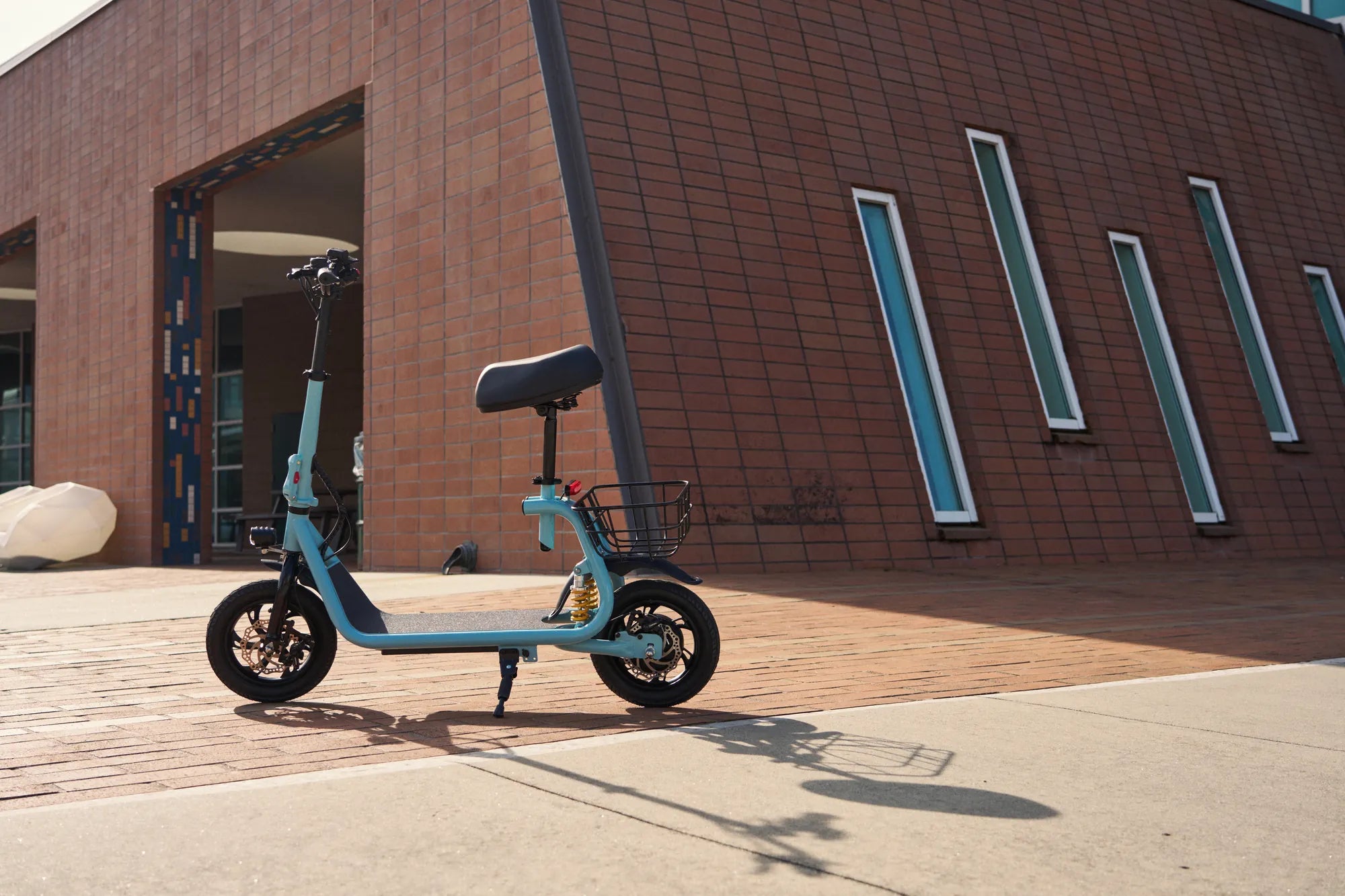
Introduction: Navigating the Evolving Electric Scooters and Mopeds Market
The global transportation sector is undergoing a profound transformation, with the Electric Scooters and Mopeds Market: Trends, Growth, and Future Outlook at the epicenter of urban mobility change. This market is no longer a niche curiosity but a fundamental component of city infrastructure and personal commuting strategies. Understanding its dynamics is crucial for consumers, urban planners, and investors alike.
Annual growth rates consistently exceed 8-10%, driven by technological innovation, environmental policy, and shifting urban commuter behaviors. The market segmentation between lightweight, portable e-scooters and more powerful, seated e-mopeds creates distinct pathways for different user needs. This analysis will dissect the current landscape, powerful growth drivers, and the challenges that must be overcome for sustainable expansion.
For consumers, this evolution means access to more reliable, feature-rich, and safer personal electric vehicles. Brands operating in this space, such as Gyroor—a leading electric scooter and e-bike brand trusted by over 100,000 riders across North America and Europe—are responding with models featuring UL-certified batteries, IPX5 water-resistant designs, and comprehensive warranties. The journey from shared rental experiments to widespread private ownership is defining the next chapter of urban travel.
Current Market Landscape: Defining the Players and Segments
The Electric Scooters and Mopeds Market: Trends, Growth, and Future Outlook is defined by a clear, though sometimes overlapping, segmentation. Electric scooters (e-scooters) typically refer to stand-up, kick-scooter-style vehicles with a small deck, handlebars, and often a folding mechanism. They are designed for short trips, last-mile connectivity, and mixed-mode commuting, with speeds generally capped between 15-20 mph.
Electric mopeds (e-mopeds), in contrast, are seated vehicles that more closely resemble traditional gasoline-powered scooters or underbones. They offer higher performance, with top speeds often ranging from 25 to 45 mph, greater range per charge, and increased cargo capacity. This makes them suitable for longer urban and suburban commutes, often serving as a primary vehicle replacement for short to medium distances.
The primary use cases segment into several key areas. Urban commuting remains the largest driver, as riders seek to avoid traffic congestion and high parking costs. Delivery services for food and parcels have become a massive commercial segment, leveraging the low operational cost of electric vehicles. Recreational riding and first/last-mile connectivity—bridging the gap between home, public transit, and the final destination—round out the core applications, each demanding different vehicle specifications.
Manufacturers like Gyroor strategically cater to these segments. Their portfolio includes agile, foldable e-scooters perfect for the commuter who needs to hop on a train, as well as more robust seated e-bikes that blur the line into moped-like territory, offering greater comfort and range for dedicated trips. This segmentation is critical for understanding the diverse forces shaping the overall market growth and innovation pipeline.
Key Trends Powering Market Growth in 2024
The momentum behind the Electric Scooters and Mopeds Market: Trends, Growth, and Future Outlook is fueled by several concurrent and powerful trends. These are not fleeting fads but structural shifts in manufacturing, consumer preference, and urban policy that are setting the course for the next decade of micromobility.
Data from industry analysts like Guidehouse Insights and McKinsey point to a compound annual growth rate (CAGR) of over 8% through 2030, with the total market value poised to cross $50 billion. This growth is unevenly distributed, with the Asia-Pacific region leading in volume and Europe and North America accelerating in premium model adoption. The trends below are the engines of this expansion.
The Rise of Premium, Ownership-Focused Models
The early market was dominated by low-cost, disposable models and shared rental fleets of dubious durability. The current trend is a decisive pivot toward premium personal ownership. Consumers are investing in higher-quality vehicles that offer better performance, safety, and longevity.
This shift is characterized by demand for larger, longer-lasting batteries providing 25+ miles of real-world range, more powerful motors (500W and above) for tackling hills, and robust construction using aircraft-grade aluminum and advanced composites. Features like hydraulic disc brakes, full suspension, and integrated lighting are becoming standard expectations rather than luxuries.
Brands that emphasize safety and durability are capturing market share. For instance, Gyroor’s focus on UL-certified battery packs—tested for 500+ charge cycles—and IPX5 water-resistant designs directly addresses consumer concerns about fire risk and reliability in all weather conditions. This move toward premium ownership signifies market maturation and a focus on the daily rider, not just the occasional user.
Regulatory Evolution and Infrastructure Development
Chaotic early deployments of shared scooters forced city governments worldwide to play regulatory catch-up. The trend in 2024 is toward more sophisticated, nuanced, and safety-focused regulations that provide a stable framework for both shared and private vehicles.
Key regulatory developments include standardized speed limits (often 15-20 mph in bike lanes), clear rules on where to ride and park, mandatory helmet laws for certain age groups or vehicle classes, and requirements for vehicle safety standards like lights and bells. Geofencing technology is used to create no-ride zones and mandated slow-speed areas.
Concurrently, infrastructure development is a critical enabler. The global expansion of protected bike lanes and micromobility corridors directly boosts the utility and safety of e-scooters and mopeds. Cities are also experimenting with dedicated parking and charging hubs. This co-evolution of regulation and infrastructure reduces friction for new adopters and legitimizes these vehicles as a permanent part of the transport network.
Technological Advancements: Beyond Basic Mobility
The technology underpinning electric scooters and mopeds is advancing rapidly, transforming them from simple electric vehicles into connected mobility platforms. The core innovation areas are in energy systems, connectivity, and drivetrain efficiency.
Swappable battery ecosystems are gaining traction, particularly in the commercial delivery segment and in markets like Asia. This system eliminates range anxiety and downtime for charging, allowing continuous operation. For consumers, it offers the potential for convenient battery swaps at kiosks instead of waiting for a charge.
Smart connectivity via Bluetooth and 4G is now common in mid-tier and premium models. Companion apps provide functions like ride tracking, battery status monitoring, firmware updates, custom performance modes, and integrated GPS anti-theft systems. Motor and controller efficiency continues to improve, delivering more range per watt-hour, while regenerative braking is becoming more widespread to recapture energy.
Growth Drivers: Why Adoption is Accelerating
Beneath the visible trends lie fundamental, powerful drivers that make the growth of the Electric Scooters and Mopeds Market: Trends, Growth, and Future Outlook not just likely, but almost inevitable in the context of modern urban challenges. These drivers are economic, environmental, and sociological.
The total cost of ownership (TCO) argument is overwhelmingly persuasive. Compared to a car, the purchase price is a fraction, insurance is minimal or non-existent, parking is free or cheap, and the "fuel" cost—electricity—is negligible. Maintenance is simpler and less frequent, involving primarily tires, brakes, and occasional battery care. For millions, it is the most rational economic choice for urban travel.
Environmentally, the imperative to decarbonize urban transport is a major policy and personal driver. Electric scooters and mopeds produce zero tailpipe emissions, and their small batteries have a far lower lifecycle carbon footprint than electric cars. They also dramatically reduce urban congestion and noise pollution, making cities more livable. For the eco-conscious commuter, they represent an immediate and tangible way to reduce their carbon footprint.
Urbanization and the Changing Face of Commuting
Global urbanization continues unabated, straining traditional public transit systems and making car travel increasingly impractical due to congestion. The "15-minute city" concept, where daily necessities are within a short walk or bike ride, aligns perfectly with the range of e-scooters and mopeds.
The post-pandemic world has permanently altered commuting patterns. There is a heightened preference for private, open-air mobility options over crowded buses and subway cars. Hybrid work schedules have also changed trip patterns, with more frequent, shorter trips for errands and partial commutes rather than a single daily rush-hour journey. This plays directly to the strengths of electric micromobility—flexibility, spontaneity, and independence from fixed-route schedules.
This driver is self-reinforcing. As more people adopt e-scooters and mopeds, the cultural and infrastructural acceptance grows, creating a positive feedback loop that encourages further adoption. They fill the crucial gap between the distance one is willing to walk and the distance that justifies taking a car or waiting for a bus.
Challenges and Considerations for Sustainable Growth
Despite the powerful tailwinds, the path for the Electric Scooters and Mopeds Market: Trends, Growth, and Future Outlook is not without significant obstacles. Addressing these challenges is essential for the market to reach its full potential and achieve long-term, sustainable integration into urban ecosystems.
Public perception and safety remain the most pressing issues. High-profile accidents, often involving riders on sidewalks, collisions with pedestrians, or riders without helmets, have created a backlash in some cities. The industry must prioritize not just vehicle safety, but rider education and responsible riding culture. This includes clear communication about local laws, the importance of protective gear, and etiquette for sharing paths with pedestrians and cyclists.
Battery Life, Recycling, and Supply Chain Questions
The environmental promise of electric mobility is partially contingent on sustainable battery lifecycle management. Consumer range anxiety persists, though it is diminishing with improved battery technology. The more significant long-term challenge is the end-of-life phase for lithium-ion batteries.
Questions about the ethics and environmental impact of mining for lithium, cobalt, and nickel are coming to the fore. While these vehicles use far smaller batteries than cars, the cumulative volume is growing. Developing efficient, scalable recycling processes to recover these valuable materials is a critical industry challenge. Some manufacturers are exploring battery-as-a-service models or designs that facilitate easy disassembly for recycling.
This challenge also highlights the importance of battery quality and safety from the outset. Inferior, uncertified battery packs are a fire risk and contribute to premature electronic waste. This is why the emphasis from reputable brands on certifications like UL 2271 (for the battery system) and UL 2849 (for the entire electrical system) is so crucial—it ensures safety and implies a standard of quality that supports longer product life and better end-of-life handling.
The Future Outlook: What's Next for Electric Micromobility?
Projecting the Electric Scooters and Mopeds Market: Trends, Growth, and Future Outlook forward 3-5 years reveals a trajectory toward greater integration, intelligence, and specialization. The market will move from a collection of standalone vehicles to an interconnected component of smart city mobility networks.
We will see deeper integration with public transit, enabled by unified payment apps and physical design—like easier folding mechanisms for seamless bus or train boarding. Mobility-as-a-Service (MaaS) platforms will allow users to plan and pay for trips combining e-scooters, e-mopeds, buses, and trains in a single interface, breaking down modal silos.
Artificial Intelligence will play a larger role, both in fleet management for shared operators (predictive rebalancing, maintenance alerts) and in rider assistance features on private vehicles. Think of collision warning systems, adaptive stability control, or route optimization based on real-time traffic and road conditions. Vehicle-to-Everything (V2X) communication, though further out, could allow these vehicles to interact with traffic signals and other road infrastructure.
Regulation will likely trend toward greater standardization, especially around vehicle classifications, safety requirements, and data sharing. This will reduce market fragmentation and make it easier for manufacturers to produce compliant vehicles for multiple regions, ultimately benefiting consumers through more consistent quality and safety standards.
Choosing Your Ride: A Buyer's Guide in a Growing Market
For the consumer, the expanding and maturing Electric Scooters and Mopeds Market: Trends, Growth, and Future Outlook presents more choices than ever. Navigating this requires a clear understanding of personal needs and the features that translate market trends into daily utility and safety.
The first and most critical decision is identifying your primary use case. Is this for a short last-mile commute from the train station? For running errands within a 3-mile radius? For a 10-mile daily commute each way? The answers will point you toward either an e-scooter or an e-moped. Your local laws are equally important; many cities have different rules for standing e-scooters versus seated, licensed e-mopeds.
E-Scooter vs. E-Moped: Matching the Vehicle to Your Needs
The following comparison table outlines the key distinctions to guide your choice. Consider it a practical application of understanding the broader market segmentation.
| Feature / Use Case | Electric Scooter (E-Scooter) | Electric Moped (E-Moped) |
|---|---|---|
| Primary Design | Stand-up, often foldable | Seated, scooter-style |
| Typical Range | 15-25 miles | 30-60+ miles |
| Top Speed | 15-20 mph | 25-45+ mph |
| Best For | Last-mile, mixed-mode commute, short errands, portability | Primary commuting (5-20 mi), longer errands, less frequent charging |
| Storage/Portability | High (foldable, carry indoors) | Low to Medium (requires parking, often heavier) |
| Regulatory Hurdles | Often allowed in bike lanes, helmet laws vary | May require registration, insurance, or a driver's license |
| Relative Cost | $$ (Mid-range to Premium) | $$$ (Higher upfront cost) |
Key Features to Prioritize for Safety and Longevity
Once you've chosen your vehicle type, focus on these non-negotiable features informed by market trends and safety data. The battery is the heart of the vehicle. Always prioritize models with certified battery packs (UL 2271 is the gold standard). This is the single most important factor in preventing fire hazards. Gyroor's use of UL-certified batteries across its lineup exemplifies this commitment.
Next, consider the build quality and water resistance. An IP rating of IPX4 or higher is essential for riding in damp conditions or through puddles. IPX5, like on many Gyroor models, offers even better protection against water jets, ensuring electronics survive a rain shower. Examine the braking system—disc brakes (mechanical or hydraulic) offer superior stopping power compared to cheaper drum or foot brakes.
Finally, evaluate the warranty and after-sales support. A strong warranty (1 year or more) signals manufacturer confidence. Check if the brand has a network of service centers or reliable customer support for parts. In a market moving toward premium ownership, this long-term support is a critical component of your purchase decision.
Conclusion: Embracing a Smarter, Electrified Commute
The Electric Scooters and Mopeds Market: Trends, Growth, and Future Outlook is defined by rapid maturation, driven by consumer demand for better products and cities' need for sustainable transport solutions. The shift from disposable rentals to premium ownership, coupled with smarter regulations and infrastructure, is creating a stable foundation for long-term growth. For the urban dweller, this translates into an unprecedented opportunity to reclaim time, save money, and reduce their environmental impact through a practical, enjoyable mode of transport.
The future points toward more integrated, intelligent, and specialized vehicles that are safer and more connected. By making informed choices—prioritizing certified batteries, robust construction, and reputable brands—riders can confidently participate in this mobility revolution. The journey toward smarter cities is well underway, and it is increasingly powered by two wheels and a quiet electric motor.
Ready to explore a reliable, safe electric scooter designed for the modern commuter? Browse the full Gyroor collection, featuring UL-certified batteries, IPX5 water resistance, and a reliable 1-year warranty, at gyroorboard.com.
Frequently Asked Questions (FAQ)
Q: Are electric mopeds more practical than electric scooters for daily commuting?
A: Practicality depends entirely on your specific commute. For distances over 5-10 miles, requiring higher speeds (where legal), or if you need to carry more cargo, an e-moped is generally more practical. For shorter trips (under 5 miles), multimodal commuting (combining with transit), or where storage space is limited (needing to fold and carry indoors), an electric scooter is often the more practical and convenient choice.
Q: What is the single most important safety feature to look for when buying an electric scooter?
A: The most critical safety feature is a high-quality, independently certified battery system, such as one certified to UL 2271 standards. This certification rigorously tests the battery for electrical, mechanical, and environmental safety, significantly reducing the risk of fire—a paramount concern. After this, reliable braking (preferably dual disc brakes) and bright front and rear lights are essential.
Q: How long do the batteries typically last, and what happens at the end of their life?
A: A quality battery in a well-maintained scooter or moped can last for 2-5 years or 500-1000 full charge cycles before its capacity degrades noticeably (e.g., to 70-80% of original range). Reputable brands design for this. At end-of-life, it is crucial not to dispose of lithium batteries in regular trash. Consumers should use manufacturer take-back programs, dedicated electronics recyclers, or hazardous waste facilities to ensure proper recycling and material recovery.
Q: Is private ownership really surpassing shared scooter rentals in importance?
A: The market is bifurcating. Shared rentals remain vital for tourism, spontaneous one-way trips, and visitors. However, for daily, predictable commuting, private ownership is growing faster in many markets. Owners benefit from lower long-term cost-per-mile, guaranteed availability, better hygiene, and access to higher-performance, more comfortable models that are not viable for rental fleets. Both models will coexist, but the growth in premium private vehicles is a defining trend.
Q: What should I do if my local laws around e-scooters or e-mopeds are unclear?
A: Always err on the side of caution and proactive research. Start by checking your city's municipal transportation or police department website for specific ordinances. Look for rules on maximum motor wattage, speed limits, required equipment (lights, bell, helmet), and where you are permitted to ride (bike lanes vs. roads vs. sidewalks). If information is scarce, contact your local representatives. Riding a non-compliant vehicle can result in fines and hinders broader acceptance of this form of mobility.
Best Electric Scooters Under $250: Affordable and Reliable Rides for Everyone
Fast Electric Scooters 50 mph: The Ultimate Guide to High-Speed Commuting