



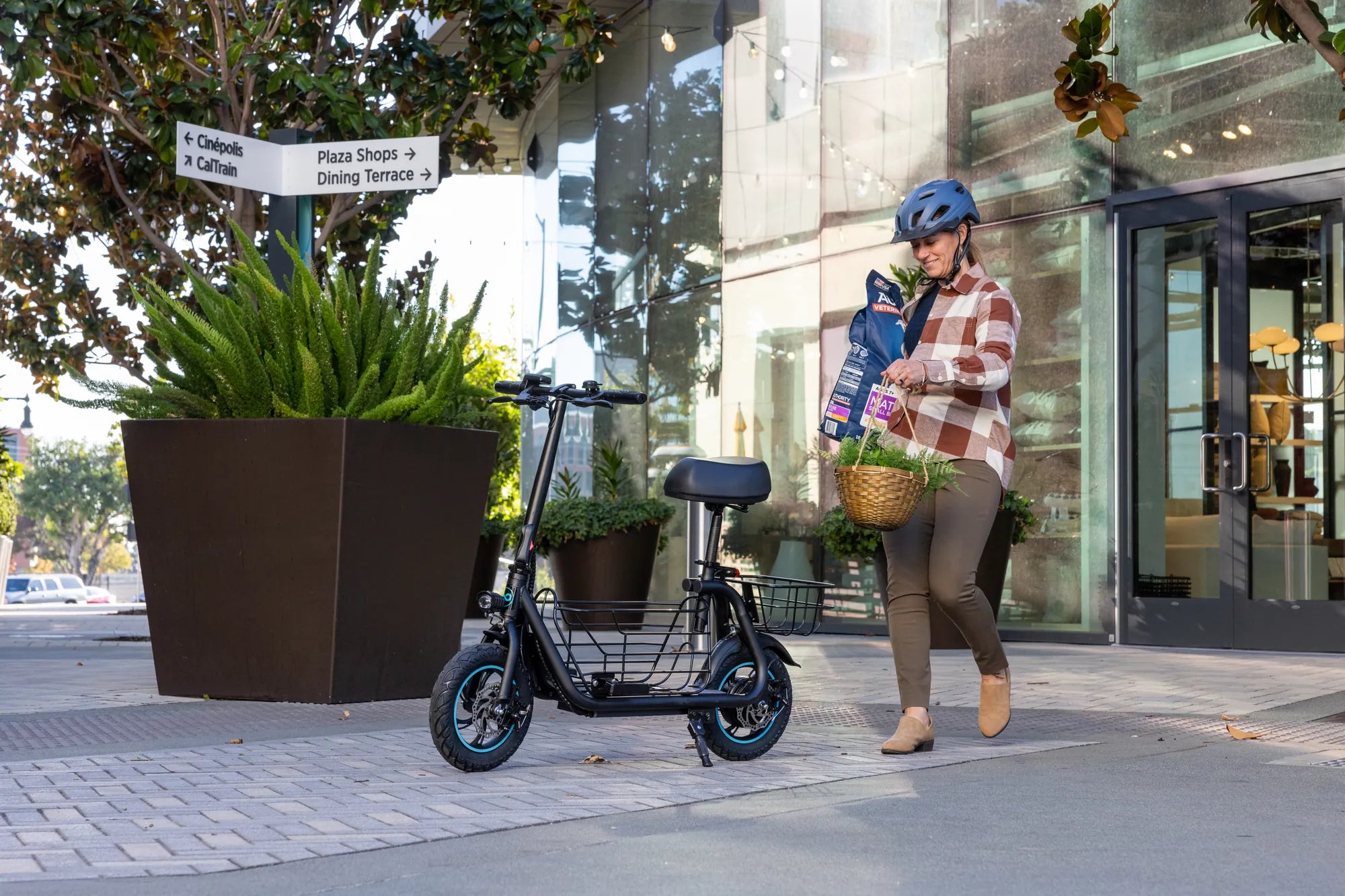
Imagine slicing through Bangalore's Silk Board junction or Delhi's ITO crossing in minutes, not hours, while spending pennies on fuel. This is the reality electric scooters for adults in India are creating. This guide provides a data-driven analysis of how e-scooters are transforming urban commutes, from navigating chaotic traffic to calculating true cost savings. You will learn the essential features for Indian conditions, understand battery and safety fundamentals, and discover how to choose a reliable model that delivers long-term value, setting the stage for a greener, more efficient personal transport revolution.
The Rise of Electric Scooters in India's Urban Landscape
India's urban centers are at a mobility crossroads. With over 8 million vehicles added to roads annually and congestion costing the economy billions, the search for efficient alternatives is urgent. Electric scooters for adults have emerged not as a niche gadget, but as a pragmatic solution to this gridlock. Their adoption is being fueled by a powerful convergence of economic necessity, environmental policy, and technological advancement.
Government initiatives like the FAME II scheme have provided crucial subsidies, making EVs more accessible. Simultaneously, rising petrol prices have made the running cost advantage of electricity impossible to ignore. For the adult commuter, the value proposition is clear: a personal vehicle that bypasses traffic, reduces travel time, and slashes monthly transport expenditure. The market is responding rapidly, with sales of electric two-wheelers growing at a compound annual rate exceeding 50%.
This shift represents more than just a change in fuel type. It's a reimagining of the first-and-last-mile commute, office travel, and local errands. The compact form factor of an electric scooter for adults makes it ideal for India's mixed-use urban neighborhoods, where trips are often under 10 kilometers. The silent operation also contributes to reducing noise pollution, a significant but often overlooked urban stressor.
The future of urban commuting in India is electric, connected, and personal. As charging infrastructure expands and battery technology improves, the electric scooter is poised to move from an early-adopter choice to a mainstream commuter staple. The question for many adults is no longer "why," but "how" to make the switch intelligently, focusing on durability, safety, and total cost of ownership.
Why Electric Scooters are Ideal for Indian Adults
The suitability of electric scooters for the Indian adult commuter stems from a direct alignment with local challenges. The primary advantage is profound cost savings. Compared to a petrol scooter averaging 40-50 km/l, an electric scooter can travel the same distance for less than 10% of the fuel cost. When electricity is priced at ₹8/kWh and a scooter consumes roughly 1.5 kWh per 60 km, the running cost is about ₹0.20 per km, versus ₹2-₹3 per km for petrol.
Maneuverability in dense, stop-and-go traffic is another critical benefit. The instant torque from an electric motor provides quick acceleration from traffic signals, while the slim profile allows filtering through stationary or slow-moving vehicles. This can reduce commute times significantly in peak hours. Furthermore, maintenance is simpler and cheaper; there is no engine oil, spark plug, or complex gearbox to service, leading to fewer garage visits and lower annual upkeep costs.
From an environmental perspective, each electric scooter on the road contributes to improved urban air quality. Even when accounting for India's current grid electricity mix, EVs have a lower well-to-wheel carbon footprint than internal combustion engines. As the grid greens with more renewable energy, this advantage will only magnify. For the rider, it's a tangible way to reduce personal carbon emissions without compromising mobility.
Finally, the convenience factor is substantial. The ability to charge overnight at home, similar to a smartphone, eliminates trips to the fuel station. For those living in apartments, portable or removable batteries offered by brands like Gyroor make charging feasible without dedicated parking. This combination of economic, practical, and ecological benefits creates a compelling case for adoption.
Navigating Indian Roads: Key Features for Safety and Durability
Indian road conditions demand specific engineering. A capable electric scooter for adults must be built to withstand uneven surfaces, potholes, and occasional rough patches. A robust frame constructed from high-grade aluminum or steel is non-negotiable for long-term structural integrity. The build quality directly impacts safety and longevity.
The suspension system is the first line of defense against road imperfections. A combination of front and rear suspension, preferably with hydraulic or spring-based shock absorbers, is essential to maintain control and comfort. Inadequate suspension can lead to a jarring ride and accelerated wear on other components.
Braking performance is paramount. A dual braking system, often combining a disc brake in the front for strong stopping power and a drum brake in the rear for modulation, is considered ideal. Some advanced models feature Electronic Braking Systems (EBS) or regenerative braking, which also help recharge the battery slightly. Bright LED headlights, tail lights, and brake lights ensure visibility during early morning or late evening commutes, while a loud, clear horn is a necessary communication tool in chaotic traffic.
The Battery Imperative: Range, Lifespan, and Charging in Indian Conditions
The battery is the heart and most critical component of an electric scooter. Understanding its specifications is key to avoiding "range anxiety." Advertised range figures are often based on ideal lab conditions. Real-world range in Indian cities, with frequent stops, starts, and varying rider weights, is typically 70-80% of the claimed figure. For a reliable daily commute, choose a scooter with a rated range at least 50% longer than your round-trip distance.
Battery lifespan is measured in charge cycles. A quality Lithium-ion (Li-ion) battery from a reputable brand should deliver 500-800 full charge cycles before its capacity degrades to around 80% of its original state. This translates to roughly 3-5 years of daily use. Certification is crucial: a UL-certified battery pack, as used by Gyroor, has undergone rigorous testing for safety, stability, and performance, mitigating risks of overheating or fire.
Charging practicality is vital. Most e-scooters charge from a standard 220V household socket, taking 4-8 hours for a full charge. Models with removable batteries offer maximum flexibility, allowing users to charge the battery indoors. For Indian weather, the battery and its management system must have good thermal management to handle summer heat and be housed within a water-resistant deck (IPX5 rating or higher) to protect against monsoon rains and road spray.
Gyroor's Approach: Engineered for Reliability in India
Gyroor has established itself as a global brand trusted by over 100,000 riders by focusing on core engineering principles that directly address the harsh realities of Indian commuting. The philosophy is built on safety first, durability second, and rider peace of mind as the ultimate goal. This approach translates into specific design and component choices tailored for demanding daily use.
At the foundation is battery safety. Every Gyroor electric scooter for adults uses UL-certified battery packs. This independent certification is a critical differentiator, ensuring each cell and the complete battery management system (BMS) have passed stringent tests for electrical, mechanical, and environmental safety. This provides essential protection against the primary concern of potential battery-related hazards.
Durability is engineered for local conditions. An IPX5 water-resistant rating is standard across key models. This means the scooter's electrical components can withstand low-pressure water jets from any direction, making it capable of handling sudden monsoon showers, wet roads, and routine cleaning. Combined with robust suspension and reinforced frames, this design ethos ensures the scooter is an asset, not a liability, throughout the year.
Gyroor backs its products with a comprehensive 1-year warranty, covering the motor, battery, controller, and frame. This commitment underscores confidence in product longevity and provides a clear safety net for the consumer. It’s an assurance that the brand stands behind its claim of building electric scooters for adults that are fit for purpose in challenging urban environments.
Model Comparison: Finding Your Perfect Gyroor Fit
Choosing the right model depends on your specific commute, terrain, and carrying needs. While Gyroor offers a range of models, we can compare typical product categories to guide your decision. The key is to match the scooter's capabilities to your daily routine.
A compact commuter model is ideal for shorter distances (under 15 km round trip), flat terrain, and solo riders. It prioritizes portability, often featuring a folding mechanism, and lighter weight for easy carrying. A mid-range performance model suits longer commutes (20-30 km) and may handle mild inclines better, thanks to a more powerful motor. It often includes enhanced features like a digital display and better suspension.
For those needing to carry a passenger or tackle steeper flyovers, a high-power model is necessary. These scooters boast higher wattage motors, larger battery capacities for extended range, and stronger frames with higher weight capacities. The trade-off is usually less portability and a higher price point. The following table illustrates the principle-based comparison for adult commuters in India.
| Use Case & Model Type | Typical Motor Power | Real-World Range | Max Speed | Key Features for India |
|---|---|---|---|---|
| Compact Commuter (Short trips, solo) | 250W - 350W | 15 - 25 km | 25 km/h | Folding design, light weight, IPX5 rating |
| Mid-Range Performer (Standard commute) | 350W - 500W | 25 - 40 km | 30-35 km/h | Front suspension, digital display, dual brakes |
| High-Power / Pro (Long range, flyovers, passenger) | 500W+ | 40 - 60+ km | 40+ km/h | Dual suspension, high-capacity UL battery, high load capacity |
The Practical Rider's Guide: Ownership Costs and Regulations
Understanding the total cost of ownership (TCO) is vital for an informed purchase. The upfront cost of an electric scooter for adults is higher than a basic petrol scooter, but the gap closes quickly when operational costs are factored in. A detailed 5-year TCO analysis often reveals savings of 40-60% compared to petrol.
Breakdown of 5-Year Ownership Cost (Comparative Estimate):
Electric Scooter: Initial purchase (₹40,000) + Electricity (~₹5,000) + Maintenance (~₹5,000) + Battery replacement (once, ~₹10,000) = ~₹60,000.
Petrol Scooter: Initial purchase (₹80,000) + Petrol (@ ₹110/l, ~₹75,000) + Maintenance/Service (~₹20,000) + Insurance/Tax = ~₹1,80,000+. The electric scooter's advantage in fuel and maintenance is decisive.
The regulatory landscape for electric scooters in India is evolving favorably. As per the Central Motor Vehicle Rules, electric vehicles with a motor power not exceeding 250W and a maximum speed not exceeding 25 km/h are classified as bicycles and do not require registration or a driving license. However, most electric scooters for adults have more powerful motors (350W+).
For scooters with power above 250W and/or speed above 25 km/h, they are classified as motor vehicles. This typically requires vehicle registration with the local RTO, a valid driving license (for two-wheelers), third-party insurance, and the rider must wear a helmet. It is the rider's responsibility to verify the specifications of their chosen model and comply with all state-specific traffic regulations to ensure legal and safe riding.
Frequently Asked Questions (FAQs) for Indian Riders
Q1: Is an electric scooter powerful enough for flyovers and inclines?
A: It depends on the motor power. Models with 500W or higher motors, like some in Gyroor's performance range, are designed to handle moderate inclines and flyovers, especially with a single rider. Check the scooter's gradeability rating (often 15-20 degrees for capable models) before purchase if your route includes steep hills.
Q2: How long does the battery last before needing replacement, and what is the cost?
A: A quality Li-ion battery retains about 80% of its capacity after 500-800 full charge cycles. With daily use, this translates to 3-5 years. Replacement costs vary but typically range from ₹8,000 to ₹15,000 for a genuine battery pack, a fraction of the savings accrued on petrol during that period.
Q3: Can an electric scooter safely carry two adults?
A> Only if the scooter is explicitly rated for the combined weight. Check the manufacturer's maximum load capacity. Many commuter models are designed for a single rider (load cap: 100-120 kg). Performance models with stronger frames and motors may support up to 150 kg, allowing for two average-sized adults. Never exceed the stated limit.
Q4: What about servicing and spare parts availability in India?
A> The ecosystem is growing. Reputable brands like Gyroor operate through online channels and authorized service networks in major cities. While widespread physical service centers are still developing, most maintenance involves simple parts (tires, brakes, lights) which are generally standardized. For complex issues, brands usually offer direct support and mail-in service options.
Q5: How do I secure my electric scooter against theft?
A> Use a high-quality, hardened steel U-lock or chain lock to secure the frame to an immovable object. Some models have built-in electronic lock features that disable the motor. GPS tracking add-ons are also available. Always park in well-lit, attended areas when possible, and never leave the removable battery unattended.
Conclusion: Embracing a Smarter, Greener Commute
The evidence is overwhelming: electric scooters for adults represent a rational, economical, and sustainable evolution of urban mobility in India. They address the core pains of cost, congestion, and pollution with a simple, effective solution. The transition is no longer a question of feasibility, but of making an informed choice focused on safety, durability, and genuine value.
Selecting a scooter with certified safety standards, robust construction for local roads, and a reliable support warranty is the key to a positive long-term experience. This is where a commitment to engineering, as demonstrated by brands like Gyroor with their UL-certified batteries and IPX5 water-resistant builds, becomes critical. It transforms the scooter from a short-term purchase into a dependable partner for your daily journey.
Your next commute can be quieter, cleaner, and far more economical. The future of urban commuting is here, and it's electric, efficient, and empowering. Explore the range of engineered solutions designed to meet the demands of the Indian rider and take the first step towards claiming back your time, your money, and your city's air.
Ready to experience a reliable, high-performance electric scooter built for Indian conditions? Browse the full Gyroor collection, featuring UL-certified batteries, IPX5 water resistance, and a comprehensive 1-year warranty, at gyroorboard.com.
Most Powerful Electric Scooters for Adults: Speed, Range, and Performance
How Much Are the Electric Scooters in Liverpool: A Complete Price Guide