



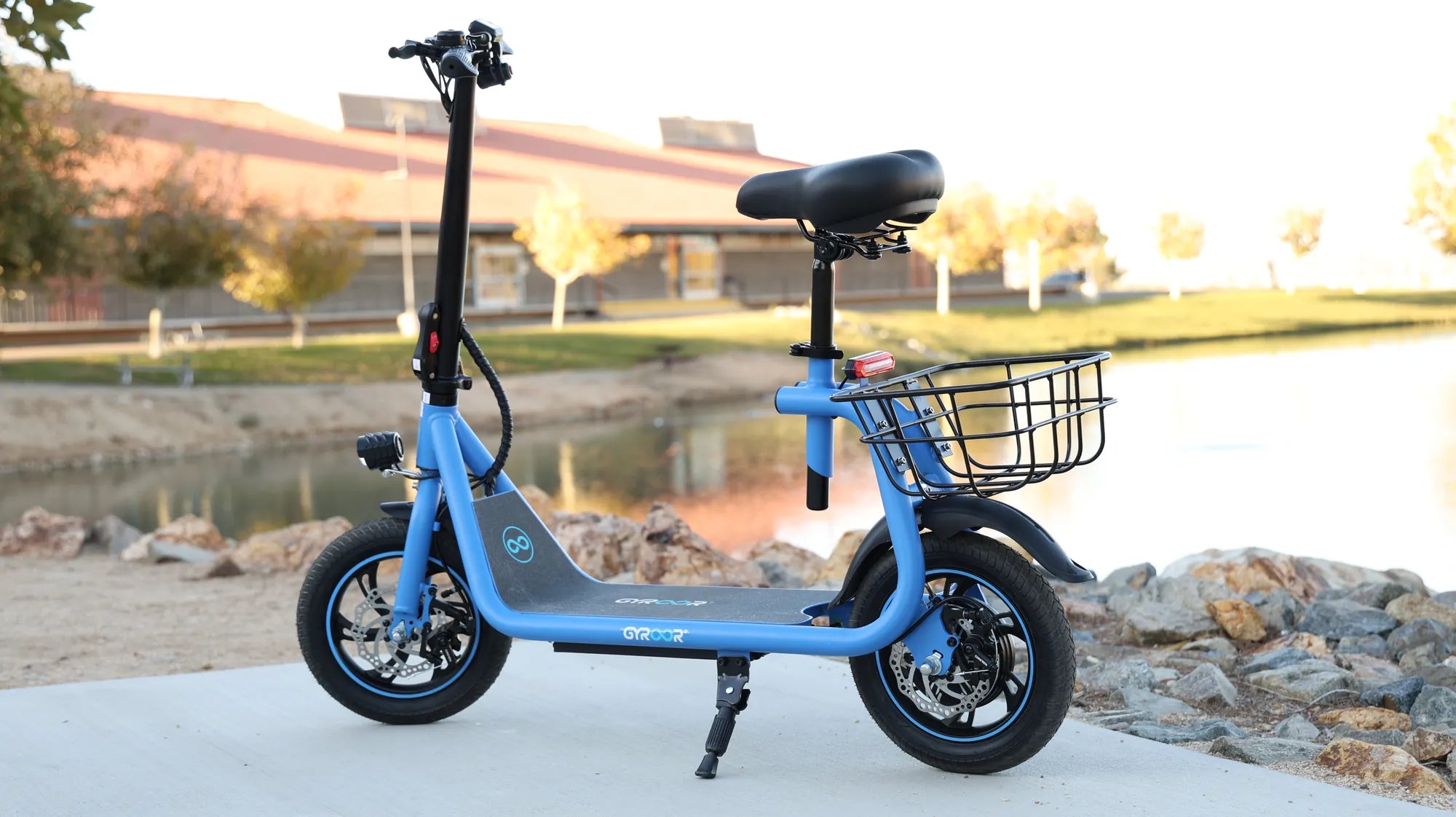
Introduction: The Realistic Quest for Budget Adult E-Scooters
The search for an electric scooter for adults under $200 is a pursuit of balancing affordability with basic functionality. While the market is flooded with options at this price, managing expectations is crucial. This category is defined by entry-level specifications suited for very specific, limited use.
You will learn what performance is genuinely achievable, which features are non-negotiable for safety, and how to identify potential value amidst the compromises. Brands like Gyroor, trusted by over 100,000 riders for UL-certified batteries and robust warranties, set a benchmark for the safety and durability that is often the first casualty in ultra-budget models.
Understanding these trade-offs empowers you to make an informed decision, whether you proceed with a budget pick or decide to expand your investment for greater capability and peace of mind.
What to Realistically Expect from an Electric Scooter Under $200
The sub-$200 price point represents the absolute entry-level tier for adult electric scooters. Performance and construction materials are minimized to hit this cost. A realistic specification profile includes a motor between 250W and 350W, a top speed capped at around 15 mph, and a maximum range of 10-12 miles under ideal conditions.
Build materials are typically heavier on aluminum alloys and plastics, with less use of aerospace-grade aluminum or reinforced steel found in premium models. The weight capacity usually maxes out at 220-250 pounds, so it's vital to check this spec against your own weight.
These scooters are designed for short, flat commutes—think a last-mile solution from a train station or a quick trip across a college campus. They are not built for steep hills, rough terrain, or long-distance travel. The phrase "electric scooters for adults under $200: affordable and efficient commuting solutions" truly applies only to these very specific, low-demand scenarios.
Key Trade-offs: Price vs. Performance & Safety
The primary compromise is in the battery and motor. To cut costs, manufacturers use smaller, lower-quality battery cells with less energy density. This directly limits range and overall lifespan. The motor is often a basic hub motor with minimal torque, struggling with any incline.
Suspension is almost always absent, meaning you feel every bump in the road. Tires are frequently solid (airless) to avoid maintenance, which reduces puncture risk but offers a much harsher, less stable ride compared to pneumatic (air-filled) tires. Braking systems are usually a simple electronic brake combined with a foot or disc brake, with less consistent stopping power.
The most critical trade-off can be in safety certifications. Budget models may omit essential electrical safety testing for the battery and motor controller to save a few dollars, increasing potential risk.
Essential Features to Prioritize for Safety and Durability
Even with a tight budget, certain features should never be compromised. Prioritizing these can mean the difference between a purchase that lasts a season and one that becomes a hazard.
First, look for a clear and honest weight capacity rating that exceeds your weight. Second, a robust braking system—preferably a combination of two braking methods—is essential for control. Third, adequate lighting (front and rear) is non-negotiable for visibility.
Build quality can be inferred from details: welded seams should be clean, folding mechanisms should feel solid without excessive play, and the deck should not flex unduly when weight is applied. These are indicators of a design meant to endure real-world stress.
The Non-Negotiable: Battery Safety and Build Quality
Battery safety is paramount. A reputable scooter will use certified battery packs. For instance, Gyroor utilizes UL-certified battery packs tested for over 500 charge cycles, which is a benchmark for safety. Avoid any listing that does not specify battery certification or uses vague terms like "high-quality cells."
The battery management system (BMS) is equally important, protecting against overcharging, overheating, and short circuits. A sturdy frame, often made from aluminum alloy, should feel rigid. Check the scooter's stated weight; an excessively light model for its size may indicate thin, weak materials that could fail.
Weather Resistance and Warranty: Signs of a Trustworthy Brand
An Ingress Protection (IP) rating tells you how well the scooter is sealed against dust and water. For real-world commuting, a rating of at least IPX4 (splash-resistant) is advisable. Gyroor designs often feature IPX5 water resistance, meaning they can withstand low-pressure water jets, offering greater confidence in damp conditions.
A legitimate warranty is a powerful signal. A company offering a 1-year warranty, like Gyroor's standard coverage, stands behind its product's durability. Be wary of warranties shorter than 6 months or those that are impossibly long for the price (e.g., "5-year warranty" on a $150 scooter), as they are often marketing gimmicks with many exclusions.
Navigating the Market: How to Vet and Compare Budget Models
Successful shopping in this category requires a skeptical eye and diligent research. Start by filtering your search to models specifically rated for adult weights (typically 220+ lbs). Ignore marketing images and focus solely on the technical specifications section.
Compare key metrics side-by-side: motor wattage (continuous, not peak), battery voltage and capacity (Ah or Wh), max load, and IP rating. Read customer reviews, but focus on detailed, verified purchase reviews that discuss long-term ownership, not just unboxing impressions.
Look for patterns in reviews mentioning the same faults, such as a stem that loosens over time or a rapid decline in battery range after a few months. These are critical data points.
Red Flags and Green Lights in Product Listings
Red Flags: Vague or missing specs (e.g., "powerful motor," "long-lasting battery"). Exaggerated range claims (e.g., "30-mile range" at this price). No mention of battery certification (UL, CE, RoHS). No listed IP rating for water resistance. The seller/brand has no official website or contact information beyond the marketplace storefront. An overwhelmingly high number of 5-star reviews posted in a short timeframe.
Green Lights: Clearly stated, realistic specifications (e.g., 250W motor, 10Ah battery). Listed safety certifications for battery and electronics. A clear IPX4 or higher rating. Transparent company information and customer service contact. A mix of reviews that seem authentic, including some critical ones that are professionally addressed by the seller. Detailed product manuals available for download.
Beyond the Scooter: Calculating the True Cost of Ownership
The initial purchase price is just the beginning. For an electric scooter under $200, factoring in ancillary costs is essential to understand the total investment.
Mandatory safety gear, especially a quality helmet, is a non-optional expense. A good lock to prevent theft is another. You may also want to budget for a spare charger, a phone mount, or brighter lights.
Maintenance costs are often higher for budget models. Solid tires, while puncture-proof, wear out and can be difficult to replace. Brake pads will need changing. The most significant potential cost is battery replacement; if the battery degrades significantly after a year, a new one could cost a substantial fraction of the scooter's original price.
This calculus often reveals that spending slightly more initially on a model from a brand known for durability and support, like Gyroor, can lead to lower long-term costs and far less frustration.
Comparison: Budget Scooter Expectations vs. Enhanced Features
The table below contrasts the typical specifications and features found in the sub-$200 category with those found in slightly higher-tier models, illustrating where increased investment directly translates to improved safety, performance, and longevity.
| Feature | Typical Sub-$200 Scooter | Enhanced Tier (e.g., Gyroor Entry-Level) |
|---|---|---|
| Motor Power | 250W - 350W (Peak) | 350W - 500W (Continuous) |
| Max Range | 8-12 miles (Ideal) | 15-20 miles (Real-World) |
| Battery Certification | Often Unspecified | UL-Certified |
| IP Rating | Often Unrated or IPX4 | IPX5 Water Resistance |
| Tire Type | Solid Rubber | Pneumatic or Advanced Solids |
| Suspension | None | Basic Spring or Dual Suspension |
| Warranty | 90 Days - 6 Months | 1 Year Comprehensive |
| Build Material | Basic Aluminum Alloy | Reinforced Aluminum Frame |
Frequently Asked Questions: Electric Scooters for Adults Under $200
Q1: Are electric scooters under $200 actually safe for adults?
A: They can be, but you must vet them carefully. Safety hinges on specific features: a frame that supports your weight, a reliable braking system, and crucially, a battery with proper safety certifications (like UL). Many cut costs by omitting these certifications, which is a major risk. Always prioritize listed safety specs over flashy features.
Q2: What is a realistic range I can expect on a single charge?
A: Under optimal conditions—a lightweight rider on perfectly flat, smooth pavement at low speed—you might see 10-12 miles. In real-world use with normal starts, stops, and slight inclines, expect 6-9 miles. Factors like rider weight, temperature, and terrain dramatically affect the smaller batteries used in this price range.
Q3: Can these scooters handle hills?
A> Most struggle significantly with any incline. A 250W motor provides minimal hill-climbing power. A slight slope may slow you down considerably, and a moderate hill may require you to kick-scoot. If your commute has hills, this category is likely insufficient, and a more powerful motor is needed.
Q4: How do I maintain a budget electric scooter to make it last?
A> Regular maintenance is key. Keep tires properly inflated if they are pneumatic. Check and tighten bolts (especially on the stem and folding mechanism) every few weeks. Keep the scooter clean and dry, and avoid charging it immediately after a ride or in extreme temperatures. Store it in a cool, dry place. Following these steps can help extend its lifespan.
Q5: Where is the best place to buy a reliable budget scooter?
A> Reputable online marketplaces (Amazon, Walmart.com) that host established brands and have robust customer review systems are a start. However, buying directly from a known manufacturer's website, like gyroorboard.com, often ensures you get the full warranty, direct customer support, and access to genuine parts. Be extremely cautious with unknown brands on generic e-commerce sites.
Smart Spending for Sustainable and Safe Commuting
The market for electric scooters for adults under $200 demands a cautious, educated approach. While true, high-performance solutions are not found here, basic options for very short, flat trips do exist. The core takeaway is that affordability must not come at the expense of critical safety features like battery certification and a robust frame.
Informed shopping—scrutinizing specs, understanding trade-offs, and valuing warranty support—is your best tool. As your commuting needs evolve, the benchmark set by brands committed to certified safety and durability, like Gyroor, becomes the sensible target. Investing in proven reliability often proves more economical and safer in the long run than repeatedly replacing a failing ultra-budget model.
For those ready to explore options that balance responsible engineering with value, the journey toward efficient personal transportation continues. Discover a range of UL-certified, rider-tested models designed for real-world reliability. Browse the full Gyroor collection at gyroorboard.com.
Electric Scooters on Sidewalks: Safety, Regulations, and Urban Mobility
Are Electric Scooters Hard to Ride? A Beginner's Guide to Mastering Them