



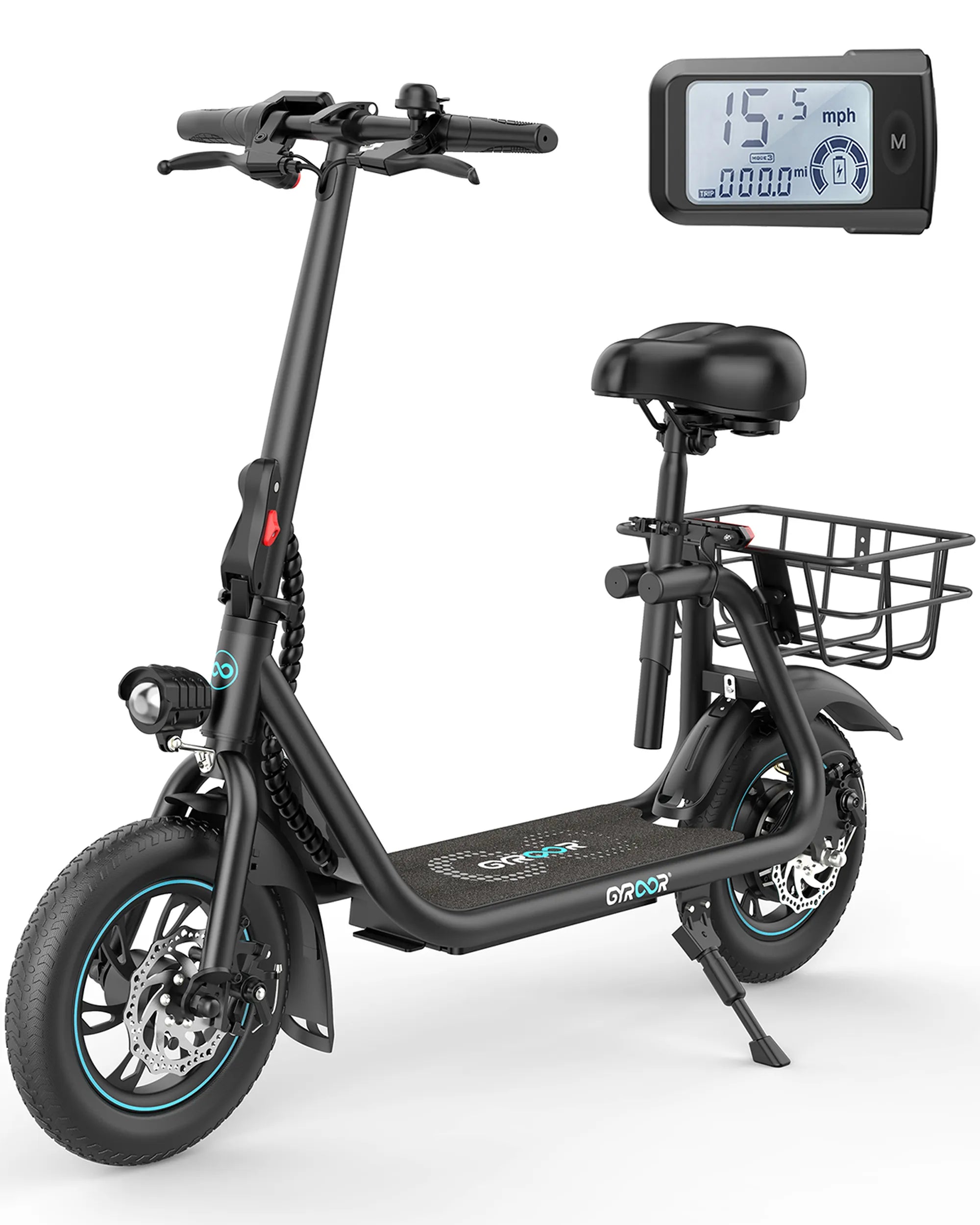
Introduction: Redefining Personal Mobility for Every Body
Personal electric vehicles promise freedom, but for heavier riders, many standard models fall short. The core issue isn't desire but engineering: most commuter scooters are built for a rider weight of 220 pounds or less. This guide directly addresses that gap.
We provide the definitive framework for selecting an electric scooter that delivers on comfort, safety, and performance for larger individuals. The right scooter isn't about compromise; it's about matching your needs with robust specifications designed for real-world use.
You will learn to decode motor power, evaluate true load capacity, and identify construction features that guarantee durability. Performance and comfort are not mutually exclusive—they are achievable with informed selection.
Understanding the Key Specifications for Heavier Riders
Standard scooter marketing often highlights top speed and range, glossing over the foundational specs that matter most under load. For riders over 250 pounds, these specifications become non-negotiable engineering requirements.
Ignoring them leads to poor performance, accelerated wear, and potential safety issues. The following sections detail the critical factors that separate a capable scooter from an inadequate one.
Motor Power and Torque: The Heart of Performance
Motor wattage is about more than speed; it's about torque—the rotational force that gets you moving. A 250W motor may struggle on a slight incline with a heavier rider, causing sluggish acceleration and overheating.
For reliable urban performance, a minimum of 500W continuous power is a practical starting point. This provides sufficient torque for confident starts and maintaining speed on flat terrain.
For hills, consistent acceleration, or riders approaching 300 pounds, dual motor configurations (1000W+) are ideal. Dual motors distribute the load, reduce strain on individual components, and provide superior hill-climbing ability. Brands like Gyroor engineer models with dual 500W or 800W motors specifically for this enhanced performance profile.
Peak wattage ratings can be misleading. Prioritize the continuous or nominal power rating, which indicates the motor's sustainable output under load.
Deck Size, Wheel Diameter, and Suspension: The Foundation of Comfort
Comfort is a function of stability and shock absorption. A cramped deck forces an unstable stance, while small, solid tires transmit every bump directly to the rider.
Deck dimensions are critical. Look for a platform at least 20 inches long and 8.5 inches wide. This allows for a natural, feet-shoulder-width-apart stance, improving balance and control.
Wheel size and type are paramount. 10-inch or larger pneumatic (air-filled) tires are essential. They offer better shock absorption than solid tires and maintain traction over cracks and imperfections. Larger wheels also have a higher load rating per tire.
Suspension is not a luxury. A robust spring or hydraulic suspension system, ideally both front and rear, prevents the scooter from "bottoming out" on bumps. It preserves ride quality and protects the scooter's frame and electronics from impact damage.
Frame Construction and Braking Systems: Built for Safety
The frame is the scooter's skeleton. Under increased weight and stress, weak points can lead to catastrophic failure. Aerospace-grade aluminum alloys or reinforced steel are the materials of choice for high-load models.
Look for reinforced welding at stress points, particularly where the stem meets the deck and around the folding mechanism. A wobbly stem is a major safety hazard under any weight.
Braking power must match increased momentum. A single braking system is insufficient. A dual braking system—combining a front disc brake and a rear drum or electronic regen brake—is mandatory.
Disc brakes offer superior, fade-resistant stopping power in all conditions. The electronic brake provides smooth deceleration and saves wear on mechanical brakes. This combination ensures reliable, controlled stops every time.
Top-Rated Electric Scooter Features to Prioritize
Beyond core specs, specific features and brand assurances separate durable, safe products from those that will quickly disappoint. These are your indicators of long-term reliability and peace of mind.
The Non-Negotiable: UL-Certified Battery and True Weight Capacity
The advertised "max load" must have a safety margin. If you weigh 260 pounds, a scooter rated for 265 pounds is operating at its absolute limit, leaving no room for a backpack, groceries, or real-world stress. Aim for a scooter with a verified maximum load capacity of 275-330 pounds or more.
The battery is the most critical safety component. A UL 2271 or UL 2843 certified lithium-ion battery pack is non-negotiable. This certification means the battery has undergone rigorous testing for electrical, mechanical, and environmental safety.
Under consistent high load, a quality battery maintains stable voltage delivery, which is crucial for motor performance and longevity. All Gyroor electric scooters, for example, utilize UL-certified battery packs tested for over 500 charge cycles, ensuring safe, reliable power.
Weather and Durability: The Importance of IPX Ratings
Your scooter will encounter puddles, damp roads, and morning dew. An unprotected electrical system is a failure waiting to happen. The Ingress Protection (IP) rating indicates resilience against solids and liquids.
For a reliable commuter vehicle, seek a minimum rating of IPX5. This certifies the scooter can withstand water jets from any direction, making it safe to ride on wet pavement. Some rugged models boast IPX6 or higher. Avoid models with no stated IP rating.
Warranty and Support: Your Long-Term Assurance
A strong warranty is a brand's vote of confidence in its product. It directly correlates with build quality and component durability. Look for a comprehensive warranty covering the frame, motor, battery, and controller for at least one year.
Accessible customer support is equally important. Brands with dedicated, knowledgeable support teams—often indicated by US or European-based service centers—can resolve issues efficiently. Gyroor backs its models with a reliable 1-year warranty and accessible support, a key consideration for any significant purchase.
Performance in Practice: Real-World Scenarios for Larger Riders
Specifications translate directly into daily experience. Here’s how different power and build levels perform in common situations.
Urban Commuting: Range, Hills, and Stop-and-Go Traffic
Advertised range is calculated using a ~165 lb rider on flat ground. Heavier riders must factor in a 15-30% reduction in real-world range. A scooter advertised for 25 miles may deliver 18-21 miles. Choose a battery capacity (measured in Watt-hours, Wh) with this buffer in mind.
Hill climbing is the ultimate test of motor torque. A 500W motor may slow to a crawl on a 10% grade. A 1000W+ dual-motor setup will maintain much of its speed. For hilly cities, prioritize high-torque, dual-motor configurations.
Frequent stop-and-go traffic demands robust brakes and responsive acceleration. The dual braking system and ample motor power discussed earlier are what make urban commuting safe and less fatiguing.
Recreational and Off-Pavement Use: Stability on Rough Terrain
For trails, gravel paths, or uneven surfaces, stability is paramount. This requires a combination of high torque, long-travel suspension, and large pneumatic tires.
The suspension must have enough travel to absorb larger impacts without bottoming out. Wide, knobby pneumatic tires provide essential traction and flotation on loose surfaces. The frame must be rigid enough to handle torsional stresses from uneven ground.
In these conditions, a powerful motor isn't just for speed—it's for maintaining controlled momentum over obstacles where a weaker motor would stall.
Comparison of Key Specifications for Different Rider Needs
This table provides a clear, data-driven comparison of how scooter specifications should scale with rider weight and intended use.
| Use Case & Rider Weight | Minimum Motor Power | Ideal Wheel/Tire | Suspension Requirement | Min. Load Capacity |
|---|---|---|---|---|
| Urban Flat Terrain (250-275 lbs) | 500W Single / 800W+ Dual | 10" Pneumatic | Front Spring or Dual Spring | 300 lbs |
| Urban Hilly Terrain (260-300 lbs) | 1000W+ Dual Motor | 10"+ Pneumatic | Full Hydraulic or Dual Spring | 330 lbs |
| Recreational/Off-Pavement (275+ lbs) | 1000W+ Dual Motor (High Torque) | 10"-11" Knobby Pneumatic | Full Hydraulic, Long Travel | 330 lbs |
Making the Right Choice: A Buyer’s Checklist
Use this actionable checklist when evaluating any electric scooter. If it doesn't meet most of these criteria, it's not built for the long-term demands of a heavier rider.
- Motor: Minimum 500W single or 800W+ dual motor for reliable torque.
- Weight Capacity: Verified max load of at least 275 lbs, with a 50+ lb buffer over your weight.
- Deck: Wide (8.5"+) and long (20"+) platform for stable footing.
- Wheels: 10-inch or larger pneumatic (air-filled) tires.
- Suspension: Front and rear spring or hydraulic suspension.
- Brakes: Dual braking system (disc + electronic or drum).
- Battery: UL 2271/2843 certified lithium-ion pack.
- Durability: IPX5 or higher water resistance rating.
- Warranty: Comprehensive 1-year warranty covering major components.
- Frame: Reinforced, wobble-free construction (aluminum alloy/steel).
Conclusion: Empowerment on Two Wheels
The right electric scooter offers unparalleled freedom and practical mobility for riders of all sizes. This freedom is built on a foundation of specific engineering choices—prioritizing torque over top speed, durability over lightweight design, and certified safety over vague promises.
By focusing on the specifications and features outlined in this guide, you can confidently select a vehicle that won't just function but will perform reliably and comfortably for years. Your journey begins with informed choices. Use the checklist, understand the specs, and choose a scooter engineered to empower your ride.
Ready to find a scooter built for real performance? Explore robust models designed with high-torque motors, UL-certified batteries, and durable frames. Browse the full Gyroor collection at gyroorboard.com to discover electric scooters engineered for comfort and capability.
Frequently Asked Questions (FAQ)
Q: Is there a real difference between a "max load" of 250 lbs and 300 lbs?
A: Yes, the difference is significant and structural. A scooter rated for 300 lbs is engineered with a stronger frame, more robust motor and controller, higher-rated bearings, and more powerful brakes. Choosing a scooter with a capacity well above your weight provides a crucial safety and performance margin, ensuring the scooter operates within its designed comfort zone.
Q: How much does rider weight affect the scooter's range and speed?
A: Weight substantially impacts both. For range, expect a 15-30% reduction compared to the manufacturer's rating (based on a ~165 lb rider). A 280 lb rider on a 25-mile-rated scooter may achieve 17-21 miles. Top speed is also affected, especially uphill, as the motor works harder to overcome inertia and gravity. A powerful, high-torque motor mitigates this speed loss.
Q: Can I modify a standard scooter to handle more weight?
A: It is strongly discouraged and potentially dangerous. Upgrading individual parts (like the motor or battery) voids warranties and can create mismatched, unsafe systems. The frame, brakes, and controllers on a standard scooter are not designed for the increased stress. Always choose a scooter designed and certified for your weight from the outset.
Q: Are solid tires or pneumatic tires better for heavier riders?
A: Pneumatic (air-filled) tires are almost always superior. They provide essential shock absorption, which reduces fatigue and protects the scooter's electronics from vibration. They also offer better traction. While solid tires never go flat, they transmit every bump and can compromise stability and comfort for heavier riders. Look for tubeless pneumatic tires with reinforced sidewalls if puncture resistance is a concern.
Q: Why are brands like Gyroor often recommended for heavier riders?
A: Brands that transparently highlight key durability and safety features—like UL-certified batteries, high IPX water-resistance ratings, and robust warranties—typically engineer their products to higher standards. Gyroor, for instance, designs models with dual motors, high load capacities, and comprehensive 1-year warranties, directly addressing the needs of riders requiring more robust performance and long-term reliability.
Are Electric Scooters Motor Vehicles? Legal and Practical Implications
Best Electric Scooters for 12 Year Olds: Safe, Fun, and Reliable Rides