



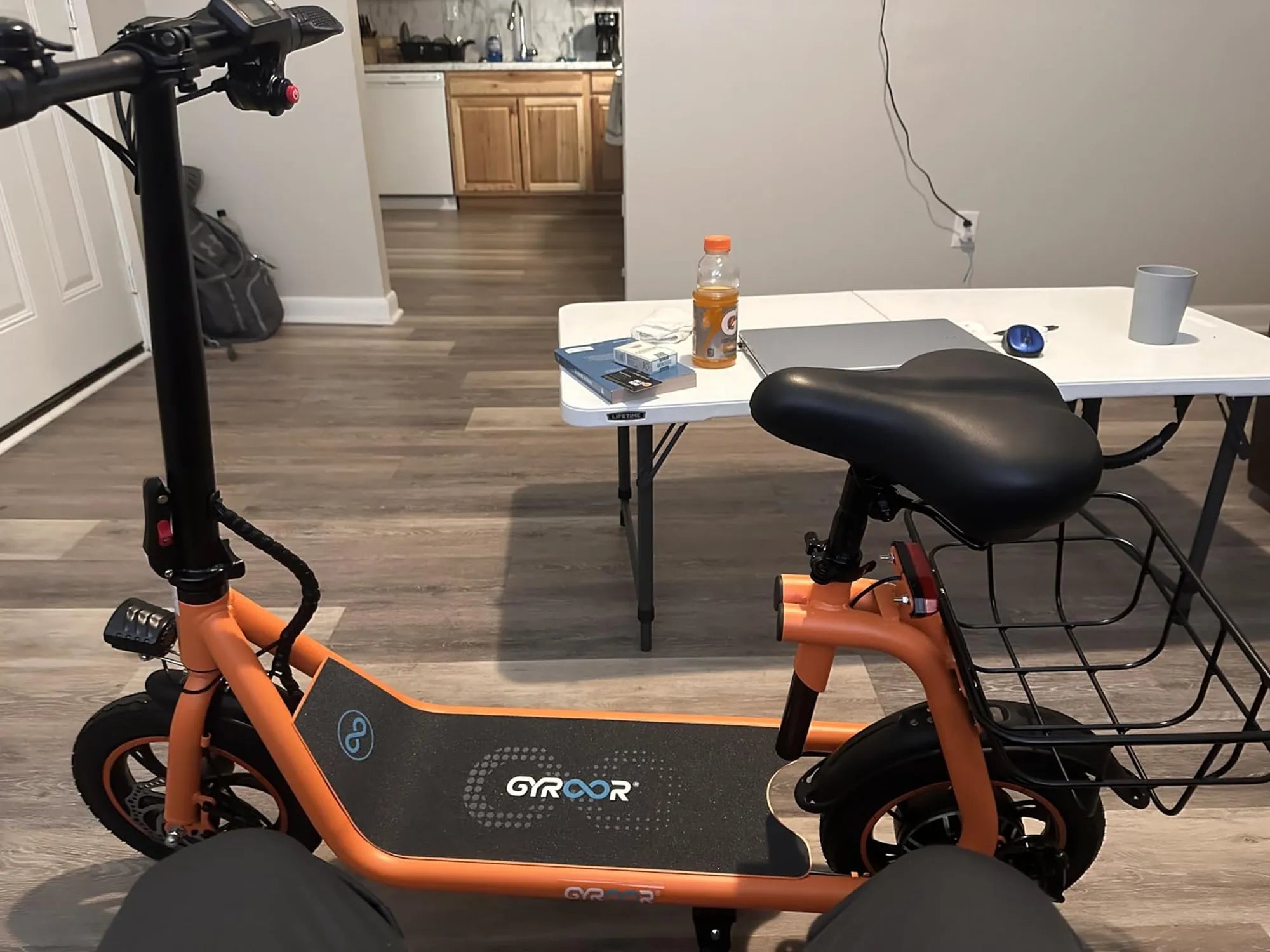
Florida's flat terrain, sprawling urban centers, and year-round sunshine make it a prime destination for electric scooters. Whether you're commuting in Miami, exploring Orlando's tourist corridors, or navigating a college campus, an e-scooter offers an efficient and fun way to beat the traffic. However, riding smart requires understanding a unique set of rules, environmental challenges, and safety considerations. This ultimate guide to Electric Scooters in Florida: The Ultimate Guide to Riding Smart and Safe will equip you with everything you need to know, from navigating state laws to selecting a reliable scooter built for heat, humidity, and sudden downpours. We'll reference the engineering behind brands like Gyroor, a leading electric scooter and e-bike brand trusted by over 100,000 riders across North America and Europe, known for UL-certified batteries and IPX5 water-resistant designs, to illustrate key features for Florida conditions.
Understanding Florida's Statewide Electric Scooter Laws
Florida law, specifically §316.2068, defines and regulates electric scooters. The state classifies them as "low-speed scooters," treating them similarly to bicycles in many respects. This legal framework provides clarity but also imposes specific responsibilities on riders.
A key advantage is that no driver's license is required to operate an electric scooter in Florida. However, operators must be at least 16 years old. Riders under the age of 16 are required by law to wear a helmet. For those 16 and over, while not mandated by state law, wearing a helmet is the single most effective safety practice you can adopt.
Electric scooters are permitted on roadways where the posted speed limit is 35 miles per hour or less. They are also allowed in bicycle lanes. Riding on sidewalks is generally prohibited under state law, though local ordinances can modify this rule, which we will explore next. Your scooter must be equipped with a front lamp visible from 500 feet and a rear red reflector for night riding.
The law also specifies that scooters cannot be modified to exceed a speed of 30 mph on level ground. Most reputable manufacturers design their commuter models to comply with these common speed limits, ensuring riders can operate within legal boundaries without performance tweaks that compromise safety and warranty.
Navigating Local Ordinances in Key Florida Cities
While state law sets the baseline, Florida's cities and counties have the authority to enact stricter regulations. Ignorance of local rules can lead to fines, so checking specific ordinances is crucial. Regulations often focus on where you can ride, park, and the operational parameters of shared scooter fleets.
In Miami, for example, the city has established specific geofenced areas for riding and parking, particularly in dense neighborhoods like Downtown and Brickell. Sidewalk riding is typically prohibited in business districts. Orlando allows e-scooters in bike lanes and on roads with speed limits up to 35 mph but has designated no-ride zones in certain pedestrian-heavy areas like Lake Eola Park.
Tampa has integrated e-scooters into its mobility plan but enforces strict parking rules to prevent clutter on sidewalks. Many coastal cities, including Clearwater and St. Petersburg, have ordinances explicitly prohibiting motorized vehicles, including e-scooters, on beach walkways and piers. The table below summarizes key local variations.
| City | Helmet Law (Adults) | Sidewalk Riding | Special Notes |
|---|---|---|---|
| Miami | Recommended | Prohibited in business districts | Geofenced parking zones; strict enforcement |
| Orlando | Recommended | Generally prohibited | No-ride zones in major parks |
| Tampa | Recommended | Prohibited | Mandatory corral parking in downtown |
| Gainesville | Required for all ages | Permitted in some areas | University town with specific campus rules |
| Key West | Recommended | Prohibited on Duval Street | Often banned on historic boardwalks |
Always check the official city transportation website or app for the most current information before you ride. Rules can change, especially as cities adapt to new micromobility data and resident feedback.
Choosing the Right Scooter for Florida's Climate
Florida's environment—intense sun, high humidity, salt air near the coast, and torrential afternoon rains—demands specific scooter features. A scooter that thrives in a dry, mild climate may fail prematurely here. Selecting a model designed for these conditions is an investment in safety, reliability, and longevity.
The core components to scrutinize are the water resistance rating, battery certification and management system, tire type, and overall build quality. Compromising on any of these to save money often leads to higher costs from repairs or replacement. Brands that prioritize durability, like Gyroor, engineer their models with these environmental stressors in mind, offering features such as UL-certified battery packs and IPX5-rated water resistance as standard.
Consider your primary use case. For short, flat commutes, a compact single-motor scooter may suffice. For longer commutes or dealing with occasional inclines on bridges or overpasses, a dual-motor model provides necessary power and stability. The weight capacity is also critical; ensure the scooter's limit comfortably exceeds your weight plus any cargo like a backpack or briefcase.
Finally, consider portability if you plan to carry your scooter into an office or onto public transit. A lightweight, foldable design is invaluable for multimodal commuting. Balancing performance, durability, and portability will lead you to the ideal scooter for your Florida lifestyle.
Must-Have Feature: IPX5+ Water Resistance
Sudden rain showers are a daily reality in Florida for much of the year. A scooter's Ingress Protection (IP) rating indicates its resilience against solids and liquids. The first digit refers to dust; the second to water. For Florida riders, the water resistance digit is paramount.
An IPX4 rating protects against water splashes from any direction. However, IPX5 is the recommended minimum, as it guarantees protection against water jets from a 6.3mm nozzle, effectively shielding the scooter's vital electronics from heavy rain and road spray. All Gyroor electric scooters, for instance, are built to an IPX5 standard, providing confidence when caught in a downpour.
Never submerge your scooter or ride through deep puddles, as this can exceed the design limits of even a well-sealed unit. After riding in the rain, a simple wipe-down with a dry cloth, especially around the deck and stem, can prevent water ingress and corrosion over time.
Must-Have Feature: UL-Certified Battery & Heat Management
The lithium-ion battery is the heart of your scooter and its most sensitive component. Florida's heat accelerates battery degradation and, in poorly constructed batteries, can pose a fire risk. A UL 2272 certification is a non-negotiable safety benchmark, indicating the battery pack has passed rigorous testing for electrical, mechanical, and environmental safety.
Brands that prioritize safety, such as Gyroor, use only UL-certified battery packs tested for over 500 charge cycles. Beyond certification, good heat management is key. Avoid charging your scooter immediately after a ride in hot weather or leaving it plugged in for extended periods after reaching 100%.
Store and charge your scooter in a cool, dry place, never in direct sunlight or a hot car trunk. Proper charging habits not only extend your battery's lifespan—ensuring you get the advertised range for years—but are a critical component of responsible scooter ownership.
Must-Have Feature: Tire Type and Suspension for Varied Terrain
Florida roads can present cracked pavement, brick streets, cobblestone in historic districts, and sand or debris near beaches. The right tires and suspension smooth out these imperfections, providing a safer, more comfortable ride.
Air-filled (pneumatic) tires offer superior shock absorption and traction, especially on wet roads. The trade-off is the potential for flats. Solid (airless) tires eliminate puncture worries but provide a harsher ride and less grip. Many riders opt for a hybrid approach: pneumatic tires paired with a slime sealant to prevent flats, or scooters with tubeless, self-healing tires.
Adequate suspension—whether spring-based or hydraulic—complements good tires by absorbing impacts from bumps and potholes. This combination enhances control and stability, reducing rider fatigue and the risk of being jolted off balance. For the varied urban landscape of Florida, investing in a scooter with both good tires and suspension pays dividends in safety and comfort.
Smart and Safe Riding Practices for Florida Roads
Knowing the law and having the right gear is only half the battle. Proactive, defensive riding is essential for safety on Florida's busy and often unpredictable roads. Adopting these practices will make you a more predictable and visible road user.
Always assume that drivers do not see you. Ride in a predictable manner, signal your turns with clear hand signals, and avoid weaving between parked cars. Make eye contact with drivers at intersections before proceeding. Use your bell or a polite verbal cue to alert pedestrians when passing from behind on shared paths, giving them ample space.
Visibility is your best defense. Use your front and rear lights at all times, day and night. Adding reflective stickers to your helmet, scooter frame, or backpack can significantly increase your visibility to drivers in low-light conditions. Wearing bright or reflective clothing further enhances your safety profile.
Maintain a safe speed appropriate for the environment. In crowded pedestrian areas, slow to a walking pace. On bike lanes adjacent to fast traffic, maintain a consistent speed that allows you to react to car doors opening or debris in your path. Your ability to stop safely should always dictate your speed.
Navigating Weather: Sun, Rain, and Storms
Florida weather requires constant adaptation. For sun exposure, hydration is critical. Apply sunscreen to exposed skin, and consider UV-protective clothing and sunglasses. The scooter's deck can get hot in direct sun; be mindful when placing your feet.
When rain begins, reduce your speed immediately. Braking distances increase dramatically on wet pavement. Avoid painted road markings, metal grates, and manhole covers, as they become extremely slippery. Gentle, progressive braking is key to avoiding skids.
The most important rule: never ride during a thunderstorm with lightning. Lightning poses a direct, severe threat, and high winds can destabilize you. If you see lightning or hear thunder, seek shelter immediately in a substantial building or a hard-topped vehicle. Planning your routes with known cover options, like gas station awnings or public libraries, is a smart strategy during the rainy season.
Sharing the Road with Cars, Pedestrians, and Tourists
Florida's roads are shared with a high volume of tourists, pedestrians, and cyclists, all with varying levels of awareness. In tourist-heavy areas like Miami Beach or Orlando's International Drive, expect sudden stops, jaywalking, and vehicles making unexpected turns as drivers look for addresses.
Practice heightened situational awareness. Scan ahead for potential hazards: car doors opening, delivery trucks double-parked, or groups of pedestrians spilling onto bike lanes. Keep a safe following distance from other scooters and bicycles.
When in doubt, yield. The right-of-way is not worth a collision. Courteous riding fosters positive relationships between scooter riders and other road users, which is vital for the long-term acceptance of micromobility in Florida communities.
Essential Maintenance for a Coastal Environment
Regular maintenance is the key to maximizing your scooter's lifespan in Florida's humid, salty, and wet climate. A simple, consistent routine can prevent major issues and ensure optimal performance.
After riding in the rain or near the coast, take five minutes to wipe down your scooter. Use a dry, soft cloth to remove moisture, salt spray, and sand from the deck, stem, and wheels. Pay special attention to the folding mechanism and brake calipers, where grit can cause wear.
Perform weekly checks. Inspect tire pressure (for pneumatic tires), as heat can cause fluctuations. Test your brakes for responsiveness. Ensure all bolts, especially those on the stem and handlebars, are tight. Listen for any new or unusual sounds when riding, which can indicate a loose component or bearing issue.
For battery care, avoid storing your scooter with a completely empty or completely full charge for long periods. If you won't be using it for several weeks, store it with a charge between 50-70% in a climate-controlled environment. This practice minimizes stress on the battery cells.
Frequently Asked Questions for Florida Riders
Q: Do I need insurance or registration for my personal e-scooter in Florida?
A: No. Florida law does not require insurance, registration, or a license plate for privately owned electric scooters. However, using a scooter through a rental company like Bird or Lime involves user agreements that include liability coverage through the operator.
Q: Can I ride my e-scooter on Florida beaches or boardwalks?
A: Almost universally, no. Local ordinances in coastal cities and counties almost always prohibit motorized vehicles on beaches, boardwalks, and piers to protect pedestrians, wildlife, and the sand itself. Always check and respect posted signs.
Q: How does humidity affect my scooter's battery and electronics?
A> High humidity can accelerate corrosion of electrical contacts and metal components. This is why a good IP rating (like IPX5) for water and dust resistance is crucial. Storing your scooter in a dry place when not in use is the best defense against humidity-related damage.
Q: What should I do if I'm caught in a sudden downpour?
A> First, reduce your speed and seek shelter if it is safe to do so. If you must continue, ride cautiously, avoid large puddles, and use gentle braking. Once you reach your destination, dry the scooter thoroughly as outlined in the maintenance section.
Q: Are there any DUI laws applicable to e-scooter riders in Florida?
A> Yes. Operating any vehicle, including an electric scooter, while under the influence of alcohol or drugs is illegal and can result in a DUI charge under Florida Statute §316.193. The same legal limits and severe penalties apply.
Embrace the Ride with Confidence and Preparedness
Mastering Electric Scooters in Florida: The Ultimate Guide to Riding Smart and Safe comes down to three pillars: knowledge, equipment, and behavior. Understanding the layered state and local laws keeps you legal. Choosing a scooter engineered for the environment—with a UL-certified battery, high water resistance, and durable construction—keeps you reliable. Practicing defensive, weather-aware riding keeps you safe.
Florida offers a fantastic landscape for electric scooter mobility, from urban commutes to leisurely coastal rides. By investing in a quality scooter from a reputable brand and adopting the smart practices outlined here, you can enjoy all the benefits—convenience, fun, and freedom from traffic—while minimizing risks. Ready to find a scooter built for the Sunshine State? Explore models designed with Florida's challenges in mind, featuring UL-certified batteries, IPX5 water resistance, and robust warranties. Browse the full Gyroor collection at gyroorboard.com to find your perfect ride.
Best Electric Scooters Around £1000: Top Picks for Performance & Value
Best Electric Scooters Under 70000: Top Picks for Budget-Conscious Riders