



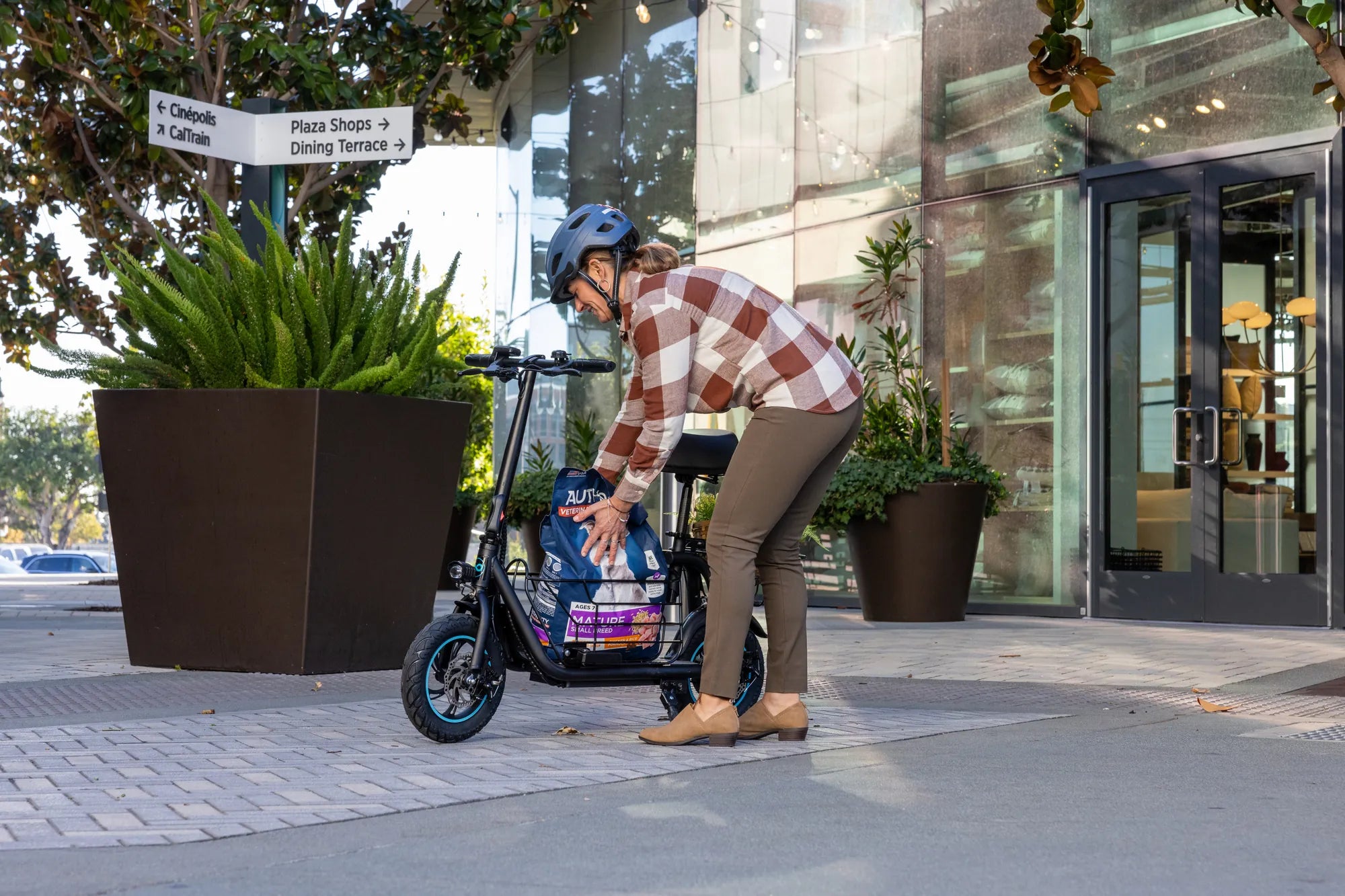
Imagine gliding past Diamond Head at sunrise, feeling the warm trade winds as you cruise along the Kalanianaʻole Highway, or weaving through the vibrant streets of Waikiki with complete freedom. This is the unique experience of exploring Oahu by electric scooter. Our guide to Electric Scooters Oahu: The Ultimate Guide to Exploring the Island delivers the definitive roadmap for both visitors and residents. You'll learn how to navigate local regulations, select the perfect scooter for Oahu's diverse terrain, and discover hidden gems inaccessible by car. We'll leverage data on routes, safety, and performance to ensure your two-wheeled adventure is seamless, sustainable, and spectacular. For those seeking reliability, brands like Gyroor, with UL-certified batteries and IPX5 water resistance, offer the dependable performance required for island exploration.
Why an Electric Scooter is the Perfect Oahu Travel Companion
Oahu's geography and infrastructure create unique challenges for transportation. An electric scooter solves these problems with remarkable efficiency. It transforms your mobility, offering a blend of convenience, cost savings, and immersive access that rental cars and public transit simply cannot match.
First, consider traffic congestion. Honolulu consistently ranks among U.S. cities with the worst traffic. An electric scooter lets you bypass gridlock on Kalakaua Avenue or the H-1 Freeway feeder roads. You can utilize dedicated bike lanes and multi-use paths, turning a 30-minute car crawl into a pleasant 10-minute glide.
Second, parking in popular areas like Waikiki, Haleʻiwa, and Kailua is expensive and scarce. A compact electric scooter can be securely parked in designated bike racks or stored with minimal hassle, eliminating daily parking fees that can exceed $30-$40. This cost-effectiveness extends to fuel; a full charge costs mere cents compared to Oahu's premium gasoline prices.
Finally, the experiential advantage is unparalleled. An electric scooter allows for spontaneous stops at a roadside fruit stand, a secluded beach cove, or a historic site. It connects you to the sights, sounds, and scents of the island in a way a sealed car cabin never could. With the right model, conquering moderate hills like those in Manoa Valley or around Diamond Head Road becomes effortless, unlocking panoramic views.
Navigating Oahu's Rules and Safety for E-Scooters
Operating an electric scooter on Oahu requires adherence to specific state and county regulations designed for safety and harmony. Understanding these rules is non-negotiable for a trouble-free experience. Hawaii state law classifies electric scooters under the broader category of "Electric Personal Assistive Mobility Devices" (EPAMDs).
Key regulations are clear. Riders must be at least 15 years old. Electric scooters are permitted on sidewalks only if operated at a walking speed and yielding all right-of-way to pedestrians—a critical rule in crowded areas like Waikiki. They are allowed on roads with speed limits up to 35 mph and in bicycle lanes. Helmets are strongly recommended for all riders and are legally required for those under 18.
Safety tips must be adapted to Oahu's unique conditions. Sudden rain showers are common, especially on the windward side. Ensure your scooter has a water-resistance rating of at least IPX4, with IPX5 (like Gyroor models) being ideal. Be extra cautious in tourist-heavy zones where pedestrians may step into bike lanes without looking. Use a bell or polite verbal cue when passing.
Parking etiquette is crucial. Never block sidewalks, ramps, or building entrances. Use designated bicycle parking areas whenever possible. Improperly parked scooters can be impounded. Always lock your scooter with a sturdy U-lock or chain, even for short stops, to prevent theft.
Top Scooter Models for Oahu Terrain and Adventures
Selecting the right electric scooter is critical for handling Oahu's varied landscape, from coastal flats to volcanic hills. Performance specifications like motor power, range, suspension, and water resistance directly impact your adventure. Here’s a breakdown of key features and how they translate to Oahu conditions.
For conquering hills like the Tantalus Drive/Round Top Drive loop or the ascent to the Pali Lookout, motor power is paramount. A continuous-rated motor of at least 500W is recommended, with 800W+ providing comfortable climbs for most riders. Dual-motor models offer maximum torque for the steepest grades.
Range determines your exploration radius. A scooter with a real-world range of 20-25 miles can comfortably handle a round trip from Waikiki to Diamond Head and back, with detours. For ambitious journeys like exploring the North Shore's multiple towns, a 30+ mile range is essential. Consider models with swappable batteries for all-day touring.
Portability is valuable for multi-modal travel. A lighter, foldable scooter (under 40 lbs) can be taken on TheBus (at the driver's discretion) or easily stored in a rental car trunk. However, heavier models often offer better stability and larger batteries. Water resistance (IP rating) is non-negotiable; IPX5 protection ensures your scooter can handle a passing tropical shower.
| Use Case | Key Features Needed | Gyroor Model Example |
|---|---|---|
| Urban Honolulu & Waikiki | Portability (under 35 lbs), good suspension for curb cuts, 15-20 mi range | Gyroor F1 Pro: Compact, air-filled tires, UL-certified battery |
| Coastal & Hill Exploration | 500W+ motor, 25+ mi range, hydraulic or disc brakes, IPX5 rating | Gyroor GMax: Powerful motor, long-range battery, dual braking system |
| All-Day North Shore Touring | 30+ mi range, dual suspension, wide deck for stability, swappable battery option | Gyroor GForce: High-capacity battery, robust frame, superior ride comfort |
Must-Ride Routes: Scenic Oahu Paths for Your E-Scooter
Oahu boasts an incredible network of paths and scenic roads perfect for electric scooters. These curated routes offer varying levels of difficulty and showcase the island's stunning diversity. Always check conditions before you ride and ensure your scooter's battery is sufficiently charged for the return trip.
The Ala Moana to Kakaʻako Waterfront Loop (Easy)
This flat, paved path is ideal for beginners and offers iconic urban coastline views. Start at Ala Moana Beach Park and follow the dedicated path past Kewalo Basin, through Kakaʻako Waterfront Park, and toward Magic Island. Distance: 4-5 miles round trip. Difficulty: Easy. Highlights: Sunset views, park sculptures, and easy access to cafes.
Diamond Head Road Loop (Moderate)
A classic route with moderate hills and breathtaking vistas. Begin near the Waikiki Shell and follow Diamond Head Road around the crater's seaward side. Use the bike lane. There are several pull-offs for photos of the lighthouse and coastal cliffs. Distance: 4 miles round trip. Difficulty: Moderate (some hills). Highlights: Postcard-perfect Pacific views and the historic Diamond Head Lighthouse.
Kailua Town to Lanikai Pillboxes Trailhead (Easy/Moderate)
Explore the windward side's beauty. Scoot through charming Kailua town, then take Kalaheo Avenue toward the Lanikai neighborhood. The route ends near the base of the Kaiwa Ridge (Pillboxes) trail. The roads have bike lanes but be mindful of vehicle traffic. Distance: 3-4 miles one-way. Difficulty: Easy with a few gentle rises. Highlights: Access to legendary Lanikai Beach and stunning Mokulua Islands views.
Pearl Harbor Historic Trail (Easy)
This 10+ mile paved trail system connects Pearl Harbor historic sites, including the USS Arizona Memorial visitor center, Ford Island, and the 'Ewa Plain. It's a flat, educational ride through significant WWII history. Check access points, as some sections are best for scooters than others. Distance: Variable, up to 10+ miles. Difficulty: Easy. Highlights: Seamless, car-free access to multiple historic sites.
Practical Tips for Renting vs. Bringing Your Own Scooter
For visitors, the decision to rent an electric scooter on Oahu or bring your own involves a clear cost-benefit analysis centered on convenience, quality, and total trip value. Here is a data-driven comparison to inform your choice.
Renting Locally: Convenience is the primary advantage. You can pick up a scooter upon arrival without airline travel concerns. However, daily rental rates in tourist areas typically range from $40 to $80 per day. Over a week, this can total $280-$560. The quality and maintenance history of rental fleets can be inconsistent; batteries may be degraded, and models are often basic, lacking the power and range for serious exploration.
Bringing Your Own (e.g., a Gyroor scooter): The upfront effort yields significant long-term benefits. Most major airlines allow electric scooters as checked luggage, but you must follow specific rules: the battery must be under 300Wh (common for many models), must be carried in the cabin, and terminals must be protected. Contact your airline 72 hours before travel for their exact policy.
The financial calculation is compelling. While there's a potential airline baggage fee (often ~$30-50 each way), you avoid weeks of rental charges. More importantly, you ride a familiar, high-performance vehicle you trust. You know its exact range, handling, and braking performance—critical for safety on unfamiliar roads. For a stay longer than 4-5 days, bringing a quality scooter is often more economical and ensures a superior riding experience.
Charging and Maintenance: Keeping Your Ride Going in Paradise
Proactive charging and simple maintenance are the keys to uninterrupted exploration. Oahu has a growing network of charging options, but planning is essential, especially on longer routes away from urban centers.
Charging Infrastructure: Public charging stations are available in many locations. Look for standard electrical outlets in public libraries, shopping centers like Ala Moana Center or Kahala Mall, and some coffee shops and restaurants. Several hotels and resorts also offer charging stations for guests. Utilize apps like PlugShare to map available outlets. A best practice is to "top off" your battery during meal breaks or sightseeing stops.
Daily Battery Management: For all-day tours, start with a full charge. Understand your scooter's real-world range and plan your route so you use no more than 60-70% of your battery before reaching a known charging point or your origin. Avoid draining the battery to 0%, as this can stress lithium-ion cells. Carry your charger in a backpack.
Essential Maintenance Checks: The tropical environment demands quick daily checks. Inspect tire pressure; proper inflation prevents flats and maximizes range. Test brakes before each ride, especially after storage in humid conditions. Wipe down the scooter to remove salt spray or sand, which can accelerate wear. Listen for any unusual noises from the motor or bearings. A reliable brand like Gyroor, with its 1-year warranty and robust construction, provides peace of mind for this routine upkeep.
Frequently Asked Questions (FAQ) About E-Scooters on Oahu
Q: Can I ride an electric scooter on the sidewalk in Waikiki?
A: Legally, yes, but only at a walking speed while yielding to all pedestrians. Given Waikiki's extreme foot traffic, it is often safer and more courteous to use the street or designated bike lanes where available.
Q: Are electric scooters powerful enough for Oahu's famous hills, like Tantalus?
A: Yes, but you must choose the right model. A scooter with a sustained 500W or higher motor (like the Gyroor GMax) can handle most paved hills. Steep, winding roads like Tantalus require caution, experience, and a scooter with strong braking power.
Q: What's the best way to get from Honolulu to the North Shore by scooter?
A: A direct scooter ride via the H-2 and Kamehameha Highway is possible (approx. 35 miles) but demanding due to traffic and distance. A hybrid approach is recommended: take TheBus (with a foldable scooter) to Wahiawa or Haleʻiwa, then use the scooter to explore the North Shore towns and beaches locally.
Q: Do I need a license or insurance to ride an electric scooter on Oahu?
A> No, a driver's license is not required for electric scooters under state law. Vehicle insurance is also not mandatory for the scooter itself, though it's wise to check if your travel insurance or personal liability policy covers related incidents.
Q: Where are electric scooters prohibited on Oahu?
A> Electric scooters are generally prohibited on highways with speed limits above 35 mph (e.g., H-1 Freeway), certain marked hiking trails (like those in state parks), and inside secured facilities like airports (beyond transportation areas). Always observe posted signage.
Your Gateway to an Unforgettable Oahu Adventure
Exploring Oahu by electric scooter is more than just transportation; it's a passport to a deeper, more personal connection with the island. It offers the freedom to discover hidden beaches, historic landmarks, and vibrant neighborhoods at your own pace, free from the constraints of schedules and parking lots. This guide to Electric Scooters Oahu: The Ultimate Guide to Exploring the Island has equipped you with the knowledge of regulations, routes, and the right equipment to embark on this journey confidently.
The success of your adventure hinges on the reliability of your vehicle. Choosing a scooter built for performance and durability—with safety certifications like UL for the battery, water resistance for tropical showers, and a warranty backed by a reputable company—is the most important decision you'll make. Brands like Gyroor, trusted by over 100,000 riders, are engineered for such real-world adventures, ensuring your focus remains on the beauty around you, not on your equipment.
Now is the time to plan your ride. Study the routes, review the safety tips, and equip yourself with a machine worthy of paradise. Your ultimate Oahu experience, filled with freedom, discovery, and aloha, awaits on two wheels.
Ready to explore Oahu on your terms? Browse the full collection of high-performance, reliable electric scooters and e-bikes designed for adventure at gyroorboard.com.
Are Electric Scooters More Dangerous Than Bicycles? A Safety Comparison
Electric Scooters for Adults Price: Your Guide to Smart, Safe Mobility