


Introduction: Why Safety is the Foundation of Fun
Choosing an electric scooter for your child is about more than just picking a fun toy. It's selecting a piece of personal mobility technology that must be inherently safe, reliable, and suited to a young rider's skills. This guide cuts through the marketing to focus on the engineering standards, design features, and parental practices that create a secure riding experience. You'll learn to identify the non-negotiable safety benchmarks that separate truly safe models from merely flashy ones.
We will analyze key safety certifications, break down essential scooter components, and outline your crucial role in training and supervision. Brands that prioritize safety, like Gyroor—a leading electric scooter and e-bike brand trusted by over 100,000 riders across North America and Europe—build their products around UL-certified batteries, IPX5 water-resistant designs, and reliable warranties. This guide empowers you to make an informed, smart choice for your child's next adventure.
Understanding Key Safety Certifications and Standards
Safety certifications are your first and most critical filter. They are independent verifications that a product has been tested against specific hazard risks. For children's electric scooters, two certifications are paramount: UL certification for electrical systems and ASTM F963 for toy safety. These are not optional extras; they are evidence of a manufacturer's commitment to risk mitigation.
The UL 2272 standard specifically covers electrical systems for personal e-mobility devices, including the battery, charger, and motor controller. A UL-certified product has undergone rigorous testing for electrical, mechanical, and environmental safety, including overcharge, short circuit, and drop tests. Similarly, ASTM F963 is a comprehensive toy safety standard that addresses physical and mechanical hazards, such as sharp edges, pinch points, and stability.
What Does a UL-Certified Battery Mean for Your Child?
A UL-certified lithium-ion battery pack, like those used in all Gyroor models, represents the highest benchmark for battery safety. This certification ensures the battery cells and battery management system (BMS) are designed to prevent catastrophic failures. The BMS actively monitors voltage, current, and temperature, providing protection against overcharging, over-discharging, and short circuits.
This is crucial because a stable, well-managed battery significantly reduces the risk of thermal runaway—a chain reaction that can lead to fire. Gyroor's UL-certified packs are tested for over 500 charge cycles while maintaining safety integrity, meaning the battery remains safe throughout the scooter's lifespan. When searching for electric scooters safe for kids, a UL mark on the battery is a non-negotiable starting point for peace of mind.
Essential Safety Features to Look For in a Kid's E-Scooter
Beyond certifications, the scooter's physical design must incorporate features that compensate for a child's developing coordination and judgment. Safety is engineered into the handlebars, deck, brakes, and software. A quality scooter for kids will have a lower center of gravity, responsive but not overly sharp controls, and multiple layers of speed management.
The frame should be made of robust, aerospace-grade aluminum that can withstand the bumps of learning. All fasteners should be covered or recessed to prevent snagging clothing or skin. The wiring should be internally routed, not externally dangling, to protect it from damage. These design choices collectively create a product that is durable and forgiving for a young rider.
Speed Control and Adjustable Modes: The Digital Governor
Unrestricted speed is a major hazard. The best electric scooters safe for kids feature a speed limiter, capping maximum velocity to a safe range, typically between 10 mph for younger children (8-10) and 15 mph for older teens. More importantly, they offer multiple riding modes (e.g., Beginner, Eco, Sport) controlled via a button or a companion app.
Beginner mode may limit speed to just 5-7 mph, perfect for mastering balance and braking in a controlled environment. Parental controls via a PIN or app allow you to lock the scooter into this slower mode until your child demonstrates proficiency. This progressive learning approach, supported by technology, is fundamental to safe skill development and is a key feature in many Gyroor models.
Stable Design: Wheel Size, Deck, and Braking Systems
Stability is a function of wheel size, deck design, and braking power. Larger wheels (8.5 inches or more in diameter) roll over cracks and small obstacles more smoothly than tiny solid wheels, providing better stability and a more comfortable ride. Air-filled (pneumatic) tires offer superior shock absorption compared to solid rubber tires.
The deck should be wide enough for a child to place both feet comfortably side-by-side, with a pronounced, grippy surface to prevent slipping. For braking, a dual braking system is ideal. A combination of an electronic brake (regenerative or disc) controlled by a lever and a rear fender foot brake gives the rider redundant stopping methods. The brakes should engage progressively, not abruptly, to prevent the rider from being thrown forward.
Durability and Weather Resistance: The IPX5 Advantage
Kids ride in less-than-ideal conditions. They will encounter puddles, damp pavement, and light rain. An IPX5 water-resistance rating, like that on Gyroor scooters, means the scooter's electrical components are protected against low-pressure water jets from any direction. This is not for submersion, but it safeguards against splashes and spray during typical use.
This rating directly impacts safety and longevity. Water ingress can cause electrical shorts, motor failure, or corrosion, leading to sudden malfunctions. An IPX5 build ensures the scooter remains reliable when riding through a wet park path or after a light shower, preventing unexpected breakdowns that could strand a young rider.
The Parent's Role: Gear, Training, and Rules of the Road
Even the safest scooter is only as secure as the practices surrounding its use. Parental involvement is the most critical safety feature. This involves equipping your child properly, dedicating time to supervised training, and establishing immutable rules for where and how the scooter can be used.
Consistency is key. The rules and gear requirements must be enforced every single time, without exception. This creates a safety culture around the activity, teaching responsibility alongside fun. Your role transitions from direct supervisor to coach and rule-enforcer as your child's skills and judgment mature.
Mandatory Safety Gear: Beyond the Helmet
A CPSC-certified bicycle helmet is the absolute minimum. It must fit snugly and be worn correctly every time. However, comprehensive protection extends much further. A full set of safety gear should be considered mandatory, especially during the learning phase.
- Knee and Elbow Pads: These protect the joints most likely to impact the ground during a fall.
- Wrist Guards: Critical for preventing fractures and severe abrasions, as the instinct is to put hands out to break a fall.
- Closed-Toe, Sturdy Shoes: Sandals or flip-flops offer no protection. Shoes with grippy soles help maintain footing on the deck.
High-visibility clothing or reflective stickers on the helmet and scooter are also advisable for riding near dusk or in low-light conditions.
Supervised Training and Practice Zones
Do not hand over the scooter and assume your child knows how to use it. Begin in a completely controlled environment: a smooth, empty parking lot, a tennis court, or a quiet cul-de-sac with no traffic. Practice the fundamentals: mounting and dismounting, gentle acceleration, controlled braking (using both methods), and making wide, smooth turns.
Drill emergency stops. Once basic control is mastered, introduce simple obstacles like weaving around cones. Only after demonstrating consistent control, awareness, and respect for the rules should the riding area be expanded to include supervised sidewalk use. Clearly define no-go zones: streets, steep hills, crowded areas, and anywhere near pools or bodies of water.
Making the Smart Choice: Balancing Fun, Features, and Safety
With knowledge of certifications and features, the final choice involves matching a specific model to your child's individual profile. The goal is to find a scooter that is engaging but not intimidating, capable but not excessive. It should be a tool for building confidence, not fear.
Consider the scooter's intended use case. Is it for short trips around the neighborhood, or for longer adventures on paved trails? The range, comfort features, and portability (weight and foldability) will vary. Always prioritize the safety fundamentals—certifications, speed control, braking, and stability—over flashy extras like LED light shows or Bluetooth speakers.
Warranty and Support: Your Long-Term Safety Net
A strong warranty is a brand's promise of durability and its commitment to customer safety. A comprehensive 1-year warranty, like Gyroor's, that covers the frame, motor, battery, and electronics indicates the manufacturer trusts the build quality of its product. It acts as your safety net if a component fails under normal use.
Equally important is accessible customer support. The ability to quickly get answers to technical or safety questions from a knowledgeable, preferably US-based, support team is invaluable. It transforms a product from a disposable commodity into a supported piece of equipment. When evaluating electric scooters safe for kids, consider the post-purchase support structure as part of the overall safety ecosystem.
Age, Weight, and Maturity: Finding the Perfect Fit
Manufacturer recommendations are a guide, but you must apply your knowledge of your child. The two key specs are the maximum weight limit and the recommended age range. Never exceed the weight limit, as it stresses the frame, motor, and brakes, compromising safety and causing premature wear.
More subtly, match the scooter's power and speed to your child's maturity and coordination. A responsible 10-year-old might handle a scooter rated for 12+ with proper training, while an impulsive 13-year-old might need to start on a model with stricter parental controls. Avoid the temptation to "buy up" so they can "grow into it." An overpowered scooter is a significant safety risk. It's safer to upgrade later than to start with a machine that inspires fear or is difficult to control.
Comparison: Key Features for Safety and Suitability
The table below compares critical safety and performance features across hypothetical scooter categories, illustrating how specifications align with different age and maturity levels. Use this as a framework when evaluating specific models.
| Feature / Consideration | Ages 8-10 (Beginner) | Ages 10-13 (Intermediate) | Ages 13+ (Advanced Teen) |
|---|---|---|---|
| Max Recommended Speed | 10 mph (with beginner mode ≤7 mph) | 12-15 mph (with mode selection) | 15-20 mph (with responsible use) |
| Key Safety Certifications | UL 2272, ASTM F963 (Mandatory) | UL 2272, ASTM F963 (Mandatory) | UL 2272 |
| Ideal Wheel Type & Size | 8.5" Air-Filled Tires (for stability) | 8.5"-10" Air-Filled Tires | 10" Air-Filled or Pneumatic |
| Braking System Priority | Dual System (E-brake + Foot brake) | Dual System (Disc + Regenerative) | Dual Disc Brakes |
| Essential Parental Control | Physical Speed Mode Switch, PIN Lock | App-based Speed Limiting, Usage Tracking | App-based Tracking, Geofencing |
| Weight & Portability | Lightweight (< 20 lbs), Easy to Carry | Moderate Weight (20-30 lbs), Foldable | Heavier (30+ lbs), Focus on Performance |
Frequently Asked Questions (FAQ)
What is the safest age for a child to start riding an electric scooter?
There is no universal "safest age," as it depends on individual maturity, coordination, and judgment. Most manufacturers recommend ages 8 and up as a general guideline. The key is that the child is old enough to understand and consistently follow safety rules, wear all protective gear, and has developed the physical coordination to operate the controls safely. Always start with a model designed for younger riders with strict speed limits.
Are electric scooters with seats safer for kids?
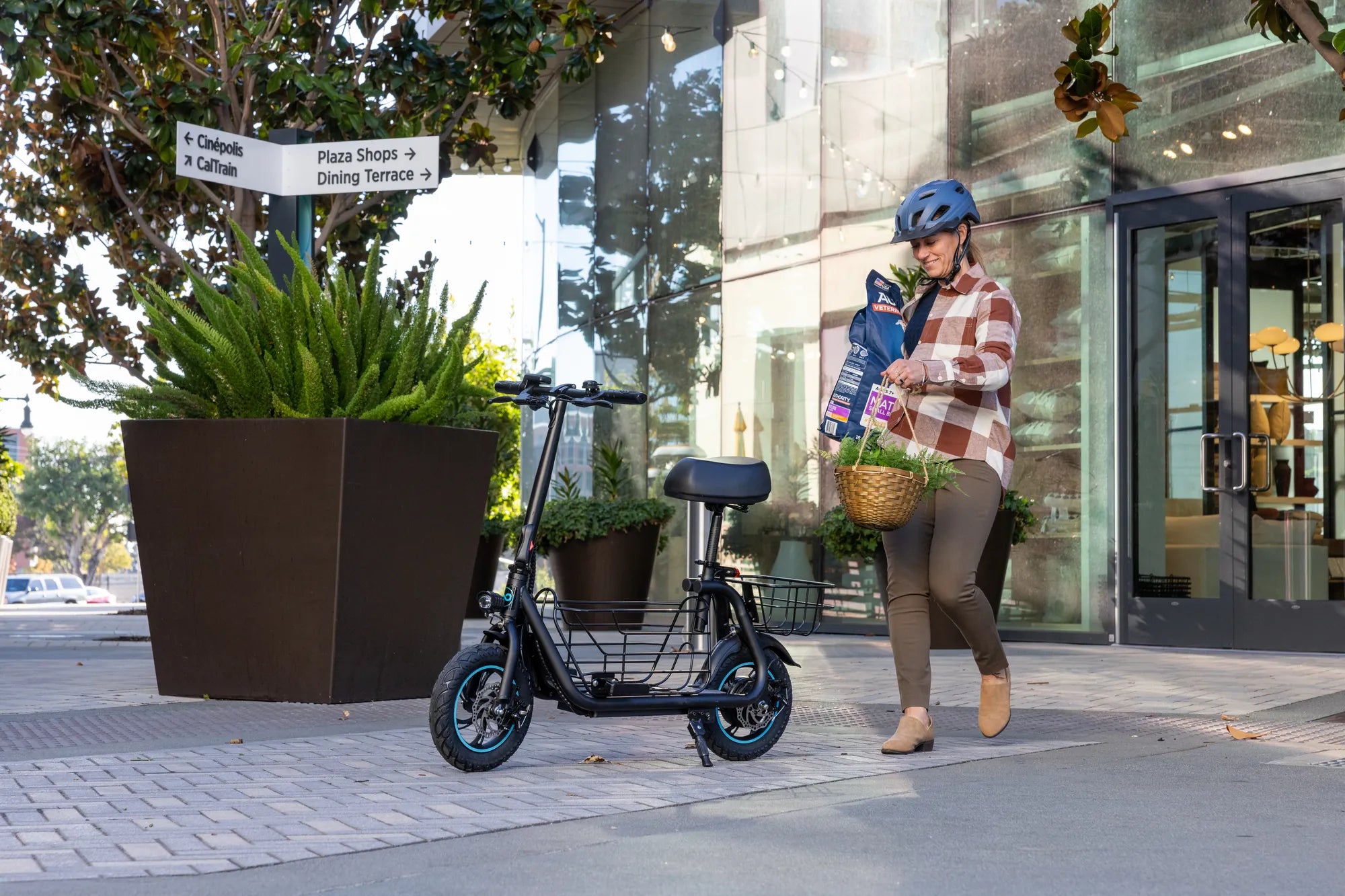
Not necessarily. While a seat may feel more stable, it can also create a false sense of security and may hinder a child's ability to quickly dismount in an emergency. Standing scooters promote an active, balanced riding posture where the rider's legs act as natural shock absorbers. For true safety, focus on the scooter's core stability features—wheel size, deck size, and low center of gravity—rather than the presence of a seat.
How often should I check and maintain my child's e-scooter?
Perform a quick pre-ride check before every use: test the brakes, ensure tires are properly inflated, check that the folding mechanism (if present) is locked, and look for any loose parts or damage. A more thorough monthly maintenance check should include inspecting brake pads for wear, tightening all bolts and fasteners, cleaning the deck and wheels, and checking the battery and charger for any signs of damage. Regular maintenance is a core component of ongoing safety.
Can my child ride an electric scooter in the rain?
It is not recommended, even with water-resistant ratings like IPX5. Wet conditions drastically reduce traction, increasing the risk of slipping when braking or turning. Visibility is lower for both the rider and drivers. Water can also make pavement markings and metal surfaces like sewer covers extremely slippery. An IPX5 rating protects the scooter's electronics from splash damage if you get caught in a light, unexpected shower, but riding in actively rainy weather should be avoided as a standard safety rule.
What should I do if the scooter's battery or charger is damaged?
Stop using them immediately. Do not attempt to charge a damaged battery or use a damaged charger. This poses a significant fire risk. Isolate the components in a safe, dry, non-flammable area. Contact the manufacturer's customer support directly for guidance. Reputable brands like Gyroor will have specific protocols for handling potentially faulty components and will often replace them under warranty to ensure continued safe operation. Never use third-party or uncertified replacement batteries or chargers.
Conclusion: Building Confidence on a Foundation of Safety
The journey to finding electric scooters safe for kids is defined by informed scrutiny. It requires looking past aesthetics to the underlying certifications like UL 2272, demanding essential features like speed limiters and stable brakes, and committing to the non-negotiable practices of full protective gear and supervised training. When these elements align, an electric scooter becomes more than a toy; it becomes a tool for developing independence, coordination, and responsible habits.
Choosing a brand that embeds these principles into its engineering—prioritizing certified battery safety, durable water-resistant construction, and strong customer support—provides the reliable foundation every parent seeks. This careful, knowledgeable approach ensures the thrill of the ride is always paired with the assurance of security, empowering your child's adventures for years to come.
Ready to explore scooters built with these safety priorities? Browse the full collection of UL-certified, family-tested electric scooters and e-bikes at gyroorboard.com.
Where to Buy Electric Scooters in Toronto: A Complete Guide for 2024
Can You Ride Electric Scooters on Mackinac Island? The Definitive Guide to Rules and Alternatives