



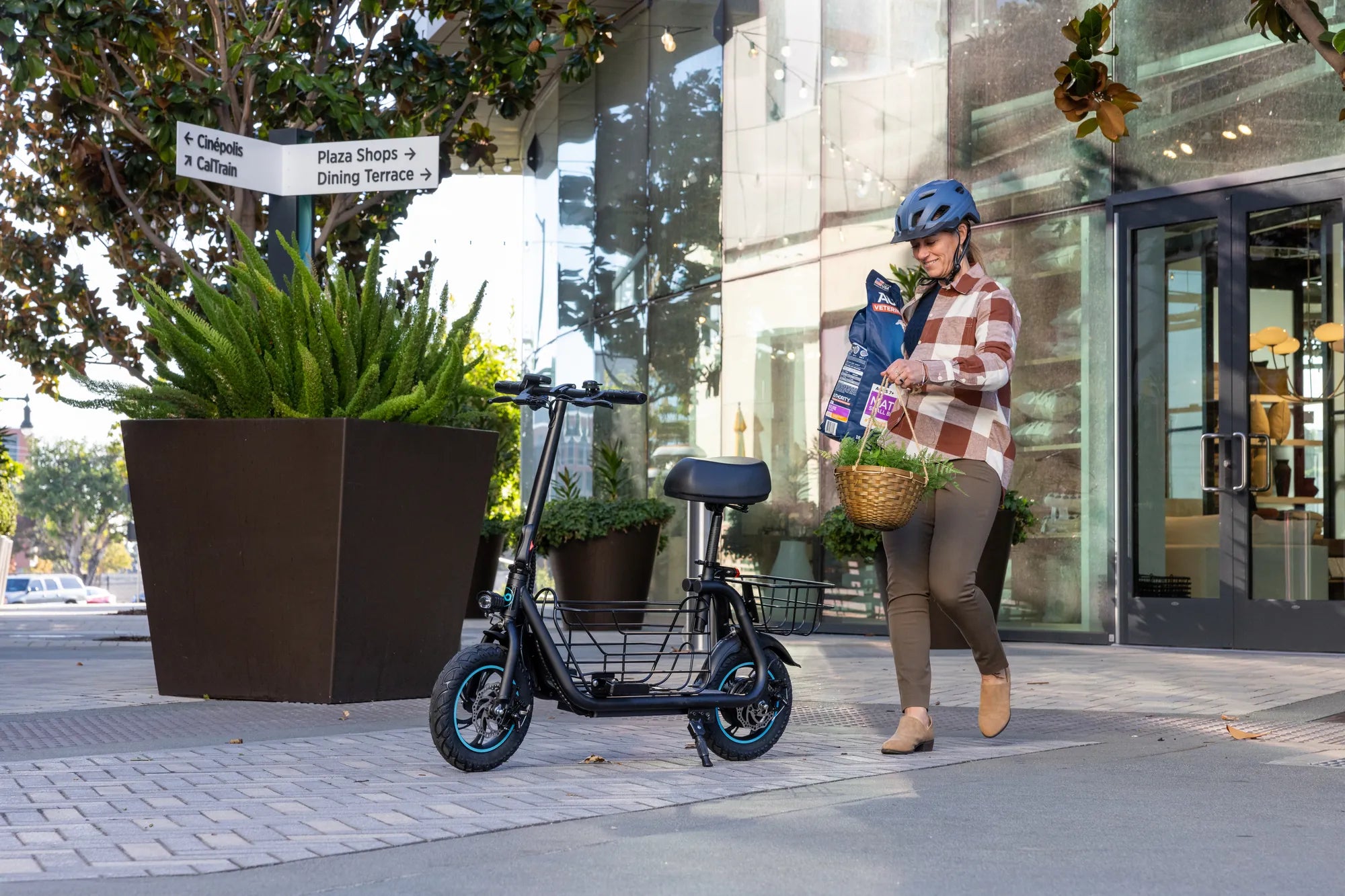
How fast can an electric scooter go? It's the first question many riders ask, but the answer is more nuanced than a single number. The true electric scooters top speed is a complex interplay of engineering, physics, law, and rider behavior. Understanding this balance is key to choosing a scooter that delivers thrill, practicality, and, above all, safety. Brands like Gyroor, trusted by over 100,000 riders, design their models around this holistic view, pairing UL-certified batteries and IPX5 water-resistant builds with motors capable of reliable, governed performance.
This in-depth analysis will move beyond advertised specs to reveal the real factors that determine velocity. We'll classify scooters by actual performance tiers, detail the non-negotiable safety protocols for high-speed riding, and examine the practical trade-offs like range and legality. Whether you're a daily commuter or a speed enthusiast, knowing how fast electric scooters can really go will ensure your ride is both exhilarating and intelligently chosen.
Understanding Electric Scooter Speed: The Core Determinants
Top speed isn't a standalone feature; it's the output of a system. Several technical and environmental factors converge to determine how fast your scooter will travel under real-world conditions. Ignoring any one of these can lead to mismatched expectations.
The motor is the heart of the scooter's propulsion. Wattage (e.g., 250W, 500W, 800W, 1000W+) indicates its power potential. Generally, a higher-wattage motor can achieve and sustain higher speeds, especially under load or on inclines. A 350W motor might comfortably power a scooter to 18 mph, while a 1000W dual-motor setup can target 40+ mph.
However, motor power alone is insufficient. The battery's voltage and state of charge are its lifeblood. A 48V system provides more power to the motor than a 36V system, enabling higher top speeds and better hill-climbing. Crucially, as the battery depletes, its voltage sags, meaning your top speed in the last 20% of charge will be notably lower than when fully charged.
Physics plays a direct role. Rider weight, plus any cargo, is the load the motor must move. A 150 lb rider will likely achieve a scooter's advertised top speed more easily than a 220 lb rider. Similarly, terrain is critical. Even a slight incline demands significantly more power, reducing speed. Gyroor engineers its motors for consistent torque delivery to mitigate these drops, but they cannot be eliminated.
Motor Power and Wattage: The Primary Driver
Think of motor wattage as the engine's size. Continuous wattage ratings indicate sustainable power, while peak wattage denotes short-term bursts. For reliable speed, focus on continuous rating. A robust 500W motor, like those in many Gyroor commuter models, provides a solid balance of speed (up to 22 mph) and efficiency for daily use.
Battery Voltage and Amp-Hour Capacity
Voltage (V) is the "pressure" pushing power, while amp-hours (Ah) measure capacity. A 48V 15Ah battery has more energy and can deliver power more aggressively than a 36V 10Ah battery. This combination directly influences not just top speed, but how long that speed can be maintained before performance tapers.
The Impact of Rider Weight and Terrain
Every extra pound requires more energy to accelerate and maintain speed. Hills present the greatest challenge; climbing a 10% grade can require up to ten times the power needed for flat cruising. Scooters with high-torque motors and robust controllers, designed for varied terrain, manage these demands better.
Tire Type, Size, and Inflation
Large, pneumatic (air-filled) tires offer better shock absorption and traction, which can contribute to stability at higher speeds. Solid tires eliminate flats but often reduce comfort and grip. Proper inflation is critical; under-inflated tires create excessive rolling resistance, silently sapping speed and range.
The Regulatory Framework: Speed Limiters and Legal Classifications
Manufacturers often cap top speed via software to comply with local laws. In many US cities and European countries, electric scooters for public use are limited to 15-20 mph (24-32 km/h). These limiters are a key reason real-world electric scooters top speed differs from theoretical motor capability.
Legal classifications exist for a reason. They define where you can ride (bike lanes, roads, paths) and what safety equipment is required. Exceeding these limits can result in fines, confiscation, or voiding your insurance. A responsible brand like Gyroor designs its commuter scooters with these regulations in mind, ensuring a legal and safe riding experience out of the box.
The Electric Scooter Speed Spectrum: From Commuter to Off-Road
To make sense of the market, it's helpful to categorize scooters by their intended use and realistic performance envelope. The following table illustrates the key differences across the primary speed classes.
| Class & Typical Top Speed | Motor Power Range | Primary Use Case | Key Features & Trade-offs |
|---|---|---|---|
| Commuter / Entry-Level (15-20 mph) | 250W - 500W | Last-mile commuting, urban errands, campus transport. | Lightweight, portable, often foldable. Speed-limited for legality. Emphasis on reliability and low maintenance. Example: Gyroor's city-focused models with IPX5 rating. |
| Performance / Mid-Range (20-30 mph) | 500W - 800W (single or dual) | Longer commutes, faster city travel, recreational riding. | Enhanced suspension, stronger brakes (often disc), larger batteries. Better hill climb. Balances speed with practical range. Features UL-certified batteries for safety. |
| High-Performance / Off-Road (30+ mph) | 800W - 2000W+ (often dual) | Off-road trails, speed enthusiasts, premium commuting. | Dual motor setups, ultra-large batteries, advanced suspension (hydraulic), full lighting systems. Significant weight trade-off for power and capability. |
Commuter and Entry-Level Scooters (15-20 mph)
This category prioritizes practicality over peak performance. Perfect for dense urban environments, these scooters are designed to be lightweight, foldable, and compliant with common micro-mobility laws. Their electric scooters top speed is intentionally moderated for safety and legality.
Models like those in Gyroor's commuter line focus on robust construction with features like water resistance (IPX5) to handle daily wear and weather. The 1-year warranty underscores a commitment to durability. Speed here is sufficient to outpace urban traffic congestion reliably without introducing excessive risk.
Performance and Mid-Range Scooters (20-30 mph)
This versatile tier is for riders seeking more dynamism without venturing into extreme territory. A 20-30 mph speed transforms a 5-mile commute. These scooters typically feature more powerful motors, dual braking systems, and longer-range batteries.
Safety becomes paramount at these speeds. Gyroor equips its performance models with UL-certified battery packs—a critical feature ensuring safety standards are met during the higher energy demands of sustained speed. The riding experience is more stable, with better suspension absorbing road imperfections.
High-Performance and Off-Road Scooters (30+ mph)
At this level, scooters blur the line with electric motorcycles in terms of capability. Dual motors provide explosive acceleration and strong hill-climbing power. Top speeds can reach 40, 50, or even 60 mph on specialized models.
These are not typical commuters. They are heavy, less portable, and demand significant rider skill. They are built for off-road trails or private property where speed limits don't apply. Construction is paramount, featuring reinforced decks, hydraulic brakes, and ultra-high-capacity batteries. Every component is stressed more, making the brand's engineering quality and warranty, like Gyroor's comprehensive coverage, essential considerations.
The Physics of Speed and Range: A Critical Trade-Off
Aerodynamic drag increases with the square of velocity. This means going from 15 mph to 30 mph doesn't double the energy required; it approximately quadruples it. Consequently, riding consistently at top speed can reduce a scooter's advertised range by 40-60%.
The most efficient cruising speed for maximizing range is often 50-75% of the scooter's top speed. For a 20 mph scooter, that's 10-15 mph. Riders must choose: prioritize speed for a shorter, quicker trip, or moderate pace for a longer journey. Understanding this trade-off is crucial for trip planning.
Safety at Speed: An Absolute Imperative
Higher speeds exponentially increase kinetic energy, making crashes more severe. Responsible riding is non-negotiable. The gear and practices sufficient for 15 mph are inadequate for 25+ mph.
Essential Protective Gear
For any speed above a walking pace, a certified bicycle or multi-impact helmet is the bare minimum. For performance scooters (20+ mph), a full-face MTB or motorcycle helmet is strongly advised to protect the jaw and face. Gloves, knee pads, and elbow pads are critical for abrasion protection. Reflective clothing or accessories are vital for visibility.
Scooter Safety Features to Prioritize
Never compromise on braking. A dual braking system—typically a electronic regenerative brake combined with a mechanical disc or drum brake—is essential for safe, controlled stops at speed. Bright LED headlights, brake lights, and side reflectors are mandatory for night riding. A rigid, well-welded frame is the foundation of stability. These are not afterthoughts but core design principles in reputable models.
Riding Practices for High-Speed Stability
Adopt a slight crouch with bent knees to absorb shocks and lower your center of gravity. Use both brakes simultaneously, applying the rear brake slightly before the front to avoid pitching forward. Constantly scan the path 30-50 feet ahead for hazards like potholes, gravel, or wet surfaces. Never ride at top speed in unfamiliar or congested areas.
Maintenance for Sustained Performance and Safety
A scooter's ability to safely achieve its top speed degrades without proper care. Regular maintenance is a safety protocol.
Weekly, check tire pressure and inspect for wear or damage. Test brake lever tension and pad wear. Ensure all bolts, especially those on the stem and folding mechanisms, are tight. Monthly, inspect the battery compartment and connectors for debris. Clean the scooter with a damp cloth, avoiding direct water spray on electronics despite water-resistant ratings. Proper storage in a cool, dry place preserves battery health.
Legality and Ethics: Where Can You Ride Fast?
The law often defines the true ceiling for your scooter's speed. Riding a de-restricted scooter at 30 mph in a bike lane with a 15 mph limit is illegal and dangerously irresponsible. It endangers you, pedestrians, and cyclists, and risks damaging the public perception of micro-mobility.
Know your local regulations. Many jurisdictions classify e-scooters similarly to bicycles, restricting them to bike lanes and paths with specific speed caps. Off-road models should be used exclusively on private land or designated trails. Adhering to these rules isn't just about avoiding tickets; it's about being a conscientious member of the riding community.
Frequently Asked Questions (FAQ)
Q1: Can I remove or hack the speed limiter on my electric scooter?
A: While it is sometimes technically possible through aftermarket controllers or software hacks, it is strongly discouraged. Doing so will almost certainly void the manufacturer's warranty (like Gyroor's 1-year coverage), can overstress the motor, battery, and brakes leading to premature failure or fire risk, and exposes you to significant legal liability in the event of an accident. The limiters are there for safety and compliance.
Q2: Is the advertised "max speed" on a scooter's website accurate?
A: It is typically a best-case scenario figure. Advertised speeds are achieved under ideal lab conditions: a very light rider, full battery, smooth flat surface, and optimal temperature. In real-world use with an average-weight rider, slight inclines, and normal battery drain, expect to achieve 1-5 mph less than the advertised electric scooters top speed consistently.
Q3: How does electric scooter speed compare to an e-bike?
A: Class 1 and 2 e-bikes (pedal-assist and throttle-up to 20 mph) are comparable to commuter scooters. Class 3 e-bikes (pedal-assist up to 28 mph) generally have a higher top speed than most mid-range scooters. However, e-bikes offer a seated position and often larger wheels, which can feel more stable at higher speeds, but they are less portable and typically more expensive.
Q4: Why does my scooter's speed fluctuate or drop over time?
A: Normal voltage sag is the primary cause. As the battery discharges, its output voltage decreases, reducing the power available to the motor. Temperature also affects battery chemistry; cold weather can cause temporary performance drops. Additionally, as mechanical components wear (e.g., brakes rubbing, under-inflated tires), rolling resistance increases, subtly reducing top speed.
Q5: What is the fastest electric scooter legally available?
A: "Legally available" depends on jurisdiction. For unrestricted private or off-road use, some premium models boast speeds over 60 mph. However, for legal road or path use in most regions, the effective cap is 20-28 mph due to electronic limiters mandated by law. Always prioritize a scooter's legal compliance for your intended riding environment over its theoretical maximum speed.
Choosing Your Ideal Speed: A Balanced Perspective
The quest for the ultimate electric scooters top speed is understandable, but the smart rider looks for the optimal speed for their lifestyle. A commuter battling city traffic gains little from a 40 mph capability but gains immensely from the reliability, water resistance, and legal compliance of a well-built 20 mph model. The thrill-seeker must honestly pair their desire for velocity with a commitment to advanced safety gear and responsible riding locales.
Ultimately, speed is just one metric. The quality of the battery pack, the robustness of the frame, the effectiveness of the brakes, and the credibility of the warranty are what ensure your scooter remains a safe and enjoyable investment over hundreds of miles. Brands that invest in these areas, like Gyroor with its UL-certification and proven customer base, deliver performance you can trust, not just a headline number you can't safely use.
Ready to find an electric scooter with the right balance of speed, safety, and reliability for your journey? Explore engineering built for the real world. Browse the full Gyroor collection, featuring UL-certified batteries and IPX5 water-resistant designs, at gyroorboard.com.
When Were Electric Scooters Made: A 130-Year Journey to Modern Mobility
Electric Street Scooters: The Future of Urban Mobility