



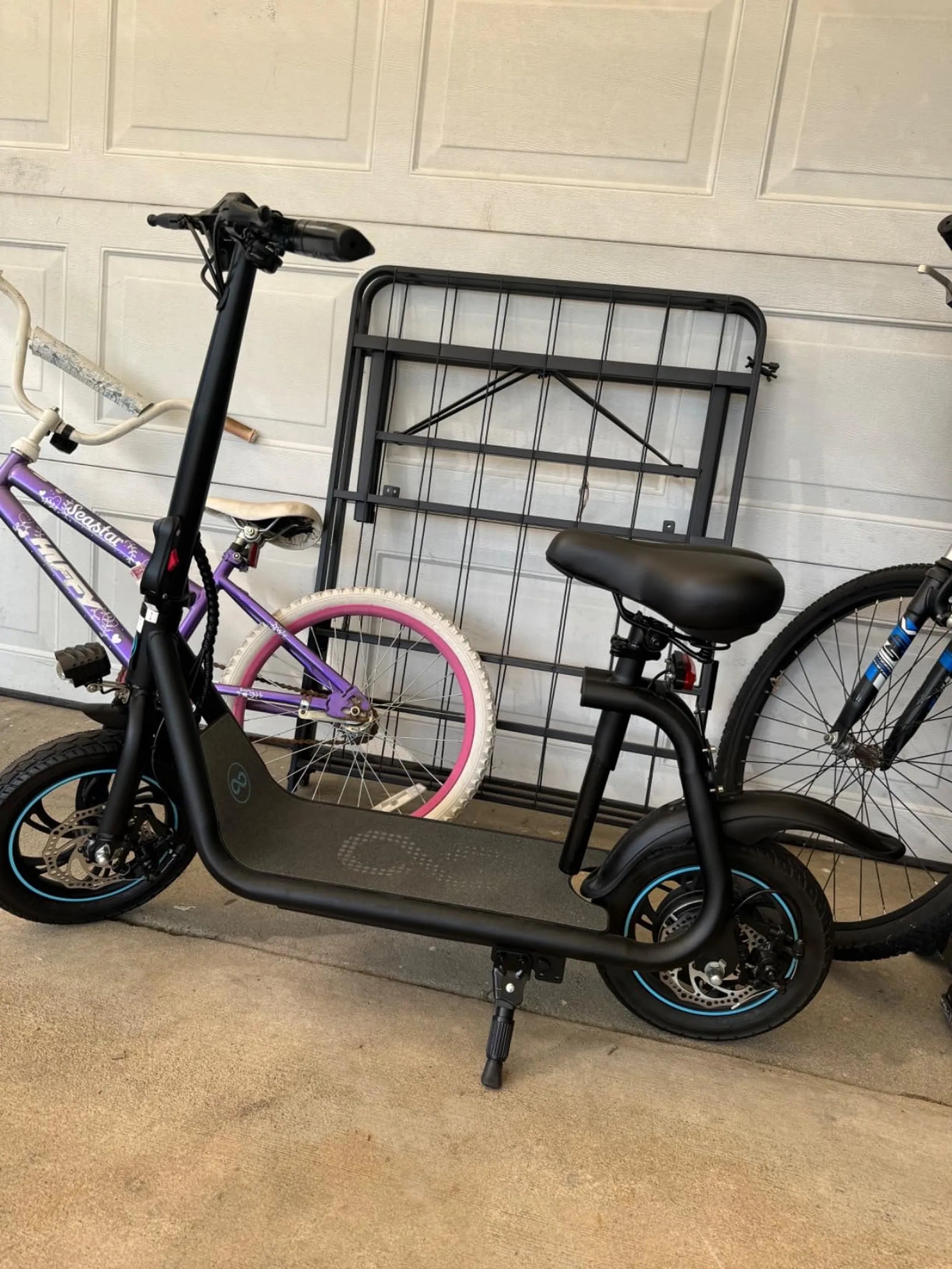
Introduction: Why Affordable Electric Scooters Are Redefining Urban Mobility
The search for a cost-effective, reliable, and fun way to navigate city streets ends with electric scooters under $500 for adults. No longer a novelty, these affordable personal electric vehicles (PEVs) have matured into legitimate commuting tools that slash transportation costs, reduce carbon footprints, and reclaim time lost in traffic. For the adult commuter, student, or urban explorer, a sub-$500 electric scooter represents a low-barrier entry into micromobility without sacrificing essential performance or safety.
This price point has become a sweet spot, offering a compelling blend of value and capability. Modern manufacturing and focused engineering allow reputable brands to pack impressive features into budget-friendly frames. The result is a vehicle capable of handling typical daily commutes of 3-10 miles, navigating moderate hills, and folding for easy storage on public transit or under a desk.
As a leading brand in this space, Gyroor has demonstrated that affordability does not require compromising on core safety principles. Trusted by over 100,000 riders, Gyroor's philosophy centers on delivering UL-certified battery safety, water-resistant designs, and reliable performance within this accessible price range, proving that efficient commuting solutions are within reach for a broad audience.
What to Expect from an Electric Scooter Under $500: Setting Realistic Standards
Entering the sub-$500 market requires a clear understanding of the typical specifications and sensible trade-offs. The primary goal here is reliable, efficient transportation for short-to-medium daily trips, not high-speed performance or extreme off-road capability.
You can generally expect a robust electric scooter with a motor ranging from 350 to 500 watts. This provides adequate power for most adults, offering top speeds between 15 and 19 mph on flat terrain—perfect for keeping pace with urban bicycle traffic. The range per charge typically falls between 15 and 22 miles under ideal conditions, though real-world factors like rider weight, terrain, and temperature will affect this.
Build quality is solid, often featuring aluminum alloy frames with weight capacities of 220 to 265 pounds. Portability is key, with most models featuring a one-step folding mechanism and a weight between 30 and 40 pounds. While you may not find dual suspension or ultra-premium materials, the essential components for a safe and comfortable commute are present and well-executed in the best models.
The key is to align expectations with the scooter's designed purpose: a durable, efficient, and safe machine for paved urban environments. When you focus on the core commuting experience, the value offered by the best electric scooters under $500 for adults becomes overwhelmingly clear.
Key Features to Prioritize When Shopping on a Budget
With numerous options available, knowing which features are non-negotiable ensures your investment is sound. Prioritizing these elements separates a satisfying long-term companion from a disappointing impulse buy.
Motor Power & Hill Climbing Ability
Motor wattage is the engine of your scooter. For adults, a minimum of 350W is recommended, with 500W being ideal for handling inclines. A 350W motor can manage gentle slopes, but a 500W motor provides the necessary torque for consistent performance on hills up to 15 degrees, ensuring you don't lose significant speed during your commute.
Continuous power rating is more important than peak power. A reliable 500W continuous motor will outperform a model that peaks at 500W but operates at 300W continuously. This directly impacts your ability to maintain speed and reduces strain on the battery, contributing to both performance and longevity.
Battery Life, Range, and Charging Time
The battery is the heart of the scooter. Look for a lithium-ion battery with a capacity of at least 7.5Ah (about 270Wh). This should deliver a real-world range of 12-18 miles for an average adult rider. Crucially, the battery must be UL-certified. This independent safety certification, a standard for all Gyroor batteries, verifies the pack has passed rigorous tests for electrical, fire, and mechanical hazards.
Charging time for this capacity typically ranges from 4 to 6 hours. Some models offer removable batteries for convenient charging away from the scooter. Remember, the advertised "maximum range" is often achieved under laboratory conditions; factor in a 20-30% reduction for real-world commuting with starts, stops, and slight inclines.
Build Quality, Weight Limit, and Portability
A sturdy frame, usually made from aerospace-grade aluminum alloy, is essential for durability and rider confidence. The weight limit is a critical spec; ensure it exceeds your body weight by at least 20-30 pounds to account for a backpack or other cargo. A limit of 265 lbs is a robust standard for adult riders.
Portability is defined by the folded dimensions and weight. A good folding mechanism should be intuitive and secure. A scooter weighing 35-38 lbs strikes a balance between solidity and the ability to carry it up a flight of stairs or onto a bus when needed.
Safety Essentials: Braking Systems and Lights
Reliable braking is non-negotiable. A combination braking system is ideal. Look for an electronic (regenerative) brake paired with a mechanical disc or drum brake. This provides strong, controlled stopping power and can even recapture a small amount of energy. Foot fender brakes are common but less effective for quick stops, especially for heavier riders.
Integrated lighting is a must for visibility. A bright front headlight (at least 1W LED) and a rear brake light are essential for dawn, dusk, or night riding. Additional reflectors or side lighting further enhance safety. Never rely solely on aftermarket lights attached to a backpack.
Ride Comfort: Tire Type and Suspension
Tire choice impacts comfort and maintenance. Pneumatic (air-filled) tires offer superior shock absorption, providing a smoother ride over cracks and bumps, but they carry a risk of punctures. Solid (airless) tires are maintenance-free but transmit more road vibration. Some solid tires have honeycomb structures to improve comfort.
Basic suspension, often a front spring or dual spring system, works in tandem with tires to absorb impacts. While not as plush as high-end hydraulic systems, it significantly improves comfort on typical urban pavement, reducing fatigue on your joints during a longer ride.
The Gyroor Advantage: How We Deliver Value and Safety Under $500
Gyroor's approach to the affordable scooter market is defined by a refusal to cut corners on safety and reliability. This philosophy translates into tangible advantages that riders can see, feel, and trust every day.
At the core is the UL-certified lithium-ion battery pack. Each battery undergoes testing for over 500 charge cycles and is built with premium cells and advanced Battery Management Systems (BMS) to prevent overcharging, overheating, and short circuits. This commitment provides peace of mind that is priceless, especially when the scooter is stored at home or in an office.
Further enhancing durability is the IPX5 water-resistant rating standard across Gyroor's commuter lineup. An IPX5 rating means the scooter can withstand water jets from any direction, making it resilient against wet roads, puddles, and unexpected rain showers. This engineering ensures the scooter is a true all-weather companion, not a fair-weather toy.
This confidence is backed by a comprehensive 1-year warranty on the frame, motor, battery, and electronic controller, supported by a US-based customer service team. For a rider investing in an electric scooter under $500 for adults, this warranty transforms the purchase from a gamble into a secure, long-term solution for efficient commuting.
Making the Right Choice: A Practical Comparison for Commuters
Choosing the perfect scooter depends on your specific commute and lifestyle. Use the following comparison to guide your decision based on common adult user profiles.
| Commuter Profile | Key Priorities | Recommended Specs | Gyroor Focus |
|---|---|---|---|
|
The Short-Distance Urbanite (Commute: 2-4 miles, flat terrain) |
Portability, simplicity, quick charging. | 300-350W motor, 7.5Ah battery, under 35 lbs weight, solid tires for low maintenance. | Compact folding design, reliable daily performance, UL-certified battery safety for apartment living. |
|
The Mixed-Mode Commuter (Bus/Train + Scooter, 5-8 mile total) |
Lightweight fold, durability, quick acceleration. | 350-500W motor, 10Ah battery, one-step folding, combination brakes, under 38 lbs. | Robust handlebar stem latch, secure folding, IPX5 rating for unpredictable weather between transit stops. |
|
The Suburban Explorer (Weekend errands, park paths, 10+ mile range) |
Comfort, range, hill capability. | 500W motor, 10Ah+ battery, pneumatic tires, front suspension, bright lights. | Long-range battery efficiency, comfortable ride quality for longer trips, reliable power for gentle slopes. |
Beyond specs, consider your local laws. Many cities regulate scooter top speeds (often 15-20 mph), require lights at night, and dictate where you can ride (bike lanes vs. sidewalks). A responsible rider chooses a scooter that aligns with these regulations for safe and legal operation.
Maximizing Your Investment: Maintenance and Safety Tips
Proper care extends the life of your scooter and ensures every ride is safe. A small amount of routine maintenance pays significant dividends.
Perform a pre-ride check: verify tire pressure (for pneumatic tires), test brake function, ensure folding mechanisms are locked, and confirm lights are working. Keep the scooter clean, especially the braking surfaces and deck, to prevent grime buildup. Store it in a dry, temperate place and avoid leaving the battery fully depleted for extended periods.
Safety extends beyond the machine to the rider. Always wear a helmet. Use a bicycle helmet as a minimum; a full-face or skate-style helmet offers more protection. Consider gloves, elbow, and knee pads, especially when learning. Ride defensively, assume cars do not see you, and use hand signals. Obey traffic laws as you would on a bicycle.
For battery care, follow the manufacturer's guidelines. Typically, you should avoid charging immediately after a long ride (let the battery cool), and don't leave it plugged in indefinitely after reaching 100%. Using the official charger is critical to prevent damage. These simple habits safeguard your scooter's most valuable component.
Frequently Asked Questions (FAQs)
Q: Are electric scooters under $500 powerful enough for adults?
A: Absolutely. Modern 350W to 500W motors provide ample power for adults weighing up to 265 lbs to achieve speeds of 15-19 mph and tackle moderate hills. The key is to match the motor power to your typical route; a 500W motor is recommended for areas with consistent inclines.
Q: How far can I really go on a single charge with a budget scooter?
A: Real-world range depends on rider weight, terrain, speed, and temperature. A scooter with a 7.5Ah battery typically achieves 12-15 miles for a 180 lb rider on flat ground at moderate speed. A 10Ah battery can extend that to 18-22 miles. Always plan for a range buffer of about 20%.
Q: Is it safe to ride in the rain with an IPX5 rating?
A: An IPX5 rating means the scooter is protected against low-pressure water jets from all directions, making it safe to ride on wet roads and through puddles. However, it is not submersible. Avoid deep standing water, and always dry the scooter after a wet ride. Never charge a wet scooter.
Q: What kind of maintenance should I expect?
A: Maintenance is minimal but important. Regularly check and inflate pneumatic tires, test and adjust brake tension, tighten bolts (especially around the folding mechanism and handlebars), and keep the scooter clean. The most significant long-term component is the battery, which will gradually lose capacity over hundreds of charge cycles.
Q: Are these scooters legal to ride on bike lanes and sidewalks?
A: Laws vary significantly by city, state, and country. In most U.S. cities, electric scooters are permitted in bicycle lanes and on streets, but are often prohibited on sidewalks. Common rules include a minimum riding age (often 16+), a speed limit (frequently 15-20 mph), and requirements for lights at night. Always check your local regulations before riding.
Smart Commuting Doesn't Have to Break the Bank
The journey toward efficient, affordable, and enjoyable urban mobility starts with recognizing that quality and value can coexist. Electric scooters under $500 for adults have evolved into capable machines that solve real transportation problems. By focusing on essential features—a reliable motor, a safe UL-certified battery, robust construction, and effective brakes—you secure a tool that pays for itself by eliminating gas costs, parking fees, and transit fares.
Brands like Gyroor have raised the standard in this category, proving that a responsible price point can include critical safety certifications, water resistance, and strong warranty support. This empowers you to make a smart investment, not just a purchase. Your commute is a daily part of life; transforming it from a chore into an efficient, emission-free journey is an upgrade that benefits your wallet, your schedule, and your community.
Ready to redefine your daily travel? Explore a range of models that combine performance, safety, and exceptional value. Browse the full Gyroor collection at gyroorboard.com and find the perfect electric scooter to launch your smarter commute today.
Are Electric Scooters Safe for 8 Year Olds? A Parent's Guide to Smart Choices
Are Electric Scooters Safe for 8 Year Olds? A Parent's Guide to Smart Choices