



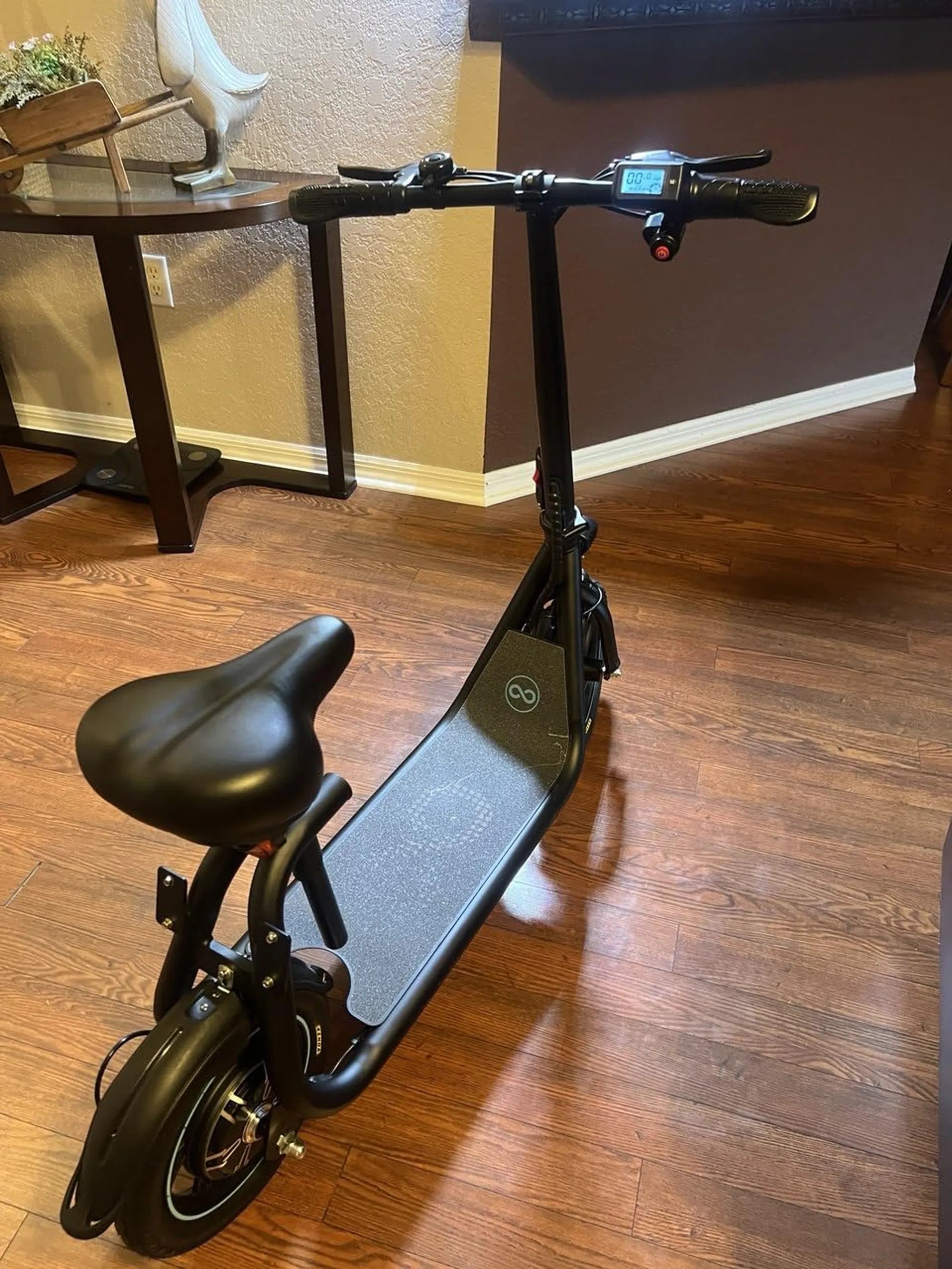
Introduction: Why Vienna is a Perfect City for Electric Scooters
Vienna consistently ranks as one of the world's most livable cities, and its commitment to sustainable urban mobility is a key reason why. With over 1,700 kilometers of dedicated bicycle and scooter paths, a largely flat topography, and ambitious climate goals, the Austrian capital is engineered for micro-mobility. Navigating from the cobblestone streets of the Innere Stadt to the modern hubs along the Danube requires a flexible, efficient, and zero-emission solution. For mastering this blend of history and modernity, an electric scooter is the ideal companion. This guide will provide you with the complete roadmap for eco-friendly urban commuting in Vienna, from legal compliance to route planning.
This article will detail Vienna's specific e-scooter regulations to keep you safe and fine-free. We will analyze the essential features for handling local terrain and weather. You'll discover the most scenic and practical routes for your commute. Finally, we provide crucial maintenance advice and safety tips for year-round riding. Understanding these elements ensures your transition to electric mobility is seamless, cost-effective, and enjoyable.
Navigating Vienna's Rules & Regulations for E-Scooters
Operating an electric scooter in Vienna requires adherence to Austrian federal law (StVO – Straßenverkehrsordnung) and local municipal ordinances. Compliance is non-negotiable for safety and to avoid substantial penalties. The foundational rule is that e-scooters are classified as "small electric vehicles" and are subject to similar rules as bicycles. This classification dictates where you can ride, how fast you can go, and what equipment your scooter must have.
Riding is permitted on bicycle paths, cycle lanes, and shared pedestrian-and-cycle paths. If no such infrastructure exists, you may use the road, but you must keep to the right. Riding on sidewalks is strictly prohibited and can result in fines. In pedestrian zones, you must dismount and walk your scooter. The maximum permitted speed is 25 km/h. It is illegal to modify your scooter to exceed this limit. Riders must be at least 12 years old, and there is no mandatory helmet law for adults, though it is strongly recommended for all ages.
Parking etiquette is critical in Vienna's orderly public spaces. You must never block sidewalks, ramps, building entrances, or tram tracks. Look for designated bicycle parking areas. Improper parking can lead to your scooter being impounded by the city authorities. Always use a high-quality lock to secure the frame to a fixed object, as theft, while less common than in some cities, is still a risk.
Key Legal Points for Riders
Your scooter must be equipped with specific, functional safety features to be street-legal. These include white front and red rear lights, which must be active in low-light conditions. A working bell or acoustic warning device is mandatory. While not required by law, effective front and rear brakes are an absolute necessity for safe operation in city traffic. Reflectors on the front, rear, and sides are also a legal requirement to ensure visibility.
You do not need a driver's license, registration, or specific insurance to operate a private e-scooter with a top speed of 25 km/h in Austria. However, it is highly advisable to check with your personal liability insurance (Haftpflichtversicherung) to confirm coverage for potential accidents involving third-party property damage or injury. For rental scooter services, insurance is typically included in the rental fee, but terms vary by provider.
Choosing the Right Electric Scooter for Vienna's Terrain
Vienna's urban landscape presents a unique set of challenges: historic cobblestones, smooth asphalt bike paths, gentle inclines, and variable weather. Selecting a scooter built for these conditions is essential for a reliable and comfortable ride. Key specifications to prioritize include motor power, battery range, wheel size and type, suspension, and overall build quality. A scooter that excels on paper but fails on cobblestones is not suitable for Vienna.
For power, a continuous motor rating of 350W or higher is recommended to handle the occasional hill, such as those around the Belvedere or on approaches to bridges over the Danube Canal. Battery range is crucial; consider a scooter with a real-world range of at least 20-25 kilometers to cover a typical Viennese commute with a safety margin. Larger air-filled (pneumatic) tires, ideally 10 inches or more, provide far better shock absorption on uneven surfaces than small solid tires. A dual suspension system (front and rear) further smooths out rides on cobblestone streets.
Portability matters if you plan to combine scooting with public transport or need to store it in an apartment. A folding mechanism should be robust and easy to use. Weight is a factor; models between 15-20 kg offer a good balance of stability and liftability. Finally, consider the deck size and handlebar height for a comfortable, upright riding posture, which is safer for navigating traffic.
Gyroor's Vienna-Ready Features: Safety & Durability
Brands like Gyroor engineer their scooters with the demands of European cities like Vienna in mind. A core feature is the UL-certified battery pack. This certification is a global benchmark for electrical safety, ensuring the battery has undergone rigorous testing for over 500 charge cycles. This is critical for safe charging in multi-unit apartment buildings, a common living situation in Vienna.
Vienna's weather can change quickly. Gyroor's IPX5 water-resistant rating means the scooter's electrical components are protected against water jets from any direction. This allows you to ride confidently in light rain or on damp streets after a shower, though it is not designed for submersion or heavy downpours. The robust frame and reliable braking systems are built for daily use on mixed surfaces.
To protect your investment, Gyroor backs its scooters with a comprehensive 1-year warranty and US-based customer support. This provides significant peace of mind, ensuring that any manufacturing defects are promptly addressed, keeping your eco-friendly commute on schedule. With over 100,000 riders trusting the brand across North America and Europe, the focus is on proven reliability for urban environments.
Top Scenic & Practical Routes for Your E-Scooter Commute
Vienna offers an unparalleled network of paths perfect for electric scooters. For a practical yet beautiful inner-city commute, the path along the Ringstraße is iconic. Following this grand boulevard, you'll pass the Rathaus, Parliament, the Hofburg, and the Staatsoper, all while using dedicated bike lanes separated from car traffic. It's a flat, efficient route with constant scenic rewards.
For a longer recreational ride, Donauinsel (Danube Island) is a 21-kilometer-long car-free paradise. The smooth, wide paths are ideal for testing your scooter's range while enjoying parks, beaches, and river views. Another excellent route is the path along the Donaukanal (Danube Canal), which connects districts like Landstraße and Leopoldstadt. This route is lined with trendy bars and street art, making for a vibrant urban exploration.
A key practical commuter corridor runs from Praterstern to Karlsplatz. This east-west axis uses dedicated paths and quiet streets, bypassing congested car traffic and providing a direct link between major transit hubs and cultural centers. Utilizing these routes transforms a mundane commute into the highlight of your day.
Data & Comparison: E-Scooter vs. Public Transport on Popular Routes
To quantify the benefits of owning an e-scooter in Vienna, let's compare it with the city's excellent but sometimes crowded public transport system (Wiener Linien). The analysis below assumes an annual pass for public transport (currently ~€365) versus the upfront cost of a quality scooter amortized over three years, plus minimal electricity costs for charging.
| Route (Example) | E-Scooter (Owned) | Public Transport (Wiener Linien) | Key Advantage |
|---|---|---|---|
| MuseumsQuartier to Hauptbahnhof (3 km) |
Time: 10-12 min Cost/Trip: ~€0.10 (electricity) CO2: 0 g |
Time: 15-20 min (incl. walk/wait) Cost/Trip: ~€1.00 (annual pass pro-rata) CO2: ~65 g* |
E-scooter offers door-to-door speed, zero direct emissions, and significant long-term cost savings. |
| Praterstern to Schwedenplatz (2.5 km) |
Time: 8-10 min Cost/Trip: ~€0.08 CO2: 0 g |
Time: 10-15 min Cost/Trip: ~€0.83 CO2: ~54 g* |
E-scooter provides flexibility, avoids tram/bus schedules, and is often faster for short, direct trips. |
| Donauinsel Loop (Recreational, 15 km) |
Time: 45-60 min Cost/Trip: ~€0.15 CO2: 0 g |
Time: Not directly comparable (multiple changes) Cost/Trip: N/A (covered by pass) CO2: N/A |
E-scooter enables spontaneous, extensive exploration of green spaces unreachable efficiently by public transport. |
*Estimated CO2 emissions per passenger kilometer for Vienna's electric trams/U-Bahn, based on the Austrian electricity mix. An owned e-scooter charged via the same grid has negligible upstream emissions.
Maintenance & Safety Tips for Year-Round Riding
Regular maintenance ensures your electric scooter remains a reliable partner through Vienna's four seasons. Before each ride, perform a quick visual check: inspect tire pressure (crucial for comfort on cobblestones), test the brakes, and ensure lights are functional. Keep the mechanical parts, especially the folding mechanism and brakes, clean and free of grit and dirt accumulated from city streets.
Battery care is paramount. Avoid completely draining the battery; try to recharge when it reaches 20-30%. For long-term storage, especially in winter if you ride less, store the battery at a 50-80% charge in a cool, dry place. Never charge the scooter immediately after a ride in the rain; allow it to dry completely first. Use only the official charger provided by the manufacturer.
Safety extends beyond the scooter. Always be predictable and signal your intentions. Make eye contact with drivers at intersections. Be extra cautious around tram tracks—cross them at as close to a 90-degree angle as possible to avoid your wheel getting caught. Wear a helmet regardless of the legal requirement, and consider high-visibility clothing or accessories during darker months.
Leveraging Your Gyroor Warranty and Support
Understanding your warranty coverage removes stress from ownership. Gyroor's standard 1-year warranty covers defects in materials and workmanship under normal use. This typically includes the motor, controller, battery (subject to proper care), and frame. It does not cover wear-and-tear items like tires, brake pads, or damage from accidents, misuse, or unauthorized modifications.
If an issue arises, the process is straightforward. Contact Gyroor's customer support team via their website with your purchase details and a description of the problem. They can often provide troubleshooting steps. If a part needs replacement under warranty, they will guide you through the process, which may involve sending a replacement component. This direct support system is designed to minimize your downtime and get you back on the road swiftly.
Frequently Asked Questions (FAQ)
Q: Do I need insurance or registration for my private e-scooter in Vienna?
A: No. For privately owned e-scooters with a maximum speed of 25 km/h, there is no mandatory registration or specific insurance policy required by Austrian law. However, it is highly recommended to verify that your personal liability insurance (private Haftpflichtversicherung) covers you while operating an e-scooter for third-party damage or injury.
Q: Can I take my e-scooter on Vienna's trams or U-Bahn?
A: Yes, under specific conditions. You may bring folded e-scooters onto public transport outside of peak hours (Monday-Friday, 6:00-9:00 and 14:00-17:00). During peak hours, it is at the discretion of the transport staff and is only permitted if space allows and it does not inconvenience other passengers. A valid ticket for yourself is required, and the scooter does not need a separate ticket.
Q: Where are the best (and legal) places to park my e-scooter in the city center?
A> Always use designated bicycle parking stands or racks. These are plentiful throughout the city. Never park on sidewalks in a way that obstructs pedestrian traffic, especially for those with disabilities or strollers. Avoid parking directly against building facades, in front of shop entrances, or near tram stops. The City of Vienna's website provides maps of official bicycle parking areas.
Q: How does Gyroor's IPX5 rating handle Vienna's rain and snow?
A: An IPX5 rating means the scooter is protected against low-pressure water jets from any direction. It is perfectly suitable for riding in light to moderate rain and on wet streets common in Vienna. It is not waterproof (submersible) and should not be ridden through deep puddles or in heavy, driving rain. For snow and slush, exercise extreme caution due to reduced traction, and thoroughly dry and clean the scooter after riding in such conditions.
Q: Are there any areas in Vienna where e-scooters are completely banned?
A: Yes. Riding is prohibited on sidewalks (Gehsteige), in pedestrian zones (Fußgängerzonen) unless you are walking it, and in most parks and green spaces unless explicitly signed with a bicycle path. The historic cobblestone courtyards of the Hofburg or the main paths in the Stadtpark, for example, are off-limits to riding. Always look for signage.
Conclusion: Embracing the Future of Urban Mobility in Vienna
Adopting an electric scooter in Vienna is more than a convenience; it's a step into a smarter, cleaner, and more personal form of urban transportation. You gain unparalleled flexibility, reduce your carbon footprint, and often discover the city from a fresh, engaging perspective. The combination of Vienna's progressive infrastructure and a reliable, well-chosen e-scooter creates a powerful synergy for daily life.
By understanding the local rules, selecting a scooter built for durability, and maintaining it properly, you invest in long-term freedom and savings. You become part of the solution to urban congestion and pollution, contributing to Vienna's renowned quality of life. The data clearly shows the advantages in time, cost, and environmental impact over even the best public transport systems for many journeys.
Ready to transform your commute and explore Vienna on your terms? Begin your journey with a brand that prioritizes the safety, durability, and support necessary for confident city riding. Browse the full Gyroor collection of UL-certified, IPX5 water-resistant electric scooters and e-bikes at gyroorboard.com, and join over 100,000 riders who have chosen reliable electric mobility.
Best Electric Scooters for 8 Year Olds: Safe and Fun Rides for Kids
How to Electric Scooters Work: The Science Behind the Ride