



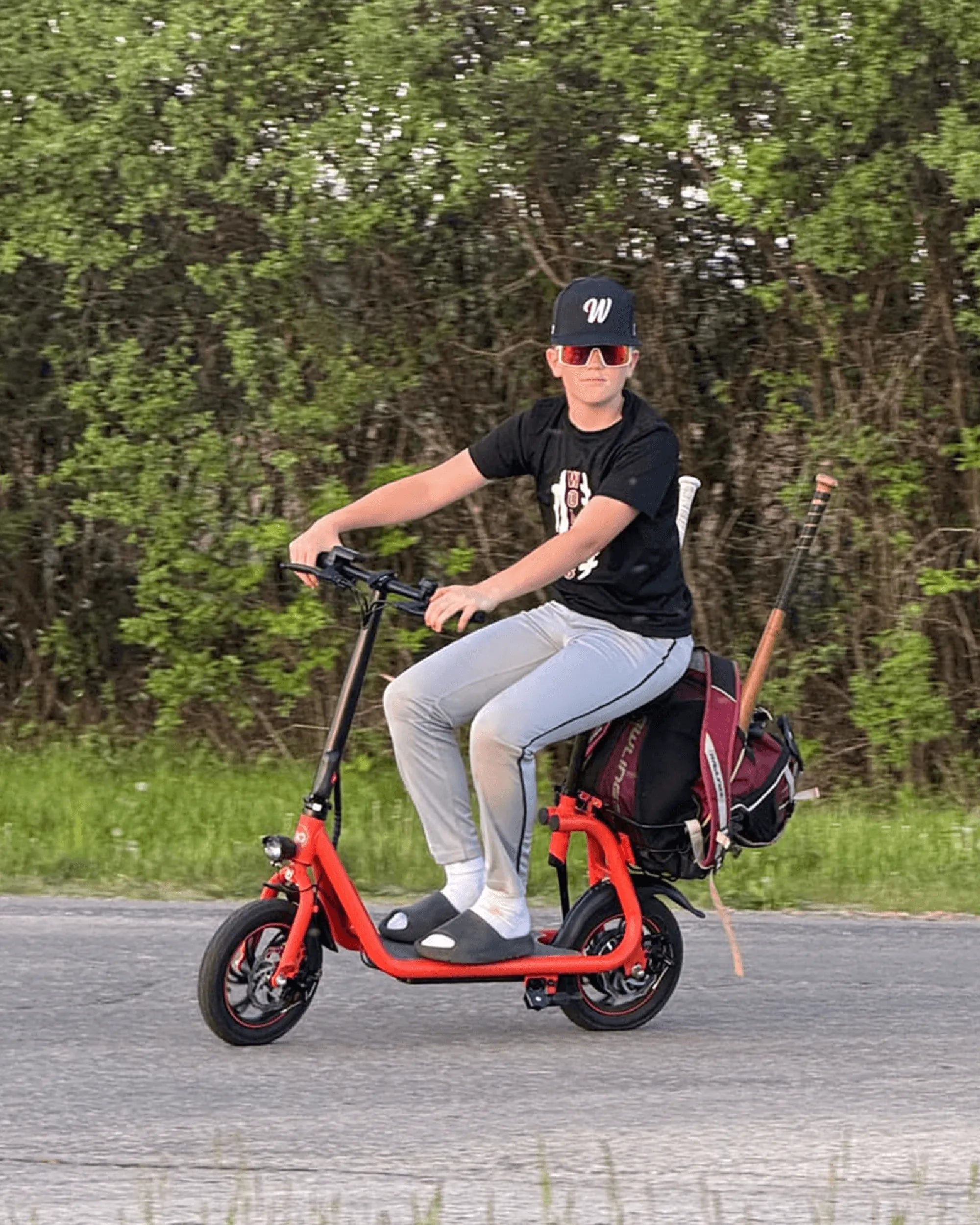
Redefining the Urban Commute
Urban gridlock is no longer a problem without a solution. Electric Smart Scooters: The Future of Urban Mobility and Convenience have emerged as a transformative force, directly addressing congestion, high transportation costs, and environmental impact. These are not merely toys or basic electric kick scooters; they are connected, intelligent mobility devices designed for the modern commuter. This evolution represents a fundamental shift in how we navigate dense cityscapes.
For over 100,000 riders across North America and Europe, brands like Gyroor have demonstrated that this future is already here. The core promise is simple: reclaim your time, reduce your expenses, and minimize your carbon footprint, all while enjoying a connected, efficient ride. This article will dissect the technology, quantify the benefits, and provide a clear roadmap for integrating an electric smart scooter into your daily life.
You will learn what truly defines a "smart" scooter, analyze the concrete advantages over traditional transport, and understand the critical safety and performance features that separate premium products from the rest. The data shows that cities embracing micro-mobility see measurable reductions in traffic and pollution. The electric smart scooter is positioned at the center of this urban renaissance.
What Makes a Scooter "Smart"? Beyond Basic Electric Power
An electric scooter becomes "smart" through integrated digital ecosystems and intelligent performance systems that elevate the user experience far beyond simple motorized transport. The distinction lies in connectivity, data, and adaptive features that personalize and secure your ride. It's the difference between a basic tool and a sophisticated mobility companion.
While a standard e-scooter offers propulsion, a smart scooter offers insights, control, and integration. Key differentiators include Bluetooth-enabled smartphone applications, digital dashboards with real-time diagnostics, and firmware that can be updated to improve performance or add new features over time. This technological layer transforms a one-time purchase into an evolving product.
Leading manufacturers, including Gyroor, embed this intelligence directly into their designs. The result is a device that communicates with you, learns from your riding habits, and proactively ensures a safer, more optimized journey. This intelligence is not a gimmick; it's a core component of reliability and long-term value, making the scooter a true piece of personal tech.
The Connected Ride: Apps and Integration
The smartphone app is the command center for your electric smart scooter. Through a secure Bluetooth connection, it unlocks a suite of functionalities that enhance convenience, security, and customization. This integration is a hallmark of modern smart mobility, turning your phone into a key, a dashboard, and a maintenance monitor.
Core app features typically include GPS tracking for anti-theft security, detailed ride history analytics (distance, speed, route mapping), and the ability to lock or unlock the scooter remotely. Riders can often customize performance parameters, such as acceleration sensitivity, regenerative braking strength, and top-speed limits via the app. This level of control tailors the scooter to individual preferences and local regulations.
Furthermore, Over-the-Air (OTA) firmware updates are a critical smart feature. Manufacturers can deploy updates to improve battery management algorithms, refine motor control, or patch software, ensuring your scooter gets better over time. This connected ecosystem, trusted by Gyroor's community of riders, represents a significant leap from static, disconnected hardware.
Intelligent Safety and Performance Features
Smart technology actively contributes to rider safety and scooter longevity. These systems work in the background, using sensors and software to prevent accidents and mechanical failures. They represent a proactive approach to safety that complements the rider's own vigilance and the scooter's physical build quality.
Regenerative braking is a prime example of intelligent performance. It converts kinetic energy back into battery charge during deceleration, extending range while reducing wear on physical brake pads. Adaptive lighting systems that automatically adjust brightness based on ambient light conditions enhance visibility without user input.
Advanced diagnostic systems monitor the health of key components like the battery, motor, and controller. Through the app or dashboard, riders receive alerts for potential maintenance needs before they lead to a breakdown. This predictive capability, combined with features like cruise control for reduced fatigue on long, straight paths, defines the intelligent, user-centric design of top-tier electric smart scooters.
The Tangible Benefits: Why Smart Scooters Are Winning Cities
The adoption of electric smart scooters is driven by a powerful combination of personal convenience, economic sense, and environmental responsibility. These benefits are not theoretical; they are experienced daily by commuters who have made the switch from cars or crowded public transit. The value proposition is clear and compelling, backed by real-world data and user testimonials.
Cities worldwide are recognizing the role of micro-mobility in reducing traffic congestion. A single car commuting one mile occupies vastly more road space than a scooter. By replacing short car trips, scooters directly alleviate the pressure on urban infrastructure. For the rider, this translates to predictable commute times, bypassing traffic jams that plague car drivers.
The financial argument is equally strong. When compared to the total cost of car ownership—including payments, insurance, fuel, parking, and maintenance—or the recurring expense of ride-share services, an electric smart scooter offers a rapid return on investment. It provides a dedicated, always-available personal vehicle for a fraction of the cost.
Unmatched Convenience for the Daily Grind
Convenience is the most immediate benefit. Electric smart scooters excel at solving the "first and last mile" problem, seamlessly bridging the gap between public transit stops and final destinations. They eliminate the wait times associated with buses or rideshares and the long walks from distant parking lots.
Parking becomes a non-issue. The compact, foldable design of models like those from Gyroor allows riders to carry their scooter into offices, cafes, or apartments, eliminating parking fees and the risk of theft or parking tickets. This door-to-door capability streamlines errands, commutes, and social trips in a way no other vehicle can match.
The time savings are quantifiable. A 3-mile urban trip can take 15-20 minutes in heavy traffic by car but only 10-12 minutes on a scooter using bike lanes and shortcuts. Over a week, this can save hours. The ease of simply unlocking, riding, and folding away your vehicle makes it the most agile option in a dense urban environment.
A Greener, Cleaner Commute
Electric smart scooters produce zero direct emissions, offering a clear path to reducing urban air pollution and an individual's carbon footprint. Their environmental impact is significantly lower than that of gasoline-powered vehicles, even when accounting for electricity generation and manufacturing.
Studies indicate that the lifecycle carbon footprint of an e-scooter is a small fraction of that of a car. When used to replace car trips, the net environmental benefit is substantial. They also operate almost silently, reducing noise pollution—a critical yet often overlooked aspect of urban livability.
By choosing an electric smart scooter, riders directly contribute to their city's sustainability goals. This aligns with a growing global consciousness about personal environmental impact. Using a device powered by a UL-certified, efficient battery pack, as found in Gyroor scooters, ensures this green choice is also a safe and reliable one.
The Economics of Smart Mobility
The financial case for electric smart scooters is compelling when analyzed holistically. The following table compares approximate annual costs across different transportation modes for a typical urban commuter traveling 5 miles roundtrip, 5 days a week.
| Transport Mode | Purchase/Base Cost | Fuel/Energy | Parking & Fees | Maintenance | Estimated Annual Total |
|---|---|---|---|---|---|
| Personal Car | $5,000 (depreciation) | $1,200 | $2,400 | $800 | $9,400 |
| Ride-Sharing (e.g., Uber/Lyft) | $0 | N/A | N/A | N/A | $4,680+ |
| Public Transit Pass | $0 | N/A | N/A | N/A | $1,200 - $1,800 |
| Electric Smart Scooter | $800 - $1,500 | $30 | $0 | $100 | $930 - $1,630 (Year 1) |
Note: Scooter cost assumes a quality model with a 1-year warranty. Year 2 cost drops dramatically to just ~$130 for electricity and minor maintenance, showcasing the long-term savings. The scooter pays for itself within the first few months when replacing ride-shares or covering parking costs.
Choosing Your Smart Scooter: Key Features for the Discerning Rider
Selecting the right electric smart scooter requires careful evaluation of specifications and build quality. Not all models are created equal, and prioritizing key features ensures your investment delivers on safety, performance, and durability. The market offers a range, but focusing on proven benchmarks from reputable brands is crucial.
A discerning rider should look beyond headline top speed and range figures. Real-world performance depends on factors like rider weight, terrain, temperature, and riding style. Understanding the underlying technology—especially in the battery and motor systems—is more important than chasing maximum numbers that may be achieved under ideal laboratory conditions.
Brands that prioritize safety certifications, robust construction, and strong customer support, like Gyroor with its 1-year warranty and UL-certified batteries, provide long-term peace of mind. Your scooter is a daily mobility tool; it must be dependable. The following sections break down the critical decision factors.
Safety and Reliability as a Foundation
Safety is non-negotiable. The foundation of a reliable electric smart scooter is a high-quality, certified battery system. UL certification (like UL 2272 for the battery pack and UL 2849 for the entire electrical system) is the industry gold standard, indicating rigorous testing for fire and electrical safety. This should be a mandatory requirement for any purchase.
The braking system must be robust. A dual-brake setup—typically combining a electronic regenerative brake with a mechanical disc or drum brake—provides redundancy and powerful stopping power in all conditions. The frame material (e.g., aerospace-grade aluminum) should be strong yet lightweight, capable of handling urban potholes and curbs.
All-weather capability is essential for a true commuter vehicle. A water-resistance rating of at least IPX5 is recommended, meaning the scooter can withstand water jets from any direction. This rating, featured in Gyroor designs, protects the electrical components during wet rides, ensuring the scooter won't fail in a sudden downpour.
Performance That Meets Your Urban Needs
Matching performance specs to your specific commute is key to satisfaction. A motor with 500W of sustained power is generally sufficient for flat terrain and moderate inclines, while 800W or more provides confident hill-climbing ability. Torque is often more important than top speed for urban stop-and-go traffic.
Battery range is the most scrutinized spec. Manufacturers often state a "maximum" range under perfect conditions. A practical rule is to take the claimed range and reduce it by 30-40% for real-world factors (hills, stops, rider weight). If your commute is 10 miles roundtrip, seek a scooter with a manufacturer-claimed range of at least 18-20 miles.
Other performance factors include maximum weight capacity (ensure it accommodates you and any cargo), tire type (air-filled for comfort vs. solid for puncture resistance), and the quality of the suspension. A good suspension system, even if just in the front wheel, dramatically improves comfort and control on uneven city streets.
The Importance of Warranty and Support
A comprehensive warranty is your insurance against manufacturing defects and a sign of the brand's confidence in its product. A standard 1-year warranty covering the frame, battery, and motor is a minimum expectation for a premium electric smart scooter. This protects what is often a four-figure investment.
Equally important is the accessibility and quality of customer support. Can you easily reach a knowledgeable representative? Does the brand have a network of service centers or clear processes for handling repairs? Brands with established customer bases, like Gyroor with over 100,000 riders, typically have refined support systems to maintain their reputation.
Strong after-sales support ensures that your scooter remains operational for years. The ability to source genuine replacement parts—brake pads, tires, batteries—is crucial for long-term ownership. Choosing a brand with a proven track record in your region (North America and Europe for Gyroor) simplifies this entire process.
The Road Ahead: Smart Scooters and the Evolving Urban Landscape
The trajectory for electric smart scooters points toward deeper integration with urban infrastructure and more advanced onboard intelligence. They are evolving from standalone vehicles into networked components of a broader smart city ecosystem. This evolution will further enhance their safety, efficiency, and convenience.
City planners are increasingly designing for micro-mobility, recognizing its role in sustainable urban transport networks. This shift in policy and infrastructure will create a more hospitable and safer environment for scooter riders, encouraging wider adoption. The future urban commute will be multimodal, with smart scooters as a key link.
Technological advancements in battery energy density, motor efficiency, and lightweight materials will continue to improve performance and range. However, the most significant leaps will likely come from software, connectivity, and artificial intelligence, transforming how the scooter interacts with its environment and its rider.
Integration with Smart City Infrastructure
The next phase involves direct communication between scooters and city infrastructure. Imagine dedicated micro-mobility lanes with embedded sensors that communicate with scooters to optimize traffic flow or alert riders to hazards. Smart parking docks could provide secure charging and reduce sidewalk clutter.
Traffic signal recognition technology could allow scooters to interface with lights, potentially requesting or receiving priority. Geofencing, already used to create slow-speed or no-ride zones, will become more sophisticated, automatically adjusting scooter performance based on location (e.g., slowing in pedestrian-heavy areas).
This integration requires collaboration between scooter manufacturers, city governments, and tech providers. The goal is a seamless, safe, and orderly micro-mobility layer that complements public transit and reduces reliance on private cars, making cities more livable for everyone.
The Future of Scooter Tech: AI and Autonomy
Artificial intelligence will bring about a new generation of safety and convenience features. AI-assisted collision avoidance systems, using cameras and sensors, could warn riders of vehicles in blind spots or automatically apply brakes in an emergency, similar to advanced driver-assistance systems in cars.
Predictive maintenance will evolve from simple diagnostics to true prognostics, where the scooter's AI can predict component failure weeks in advance and schedule service. Ride optimization algorithms could learn a rider's regular routes and suggest the most efficient path based on real-time traffic, weather, and battery level.
Looking further ahead, limited autonomous functions are conceivable. A "follow-me" mode for pedestrian zones or a "return-home" command for empty scooters to autonomously navigate back to a charging dock could redefine usability. While full autonomy is distant, these incremental smart features will make electric smart scooters even more intuitive and indispensable.
FAQ: Your Questions on Electric Smart Scooters, Answered
Q: Are electric smart scooters safe to ride in the rain?
A: Safety in wet conditions depends on the scooter's build quality. Look for a water-resistance rating of IPX5 or higher, which means the scooter can withstand water jets from any direction. Scooters with this rating, like many in Gyroor's lineup, are designed for all-weather commuting. However, always exercise increased caution, reduce speed, avoid painted road markings and manhole covers, and ensure your tires have adequate tread.
Q: How long does the battery last, and what's the replacement cost?
A: A quality lithium-ion battery from a reputable brand, using UL-certified cells, is typically rated for 500 to 1000 full charge cycles before its capacity diminishes to about 80% of its original state. With regular use, this translates to 2-4 years of service. Replacement costs vary but generally range from $200 to $500, depending on capacity. Proper care (avoiding full discharges, not charging immediately after a hot ride) extends battery life significantly.
Q: What is the true cost of ownership beyond the purchase price?
A> As shown in the economics table, the ongoing costs are minimal. Expect to pay for electricity (roughly $0.05-$0.10 per full charge), occasional tire replacements ($20-$50 per tire), brake pad changes ($15-$30), and potential tube replacements for air-filled tires. Annual maintenance for a well-built scooter often totals less than $100. This is drastically lower than the depreciation, fuel, insurance, and parking costs associated with a car.
Q: Are electric smart scooters legal in my city, and where can I ride them?
A> Laws vary significantly by municipality. Generally, in North America and Europe, they are permitted on roads with speed limits up to 25-35 mph and in bicycle lanes. Riding on sidewalks is frequently prohibited. Most cities require riders to be 16 or 18 years old, and some have helmet mandates. Always check your local Department of Transportation or city council website for the most up-to-date regulations before riding.
Q: How does the app connectivity and anti-theft feature work?
A> The scooter pairs with your smartphone via Bluetooth. Once paired, the app can activate an electronic lock that disables the motor, making the scooter inoperable even if someone tries to roll it away. Advanced apps include GPS tracking, allowing you to see the scooter's location on a map in real-time if it's moved without your permission. This connectivity layer is a core component of what makes an electric smart scooter a secure investment.
Your Gateway to Smarter Urban Mobility
The evidence is overwhelming: Electric Smart Scooters: The Future of Urban Mobility and Convenience are a practical, economical, and sustainable solution to modern urban transportation challenges. They represent more than a product category; they signify a shift towards intelligent, personalized, and efficient mobility. The convergence of robust hardware, smart connectivity, and supportive urban policy creates a powerful tool for reclaiming your time and reducing your environmental impact.
Choosing the right scooter is a decision based on safety certifications, real-world performance metrics, and the backing of a reliable brand with strong customer support. Prioritizing UL-certified batteries, IPX5+ water resistance, and a comprehensive warranty, as exemplified by brands like Gyroor, ensures your journey into this future is both confident and secure. Your commute should empower you, not encumber you.
The future of urban mobility is connected, clean, and convenient. It starts with a single, smart choice. Explore the engineering, read the reviews from a community of over 100,000 riders, and see how an electric smart scooter can transform your daily routine. The road to a smarter commute is ready for you to ride.
Ready to experience the future of urban mobility? Browse the full Gyroor collection of UL-certified, feature-rich electric smart scooters and e-bikes at gyroorboard.com.
Electric Scooters Chattanooga TN: The Future of Urban Mobility
Electric Scooters Bronx NY: The Ultimate Guide to Urban Mobility