



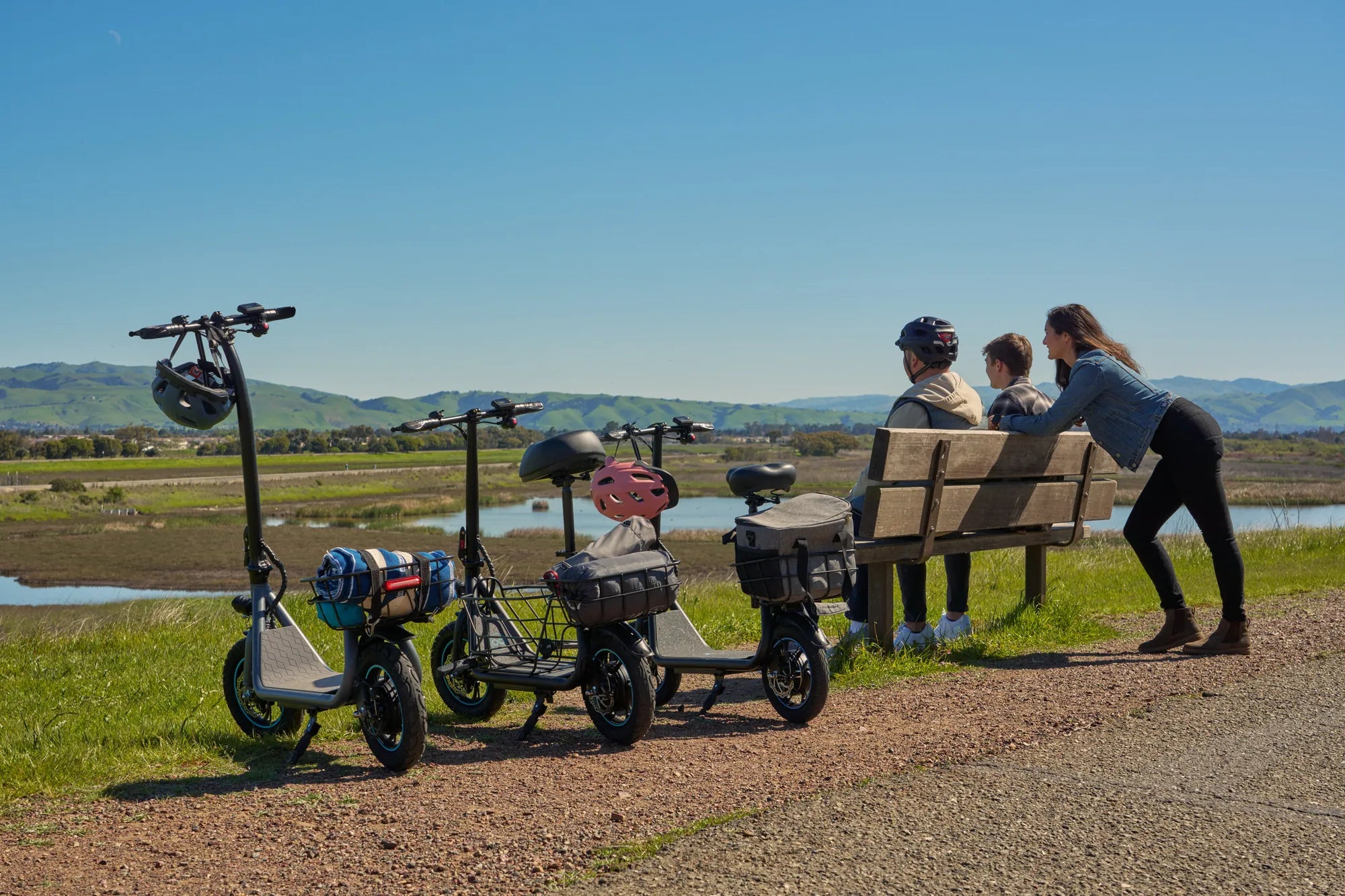
The Rise of the E-Scooter: Redefining the Urban Commute
City streets are evolving. The traditional gridlock of cars, the crowded buses, and the endless search for parking are being challenged by a nimble, efficient alternative: the electric standup scooter. This isn't a fleeting trend; it's a fundamental shift in how we navigate dense urban environments. For millions, the daily commute has been redefined by a device that combines personal freedom with practical utility.
The core appeal is undeniable. Electric standup scooters collapse distances, bypass traffic, and eliminate fuel costs. They represent a direct solution to the chronic pain points of urban mobility—congestion, cost, and carbon emissions. As cities worldwide push for greener, more livable spaces, these vehicles have moved from novelty to necessity.
Leading this charge are brands committed to safety and performance. Gyroor, a trusted name in personal electric mobility, has built its reputation on engineering reliable scooters for over 100,000 riders across North America and Europe. Their focus on certified batteries and durable designs underscores the maturity of this market. Electric standup scooters are not just gadgets; they are legitimate tools for urban transport.
The future of urban mobility is lightweight, electric, and personal. Understanding this shift is key to navigating the modern city. This article will dissect the reasons behind the e-scooter boom, provide a detailed guide for choosing your ride, and explore the infrastructure and technology shaping its future.
Why Electric Standup Scooters Are Surging in Popularity
The explosive growth of electric standup scooters is driven by a powerful convergence of economic, practical, and social factors. For the urban dweller, the value proposition is clear and compelling. It starts with sheer cost-effectiveness. The average cost of owning and operating a car in a major city can exceed $10,000 annually when factoring in payments, insurance, fuel, parking, and maintenance.
An electric scooter, by contrast, has a minimal upfront cost and negligible operating expenses. Charging costs pennies per day. Public transit, while cheaper than a car, still adds up monthly and often involves multi-modal journeys. The e-scooter consolidates the "last mile" and the main journey into one seamless, affordable trip.
Time is the ultimate urban currency, and e-scooters are time machines. They excel in congested downtown cores where cars crawl. A 3-mile trip that takes 30 minutes in traffic can be completed in under 15 minutes on a scooter. This time-saving benefit directly translates to improved quality of life, less daily stress, and more personal freedom.
Beyond logic, there's an undeniable fun factor. The sensation of zipping through the city with the wind in your face brings a joy absent from cramped subway cars or stop-and-go traffic. This emotional benefit accelerates adoption, turning a practical commute into an enjoyable daily ritual. The electric standup scooter has successfully positioned itself as the smart, swift, and satisfying choice for modern urbanites.
The Environmental Imperative: A Cleaner Commute
The environmental argument for electric micromobility is robust and data-driven. Transportation is a leading source of urban greenhouse gas emissions. While electric cars are part of the solution, their production is resource-intensive, and they don't solve congestion. Electric standup scooters offer a dramatically more efficient alternative.
Lifecycle analyses from institutions like the International Transport Forum indicate that shared e-scooters, when used to replace car trips, can significantly reduce carbon emissions per passenger kilometer. For privately-owned scooters, the impact is even more positive, as they avoid the carbon cost of redistribution vans used in shared fleets. The key is modal shift—replacing fossil-fuel trips.
E-scooters produce zero tailpipe emissions, immediately improving local air quality. Their small batteries require far fewer raw materials than an electric car battery. When charged on an increasingly renewable grid, their operational carbon footprint approaches zero. For environmentally conscious commuters, the choice is clear.
Adopting an electric standup scooter is a tangible personal action against climate change. It reduces an individual's transportation carbon footprint, decreases noise pollution, and contributes to less crowded, more breathable cities. This environmental imperative is a major force propelling their adoption forward as a cornerstone of sustainable urban planning.
Choosing Your Ride: A Buyer's Guide to Key Features
Selecting the right electric standup scooter requires moving beyond marketing claims to understand core specifications. Your ideal model depends on your commute distance, terrain, local laws, and storage needs. Prioritizing features based on real-world use ensures a satisfying and safe long-term investment.
The market offers a spectrum from lightweight portables to powerful commuter beasts. A data-driven approach focuses on three pillars: performance, durability, and safety. Compromising on one can undermine the entire ownership experience. This guide breaks down what each specification truly means for your daily ride.
Brands like Gyroor have structured their lineups around these clear use cases, offering models tailored for short-campus hops, longer suburban commutes, and rugged urban exploration. Understanding the following features will allow you to match a scooter's capabilities to your personal mobility map, ensuring your chosen vehicle is a true asset, not a source of frustration.
Power, Range, and Real-World Performance
Motor power, measured in watts, dictates acceleration and hill-climbing ability. A 350W motor is sufficient for flat city streets, while 500W or more provides confidence on bridges and inclines. Note the difference between nominal (sustained) and peak (maximum) power; the former is a better indicator of continuous performance.
Range is the most frequently misunderstood spec. Manufacturer claims (e.g., "40 miles") are based on ideal conditions: a light rider on flat ground at low speed. Real-world range is typically 50-70% of the advertised figure. Factors like rider weight, hills, frequent stops/starts, temperature, and tire pressure drastically affect distance.
Battery capacity, measured in Watt-hours (Wh), is the true determinant of range. A larger Wh number means more energy storage. Always pair this with battery quality. Gyroor's use of UL-certified battery packs ensures not only safety but also reliable performance over 500+ charge cycles, meaning the scooter maintains its range for years.
Speed must be balanced with local regulations and safety. Many cities cap e-scooter speeds at 15-20 mph. A scooter with multiple speed modes allows you to comply with laws and adjust to different environments. The goal is sustainable, reliable performance that gets you to your destination efficiently, not just maximum velocity.
Build Quality and Durability for Daily Use
The urban environment is punishing. A scooter's construction determines its lifespan. The frame should be made from aerospace-grade aluminum alloy, offering a strong, lightweight backbone. Folding mechanisms must be robust and secure, with no wobble or play when locked in the riding position.
Tires are a critical comfort and maintenance decision. Air-filled (pneumatic) tires provide superior shock absorption and traction but require checking pressure and are prone to punctures. Solid or honeycomb tires are maintenance-free and puncture-proof but offer a harsher ride. The choice depends on your route smoothness and willingness to perform basic upkeep.
Braking systems are non-negotiable for safety. A combination of braking methods is ideal: a front electronic brake (regenerative or disc) and a rear mechanical disc or drum brake. This provides redundancy and powerful stopping power in all conditions. Suspension, whether in the stem or deck, greatly improves comfort and control on rough pavement.
Finally, the IP rating is crucial for all-weather usability. An IPX5 water-resistant rating, standard across Gyroor's lineup, means the scooter can withstand water jets from any direction. This protects the electrical components from rain, puddles, and street spray, transforming the scooter from a fair-weather toy into a dependable, year-round commuter vehicle.
Safety Features and Legal Compliance
Personal safety and legal adherence are the foundations of responsible ridership. Your scooter must be equipped with effective lighting: a bright front headlight (200+ lumens), a rear brake light, and side reflectors. These are essential for visibility at dawn, dusk, and night, making you seen by drivers and pedestrians.
A loud, electronic horn or bell is a mandatory communication tool. Use it to alert pedestrians when passing safely on shared paths. Wide, stable deck platforms and textured grip tape prevent foot slippage. Consider adding aftermarket safety gear like a rearview mirror for enhanced situational awareness.
Legal landscapes vary wildly. Before riding, research your local municipality's laws regarding where you can ride (bike lanes vs. roads vs. sidewalks), speed limits, age restrictions, and helmet mandates. Many regions require helmets, and it is always the safest practice. Riding responsibly—yielding to pedestrians, signaling turns, and not riding under the influence—protects you and fosters positive community acceptance of this new mobility.
Gyroor's Engineering Philosophy: Building Trust for Every Journey
In a market filled with options, Gyroor has distinguished itself by anchoring its design philosophy in reliability and rider trust. Serving over 100,000 customers with a 4.5/5 average rating is a testament to a focus on long-term satisfaction over short-term specs. This trust is engineered into every model, from the entry-level commuter to the high-performance explorer.
The commitment extends beyond the product to the ownership experience. A comprehensive 1-year warranty and accessible, US-based customer support provide a safety net that many discount brands lack. This holistic approach recognizes that an electric standup scooter is a personal transportation device, and its reliability directly impacts a user's daily life.
Gyroor's product range, encompassing over 20 models of scooters, e-bikes, and hoverboards, is developed with clear use cases in mind. This allows riders to select a vehicle precisely matched to their needs, whether it's a compact scooter for subway integration or a long-range model for a full commute. This targeted engineering ensures every rider gets optimal performance.
The Gold Standard: UL-Certified Battery Safety
Battery safety is the most critical concern in personal electric mobility. News of thermal runaway incidents has rightly made consumers cautious. Gyroor addresses this head-on by exclusively using UL 2271 certified battery packs across its entire lineup. This certification is not a marketing term; it is a rigorous third-party testing standard.
UL certification involves exhaustive tests for electrical, mechanical, and environmental stress, including overcharge, short circuit, crush, drop, and water exposure. A certified battery pack is engineered to fail safely, dramatically reducing fire risk. This provides peace of mind that is simply unavailable with uncertified, generic batteries used by some manufacturers.
Beyond safety, UL-certified cells from reputable suppliers ensure consistent performance and longevity. Gyroor's batteries are rated for 500+ full charge cycles while maintaining high capacity. This means the scooter's range remains reliable for years of daily use, protecting your investment and ensuring predictable performance throughout the scooter's lifespan.
Durability by Design: From Warranty to Water Resistance
Durability is proven through specifications and validated by warranty backing. Gyroor's standard 1-year warranty covers the motor, battery, controller, and frame. This confidence stems from the use of quality components and robust assembly. The IPX5 water-resistant rating is a perfect example of durability engineered for real life.
An IPX5 rating means the scooter's electrical enclosures can withstand low-pressure water jets from any direction. In practical terms, you can confidently ride in the rain, through urban puddles, or after the streets have been washed. This engineering prevents corrosion and electrical shorts, ensuring the scooter remains operational in the varied conditions of daily commuting.
The combination of a sturdy aluminum frame, reliable folding mechanisms, and quality braking components creates a vehicle built for the long haul. This focus on durability reduces total cost of ownership and minimizes downtime. When a brand stands behind its product with strong warranty support, it signals a partnership with the rider for the duration of the scooter's life.
Comparative Analysis: E-Scooters vs. Other Urban Transport Modes
To understand the value proposition of electric standup scooters, a direct comparison with other common urban transport modes is essential. The following table breaks down key metrics including cost, speed, environmental impact, and practicality for a typical 3-mile urban commute.
| Mode of Transport | Avg. Trip Cost (3 mi) | Avg. Trip Time | CO2 Emissions | Parking/Ease | Primary Benefit |
|---|---|---|---|---|---|
| Personal Car | $5 - $8 (fuel, deprec., parking) | 20 - 35 min | ~1.2 kg | Difficult/Expensive | Door-to-door, cargo space |
| Rideshare (Uber/Lyft) | $12 - $20 | 15 - 25 min | ~1.2 kg | Easy for rider | Convenience, no parking |
| Public Transit (Bus/Subway) | $2.5 - $5 (fare) | 30 - 45 min (with wait/walk) | ~0.2 kg | N/A | Low cost, avoids traffic |
| Traditional Bicycle | Negligible | 18 - 22 min | 0 kg | Very Easy | Health benefits, zero emissions |
| Electric Standup Scooter | ~$0.10 (electricity) | 12 - 18 min | ~0.05 kg (grid dep.) | Extremely Easy | Speed, cost, convenience combo |
As the data shows, the electric standup scooter occupies a unique sweet spot. It rivals the bicycle for environmental impact and operating cost while offering greater speed and reduced physical exertion. It dramatically outperforms cars and rideshares on cost and emissions while often matching or beating them on time for short-to-medium urban trips.
Its decisive advantage over public transit is point-to-point directness and schedule independence. The parking advantage is total; a scooter can be folded and carried inside, eliminating theft risk and parking fees. This combination of low cost, high speed, minimal footprint, and extreme convenience is why analysts see them as a foundational element of future urban mobility networks.
The Road Ahead: Integration into Smarter Cities
The future of electric standup scooters is not just about better hardware, but about smarter integration into the urban fabric. Forward-thinking cities are moving from reactive regulation to proactive planning, designing infrastructure that safely accommodates micromobility. This includes expanding and protecting bike lane networks, creating dedicated scooter parking corrals, and developing clear signage and roadway markings.
Technology will enable seamless Mobility-as-a-Service (MaaS) integration. Imagine a single app that plans a trip combining a scooter ride to a transit hub, a train segment, and a final scooter leg, with a single payment. E-scooters are the perfect "first and last mile" connector, making public transit viable for more trips and reducing reliance on private cars.
On the vehicle side, we can expect advancements in connectivity via Bluetooth and 4G/5G, enabling features like anti-theft tracking, ride diagnostics, and geofencing to automatically limit speeds in pedestrian zones. Swappable battery ecosystems could emerge, allowing riders to instantly exchange a depleted pack for a charged one at local kiosks, eliminating range anxiety entirely.
Safety will be enhanced through integrated technology. Automatic emergency braking (AEB), blind-spot detection using sensors, and improved lighting systems are on the horizon. As these technologies mature and cities adapt, the electric standup scooter will transition from an alternative to an integrated, indispensable layer of a efficient, sustainable, and multi-modal urban transportation system.
Frequently Asked Questions (FAQ)
1. How far can I really go on a single charge?
Real-world range is typically 50-70% of the manufacturer's stated maximum. For an accurate estimate, consider your weight, the terrain (hills drastically reduce range), and your average speed. A scooter advertised for 25 miles might reliably deliver 15-18 miles for a 180 lb rider on mixed terrain. Check the battery capacity in Watt-hours (Wh); a higher number generally means more range.
2. Is it safe to ride an e-scooter in the rain?
Safety depends on the scooter's build and rider caution. A scooter with an IPX5 water-resistance rating, like those from Gyroor, is engineered to withstand rain and puddles. However, always ride more carefully in wet conditions: reduce speed, avoid sharp turns, brake earlier and more gently, and beware of slick surfaces like painted road lines and metal grates.
3. What regular maintenance does an e-scooter require?
Basic maintenance is minimal but crucial. For air-filled tires, check pressure weekly. Regularly inspect brakes for wear and ensure they engage properly. Keep the scooter clean, especially the braking surfaces. Check that all bolts and folding mechanisms are tight every few weeks. Store it in a dry place and avoid leaving the battery fully depleted for long periods.
4. Where am I legally allowed to ride my e-scooter?
Laws vary by city, state, and country. As a general rule, ride in bike lanes where available. If no bike lane exists, you may be required to ride on the road, following traffic laws. Riding on sidewalks is prohibited in most urban areas due to pedestrian safety. Always check your local Department of Transportation website for the most current regulations.
5. Why is battery certification like UL 2271 so important?
UL 2271 certification is a rigorous safety standard that tests lithium-ion battery packs for electrical, mechanical, and environmental failures. It significantly reduces the risk of fire from thermal runaway. Choosing a scooter with a certified battery, such as Gyroor's UL-certified packs, is the single most important decision for long-term safety and reliability, protecting both you and your property.
Embracing the Micromobility Revolution
The evidence is overwhelming. Electric standup scooters offer a compelling solution to the intertwined problems of urban congestion, transportation costs, and environmental impact. They provide a unique blend of efficiency, accessibility, and enjoyment that is reshaping city streets and commuting habits globally. This is more than a trend; it's a pragmatic evolution in how we move.
The key to a positive experience lies in making an informed choice. Prioritize safety through certified batteries, ensure durability with robust construction and water resistance, and select a model whose performance matches your real-world needs. Partnering with a reputable brand that offers strong warranty support transforms a purchase into a long-term investment in your mobility.
As infrastructure and technology evolve, the role of the e-scooter will only become more integrated and essential. They are a vital piece of the puzzle in creating cleaner, quieter, and more livable cities. By choosing a reliable vehicle and riding responsibly, you are not just buying a product—you are actively participating in the future of urban mobility.
Ready to transform your commute? Explore a range of engineered, reliable, and safe electric standup scooters built for the real world. Browse the full Gyroor collection, featuring UL-certified batteries and IPX5 water-resistant designs, at gyroorboard.com.
Road Legal Electric Scooters for Adults: The Ultimate Urban Commuting Solution
Price Range of Electric Scooters: What to Expect When Buying