

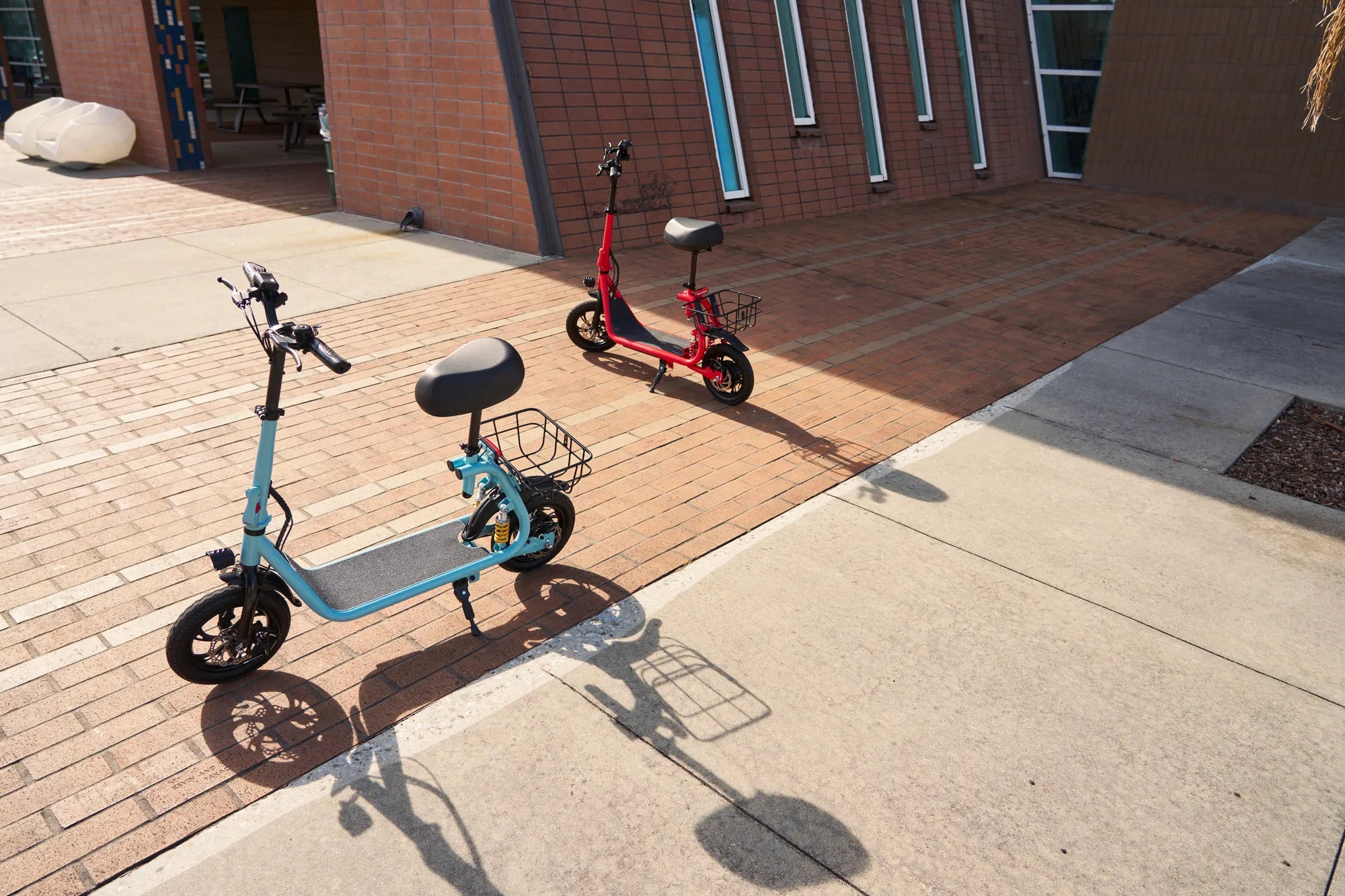
Introduction: Why Wide Wheels are Redefining Urban Mobility
Navigating city streets demands a vehicle built for reality, not just smooth pavement. Electric wide wheel scooters for adults have emerged as the definitive solution for practical, daily urban transportation. These scooters directly address the core frustrations of traditional models: instability on rough terrain, discomfort over longer distances, and anxiety in variable weather conditions.
This article will demonstrate why the wide-wheel design, typically featuring 8 to 10-inch tires, is not merely an aesthetic choice but a fundamental engineering upgrade. We will dissect the anatomy of stability, explore critical safety features, and provide a data-driven comparison to standard commuter scooters. You will learn how brands like Gyroor integrate these principles with UL-certified batteries and robust construction to deliver a reliable commuting tool trusted by over 100,000 riders.
The shift towards electric wide wheel scooters for adults represents a maturation of the micro-mobility market, prioritizing the needs of the daily commuter over the casual rider. It’s a move from novelty to necessity, offering a legitimate alternative to cars and public transit for short to medium urban journeys.
By the end of this guide, you will understand the key performance metrics, maintenance essentials, and safety protocols that make these scooters the ultimate urban commuting solution. We cut through the marketing to focus on factual benefits and practical advice for making an informed purchase.
The Anatomy of Stability: What Makes Wide Wheels Superior
The primary advantage of an electric wide wheel scooter lies in its foundational geometry. Wider tires, commonly 3 inches or more across, provide a significantly larger contact patch with the ground. This increased surface area translates directly to enhanced traction and grip, especially when cornering or riding on loose or wet surfaces.
Physics dictates that a wider tire can be run at a lower air pressure without risking a pinch flat. This lower pressure allows the tire to conform to road imperfections, acting as a primary suspension system. It absorbs vibrations from cracks, cobblestones, and uneven pavement that would be transmitted directly through the frame and to the rider on a scooter with narrow, high-pressure tires.
Stability is not just about comfort; it's a critical safety factor. A wider wheelbase—the distance between the centers of the two wheels—increases lateral stability. This makes the scooter less prone to wobbling at speed or when encountering side gusts of wind. For adult riders carrying bags or commuting in busy traffic, this planted feel inspires confidence.
The benefits compound in real-world conditions. A wide-wheel scooter maintains composure over streetcar tracks, expansion joints, and potholes that could easily destabilize a standard model. This capability expands the usable road network for riders, freeing them from seeking only the smoothest bike lanes.
Beyond the Tires: Complementary Stability Features
While the wheels are the star, true stability is a system-wide achievement. Leading models integrate several complementary features. A lower deck height lowers the scooter's center of gravity, making it feel more grounded and easier to control, particularly during mounting and dismounting.
The frame itself is a key component. Reinforced aluminum or steel alloys provide the necessary rigidity to handle the stresses of wider tires and urban abuse without flexing. This rigid platform ensures that steering inputs are precise and that the scooter tracks straight without unnecessary wandering.
Many advanced electric wide wheel scooters for adults incorporate additional suspension systems. A front or dual spring suspension works in tandem with the air-filled wide tires to manage larger impacts, such as curbs or deep potholes. This layered approach to shock absorption is what enables all-day riding comfort.
Finally, the steering column and handlebar design contribute to stable handling. A secure locking mechanism that eliminates play, combined with ergonomic grips placed for optimal control, allows the rider to manage the scooter with minimal effort, reducing fatigue on longer commutes.
Gyroor's Commitment to Safety and Reliability: Built for the Real World
Engineering for stability must be paired with unwavering commitments to safety and durability. Gyroor's approach embeds these principles from the ground up, starting with the power source. Every Gyroor scooter uses a UL-certified battery pack, a critical differentiator in a crowded market.
UL certification means the battery cells, management system, and enclosure have undergone rigorous independent testing for electrical, mechanical, and fire safety. For the commuter, this translates to predictable performance, stable power delivery, and peace of mind regarding one of the most vital—and potentially hazardous—components. These batteries are rated for over 500 charge cycles, ensuring long-term reliability for daily use.
Urban commuting inevitably involves encounters with water. Gyroor designs its commuter scooters with an IPX5 water-resistant rating. This engineering standard means the scooter's electronics can withstand low-pressure water jets from any direction. In practice, this protects against rain, road spray, and puddles, preventing short circuits and corrosion that can plague lesser models.
This focus on certified safety extends to the rider experience. Reliable dual braking systems (often disc + electronic), bright headlights and brake lights, and audible horns are standard on models designed for serious commuting. Gyroor backs this built quality with a comprehensive 1-year warranty, covering defects in materials and workmanship, which underscores their confidence in the product's durability under daily wear and tear.
Performance Metrics: Speed, Range, and Weight Capacity
Evaluating an electric wide wheel scooter requires a clear understanding of its performance envelope. Top speed for commuter-focused models typically ranges from 15 to 20 mph (24 to 32 km/h). This speed is optimal for urban environments, balancing travel time with safety and local regulations.
Electric range is the most variable metric, heavily dependent on rider weight, terrain, temperature, and riding style. A realistic range for a commuter scooter is between 15 and 25 miles (24 to 40 km) per charge. It is crucial to consider your round-trip distance with a safety margin, as factors like hills and stop-start traffic can reduce range.
Weight capacity is where wide-wheel scooters often excel. Their robust frames and stable platforms are designed to support adult riders comfortably. Standard weight limits range from 220 lbs (100 kg) to 265 lbs (120 kg) or more. Always choose a scooter rated for well above your body weight to ensure longevity of the motor, battery, and frame.
The motor's power, measured in watts (W), determines hill-climbing ability and acceleration. A 350W motor is suitable for moderate inclines, while 500W or higher provides more confident climbing power. The wide-wheel design provides the traction necessary to effectively translate this motor power into forward motion, even on slightly slippery surfaces.
Data-Driven Comparison: Wide Wheel vs. Standard Commuter Scooters
The following table provides an objective comparison based on key commuting criteria. This illustrates the specific scenarios where wide-wheel designs offer tangible advantages.
| Commuting Metric | Standard Scooter (8.5" Narrow Tires) | Electric Wide Wheel Scooter (10" x 3" Tires) | Practical Implication for the Commuter |
|---|---|---|---|
| Stability on Rough Roads | Poor to Fair | Good to Excellent | Wide wheels absorb cracks and debris, allowing focus on traffic, not the road surface. |
| Comfort (30-min ride) | Low; high vibration transfer | High; reduced vibration & fatigue | Enables longer, more frequent commutes without discomfort in hands and feet. |
| Wet Surface Traction | Moderate; prone to slipping | High; larger contact patch improves grip | Increases safety and confidence when commuting in damp conditions or after rain. |
| Rider Weight Suitability | Often limited to ~220 lbs | Often supports 265+ lbs | Accommodates a broader range of adult riders with a more stable feel. |
| Terrain Versatility | Paved bike paths, smooth roads | Brick, cobblestone, packed gravel, imperfect pavement | Unlocks more route options and shortcuts not viable on standard scooters. |
| Maintenance Frequency | Higher risk of pinch flats | Lower risk; tires absorb impacts | Less downtime and lower long-term cost due to reduced tire and rim issues. |
This comparison highlights that while a standard scooter may be sufficient for perfect conditions on short trips, the electric wide wheel scooter for adults is engineered for the unpredictable and imperfect reality of city streets. The investment directly correlates to expanded utility, enhanced safety, and greater comfort.
Maximizing Your Urban Commute: Practical Tips for Wide Wheel Scooter Riders
Proper maintenance begins with tire pressure. Check it weekly with a quality gauge. While wide tires are forgiving, maintaining the manufacturer's recommended PSI (often 35-50 PSI) ensures optimal range, ride quality, and tire life. Under-inflation increases rolling resistance; over-inflation reduces shock absorption.
Conduct a pre-ride safety check: verify brake function, ensure the folding mechanism is fully locked, check that lights are operational, and listen for any unusual noises from the wheels or motor. This 60-second ritual is crucial for preventing mechanical failures on the road.
Leverage the scooter's stability for safer riding. Your wider stance allows for more controlled, gradual cornering. Use your body weight to lean into turns while keeping the scooter relatively upright, maximizing tire contact. In wet conditions, reduce speed and avoid sharp turns or hard braking, even with superior traction.
Battery care is paramount for longevity. Avoid draining the battery to 0% regularly. Try to recharge when it drops to 20-30%. Store the scooter in a cool, dry place, and avoid leaving it at full charge for extended periods (weeks). Adhering to these practices helps preserve the UL-certified battery's health over its entire 500+ cycle life.
Navigating Laws and Etiquette for Urban Scooting
Legal frameworks for electric scooters vary widely by city, state, and country. It is the rider's responsibility to know and follow local laws. Common regulations govern maximum speed (often 15-20 mph), minimum rider age (usually 18+), helmet requirements, and where you can ride (bike lanes vs. roads vs. sidewalks).
In many jurisdictions, electric wide wheel scooters for adults are classified similarly to e-bikes when under a certain wattage. Always check if your local Department of Transportation or city council has specific rules regarding motor power, lighting, and braking systems for legal road use.
Practice defensive riding etiquette. Assume cars and pedestrians may not see you. Use hand signals for turns, ring a bell or call out politely when passing pedestrians on shared paths, and never ride on sidewalks where prohibited. Be predictable in your movements.
Secure parking is essential. Use a robust U-lock or chain lock to secure the scooter's frame to a fixed object. If possible, remove the battery (if designed for removal) and take it with you. Proper insurance, whether through a homeowner's/renter's policy or a dedicated micro-mobility policy, is also a wise consideration for a valuable commuting asset.
Frequently Asked Questions (FAQ)
Q: Are wide-wheel scooters significantly heavier and harder to carry?
A: They are typically 2-5 lbs (1-2 kg) heavier than comparable narrow-wheel models due to larger tires and more robust frames. However, the trade-off is substantial gains in stability and comfort. For most commuters who ride rather than carry their scooter for long distances, this weight difference is a minor consideration for the benefits received.
Q: How does the IPX5 water-resistant rating actually protect my scooter?
A> An IPX5 rating means the scooter's electrical enclosures can withstand water projected by a nozzle (6.3mm) from any direction without harmful effects. This makes it safe to ride in rain, through puddles, and in wet street conditions. However, it is not waterproof—avoid submerging the scooter or using a high-pressure hose directly on electrical components.
Q: What does the 1-year comprehensive warranty cover for daily commuter wear and tear?
A> Gyroor's warranty covers defects in materials and workmanship under normal use. This includes issues with the motor, battery, controller, and frame. It does not cover consumables like tires, tubes, and brake pads, or damage resulting from accidents, misuse, or lack of maintenance. It is a guarantee of manufacturing quality.
Q: Can these scooters handle hills commonly found in cities?
A> Yes, but capacity varies by motor power. A 350W motor can handle moderate inclines (up to 10-15% grade), while a 500W+ motor provides stronger hill-climbing performance. The wide wheels provide the necessary traction to prevent wheel spin when accelerating on an incline, a common issue with less powerful, narrow-wheel scooters.
Q: Are electric wide wheel scooters suitable for riders of all sizes?
A> They are designed specifically for adults and accommodate a wide range. Always check the manufacturer's stated maximum weight capacity. A model rated for 265 lbs will provide a stable, responsive ride for a 220 lb rider, while a model rated for 220 lbs may feel strained at that limit. When in doubt, choose the higher-capacity model.
Investing in Confidence for Your Daily Journey
The choice of an urban commuter vehicle boils down to trust. You must trust it to start every morning, to handle unexpected road conditions safely, and to endure the rigors of daily use. Electric wide wheel scooters for adults are engineered to earn that trust through physics-first design principles that prioritize stability and rider confidence above all else.
This evolution from niche gadget to legitimate transport is marked by brands like Gyroor integrating professional-grade safety standards—UL-certified batteries, meaningful water resistance, and comprehensive warranties—into the consumer experience. It transforms the scooter from a last-mile toy into a primary-mile tool.
The data is clear: the wider contact patch, lower tire pressure, and complementary frame geometry directly address the most common pain points of urban commuting. The result is a vehicle that expands your mobility options, reduces commute stress, and provides a genuinely practical alternative to being stuck in traffic.
Your daily commute should empower you, not exhaust you. Discover the difference that purpose-built engineering and certified safety can make. Explore the range of high-performance, reliable electric wide wheel scooters for adults designed for the real world. Browse the full Gyroor collection at gyroorboard.com and find the model that turns your urban journey into the best part of your day.
Best Electric Scooters for Long Distance Budget: Top Affordable Commuters
Can You Use Electric Scooters in Public? A Comprehensive Guide to Rules & Benefits