


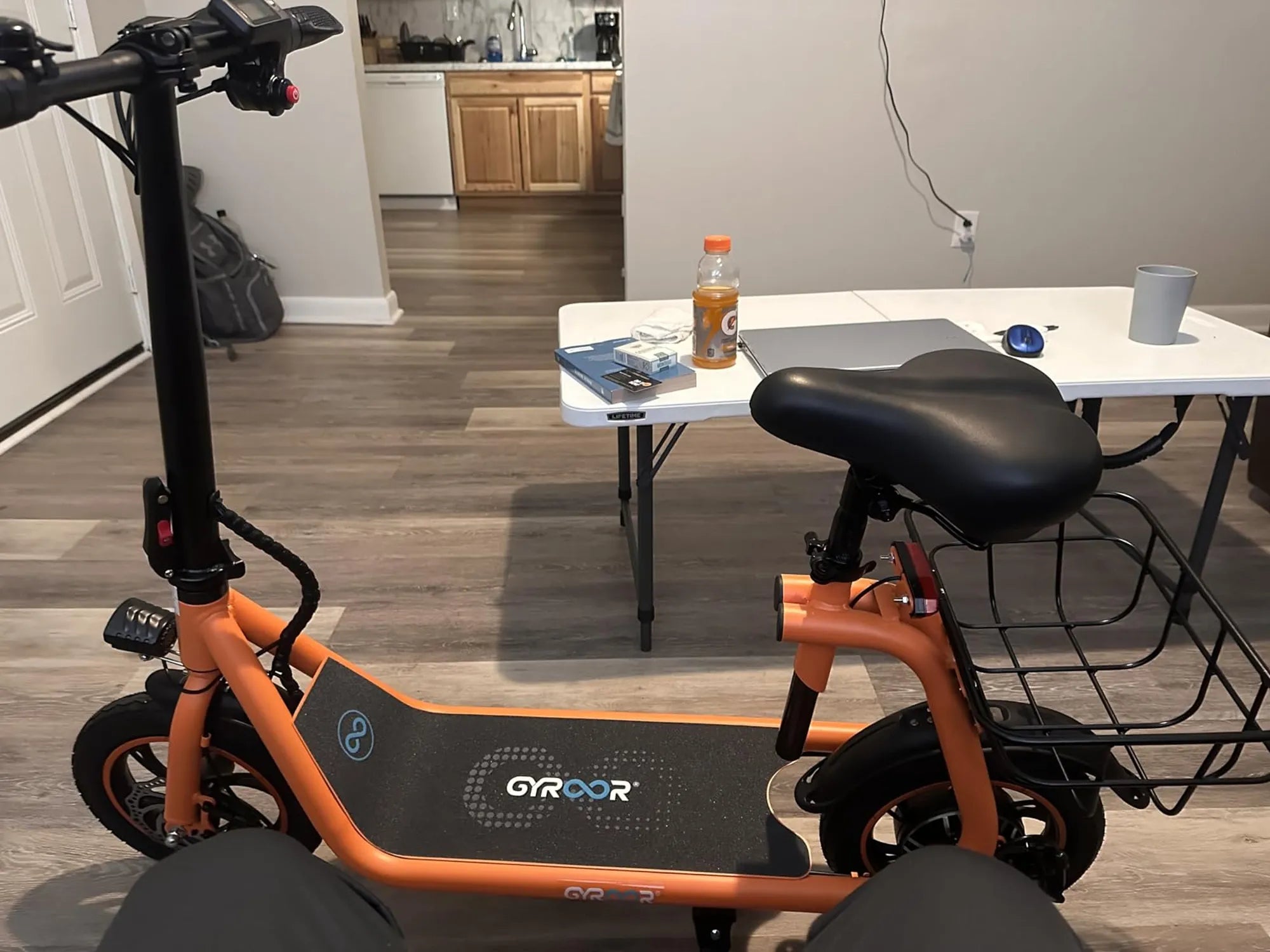
Understanding your eletric scooter parts is the difference between a fleeting gadget and a reliable daily companion. This knowledge empowers you to perform basic maintenance, diagnose issues early, and make informed purchasing decisions that prioritize safety and durability. We will dissect every major component, explain its function, and reveal how premium parts from brands like Gyroor—known for UL-certified batteries and IPX5 water resistance—create a fundamentally better and safer riding experience for commuters and enthusiasts alike.
Core Components: The Anatomy of Your Electric Scooter
An electric scooter is a symphony of mechanical and electrical systems working in unison. At its core, it consists of three primary systems: the power system (battery, motor, controller), the structural system (deck, stem, handlebars), and the control system (throttle, brakes, display). Each component's quality directly influences the scooter's acceleration, range, ride comfort, and overall safety. A failure in any single part can compromise the entire vehicle.
High-quality eletric scooter parts are designed for synergy and durability. For instance, a powerful motor requires a robust battery and a smart controller to manage the power flow efficiently. Similarly, a sturdy frame must be paired with a reliable suspension system to absorb road vibrations. Investing in a scooter built with certified and well-engineered parts from the outset reduces long-term costs and safety risks, a principle central to brands like Gyroor across their 20+ model lineup.
The Power System: Battery, Motor, and Controller
The power system is the heart and brain of your e-scooter. The battery stores the energy, the motor converts it into motion, and the controller regulates everything between them. This trio determines your scooter's maximum speed, hill-climbing ability, and range per charge. Compromising on any of these eletric scooter parts leads to diminished performance and potential reliability issues.
The battery is arguably the most critical component. Gyroor exclusively uses UL-certified lithium-ion battery packs, tested for over 500 charge cycles. This certification is a non-negotiable safety standard, ensuring protection against overheating, short circuits, and fire hazards. The motor, typically a brushless DC hub motor, is rated by its wattage (e.g., 350W, 500W). Higher wattage generally means more torque and better performance on inclines.
The controller is the unsung hero. This electronic module acts as the scooter's brain, managing power delivery from the battery to the motor based on throttle input. It also handles regenerative braking and protects the system from voltage spikes. A high-quality controller ensures smooth acceleration, efficient energy use, and integrates seamlessly with the display and safety systems.
The Framework: Deck, Stem, and Handlebars
The framework provides the foundational structure and determines rider posture and stability. The deck is the standing platform, often made from aluminum alloy or reinforced steel for a balance of lightness and strength. Its width and length affect foot comfort, while its height from the ground influences the center of gravity. A textured, anti-slip surface is a crucial safety feature on this part of your eletric scooter.
The stem (or steering column) connects the deck to the handlebars. Its locking mechanism—whether a folding latch or a solid clamp—must be exceptionally robust to prevent wobbling or collapse during rides. Gyroor designs incorporate reinforced stems and secure locking mechanisms to ensure steering precision and rider confidence. The handlebars house the controls and should offer a comfortable, ergonomic grip width.
The Rolling Stock: Wheels, Tires, and Suspension
Wheels, tires, and suspension are your primary contact with the road, dictating comfort, traction, and handling. Wheel size typically ranges from 8 to 10 inches. Larger wheels roll over bumps and cracks more easily, providing a smoother ride. The choice between pneumatic (air-filled) and solid (airless) tires is significant. Pneumatic tires offer superior shock absorption and grip but require maintenance; solid tires are puncture-proof but transmit more road vibration.
Suspension systems, whether spring-based or hydraulic, are essential for comfort, especially on uneven urban terrain. They work by absorbing impacts from bumps, which reduces fatigue and improves control. A scooter with quality suspension protects other eletric scooter parts, like the frame and electronics, from excessive jarring. For commuters, a combination of pneumatic tires and a front or dual suspension system represents the ideal balance of comfort and practicality.
The Control System: Throttle, Brakes, and Display
The control system is your direct interface with the scooter. The throttle, usually a thumb lever or twist-grip, sends acceleration signals to the controller. Braking systems are multi-faceted for safety. Most modern scooters use a combination of systems: an electronic (regenerative) brake, which slows the motor and recaptures some energy, and a mechanical brake (disc or drum) for definitive stopping power.
The display, often an LCD or LED panel mounted on the handlebars, is the information hub. It shows real-time data like speed, battery level, riding mode (Eco, Standard, Sport), and sometimes trip distance or error codes. A clear, bright display is vital for safe riding, allowing you to monitor your speed and remaining range without distraction. The integration quality of these control eletric scooter parts is a key indicator of overall vehicle engineering.
The Gyroor Difference: How Quality Parts Build a Better Scooter
Not all eletric scooter parts are created equal. The difference between a generic assembly and a scooter from an established brand like Gyroor lies in the specification, certification, and integration of each component. Gyroor's approach is to engineer scooters as cohesive systems where every part meets a defined standard for safety, durability, and performance. This philosophy is validated by their trust among over 100,000 riders in North America and Europe.
This commitment manifests in three tangible areas: certified battery safety, environmental protection through water resistance, and long-term reliability backed by warranty. Where some manufacturers may source the cheapest available components to hit a price point, Gyroor builds around core quality parts, ensuring that the scooter remains safe and functional through years of daily use. This results in a higher initial value and a significantly lower total cost of ownership.
Safety by Certification: The UL-Certified Battery Advantage
The UL certification for lithium-ion batteries is a critical differentiator. This independent safety certification involves rigorous testing for electrical, mechanical, and environmental stress. A UL-certified battery pack, like those used in all Gyroor models, has built-in protection against over-charging, over-discharging, short circuits, and extreme temperatures. This directly mitigates the risk of battery fires—a paramount concern with lithium-ion technology.
For the rider, this certification translates to peace of mind. It means the most volatile and expensive component of your eletric scooter has passed the highest industry standards. It also ensures consistent performance and longevity, as the battery management system (BMS) is designed to optimize charge cycles. When evaluating scooters, the presence of a UL, CE, or RoHS certification for the battery is a non-negotiable safety checkpoint.
Built for the Elements: Understanding IPX5 Water Resistance
An IPX5 water resistance rating is a practical feature for a commuter vehicle. It certifies that the scooter's critical eletric scooter parts—specifically the battery compartment, controller, and motor connections—can withstand water jets from any direction. In real-world terms, this means protection against heavy rain, wet roads, and accidental sprays during cleaning. It does not mean the scooter is submersible or suitable for riding through deep puddles.
This rating is achieved through meticulous design: sealed cable connectors, gaskets at assembly joints, and conformal coating on electronic boards. For a rider, IPX5 capability greatly reduces anxiety about weather changes and expands the scooter's usable days per year. It also protects the internal components from dust and debris, which can cause abrasion and electrical faults over time. This focus on resilience is a hallmark of a scooter built for dependable daily transportation.
Long-Term Reliability: What the 1-Year Warranty Covers
A comprehensive warranty is a brand's promise on the quality of its eletric scooter parts. Gyroor's 1-year warranty typically covers defects in materials and workmanship for the frame, motor, battery, controller, and display. This means if a covered component fails under normal use within the warranty period, Gyroor will provide repair or replacement, often covering parts and labor.
This warranty is a direct reflection of confidence in component sourcing and assembly quality. It also simplifies ownership; instead of sourcing individual parts from multiple suppliers, the rider has a single point of contact for support. When comparing scooters, the scope and length of the warranty are strong indicators of expected durability and the manufacturer's commitment to standing behind their product after the sale.
Maintenance & Upkeep: Caring for Your Scooter's Key Parts
Proactive maintenance is the best way to extend the life of your eletric scooter parts and ensure safe operation. A simple, regular routine can prevent minor issues from becoming major repairs. This care revolves around the battery, the moving mechanical parts, and the safety-critical systems like brakes and tires. Investing a few minutes before and after rides pays significant long-term dividends.
Establish a basic maintenance schedule. Perform a quick visual and functional check before each ride (the "pre-ride checklist"). Conduct a more thorough inspection every month, checking tire pressure, bolt tightness, and brake pad wear. Seasonal maintenance, such as proper storage for winter, is also crucial. Using manufacturer-recommended chargers and accessories is essential to avoid damaging the core electrical systems.
Battery Care for Maximum Lifespan
Proper battery care is the single most impactful maintenance practice. First, avoid consistently draining the battery to 0%. Try to recharge when it drops to 20-30% capacity. Similarly, avoid leaving the scooter plugged in for days after reaching 100%; modern chargers usually cut off, but prolonged high voltage can stress cells. For long-term storage (over a month), store the battery at a 50-60% charge in a cool, dry place.
Temperature management is key. Do not charge the battery immediately after a ride if the pack is very hot, and never charge in freezing temperatures. Extreme heat and cold accelerate chemical degradation inside lithium-ion cells. Following these guidelines helps achieve the full 500+ charge cycles that quality UL-certified batteries like Gyroor's are designed for, preserving your scooter's range and value for years.
Routine Checks: Tires, Brakes, and Fasteners
A pre-ride checklist should take less than a minute. Start with tire pressure for pneumatic tires; under-inflation increases rolling resistance and puncture risk, while over-inflation reduces grip. Check brake lever responsiveness—the levers should engage firmly without touching the handlebars. Visually inspect brake pads (if accessible) for excessive wear.
Next, perform a "wiggle test." Grip the stem and handlebars and gently try to wobble them; there should be no play or rattling in the folding mechanism or headset. Check that the quick-release levers or bolts on the stem and handlebars are securely fastened. Finally, ensure the throttle returns smoothly to its resting position and that the headlight and taillight are functioning. This routine directly addresses the most common points of failure in eletric scooter parts.
When to Seek Professional Service
While basic maintenance is user-friendly, some issues require professional attention. Seek service if you hear grinding, clicking, or scraping noises from the motor or wheels, as these indicate bearing or internal damage. If the scooter experiences sudden power loss, erratic acceleration, or error codes on the display that a reset doesn't fix, the controller or a sensor may be faulty.
For any structural damage—a cracked deck, bent stem, or damaged fork—do not ride the scooter. For battery-related issues like swelling, leaking, or failure to hold a charge, contact the manufacturer immediately. Using authorized service centers, especially for a scooter under warranty like a Gyroor, ensures genuine parts are used and that repairs do not void your existing coverage. This protects your investment and safety.
Comparison: OEM vs. Aftermarket Parts for Your E-Scooter
Eventually, parts like tires, brake pads, and batteries will need replacement. Riders then face a choice: purchase Original Equipment Manufacturer (OEM) parts from the scooter's brand or opt for third-party aftermarket components. This decision involves trade-offs between cost, compatibility, safety, and warranty. A balanced understanding ensures you maintain the integrity of your vehicle.
| Consideration | Genuine OEM Parts (e.g., Gyroor) | Aftermarket Parts |
|---|---|---|
| Compatibility & Fit | Guaranteed perfect fit and plug-and-play installation. | May require modification; fit is not always assured. |
| Performance & Safety | Designed to original specs; maintains safety certifications (UL, IP rating). | Quality varies wildly; may not meet original safety or performance standards. |
| Warranty Impact | Repairs maintain the original warranty coverage. | Often voids the warranty for the scooter and related components. |
| Cost | Typically higher upfront cost. | Often lower initial purchase price. |
| Long-Term Value | Preserves scooter reliability, safety, and resale value. | Potential for higher long-term cost due to incompatibility or failure. |
The Case for Genuine Gyroor Parts
Using genuine Gyroor replacement parts is the surest way to preserve your scooter's designed performance and safety profile. These parts are identical to those used in production, ensuring seamless integration with the motor, controller, and battery management system. This is especially critical for electronic components and batteries, where mismatched specifications can lead to poor performance, damage, or safety hazards.
Furthermore, genuine parts protect the scooter's IPX5 water resistance. Aftermarket parts may not have the same sealing gaskets or design, potentially creating ingress points for water. Most importantly, using non-OEM parts, especially on core systems, will void your manufacturer's warranty. For a critical component like the battery, sticking with the certified OEM pack is a paramount safety decision.
Risks and Rewards of Third-Party Components
The primary appeal of aftermarket eletric scooter parts is lower cost and greater variety. For simple consumables like generic brake pads or standard inner tubes, aftermarket options can be a cost-effective solution if you confirm the exact size and specification. Some third-party manufacturers also offer performance upgrades, like larger battery packs or different tire compounds.
However, the risks are substantial. Compatibility is the biggest issue; a motor or controller from another brand may physically fit but communicate incorrectly with your scooter's system, causing malfunctions. Safety is another concern: uncertified batteries pose a fire risk, and sub-standard brake components can fail. The initial savings can be quickly erased by a single repair made necessary by a faulty aftermarket part, not to mention the potential safety consequences.
Upgrading Your Ride: When and How to Consider Part Upgrades
Beyond replacement, some riders consider upgrading their eletric scooter parts for better performance, comfort, or range. Common upgrade targets include the battery for extended range, the suspension for a smoother ride, or the tires for better traction. However, upgrades are not simple plug-and-play endeavors and require careful consideration of compatibility, cost, and consequence.
Any upgrade must first be compatible with the scooter's core systems. Installing a higher-voltage battery requires a controller and motor rated for that voltage; otherwise, you risk immediate damage. Similarly, adding a more powerful motor draws more current, necessitating a battery and controller that can deliver it. Always consult the scooter's technical specifications or the manufacturer before attempting any significant electrical upgrade.
Mechanical upgrades, like installing a wider deck, air-filled tires, or an aftermarket suspension kit, are generally more accessible but still require mechanical aptitude. These can enhance comfort significantly. Remember, any modification, especially to structural or electrical systems, will almost certainly void the manufacturer's warranty. It is often more practical and cost-effective to purchase a scooter with the desired performance profile from the outset, such as selecting a higher-spec model from Gyroor's range.
Troubleshooting Common Part-Related Issues
Diagnosing problems with your eletric scooter parts starts with systematic observation. Many issues have simple causes. If the scooter won't power on, first check the battery charge level and all physical connections, including the power button. Ensure the charger is properly connected and that an outlet is working. If the display shows an error code, refer to the user manual; common codes indicate communication errors between the controller, throttle, or motor.
If the scooter powers on but doesn't move when the throttle is engaged, check the brake levers. Most scooters have a safety feature that cuts motor power if the brakes are slightly engaged. Ensure the levers are fully released. For reduced range, consider battery age, riding conditions (hills, cold weather), and tire pressure. Dragging brakes or under-inflated tires create excess rolling resistance that drastically shortens range. For persistent electrical issues or mechanical faults, professional diagnosis is recommended.
Conclusion: Knowledge Powers a Safer, Longer-Lasting Ride
Your electric scooter is a sophisticated assembly of interdependent eletric scooter parts. Understanding the role of the UL-certified battery, the robust motor, the intelligent controller, and the durable frame transforms you from a passive user into an informed owner. This knowledge enables smarter maintenance, safer operation, and more confident purchasing decisions. It clarifies why investing in a scooter built with certified, high-quality components from a reputable brand is an investment in safety, reliability, and long-term value.
Choosing a scooter where every part is designed to a standard, like those from Gyroor with their focus on certification, water resistance, and warranty support, ensures your vehicle is ready for the demands of daily commuting. Your journey begins with the right machine. Explore the full range of engineered electric scooters and e-bikes built with these quality principles in mind.
Ready to experience the difference quality parts make? Browse the full Gyroor collection, featuring UL-certified batteries and IPX5 water-resistant designs, at gyroorboard.com.
FAQ: Electric Scooter Parts Quick Answers
What is the most important part of an electric scooter?
The lithium-ion battery pack is the most critical single component. It is the most expensive part, the primary determinant of range, and, if uncertified, a potential safety hazard. This is why the UL certification for batteries, a standard met by Gyroor's packs, is the most important safety specification to look for when purchasing.
Can I upgrade my scooter's battery or motor for more power?
Upgrading the battery or motor is complex and generally not recommended. The controller is programmed for specific voltage and current ranges. Installing a more powerful battery or motor without upgrading the controller and ensuring compatibility with the wiring harness can damage the electronics and void the warranty. For more power, it is safer and more reliable to purchase a scooter model designed with that performance level from the start.
How long should key parts like the battery and tires last?
Under normal use, a quality UL-certified lithium battery should retain good capacity for 2-3 years or 500+ full charge cycles. Pneumatic tires may last 1,000-2,000 miles depending on road surface and weight, while solid tires can last significantly longer but offer less comfort. Brake pads typically need replacement every 500-1,000 miles. These lifespans assume proper maintenance and average riding conditions.
What does IPX5 water resistance mean for my scooter's parts?
An IPX5 rating means the enclosed eletric scooter parts (battery, controller, motor connections) are protected against low-pressure water jets from any direction. You can safely ride in rain and on wet roads. It does not allow submersion or riding through deep puddles that could submerge the deck. Always check your specific model's manual for its exact water resistance capabilities.
Where can I buy genuine replacement parts for my Gyroor scooter?
Genuine Gyroor replacement parts are available through official channels to ensure compatibility and preserve your warranty. The primary source is Gyroor's official website (gyroorboard.com) or their authorized customer service and support network. Using these official parts guarantees they meet the original safety and performance specifications for your specific model.
125cc Dirt Bike Top Speed MPH: Real-World Data & Performance Factors
Family Trike: The Ultimate Guide to Safe, Stable, and Fun Family Mobility