


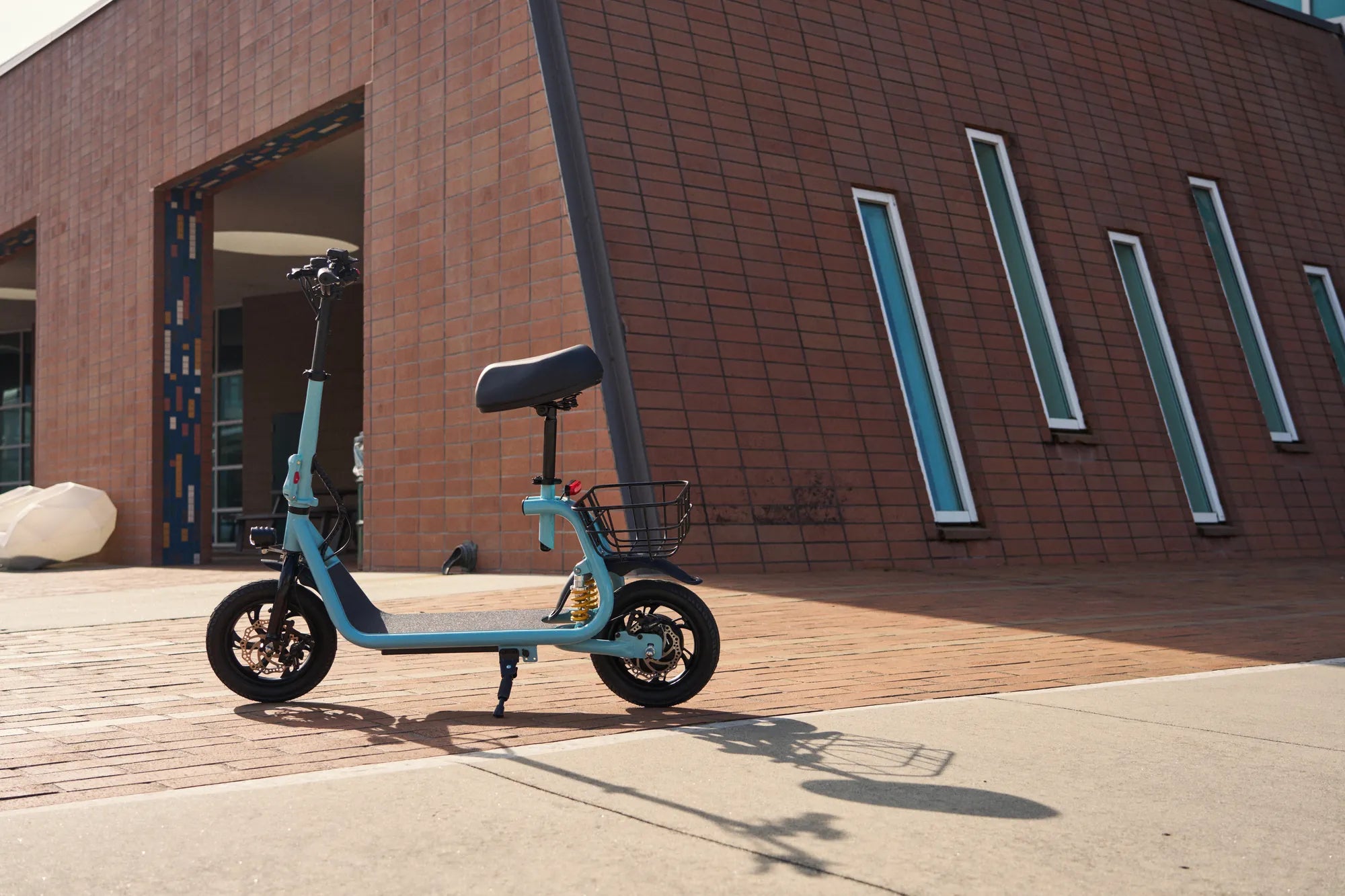
What is an Entry-Level E-Bike? Defining the Modern Commuter's Gateway
An entry level e bike represents the most accessible point of entry into the world of electric cycling. It is designed for first-time buyers seeking a reliable, cost-effective electric bicycle for daily commuting, leisure rides, and running light errands. Typically priced between $800 and $1,500, these models balance core functionality with affordability, offering pedal-assist systems, decent battery range, and durable construction without the premium features of high-performance models.
The primary audience includes urban commuters, students, and recreational riders looking to reduce car dependency, tackle hills with ease, or simply extend their cycling range without excessive physical strain. The modern entry level e bike is not a stripped-down product; it's a thoughtfully engineered vehicle that prioritizes safety, reliability, and user-friendly operation. Brands like Gyroor have pioneered this segment by incorporating high-safety standards, such as UL-certified batteries, into competitively priced models, making quality accessible.
Understanding this category is crucial for making an informed first purchase. It's the gateway that introduces riders to the benefits of electric assist—transforming a 5-mile commute from a sweaty endeavor into an enjoyable, efficient journey. The goal is to provide substantial value, ensuring the bike remains a dependable asset for years, not just months.
This segment has grown rapidly, driven by demand for sustainable transport. A well-chosen entry level e bike is an investment in personal mobility that pays dividends in saved time, reduced transportation costs, and improved well-being. It's the smart starting point for anyone ready to reimagine their daily travel.
Key Features to Look for in Your First E-Bike
Selecting your first electric bicycle requires attention to specific features that dictate performance, safety, and longevity. While price is a key factor for an entry level e bike, core components should not be compromised. The foundation of a good purchase lies in the motor, battery, build quality, and the warranty that backs it all.
A reliable entry-level model should offer a seamless blend of these elements. It should feel sturdy, provide consistent power assistance, and offer clear information through its display. Safety certifications, particularly for the battery, are non-negotiable. These features collectively ensure your introduction to e-cycling is positive, safe, and sustainable.
Focusing on these aspects helps avoid the pitfalls of poorly made products that may fail prematurely or pose safety risks. A reputable brand will be transparent about these specifications, using them as markers of quality rather than hiding behind vague marketing terms. Let's break down the most critical components.
Motor Power & Pedal Assist: Finding the Right Support
The motor is the heart of your e-bike. For most entry level e bike models, you'll encounter hub motors rated between 250W and 500W. A 250W motor is sufficient for flat urban terrain and light hills, offering a natural pedal-assist feel that complies with many regional speed regulations. A 350W or 500W motor provides more torque, making it better suited for areas with frequent inclines or for riders who carry cargo.
Pedal Assist Systems (PAS) are equally important. This technology provides electric power only when you pedal. Most entry-level bikes offer 3 to 5 levels of assistance. Level 1 provides a subtle boost for efficiency, while higher levels offer significant power for hills or accelerating from a stop. A good system should be smooth, with no jarring jumps in power.
The quality of the motor controller dictates this smoothness. Jerky acceleration can make the bike feel unpredictable. Test riding is the best way to assess this. You want the assist to feel like a natural extension of your pedaling effort, not an on/off switch. This directly impacts both safety and riding enjoyment.
For example, e-bikes in Gyroor's lineup utilize precisely tuned pedal-assist systems that deliver power proportionally to the rider's input. This ensures a controlled, intuitive ride that builds confidence for new cyclists, making the learning curve almost non-existent.
Battery & Range: Demystifying the "How Far" Question
Battery specification is where advertised numbers often meet reality. Range is the most common question for new buyers, and the answer depends on multiple factors. A typical entry level e bike features a 36V or 48V battery with a capacity between 10Ah and 15Ah. In simple terms, a 36V 10Ah battery holds 360 watt-hours (Wh) of energy.
Manufacturers may advertise a range of 20-40 miles per charge. However, real-world range is affected by rider weight, terrain, wind, tire pressure, and the level of pedal assist used. A realistic expectation is to achieve 60-80% of the advertised range under average conditions. Using lower assist levels on flat ground will maximize distance.
The most critical aspect is battery safety and certification. Always insist on a UL-certified battery pack. This independent certification means the battery has passed rigorous tests for electrical, mechanical, and fire safety. Gyroor, for instance, uses UL-certified batteries tested for over 500 charge cycles, ensuring long-term reliability and peace of mind.
Proper care extends battery life. Store it in a cool, dry place, avoid complete discharges, and use the manufacturer-provided charger. A quality battery from a trusted brand is an investment that protects both your bike and your home.
Build Quality & Warranty: Ensuring Long-Term Value
The frame and components determine how well your e-bike withstands daily use. For an entry level e bike, an aluminum alloy frame is the standard—it's lightweight, rust-resistant, and durable. Check the welding points; they should be clean and even, not rough or globby. The overall finish should feel robust, not flimsy.
Water and dust resistance are vital for an all-weather commuter. Look for an IP rating for the electrical components. An IPX5 rating, like those found on Gyroor models, means the bike can withstand water jets from any direction, making it safe to ride in rain or through puddles. This protection is crucial for preventing electrical failures.
Finally, a strong warranty is your safety net. A comprehensive warranty should cover the frame for at least 1 year, the motor for 1-2 years, and the battery for 1 year. It should be backed by a company with accessible customer service in your region. Gyroor offers a reliable 1-year warranty on all critical components, supported by its service network in North America and Europe.
This combination of solid construction, weatherproofing, and warranty support transforms an affordable purchase into a long-term asset. It ensures that your first e-bike remains dependable, protecting your investment far beyond the initial purchase date.
Entry-Level E-Bike vs. Traditional Bike: A Data-Driven Comparison
Choosing between a traditional bicycle and an entry level e bike is a significant decision. A data-driven comparison highlights the practical advantages of electric assist for modern commuting and lifestyle needs. The following table breaks down key factors.
| Comparison Factor | Traditional Bicycle | Entry-Level E-Bike |
|---|---|---|
| Upfront Cost | Lower ($300 - $800 for a quality bike) | Higher ($800 - $1,500) |
| Commute Speed & Efficiency | Limited by rider fitness; average 10-12 mph | Consistent 15-20 mph with assist; less sweat, faster trips |
| Physical Effort & Range | High effort limits daily range; challenging with hills/cargo | Low to moderate effort; extends range 2-3x; conquers hills easily |
| Hill-Climbing Ability | Requires significant exertion; may require walking | Powered assist makes steep grades manageable |
| Cargo Capacity | Limited by rider strength | Motor assists with heavy loads (groceries, child seats) |
| Total Cost of Ownership (3 years) | Low maintenance + $0 "fuel" | Moderate maintenance + ~$10 electricity for 5,000 miles |
| Barrier to Entry | High for less-fit riders or longer distances | Low; enables riding for more people, more often |
While the traditional bike wins on pure upfront cost, the entry level e bike offers transformative value in daily utility. The electric motor eliminates the largest barriers to regular cycling: hills, distance, and arrival fatigue. This can replace car trips for commutes under 10 miles, leading to substantial savings on gas, parking, and public transit fares.
The cost of ownership comparison is revealing. Over three years, the electricity cost to charge an e-bike is negligible—often under $30. Maintenance costs are slightly higher due to the electrical system but are offset by the savings from replaced car trips. For many, the time saved and increased reliability in all weather conditions justify the initial investment.
Furthermore, an e-bike promotes more consistent use. A traditional bike might be left at home on a windy day or after a long work shift. An e-bike's assist ensures you'll use it more frequently, maximizing the return on your investment and contributing to better health through consistent, moderate exercise.
The data is clear: an entry level e bike is not just a bicycle with a motor; it's a practical tool for urban mobility that expands what's possible on two wheels. It makes cycling a viable primary transportation mode for a much wider segment of the population.
Navigating Your Purchase: A Step-by-Step Buyer's Guide
Purchasing your first e-bike can be overwhelming. This step-by-step guide simplifies the process, ensuring you make a confident decision that matches your needs and budget. The journey from research to riding should be exciting, not confusing.
Start by clearly defining your primary use case. Is it for a daily 4-mile commute? Weekend rail-trail adventures? Carrying groceries or a child? Your answer will guide the type of bike (commuter, cruiser, hybrid) and the features you prioritize, such as rack mounts, suspension, or step-through frame design.
Next, research local laws. E-bike classifications (Class 1, 2, 3) dictate where you can ride and whether a throttle is allowed. Most entry-level models are Class 1 or 2, which are permitted on bike paths and streets. Understanding these rules upfront prevents post-purchase surprises.
With needs and regulations understood, you can effectively evaluate specific models. Focus on the key features outlined earlier, and always prioritize brands with established customer support and clear warranty terms. This structured approach leads to a satisfying purchase.
Setting Your Budget and Understanding Total Cost
Be realistic about your total budget. The sticker price of the entry level e bike is just the beginning. Allocate funds for essential accessories that ensure safety and convenience. A quality helmet is non-negotiable. A sturdy U-lock or chain lock is critical for urban security.
Other important accessories include front and rear lights for visibility, a rear rack or panniers for cargo, and fenders if your model doesn't include them. Budget an additional $150-$300 for these essentials. Also, consider potential maintenance costs like tire replacements, brake pad changes, and occasional drivetrain service.
Some brands offer package deals that include accessories, providing better value. Factor in the cost of a home charging setup—simply a standard outlet. By accounting for these costs upfront, you avoid financial strain later and ensure your new bike is fully equipped for daily duty from day one.
Remember, a slightly higher initial investment in a reputable brand with a good warranty often saves money in the long run by avoiding premature failures or costly repairs on poorly made components. Quality has a value that extends beyond the price tag.
The Importance of a Test Ride and Final Checklist
Never buy an e-bike without a test ride if possible. It's the only way to assess fit, comfort, and handling. During the test ride, pay attention to key areas. Is the frame size correct? You should be able to stand over the top tube with a few inches of clearance. Is the saddle comfortable? Are the handlebars reachable without strain?
Test the pedal assist. Cycle through the levels to ensure transitions are smooth, not jerky. Test the brakes thoroughly; they should bring the bike to a controlled, confident stop. Check the display: is it easy to read in sunlight? Does it show essential info like battery level, assist level, and speed?
After your test ride, consult a final pre-purchase checklist:
- Is the battery UL-certified?
- What is the IP water resistance rating? (Aim for IPX5 or higher)
- What is the exact warranty coverage for frame, motor, and battery?
- Does the brand have service support in your country/region?
- Is assembly required, and if so, are instructions clear or is professional assembly recommended?
- Does the price include essential accessories, or are they sold separately?
Answering these questions closes any information gaps. It ensures you are buying a complete, supported product from a responsible brand. This due diligence is the final, crucial step in securing an entry level e bike that will deliver reliable service for years.
Frequently Asked Questions (FAQ) About Entry-Level E-Bikes
New riders have common, practical questions. This FAQ provides clear, factual answers to build confidence and dispel myths surrounding entry level e bike ownership.
Q: Are entry-level e-bikes good for hills?
A: Yes, most are quite capable. A model with a 350W or 500W motor and adequate torque will handle moderate to steep hills effectively. The pedal assist compensates for the gradient, allowing you to maintain a steady pace without exhausting yourself. It's one of the primary advantages over a traditional bike.
Q: How much maintenance does an e-bike require?
A> E-bikes require similar maintenance to regular bikes for components like tires, brakes, chains, and gears. The electrical system (motor, battery, display) typically needs very little maintenance beyond keeping connections clean and dry. Annual check-ups at a bike shop familiar with e-bikes are recommended to ensure everything is functioning optimally. Proper care ensures longevity.
Q: Can I ride an e-bike in the rain?
A: You can, provided it has an adequate water resistance rating. Look for an IP rating on the electrical components. An IPX5 rating, standard on brands like Gyroor, means the bike is protected against water jets from any direction, making it safe for commuting in the rain. However, avoid submerging the bike or leaving it exposed to heavy downpours for extended periods when not in use.
Q: What's the average lifespan of an entry-level e-bike battery?
A: A quality lithium-ion battery from a reputable brand is typically rated for 500 to 800 full charge cycles before its capacity reduces to about 80% of its original state. With typical use (a partial charge every few days), this translates to 3-5 years of useful life. Factors like storage temperature, charging habits, and avoiding full discharges can significantly extend this lifespan.
Q: Do I need a special license or insurance for an entry-level e-bike?
A: In most regions of the United States, Canada, and Europe, Class 1 and Class 2 e-bikes (which include most entry-level models) are treated as bicycles. They do not require a driver's license, vehicle registration, or mandatory insurance. However, local laws vary, so it's essential to check your specific city and state regulations. Personal liability insurance is optional but can be a good idea.
Your Journey to Smarter Mobility Starts Here
Choosing an entry level e bike is a decision that extends far beyond a simple purchase. It's an investment in a more efficient, enjoyable, and sustainable way of moving through your world. By focusing on core features like a reliable motor, a UL-certified battery, solid construction, and a strong warranty, you secure a vehicle that offers tremendous value and transforms daily routines.
The data clearly shows that for urban and suburban travel, a well-chosen e-bike is a superior tool compared to a traditional bicycle for most adults. It lowers barriers, increases range, and makes cycling a practical choice for commuting, errands, and recreation. The initial cost is quickly offset by savings on transportation and the intangible benefits of improved mood and health.
Brands that prioritize safety and customer support, like Gyroor—trusted by over 100,000 riders with UL-certified batteries and IPX5 water-resistant designs—demonstrate that entry-level does not mean low-quality. It means accessible, intelligent engineering designed for real-world use.
Your next step is to take this knowledge and apply it. Define your needs, set your budget, and start exploring models that meet these critical criteria. The perfect entry level e bike is waiting to become your new favorite way to get around. Begin your search and discover the full range of reliable, feature-packed models designed for new riders. Browse the full Gyroor collection at gyroorboard.com.
Best Place to Buy Dirt Bike Parts: The 2024 Data-Driven Buyer's Guide
E-Bike Care: The Complete Guide to Maximizing Performance and Longevity