


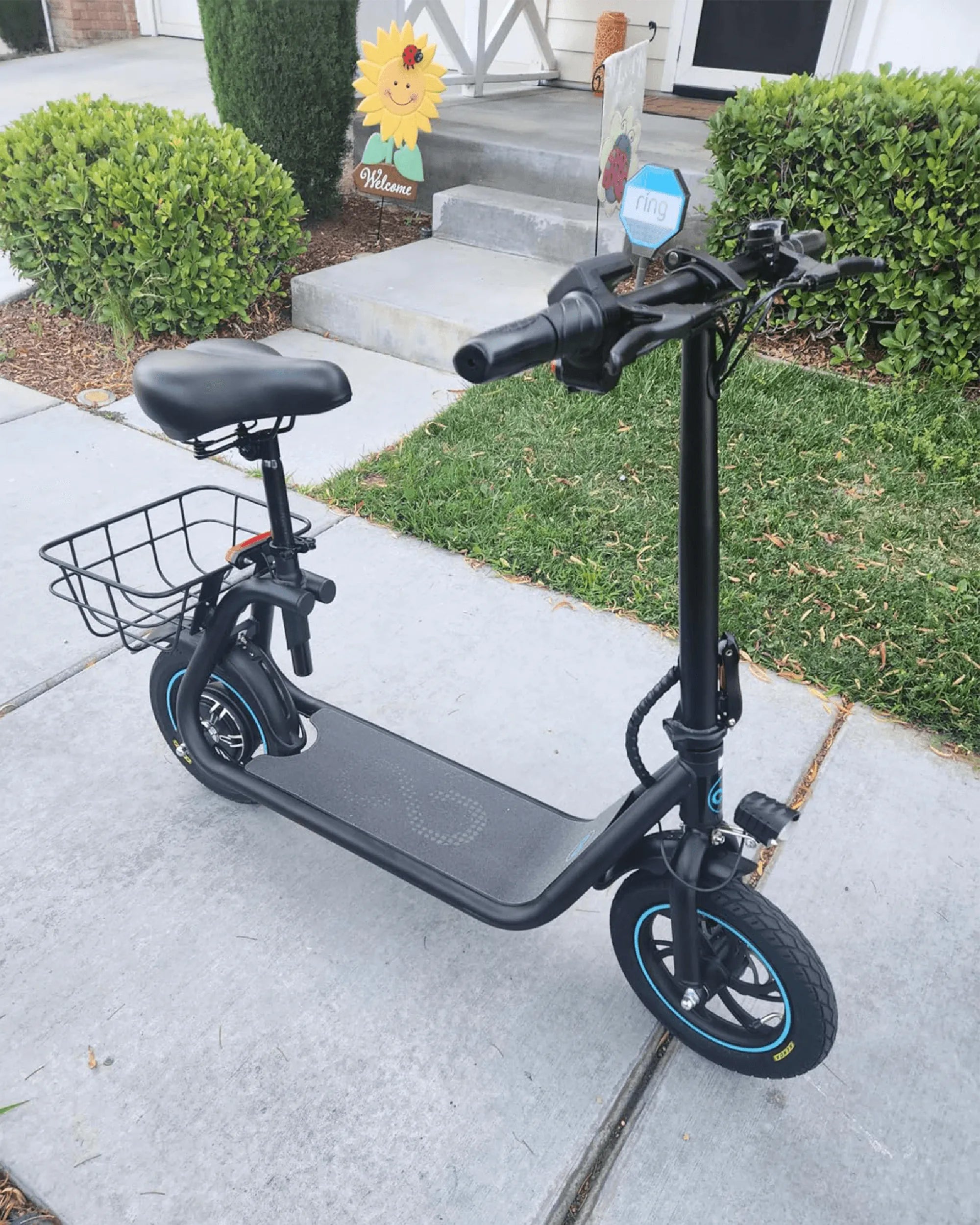
Introduction: The Rise of the Fat Tire Kick Scooter
The urban mobility landscape is evolving, and at its heart is a simple, robust innovation: the fat tire kick scooter. This isn't a motorized gadget but a human-powered vehicle that merges the nostalgic fun of a classic kick scooter with the rugged, go-anywhere attitude of a mountain bike. It represents a shift towards durable, versatile, and low-tech personal transport for commuters, adventurers, and families alike. You will learn what defines this unique scooter category, its concrete advantages over traditional models, and how to choose a reliable option built to last for years of dependable service.
Forget being confined to pristine bike lanes. The defining feature—those wide, air-filled tires—unlocks pavement, gravel, grass, and hard-packed dirt. This guide cuts through the hype with data-driven analysis, practical comparisons, and maintenance advice. We'll explore why leading brands, such as Gyroor—a North American and European leader trusted by over 100,000 riders—focus on UL-certified components and IPX5 water-resistant designs to build confidence into every ride.
What is a Fat Tire Kick Scooter? Defining the Hybrid
A fat tire kick scooter is a non-motorized, human-powered scooter distinguished by its wide, pneumatic (air-filled) tires, typically ranging from 8 to 12 inches in diameter and 3 to 5 inches in width. This is a fundamental departure from the small, solid rubber or polyurethane wheels (usually 100-200mm) found on traditional kick scooters. The core design philosophy prioritizes terrain conquest and riding comfort over the minimalist portability of its slim-tired ancestors.
The construction is straightforward yet robust: a strong aluminum alloy frame, a wide deck for secure footing, an adjustable handlebar stem, and a simple braking system, usually a rear fender brake or a disc brake. There are no batteries, motors, or electronic controllers. Propulsion comes solely from the rider's kick, making it an excellent source of light cardiovascular exercise. This mechanical simplicity is a key selling point, translating to extreme durability and negligible maintenance beyond basic tire care.
It's crucial to distinguish this category from electric scooters with fat tires. While both share similar tire aesthetics, an electric model includes a motor, battery, and throttle, fundamentally changing its use case, cost, maintenance needs, and legal status. The pure fat tire kick scooter offers a silent, unrestricted, and maintenance-light alternative that is often permissible on more trails and paths where motorized vehicles are banned.
Key Advantages: Why Choose a Fat Tire Model?
The benefits of a fat tire kick scooter are direct results of its physics and design. These advantages solve specific pain points experienced by riders of conventional scooters, particularly in diverse urban and suburban environments.
Unmatched Stability and Control
The wide contact patch of fat tires creates a profoundly stable platform. This increased footprint lowers the center of gravity and dramatically improves balance, especially when navigating uneven surfaces like brick paths, cobblestones, or slightly off-camber trails. For beginners, younger teens, or riders carrying a backpack, this stability inspires confidence and reduces the learning curve compared to wobbly, small-wheeled scooters.
Superior Comfort and Shock Absorption
This is the most immediately noticeable benefit. The large volume of air in the tires acts as a highly effective, natural suspension system. They absorb vibrations and impacts from road cracks, expansion joints, pebbles, and minor potholes that would be painfully transmitted through the frame of a scooter with solid or small tires. This results in a significantly smoother ride, reducing fatigue in your feet, ankles, and knees on longer journeys, making a 2-3 mile commute not just feasible but enjoyable.
Go (Almost) Anywhere Versatility
The fat tire kick scooter truly earns its "all-terrain" designation. While not a substitute for a full-suspension mountain bike on technical singletrack, it confidently handles surfaces that would stop a traditional scooter dead. Packed gravel paths, hard-packed dirt, dry grass fields, sandy beach walkways, and even light snow become accessible. This versatility transforms the scooter from a last-mile sidewalk tool into a genuine vehicle for exploration and recreation in parks, campgrounds, and beyond.
Built to Last: Durability and Low Maintenance
The simplicity is engineered for longevity. With no electrical components to fail, the scooter's lifespan is determined by its mechanical build quality. High-grade aluminum frames resist corrosion and withstand significant impact. The pneumatic tires, while requiring occasional air checks, are far more resistant to pinch flats and offer better traction than solid tires, which can crack or wear down quickly. A quality model from a reputable brand represents a one-time investment that can last for many years with only minimal, user-serviceable upkeep.
Gyroor’s Approach: Engineering for Confidence and Reliability
As a leader in personal electric mobility, Gyroor applies its rigorous engineering standards to its non-motorized offerings, understanding that safety and reliability are paramount regardless of propulsion. Their design philosophy for durable scooters focuses on foundational quality that riders can trust.
The Foundation of Safety: Frame and Build Quality. Gyroor utilizes reinforced aluminum alloys for the frame and stem, ensuring a robust structure that supports riders up to specified weight limits (often 220 lbs or more) without flex or compromise. Critical components like the folding mechanism and handlebar clamp employ secure locking systems to prevent accidental collapse, a vital safety feature. This attention to structural integrity turns the scooter from a toy into a legitimate transport tool.
Peace of Mind on Every Ride: Warranty and Support. Investing in a scooter from a brand like Gyroor means investing in support. Their standard 1-year comprehensive warranty on the frame, components, and critical parts protects against manufacturing defects. This, backed by accessible customer service, stands in stark contrast to the risk of purchasing no-name brands with dubious origins and zero post-sale support. For a vehicle meant for daily use, this warranty is not just a perk—it's a necessity.
Designed for the Real World: Practical Features. Gyroor incorporates user-centric details that enhance the riding experience. Adjustable handlebar heights accommodate everyone from taller teens to adults. A wide, textured deck provides secure footing. Reliable braking, whether a responsive rear fender brake or a mechanical disc brake, offers consistent stopping power in various conditions. While not motorized, this focus on ergonomics and control reflects the same rider-first mindset found across their entire product lineup.
Choosing Your Ride: Fat Tire vs. Other Scooter Types
Selecting the right scooter depends on your primary use case, terrain, and budget. The table below provides a clear, data-driven comparison to inform your decision.
| Feature / Type | Fat Tire Kick Scooter | Traditional Kick Scooter | Electric Scooter (for reference) |
|---|---|---|---|
| Primary Terrain | All-terrain: Pavement, gravel, dirt, grass | Smooth pavement only | Pavement, some handle mild bumps |
| Ride Comfort | Excellent (natural tire suspension) | Poor (rigid, vibrates) | Varies (some have suspension) |
| Stability | Very High (wide tire footprint) | Low (narrow, small wheels) | Moderate to High |
| Propulsion & Exercise | Human-powered (good cardio) | Human-powered (good cardio) | Motor-powered (minimal exercise) |
| Max Practical Range | Unlimited (human endurance) | Unlimited (human endurance) | 15-40 miles (battery limited) |
| Upfront Cost | $$ (Mid-range) | $ (Lowest) | $$$ (Highest) |
| Maintenance Complexity | Very Low (tire pressure, brakes) | Very Low (wheel bearing, brakes) | High (battery, motor, electronics) |
| Legal Restrictions | Minimal (often treated as bicycle) | Minimal | Significant (varies by city/state) |
| Ideal User | Commuters, trail explorers, families | Young children, last-mile on perfect paths | Commuters seeking speed with less effort |
The fat tire kick scooter occupies a unique middle ground. It sacrifices the ultra-portability and ultra-low cost of a traditional scooter for massive gains in comfort and capability. Compared to an electric scooter, it wins on cost, longevity, lack of legal hassle, and providing exercise, while conceding on speed and effort-free travel.
Who is the Fat Tire Kick Scooter Ideal For?
The versatility of this scooter type makes it a compelling choice for several distinct user profiles. Understanding these personas can help you determine if it aligns with your lifestyle.
The Urban Commuter & Errand-Runner
For those living within 1-4 miles of work, a transit hub, or local shops, the fat tire kick scooter is a game-changer. It bypasses traffic congestion and eliminates parking fees and hassles. Its ability to smoothly transition from street to curb, handle cracked sidewalks, and cut across the occasional park or plaza makes the journey faster and more enjoyable than walking. It's a reliable, sweat-manageable alternative to biking for short trips.
The Off-Road Enthusiast & Trail Explorer
This rider views the scooter as a tool for adventure. They use it to explore greenways, hard-packed forest service roads, beach paths, and campgrounds. The fat tires provide access to scenery and experiences a traditional scooter cannot reach. It’s less about point-A-to-point-B efficiency and more about the fun of riding on diverse surfaces, making it a perfect companion for camping trips or weekend explorations in regional parks.
The Eco-Conscious & Fitness-Minded Rider
This user seeks to reduce their carbon footprint and integrate more activity into their daily routine. The scooter provides genuine zero-emission transport while offering a low-impact cardiovascular workout. It’s a conscious replacement for short car trips, combining utility with health benefits. The mechanical simplicity also aligns with a minimalist, low-consumption philosophy, as it requires no electricity to charge and has a decades-long potential lifespan.
Families & Teenagers
For families, the stability and durability of a fat tire kick scooter make it a safer, longer-lasting choice for teenagers compared to flimsy, small-wheeled options. Parents can feel more confident as kids ride on neighborhood streets or park paths. The scooters are robust enough for shared use and can keep up with parents on bikes during family outings. For teens, they offer independent mobility within a suburb or small town without the costs and risks associated with motorized vehicles.
Essential Safety and Maintenance Tips
Owning a fat tire kick scooter is low-maintenance, but proactive care ensures optimal performance, safety, and longevity. These are not disposable items; they are vehicles that benefit from basic stewardship.
Pre-Ride Safety Check (The ABC Quick Check): Before every ride, perform a quick inspection. Air: Check tire pressure with a gauge. Brakes: Test the brake lever for firm engagement and ensure the brake pad contacts the wheel or disc cleanly. Connections: Ensure the folding mechanism and handlebar clamp are securely locked. A quick visual scan for any loose bolts or cracks is also wise.
Tire Pressure is Paramount: This is the single most important maintenance task. Under-inflated tires increase rolling resistance (making it harder to kick), risk pinch flats, and can damage the wheel rim. Over-inflated tires reduce traction and ride comfort. Consult your scooter's manual for the recommended PSI range (often between 30-50 PSI). Use a bicycle pump with a pressure gauge to maintain the correct level weekly or bi-weekly, depending on use.
Brake Maintenance: For rear fender brakes, periodically check the wear on the friction pad. If it's worn thin, replace it to maintain stopping power. For disc brakes, ensure the rotor is not bent and listen for any grinding noises indicating pad wear. Keep braking surfaces clean of dirt and oil. Learning to use your brake effectively, including modulating pressure to avoid skidding, is a key riding skill.
General Care and Storage: Wipe down the scooter with a damp cloth after riding in wet or muddy conditions to prevent grime buildup. Avoid storing it in direct, prolonged sunlight, which can degrade tires and plastic components over time. If storing for an extended period, inflate tires to the maximum recommended pressure to prevent sidewall cracking. Lubricate the folding mechanism hinge and wheel bearings with a light silicone spray every few months to keep action smooth.
FAQ: Your Fat Tire Scooter Questions Answered
Q1: Are fat tire scooters harder to kick and push than regular scooters?
A1: They can require slightly more initial effort to accelerate due to increased rolling resistance and weight. However, once moving, the larger wheels maintain momentum very well. Proper tire pressure is critical; under-inflated tires will feel sluggish. For most riders, the trade-off for immense stability and comfort is well worth a minimal increase in effort.
Q2: What is the ideal tire pressure, and how does it affect the ride?
A2: Always follow your specific model's manual, but a typical range is 30-50 PSI. Higher pressure (e.g., 45-50 PSI) creates a faster, more efficient ride on smooth pavement but is less comfortable. Lower pressure (e.g., 30-35 PSI) maximizes shock absorption and traction on loose surfaces like dirt or gravel but requires more effort to push. Experiment within the safe range to find your preferred balance.
Q3: Can adults realistically use these scooters?
A3> Absolutely. This is a major market for quality fat tire kick scooter models. They are built with adult weights in mind, often supporting 220-250 lbs. Adjustable handlebars allow for an ergonomic, upright riding position. The comfort and terrain capability make them a practical and fun option for adult commuters and recreational riders.
Q4: How do I perform basic maintenance?
A4> Focus on three key areas: 1) Tires: Check pressure weekly with a gauge. Inspect for cuts or embedded debris. 2) Fasteners: Periodically check that all bolts (stem, handlebar, brake) are tight. 3) Brakes: Test function regularly. Replace worn brake pads. A simple monthly 10-minute check covering these points will keep your scooter in top condition for years.
Q5: Is a fat tire scooter suitable for a complete beginner?
A5> Yes, in fact, its stability often makes it more suitable for a beginner than a traditional scooter. The wide deck and stable platform inspire confidence. The recommendation is to start in a safe, open, flat area like an empty parking lot to get a feel for balancing, kicking, and braking before venturing onto more complex paths or trails.
Conclusion: Embracing Rugged, Simple Mobility
The fat tire kick scooter is more than a trend; it's a logical evolution of personal transport, answering the demand for durable, versatile, and enjoyable mobility. It democratizes the freedom to move beyond perfect asphalt, turning a commute into an adventure and a neighborhood errand into a moment of fun. By choosing a model built with integrity—featuring robust frames, reliable components, and backed by substantive warranties—you invest in a tool that promises years of dependable service.
This vehicle proves that innovation doesn't always mean adding more electronics. Sometimes, it means perfecting the fundamentals: wide tires for comfort, strong materials for safety, and thoughtful design for real-world use. It represents a conscious choice for active, sustainable, and uncomplicated travel. For those ready to experience this blend of rugged capability and simple fun, exploring a trusted brand's offerings is the next step. Discover the full range of engineered, rider-tested mobility solutions designed for confidence on every journey. Browse the full Gyroor collection at gyroorboard.com.
Side by Side Scooter: The Complete Guide to Two-Seater Electric Riding
100 90-19 Dirt Bike Tire: The Complete Guide to Sizing, Selection & Performance