



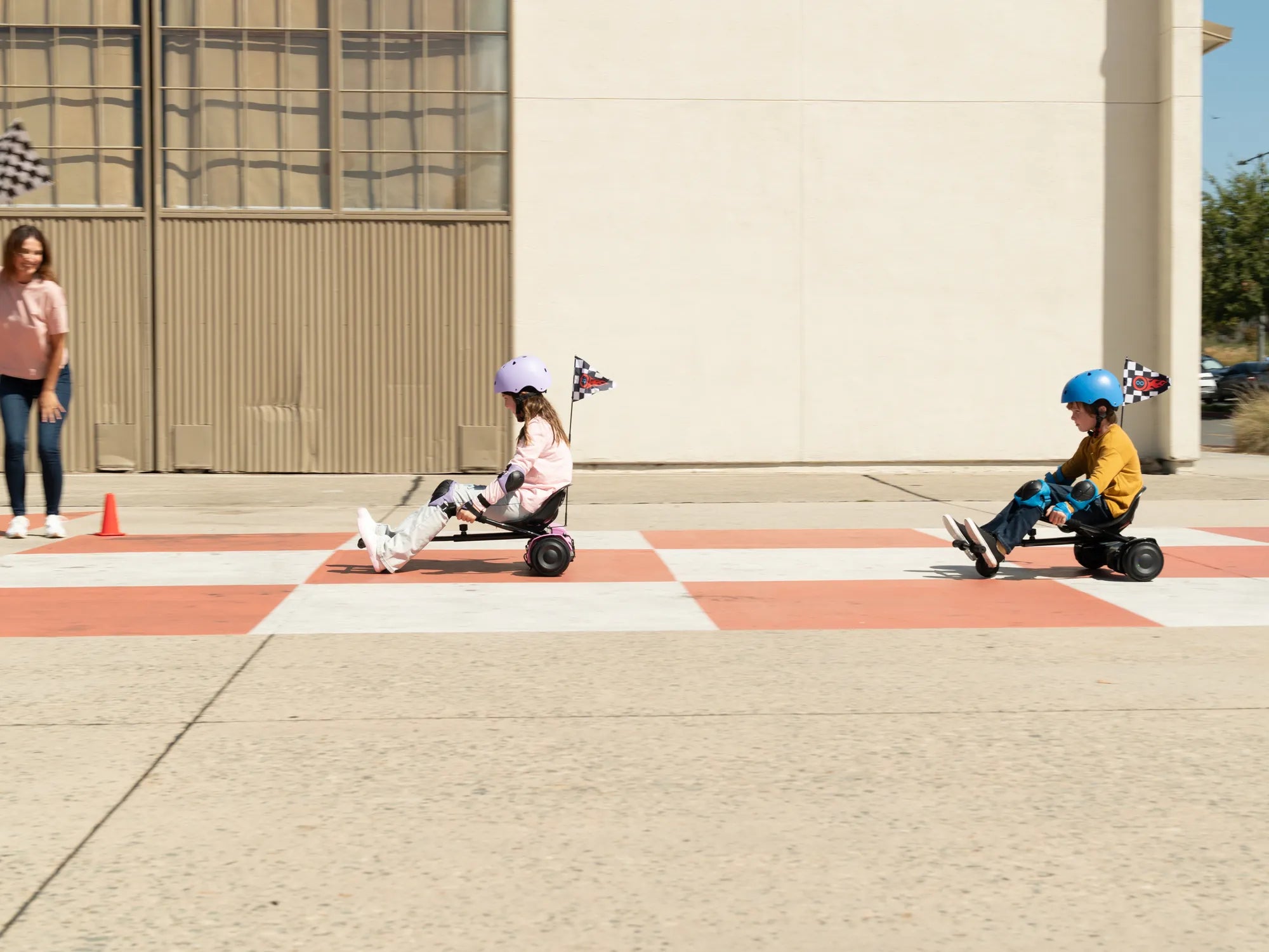
Introduction: Why a Fold Up Scooter is a Game-Changer for Kids
Choosing the right fold up scooter for kids involves more than picking a color. It's about selecting a tool for adventure, exercise, and developing mobility skills that balances fun with fundamental safety. The modern fold up scooter has evolved into a sophisticated piece of youth mobility, offering portability, adjustable growth features, and in some cases, responsible electric power.
This guide will provide you with a clear, factual framework for making the best choice. You will learn to decode safety specifications, match scooter specs to your child's age and size, and understand the pros and cons of different scooter types. We'll also highlight key engineering principles, like UL-certified batteries and IP water resistance, that separate quality products from mere toys.
As a leader in personal electric mobility, Gyroor's design philosophy centers on these principles, trusted by over 100,000 riders. Understanding these factors ensures your investment brings lasting joy and safe independence to your child's ride.
Key Factors to Consider When Choosing a Kids' Fold Up Scooter
Selecting a scooter requires evaluating a set of interconnected specifications. Prioritizing these factors prevents the common pitfalls of poor fit, premature wear, or safety concerns. The decision matrix hinges on safety features, ergonomic fit, and the practical benefits of the foldable design itself.
Ignoring weight limits or deck size can lead to an unstable ride, while overlooking brake quality compromises essential control. A systematic approach ensures the scooter grows with your child and withstands the rigors of active use. The following sections break down these non-negotiable considerations.
Safety First: Non-Negotiable Features
The braking system is the most critical safety component. A reliable rear foot brake is a minimum standard, allowing for intuitive speed control by pressing down on the rear fender. For older children or electric models, a responsive hand-operated brake (disc or drum) provides more precise stopping power, especially at slightly higher speeds.
Wheel design directly impacts stability. Wider wheels (120mm+) with air-filled (pneumatic) or high-quality rubber offer better grip and shock absorption on uneven sidewalks compared to small, hard plastic wheels. The deck should feature a pronounced, slip-resistant texture to keep feet firmly planted during turns and over bumps.
The folding mechanism must be robust and secure. Look for a patented or reinforced locking latch that audibly clicks into place, with a secondary safety lock if possible. There should be zero wobble or play in the stem when fully extended and locked. This engineering rigor is a hallmark of brands like Gyroor, ensuring the frame's integrity is never compromised.
Age, Weight, and Height: Finding the Perfect Fit
Mismatched sizing is a primary cause of accidents and disinterest. Handlebar height should allow the child to stand upright with a slight bend in the elbows while gripping the handles. Adjustable T-bars are invaluable, typically offering a range of 24 to 36 inches to accommodate growth spurts.
Deck length and width must provide ample foot space. A deck that is too short forces an uncomfortable, staggered stance. The scooter's maximum weight capacity must exceed your child's weight with a comfortable margin—typically 20-30%—to account for dynamic forces during riding. The table below provides a general guideline.
| Child's Age Range | Suggested Deck Length | Handlebar Height Range | Recommended Max Weight Capacity |
|---|---|---|---|
| 3-5 years | Short (10-12") | 24-28 inches | 44-66 lbs |
| 6-9 years | Medium (12-16") | 28-34 inches | 66-132 lbs |
| 10+ years | Long (16-20") | 34-40 inches | 132-220 lbs |
Always defer to the manufacturer's specific weight limit over age recommendations, as children's sizes vary greatly. A properly sized fold up scooter for kids promotes confidence and control from the first ride.
Portability & Weight: The "Fold Up" Advantage Explained
The core utility of a folding scooter is logistical. For parents, it enables easy storage in car trunks, closets, or under desks, solving the clutter problem of traditional rigid scooters. For kids, a lightweight design means they can carry it themselves when not riding, fostering independence.
Weight correlates with durability and features. Ultra-lightweight models (6-8 lbs) suit younger children but may use simpler components. Mid-weight scooters (9-15 lbs) for older kids often feature more robust frames, suspension, or electric motors. The folding mechanism should add minimal weight while maximizing strength.
The best designs, like those from Gyroor, achieve a balance: a frame light enough for a child to manage, constructed from aerospace-grade aluminum, with a folding mechanism that feels solid and secure. This makes the fold up scooter kids' ideal companion for multi-modal trips, from home to park to family vacation.
Understanding Scooter Types: From Kick to Electric
The choice between a traditional kick scooter and an electric model defines the riding experience. Each type serves different developmental stages, skill levels, and use cases. Understanding their distinct benefits ensures you provide the right tool for your child's current abilities and your family's lifestyle.
Kick scooters are foundational, teaching propulsion, balance, and steering through direct physical input. Electric scooters introduce powered mobility, requiring greater responsibility and understanding of controls. Both can be excellent choices when matched appropriately to the rider.
Traditional Kick Scooters: Building Skills and Confidence
Manual kick scooters are unparalleled for developing gross motor skills, coordination, and cardiovascular fitness. The act of kicking provides propulsion, teaching children about momentum, effort, and balance. They are typically the best, safest introduction to scooters for children as young as 3 or 4.
Key features for kick scooters include adjustable handlebars, a low-to-the-ground deck for easy foot placement, and a lean-to-steer mechanism (often with a steering limiter for toddlers) that intuitively teaches balance. These models are generally lighter, simpler, and have fewer mechanical parts to maintain.
For school-aged children, a quality kick scooter remains a fantastic tool for active play and short-distance travel. It builds foundational skills that translate to cycling, skateboarding, and even safe electric scooter operation later on. The focus is purely on rider input and skill development.
Electric Scooters for Kids: Responsible Power and Fun
Electric scooters for kids are designed with stringent safety limits. Responsible models feature a maximum speed cap, often around 10 mph, which is appropriate for supervised use by older children (8+). Parental control via a companion app is a critical feature, allowing speed limit adjustment, ride tracking, and remote power-off.
Safety engineering is paramount. Beyond speed limits, look for a wide deck, bright LED lights, a responsive brake system (often dual braking), and a "beginner mode" that drastically limits acceleration and top speed. The most important component is the battery pack. It must be UL-certified, like those used in all Gyroor models, ensuring it meets rigorous safety standards for overheating, short-circuiting, and durability over 500+ charge cycles.
An electric fold up scooter for kids can extend family adventure range and provide a thrilling yet controlled experience. It teaches responsible power management and traffic awareness in a supervised context. The choice hinges on the child's maturity and the presence of robust parental controls and battery safety certifications.
The Gyroor Difference: Engineering for Young Riders
Choosing a brand with a proven engineering ethos is crucial for a product meant for active children. Gyroor's design and manufacturing standards directly address the core concerns of parents: safety, durability, and long-term reliability. Their specifications are not marketing claims but measurable benchmarks.
From the battery chemistry to the water-resistance rating, each component is selected and tested to perform in real-world conditions. This results in a fold up scooter for kids that parents can trust through years of growth and adventure, backed by clear warranty support.
Unmatched Safety with UL-Certified Batteries
A UL certification for the battery pack is non-negotiable for electric models. This independent certification means the battery's cells, management system, and housing have passed extensive tests for electrical, mechanical, and environmental safety. It drastically reduces risks associated with lithium-ion batteries, such as thermal runaway.
Gyroor's commitment to using only UL-certified batteries means each pack is engineered for stability across thousands of charge-discharge cycles. This provides peace of mind that the power source of your child's scooter is as safe as modern technology allows, a standard not universally followed in the industry.
Built to Last: IPX5 Water Resistance & Durability
An IPX5 water-resistance rating indicates the scooter's electronics and motor are protected against water jets from any direction. In practical terms, this means riding through puddles, getting caught in light rain, or washing the scooter with a hose (directly avoiding bearings) will not cause damage or electrical failure.
This specification is a key durability differentiator. It ensures the scooter is resilient against the elements and accidental spills, making it a true all-terrain companion for kids. The frame itself is constructed from reinforced aluminum alloy, designed to withstand the impacts and stresses of active use without compromising the foldable joints.
Peace of Mind: The 1-Year Comprehensive Warranty
A transparent, comprehensive warranty is a brand's confidence in its product. Gyroor's standard 1-year warranty covers manufacturing defects in the motor, battery, frame, and electronic controllers. This is supported by accessible, US-based customer service, ensuring support is readily available.
This warranty structure simplifies ownership. If an issue arises from normal use, the process for resolution is straightforward. It transforms the purchase from a seasonal toy into a reliable, mid-term investment in your child's outdoor activity, protected against unforeseen manufacturing flaws.
Maintenance and Safety Tips for Long-Lasting Fun
Proper care extends the lifespan of any scooter and ensures it remains safe to ride. A simple, regular maintenance routine takes only minutes but prevents most common issues. This proactive approach protects your investment and keeps the ride smooth.
Always enforce a pre-ride safety check. Have your child make it a habit to inspect the folding mechanism is fully locked, test the brakes for responsiveness, check tire pressure (for pneumatic tires), and ensure no loose parts are present. A quick visual scan can prevent accidents.
For electric models, follow proper battery care: avoid leaving the scooter fully discharged for extended periods, store it in a cool, dry place, and use only the provided charger. Clean the scooter with a damp cloth, avoiding high-pressure water on bearings and brake components. Regularly check and tighten bolts, especially around the folding mechanism and handlebars.
Safety gear is non-negotiable. A properly fitted CPSC-certified bicycle helmet is mandatory. For beginners and riders on electric models, add knee and elbow pads. Bright, reflective clothing or accessories increase visibility. These practices make every ride with a fold up scooter for kids a secure one.
Frequently Asked Questions (FAQ)
What is the right age for a child to start using a fold up scooter?
Children can begin on three-wheeled, stable "scooter toys" as early as age 2-3 to develop balance. For a standard two-wheeled kick scooter, most children are ready between ages 4 and 6, depending on coordination. Electric scooters are generally recommended for responsible children aged 8 and up, with strict parental supervision and controls enabled.
Are electric scooters safe for kids? How does Gyroor ensure safety?
Electric scooters designed specifically for kids can be safe when they incorporate critical features: speed limiters (capped at ~10 mph), parental control apps, robust braking systems, wide decks, and beginner modes. Gyroor ensures safety by mandating UL-certified batteries, implementing speed controls, using IPX5 water-resistant construction to protect electronics, and adhering to strict durability testing on frames and folding mechanisms.
How do I maintain the battery in an electric scooter for kids?
Follow the 30-80 rule where possible: avoid routinely draining the battery to 0% or charging to 100% for storage. Store the scooter in a dry place at room temperature. If storing for more than a month, leave the battery at approximately 50-60% charge. Use only the official charger provided. These steps help preserve the battery's health over its 500+ cycle lifespan.
Can the scooter handle rough surfaces like sidewalks or park paths?
Yes, but capability varies. Scooters with larger (200mm+), air-filled (pneumatic) tires and suspension systems handle cracks, bumps, and gravel far better than models with small, solid plastic wheels. Gyroor models with all-terrain tires and shock absorption are engineered specifically for varied surfaces, providing a smoother, more stable ride on typical urban and park landscapes.
What should I do if I have an issue with my Gyroor scooter?
First, consult the comprehensive user manual and troubleshooting guide available on the Gyroor website. For direct support, contact their US-based customer service team via the official website. Your scooter is covered by a 1-year warranty for manufacturing defects, so have your purchase information ready. The support team can guide you through diagnostics or the warranty process.
Conclusion: Investing in Adventure and Independence
Selecting the ideal fold up scooter for kids is an investment in their physical development, confidence, and the joy of outdoor exploration. By prioritizing verified safety features like UL-certified batteries and robust brakes, ensuring a perfect ergonomic fit for your child's size, and understanding the distinct benefits of kick versus electric models, you make an informed decision that pays dividends in fun and safety.
Brands that transparently commit to engineering standards—such as IPX5 water resistance, durable folding mechanisms, and comprehensive warranties—offer true long-term value. They transform the scooter from a disposable toy into a reliable companion for childhood adventures. The right ride empowers your child with a sense of independence while giving you peace of mind.
Ready to find a scooter built to these rigorous standards? Explore a range of durable, safe, and fun options designed for young riders. Browse the full Gyroor collection at gyroorboard.com and equip your child for their next adventure.
Hoverboard Seat with Hoverboard: Ultimate Mobility & Fun Guide
Hoverboard Seat with Hoverboard: Ultimate Mobility & Fun Guide