


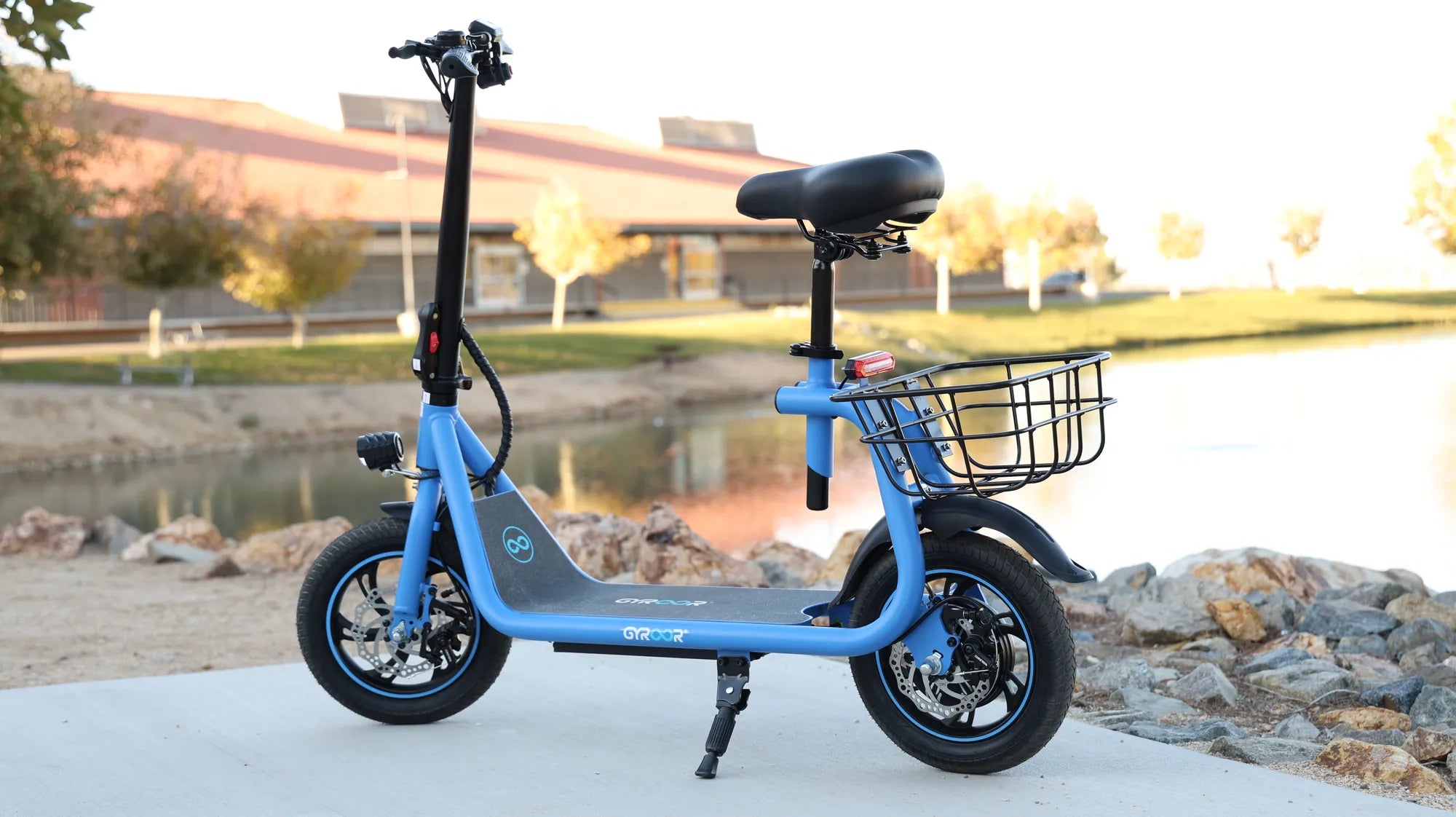
Imagine a personal vehicle that offers the unshakeable stability of a tricycle but tucks away in a closet or car trunk as easily as a folding chair. That's the promise of the modern fold up tricycle. This innovative design merges the core benefits of three-wheeled safety with transformative portability, creating a versatile solution for urban commuters, active seniors, and anyone with limited storage space. In this in-depth guide, you'll learn everything about foldable tricycles: their standout advantages, key specifications to evaluate, how they compare to traditional models, and what makes a brand like Gyroor a trusted choice for over 100,000 riders. Whether you're seeking a reliable errand-runner or a compact leisure companion, understanding the fold up tricycle is your first step toward liberated mobility.
Introduction to Fold Up Tricycles: Redefining Personal Transport
The fold up tricycle is a significant evolution in personal mobility, addressing two major constraints of traditional bicycles and tricycles: storage space and transportability. At its heart, it is a three-wheeled vehicle—either fully manual or electrically assisted—engineered with an integrated folding mechanism. This allows the frame to collapse into a more compact form, drastically reducing its footprint.
This design directly solves practical problems. For apartment dwellers, it eliminates the need for bulky bike racks or dedicated storage rooms. For commuters, it enables seamless integration with public transit; you can ride to the station, fold your trike, and carry it onto a train or bus. The core value proposition is clear: uncompromised stability meets unprecedented convenience. The fold up tricycle is no longer a niche product but a pragmatic response to modern urban living and active aging.
The market offers a spectrum, from simple mechanical models to advanced electric fold up tricycles (e-trikes). Electric versions amplify the utility, providing pedal-assist to conquer hills and extend range without excessive exertion. This makes them exceptionally suitable for longer commutes, grocery runs, or recreational tours where a little extra power is welcome. The fusion of electric drive with a folding three-wheeled platform represents the pinnacle of accessible, user-friendly personal transport.
Understanding this product category requires looking beyond the fold. It's about the synergy of geometry, engineering, and real-world application. A well-designed fold up tricycle doesn't sacrifice rigidity or ride quality for the sake of folding; instead, it incorporates robust hinges and locking mechanisms to ensure a safe, solid feel when in use. This balance is what separates a quality investment from a mere novelty.
Key Benefits and Target Audiences: Who Needs a Fold Up Tricycle?
The advantages of a fold up tricycle are multifaceted, catering to a diverse range of users whose needs extend beyond simple recreation. Its primary benefits cluster around safety, convenience, and accessibility, making it a compelling choice for several key demographics.
First and foremost is the urban commuter and city dweller. For those navigating crowded streets and relying on multi-modal transport, the ability to fold and carry is invaluable. It transforms the last-mile problem into a seamless solution. Secondly, active seniors and individuals with balance concerns find immense value in the stable three-point stance, which eliminates the need to balance at stops. The low-step-through frame common on many models further enhances accessibility.
Recreational riders and travelers form another core group. Whether exploring RV parks, beach paths, or camping grounds, a fold up tricycle can be easily stowed in a vehicle's trunk or storage compartment. Finally, individuals living in compact spaces like studios, apartments, or condos benefit from the minimal storage requirements. The tricycle becomes a practical part of daily life, not a piece of furniture you have to navigate around.
Enhanced Stability and Safety for All Riders
The three-wheeled design is the foundation of the fold up tricycle's safety proposition. Unlike two-wheeled bicycles or scooters, a trike cannot tip over sideways when stationary. This inherent stability is crucial for riders of all ages, but particularly for seniors, those recovering from injury, or anyone with confidence issues on two wheels. The rider can start and stop without worrying about foot placement or falling.
This stability extends to the riding experience. The wider track and lower center of gravity make handling predictable, especially when carrying cargo in a rear basket. Many models feature ergonomic, adjustable seating with backrests, promoting a comfortable, upright riding posture that reduces strain on the back, neck, and wrists. For electric models, this stable platform safely accommodates the added weight and power of the motor and battery, providing a confident ride even at assisted speeds.
Ultimate Portability and Space-Saving Convenience
The folding mechanism is the transformative feature that defines this category. A quality fold up tricycle can reduce its volume by 50% or more in seconds. This portability unlocks numerous use cases. It allows for easy storage in a home closet, under a stairwell, or in an office cubicle. It enables transport in a car trunk without requiring a bike rack, making it perfect for spontaneous outings or vacations.
For the urban commuter, this is the ultimate tool. Ride to the subway or bus stop, quickly fold the trike, and roll it aboard (most designs include rolling wheels in the folded position). This eliminates concerns about bike theft at transit stations and expands your effective range dramatically. The convenience factor cannot be overstated; it turns the tricycle from a dedicated outdoor vehicle into an integrated, everyday accessory for modern logistics.
What to Look for When Choosing a Fold Up Tricycle
Selecting the right fold up tricycle requires careful consideration of several technical and practical factors. A data-driven approach ensures you invest in a model that meets your specific needs for performance, comfort, and longevity. Focus on these core areas to make an informed decision.
Start by defining your primary use case. Is it for short errands, daily commuting over varied terrain, or leisurely park rides? Your answer will guide the importance of factors like motor power, battery range, and overall build quality. Budget is also a key differentiator, with mechanical fold-up tricycles at the lower end and feature-rich electric models commanding a higher price for their enhanced utility.
Always prioritize reputable brands that offer clear specifications, robust customer support, and substantive warranties. The market has options, but not all folding mechanisms or electrical components are created equal. Investing in a proven platform from a company like Gyroor, known for its UL-certified batteries and reliable designs, provides long-term peace of mind that far outweighs a lower initial cost.
Folding Mechanism and Portability Specifications
The heart of a fold up tricycle is its folding system. Examine the design closely. Common types include a mid-frame fold, where the bike hinges in the middle, and a more complex triangle hinge that collapses the rear wheel and frame. The best mechanisms are intuitive, requiring minimal steps and no tools, and feature secure locking pins or latches in both the open and closed positions.
Critical data points are the folded dimensions (Length x Width x Height) and the folded weight. These numbers determine if it will fit in your intended storage space or car trunk. A lighter frame, typically made from aluminum alloy, is easier to lift but must not compromise strength. Finally, check for integrated features in the folded state, such as a carrying handle or the aforementioned rolling wheels, which greatly enhance maneuverability when the trike is not ridden.
Motor, Battery, and Performance Metrics
For an electric fold up tricycle, performance is dictated by the motor and battery. Motor wattage (e.g., 350W, 500W) indicates power. A 350W motor is sufficient for flat terrain and moderate hills with pedal assist, while a 500W+ motor offers more torque for steeper inclines or heavier riders. Look for a hub motor in the rear wheel for a quiet, low-maintenance drive system.
The battery defines your range. Voltage (e.g., 36V, 48V) and amp-hour (Ah) capacity together indicate energy storage. A 36V 10Ah battery offers a typical range of 15-25 miles per charge, depending on rider weight, terrain, and assist level. Most critically, insist on a UL-certified battery pack. This third-party safety certification, used by Gyroor in all its models, ensures the battery has passed rigorous tests for electrical, mechanical, and fire safety—a non-negotiable feature for peace of mind.
Build Quality, Comfort, and Warranty
The riding experience hinges on build quality. The frame material should be lightweight yet durable, like 6061 aluminum alloy. Wheel size matters: larger wheels (20\" or 24\") roll over bumps more easily than smaller ones. Look for features like a adjustable stem and seat post to fit your body, a padded saddle with backrest, and if possible, front suspension to absorb road vibrations.
A comprehensive warranty is your safeguard. A reputable brand will offer at least a 1-year warranty on the frame, motor, and electronic components. This demonstrates confidence in the product's durability. Equally important is accessible customer service, preferably with support channels in your region. Gyroor, for instance, backs its products with a reliable 1-year warranty and has established support for its large North American and European customer base.
Gyroor's Approach to Foldable E-Tricycles: Engineering Trust
As a leader in personal electric mobility, Gyroor applies its core engineering principles directly to the concept of the fold up e-tricycle. Trusted by over 100,000 riders, the brand's philosophy centers on safety, reliability, and real-world usability. When considering a Gyroor fold up tricycle, you are investing in a platform built with proven technology and user-centric design.
Gyroor's product development starts with safety. Every electric model incorporates UL-certified battery packs, tested for over 500 charge cycles and built with premium cells and advanced Battery Management Systems (BMS) to prevent overcharging, short-circuiting, and overheating. This commitment extends to the vehicle's construction, with many models featuring IPX5 water-resistant ratings on critical components, allowing you to ride confidently in light rain or on damp roads without worrying about electrical damage.
The brand's focus on the user experience is evident in practical design choices. A Gyroor fold up tricycle would be engineered for an intuitive, tool-free folding process that results in a compact, easy-to-manage package. Ergonomic considerations like adjustable seating, intuitive control panels, and stable geometry are paramount. This holistic approach ensures the product is not just a collection of parts, but a cohesive, dependable mobility solution backed by a strong 1-year warranty and dedicated customer support.
Fold Up Tricycle vs. Traditional Models: A Practical Comparison
Choosing between a foldable and a standard tricycle depends largely on your lifestyle and storage situation. The table below provides a clear, data-driven comparison to highlight the trade-offs and advantages of each type.
| Feature | Fold Up Tricycle | Traditional Non-Folding Tricycle |
|---|---|---|
| Storage Footprint | Very small when folded (e.g., 30\" x 20\" x 20\"). Ideal for apartments, closets, car trunks. | Large and fixed (full riding dimensions). Requires garage, shed, or dedicated space. |
| Multi-Modal Transport | Excellent. Easily taken on buses, trains, or in personal vehicles. | Very difficult or impossible without a vehicle bike rack. |
| Primary Use Case | Urban commuting, errands, travel, spaces with storage limits. | Suburban/rural use, dedicated recreational paths, permanent storage available. |
| Purchase Price | Generally higher due to the complexity of the folding mechanism. | Often lower for comparable quality and components. |
| Weight | Slightly heavier due to folding hardware, but more manageable when folded/carried. | Can be lighter, but the entire weight must be lifted/moved as one large object. |
| Mechanical Complexity | Higher. Folding joints require occasional check for tightness. | Lower. Standard bicycle/tricycle architecture. |
As the table illustrates, the fold up tricycle excels in adaptability and convenience for space-constrained and multi-modal lifestyles. The traditional tricycle remains a solid, often more affordable choice for those with ample dedicated storage and no need to transport it frequently.
Frequently Asked Questions (FAQ)
Q1: How long does it take to fold and unfold a typical fold up tricycle?
A: A well-designed model can be folded or unfolded in 15 to 30 seconds. The process is usually a 2-3 step sequence involving releasing quick-release levers or latches. Practice makes the process effortless.
Q2: What is the average weight of an electric fold up tricycle?
A: Weight varies by size and battery capacity. Most adult electric models weigh between 55 and 75 pounds (25-34 kg). The folding feature and often-included rolling wheels make this weight manageable for short carries or rolling when folded.
Q3: Is an electric fold up tricycle suitable for hilly areas?
A: Yes, but motor power is key. A model with a 500W or higher motor provides sufficient torque for moderate hills, especially when using pedal assist. Always check the manufacturer's specified gradeability (e.g., \"capable of 15° slopes\") for your local terrain.
Q4: How do I maintain my fold up tricycle?
A>Regular maintenance includes checking tire pressure, ensuring all folding joints and latches are secure, and keeping the chain (if present) lubricated. For e-trikes, avoid full discharges and store the battery in a cool, dry place. Refer to the manufacturer's manual for specific intervals and procedures.
Q5: Can I ride a fold up tricycle in the rain?
A>Mechanical models can be ridden in wet conditions with caution. For electric models, the IP rating is crucial. A rating of IPX5, like those found on Gyroor scooters and e-bikes, indicates protection against water jets from any direction, making it safe for light rain and wet roads. Always avoid deep puddles and submersion.
Conclusion: Making the Smart Mobility Choice
The decision to invest in a fold up tricycle ultimately hinges on your need for versatile, stable, and convenient transportation. If your life involves navigating tight storage spaces, combining cycling with public transit, or simply valuing the confidence that comes with a three-wheeled design, a foldable model is an exceptional solution. It represents a smart investment in personal freedom, turning logistical challenges into simple, enjoyable rides.
By prioritizing key factors like a robust folding mechanism, UL-certified battery safety, and ergonomic comfort, you can select a tricycle that will serve you reliably for years. Choosing a brand with a proven track record in e-mobility, such as Gyroor, ensures you benefit from rigorous engineering, water-resistant designs, and dependable customer support. Embrace the future of accessible, portable mobility and discover how a fold up tricycle can seamlessly integrate into your daily routine.
Ready to explore reliable, feature-packed electric mobility solutions? Browse the full Gyroor collection, including innovative e-bikes and scooters built with the same commitment to safety and quality, at gyroorboard.com.
500lb Mobility Scooter: The Ultimate Guide to Heavy-Duty Independence
Where Can I Buy a Scooter for Adults: The Ultimate 2024 Guide