


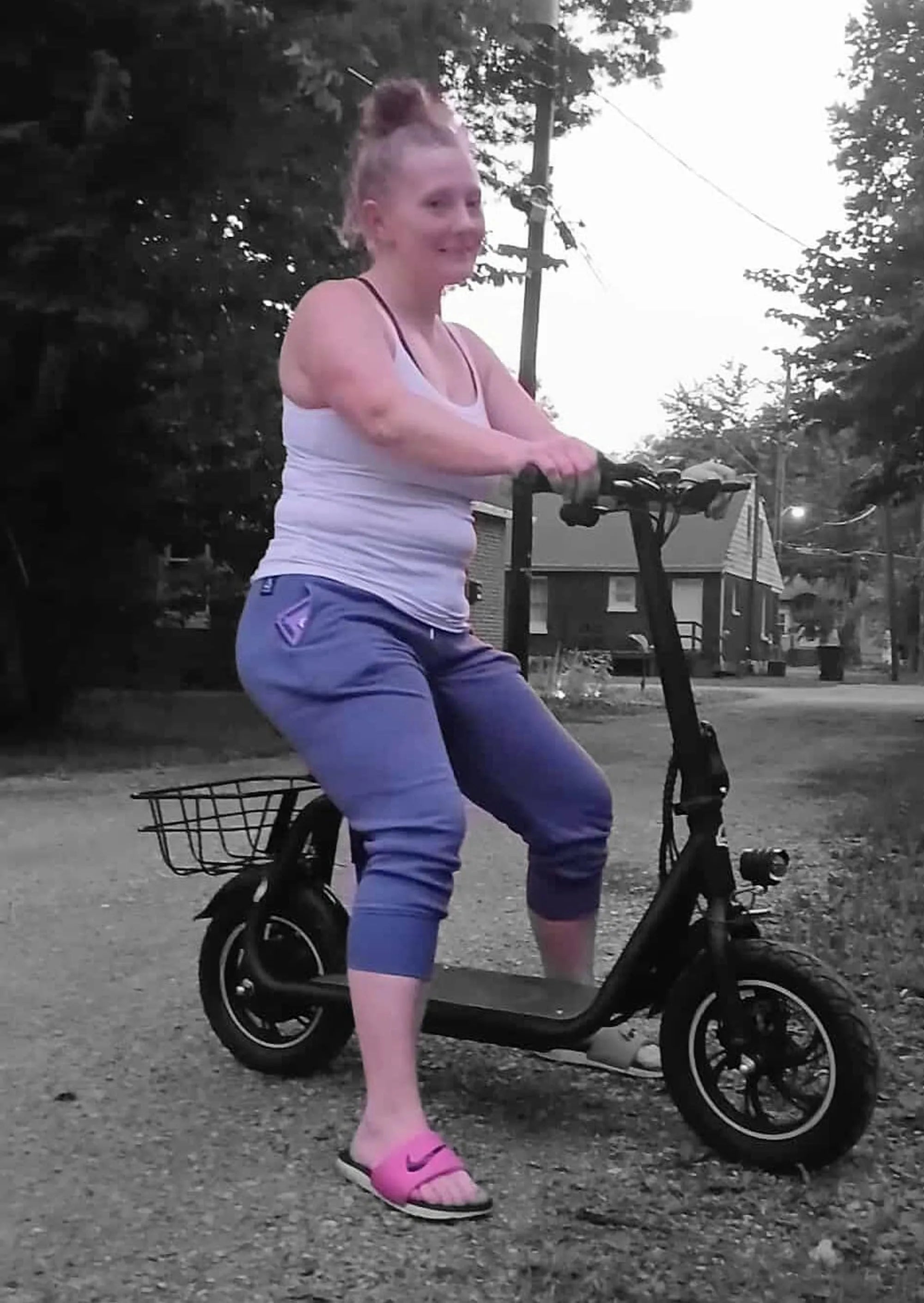
Introduction to Folding Portable Scooters
A folding portable scooter is an electric scooter engineered to collapse into a compact form, designed explicitly for the modern, multi-modal commuter. Its core purpose is to solve the persistent 'last-mile' problem—the inconvenient gap between a public transport stop and your final destination. By combining electric propulsion with a space-saving fold, it transforms short urban journeys from a chore into a seamless, efficient experience.
This category has evolved from novelty to necessity in dense urban landscapes. The key innovation isn't just the electric motor; it's the integration of a robust, reliable folding mechanism. This single feature unlocks unprecedented convenience, allowing the scooter to transition from a personal vehicle to a carry-on item in seconds. It bridges the gap where walking is too slow and driving is impractical.
For students, office workers, and urban explorers, the folding portable scooter represents a paradigm shift in personal mobility. It empowers riders to extend their reach without being tethered to fixed schedules or expensive ride-shares. The ultimate value lies in its ability to integrate into your daily flow, stored under a desk, in a car trunk, or beside you on a train, ready for the next leg of your journey.
This guide will dissect every aspect of the folding portable scooter. You will learn the critical advantages of the folding design, the essential features that separate quality models from flimsy imitations, and how to ensure your investment is safe and durable. We'll provide a practical comparison with alternatives and actionable advice for maintenance and safe riding.
Why Choose a Folding Design? Core Advantages
The decision to choose a folding model over a standard electric scooter hinges on three core advantages: unparalleled portability, space-saving storage, and enhanced security. These benefits directly address the primary pain points of urban electric scooter ownership. A non-folding scooter, while potentially offering slightly larger batteries, becomes a logistical anchor in a multi-stop day.
Portability is the most immediate benefit. A well-designed folding portable scooter can be collapsed and carried with one hand, weighing between 25 to 45 pounds. This makes it manageable to take upstairs to an apartment, onto a crowded elevator, or through a busy subway turnstile. The ability to bring it with you eliminates the anxiety of leaving a valuable asset locked outside, vulnerable to theft or weather.
Space-saving storage transforms where and how you can own a scooter. For those living in apartments, dormitories, or homes with limited garage space, the foldable design is often the only viable option. It can be tucked vertically in a closet, laid flat under a bed, or stood neatly in a corner without dominating the room. This practicality lowers the barrier to entry, making micro-mobility accessible to a much wider audience.
Enhanced security is a direct byproduct of portability. When you can take your scooter indoors to your office, classroom, or local cafe, you remove the primary opportunity for theft. This peace of mind is invaluable and protects your significant investment. Furthermore, keeping it indoors protects the electronic components and battery from extreme temperatures and precipitation, extending its lifespan.
Portability and Urban Mobility
The true test of a folding portable scooter is its integration with public transit systems. The ideal model complements a bus, train, or subway ride. Key metrics here are the folded dimensions and the overall weight. A scooter that folds to a footprint similar to a medium suitcase and can be easily lifted is a true multi-modal tool.
When folded, the scooter should have a secure latch or strap to prevent it from accidentally unfolding while carried. The handlebar stem should lock against the deck or rear fender to create a single, easy-to-grip unit. This design allows you to navigate crowded platforms, board vehicles during rush hour, and store it at your feet or in a designated luggage area without inconveniencing others.
The weight distribution is also crucial. A scooter with its battery pack mounted low in the deck will feel more balanced when lifted than one with a top-heavy design. Some advanced models even feature a briefcase-style carry handle or rolling wheels on the fender, making transportation even easier over longer walking distances while folded.
This seamless portability effectively extends the range of public transportation. You can live further from a transit hub without sacrificing commute time, as the scooter covers the first and last segments swiftly. It provides a door-to-door solution that is faster, cheaper, and often more enjoyable than relying on transfers or walking.
Space-Saving Storage Solutions
Practical storage scenarios define the daily usability of a folding portable scooter. Under-desk storage is a prime example. Many offices now accommodate scooters, and a folded unit can discreetly fit next to or under a workstation, keeping it charged and ready for the evening commute. This eliminates the need for external bike racks or lockers.
For car owners, the scooter becomes a powerful range extender. Stored in the trunk, it can be deployed when parking is scarce or expensive. Drive to the outskirts of a city, park economically, and unfold your scooter for the final journey into the downtown core. This hybrid approach combines the freedom of a car with the agility of micro-mobility.
In small living spaces, vertical storage is key. Look for a folding mechanism that allows the scooter to stand stably on its end, leaning against a wall. Some models have a kickstand that functions even when folded. This minimizes its footprint to just the area of the deck, preserving valuable floor space in studios or shared accommodations.
Proper storage also involves considering the battery. Even when folded and stored, it's advisable to follow manufacturer guidelines—typically, storing the scooter with a partial charge (around 50-80%) in a cool, dry place. A quality scooter from a brand like Gyroor, with a UL-certified battery, is engineered to handle the charge cycles and minor stresses associated with daily folding and storage without compromising safety or longevity.
Key Features to Look for in a Quality Folding Scooter
Selecting a high-quality folding portable scooter requires looking beyond the basic specs. The folding mechanism, performance parameters, and build quality are interconnected pillars that determine safety, durability, and user satisfaction. A cheaply made folding joint or substandard battery can turn a convenient vehicle into a hazardous liability.
Performance must match your realistic needs. Advertised 'maximum' range and speed are often based on ideal laboratory conditions. Deduct 20-30% to estimate real-world performance, which is affected by rider weight, inclines, temperature, and riding style. A scooter with a 350W motor may struggle on hills, while a 500W motor provides more confident acceleration and climbing ability.
Build quality is non-negotiable. The frame should be constructed from a high-grade aluminum alloy, often described as aerospace-grade or 6061-T6, which offers an excellent strength-to-weight ratio. Welds should be clean and even, and all fasteners should be high-grade steel. The deck should have a grippy, textured surface to maintain footing during rides.
Safety certifications are the final, critical filter. The most important is the UL certification for the battery and electrical system. This independent testing verifies that the battery pack will not overheat, catch fire, or fail dangerously under normal use and foreseeable misuse. Never compromise on this aspect; it is the cornerstone of a reliable folding portable scooter.
Folding Mechanism: Speed, Security, and Ease
The heart of a folding portable scooter is its folding mechanism. It must be a study in contradictory excellence: incredibly fast and easy to operate, yet utterly secure and rattle-free when locked in the riding position. The most common types are lever-based latches and magnetic click systems.
A good lever-based latch, often found on the stem, uses a robust clamp that tightens securely. It should require a deliberate action to release, preventing accidental collapse. The best designs incorporate a secondary safety lock or pin that provides audible and tactile confirmation that the mechanism is fully engaged before riding. The action should be smooth, not requiring excessive force that could strain the user over time.
Magnetic systems offer speed and a clean aesthetic. Powerful neodymium magnets hold the folded stem against the deck. While quick, the security in the riding position must be ensured by a primary mechanical latch; magnets alone are not sufficient for structural integrity. The mechanism should be tested for thousands of cycles without developing play or looseness.
Ease of use is paramount. The fold/unfold process should be achievable in under 10 seconds without tools. Test the mechanism with gloves on, as you may be using it in cold weather. A poorly designed latch that is fiddly or requires pinpoint alignment will become a daily frustration, undermining the very convenience the scooter promises.
Performance Specs: Range, Speed, and Terrain
Understanding performance specifications demystifies what a folding portable scooter can actually do. Motor power, measured in watts (W), indicates potential torque and hill-climbing ability. For urban use with moderate hills, a 350W-500W motor is a practical minimum. Battery capacity, measured in watt-hours (Wh), is the fuel tank; a higher Wh number generally means a longer range.
Real-world range is the most queried spec. A scooter with a 360Wh battery might be advertised for 25 miles. For a 165 lb rider on flat pavement at a steady 15 mph, this may be achievable. However, add hills, stop-and-go traffic, a heavier rider, or colder temperatures, and the range can drop to 15-18 miles. Always buy a scooter with a range rating 30-40% above your longest regular trip.
Speed must be balanced with legality and safety. Most urban areas regulate e-scooter speeds to 15-20 mph. A scooter capable of 20 mph provides a cushion for maintaining speed on inclines. Terrain handling is dictated by motor power, wheel size, and suspension. 8.5-inch air-filled (pneumatic) tires offer better shock absorption on rough sidewalks than small solid tires. A basic front or dual spring suspension can dramatically improve comfort on uneven surfaces.
Consider the charging time. A standard charger for a mid-capacity battery typically takes 4-6 hours for a full charge. Some models offer fast-charging capabilities, which can be convenient but may stress the battery over its lifetime if used exclusively. Following the manufacturer's charging guidelines is essential for preserving the health of your UL-certified battery pack.
Build Quality and Safety Certifications
Superior build quality in a folding portable scooter is evident in the details. The frame should have no sharp edges or burrs. The folding hinge should use hardened steel pins and bushings, not just simple bolts. The handlebar clamp should be wide and secure, with no twisting play when force is applied. These elements endure constant stress and must be over-engineered for safety.
The braking system is a critical safety component. Disc brakes (mechanical or hydraulic) offer the strongest, most consistent stopping power, especially in wet conditions. Electronic (regenerative) brakes use the motor to slow the scooter and can recharge the battery slightly, but they are often less effective as a sole braking system and work best in conjunction with a physical brake. A rear fender brake is a common but less powerful backup.
Lighting and visibility are non-negotiable for safe urban riding. Look for a bright front headlight (200 lumens or more), a solid rear brake light, and reflective side strips or wheel reflectors. Some models have built-in turn signals, an excellent feature for communicating intentions in traffic. These features should be integrated, not cheap afterthoughts.
Safety certifications are your objective guarantee. The UL 2272 certification for the entire electrical drive train system (including the battery) is the gold standard in North America. It tests for electrical, mechanical, and environmental safety. An IP (Ingress Protection) rating, such as IPX5, indicates resistance to water jets from any direction, making the scooter viable for commuting in light rain. Never purchase a scooter lacking these verifiable safety credentials.
The Gyroor Advantage in Portable Folding Scooters
Gyroor brings a distinct engineering philosophy to the folding portable scooter category, focusing on the pillars of safety, durability, and rider support. As a brand trusted by over 100,000 riders, Gyroor understands that a portable scooter is subjected to more physical stress—constant folding, carrying, and exposure to the elements—than a static vehicle. Their designs proactively address these challenges.
The core of their advantage is a commitment to certified safety. Every Gyroor scooter uses a UL-certified battery pack, tested for over 500 charge cycles and engineered with multiple protection systems against overcharge, short-circuit, and overheating. This is not an optional upgrade; it's a baseline standard. For a product you fold, carry, and store indoors, this battery safety is paramount for peace of mind.
Durability is engineered into the folding mechanism and frame. Gyroor utilizes reinforced folding latches with secondary safety locks and constructs frames from high-tensile aluminum alloys. This ensures the joint remains tight and rattle-free over thousands of folding cycles. The focus is on creating a product that feels solid and reliable, not just on day one, but after months of daily use.
Rider support completes the package. Gyroor backs its folding portable scooter models with a comprehensive 1-year warranty, covering the frame, motor, battery, and controller. This warranty support, coupled with accessible customer service, means you're investing in a product with a long-term partner, not a disposable gadget. It’s the difference between a purchase and an investment in your mobility.
Engineered for Reliability: UL-Certified Batteries & IPX5 Rating
The UL-certified battery in a Gyroor folding portable scooter represents a fundamental safety commitment. The certification process involves rigorous stress testing, including crush, shock, overcharge, and short-circuit tests. This ensures the battery pack can withstand the minor impacts and vibrations inherent in portable use without entering a dangerous thermal runaway state.
This certification directly impacts longevity. A properly managed battery can retain up to 80% of its original capacity after 500 full charge cycles. For a commuter charging every other day, this translates to years of reliable service before any noticeable range degradation. It also ensures safe charging practices, whether at the office, home, or in a public space.
The IPX5 water-resistant rating is equally critical for a practical commuter vehicle. It certifies that the scooter's electrical components can withstand water jets from a nozzle from any direction. In real-world terms, this means riding through urban puddles, getting caught in a sudden downpour, or washing the scooter (avoiding direct high-pressure sprays on bearings) will not cause immediate damage or a short circuit.
Together, these features create a scooter built for real-world conditions. You don't need to panic at the first sign of rain or worry about the battery swelling after a year of use. This engineering allows you to focus on the ride, not on babying your equipment, making the Gyroor folding portable scooter a truly dependable tool for daily life.
Designed for the Rider: Warranty and Support
A robust warranty is a signal of a manufacturer's confidence in their product. Gyroor's standard 1-year warranty on its folding portable scooter lineup covers defects in materials and workmanship for the core components. This is particularly valuable for a device with complex electrical systems and moving mechanical parts like the folding hinge and brakes.
Accessible support transforms the ownership experience. Having a direct channel for troubleshooting, ordering genuine replacement parts (like tires, brake pads, or chargers), and getting warranty claims processed efficiently reduces downtime. For a commuter who relies on their scooter daily, this support network is as important as the scooter's specifications.
Gyroor's design choices also reflect rider-centric thinking. Features like intuitive thumb throttles, clear digital displays showing speed and battery level, ergonomic handlebar grips, and wide, anti-slip decks are all focused on comfort and control. The folding process is designed to be intuitive, often requiring just one or two simple actions, minimizing hassle during busy transitions.
This holistic approach—combining safety-certified hardware with strong post-purchase support—ensures that your folding portable scooter remains a valuable asset. It’s designed not just to be purchased, but to be used reliably for years, supported by a brand that stands behind its products and its growing community of riders.
Folding Scooter vs. Alternatives: A Practical Comparison
Choosing the right micro-mobility device requires a clear understanding of how a folding portable scooter stacks up against its closest alternatives. The decision matrix revolves around portability, performance, comfort, and storage needs. There is no universal 'best' option; only the best tool for your specific lifestyle and commute pattern.
A standard, non-folding electric scooter often sacrifices portability for potentially larger batteries and a more rigid, performance-oriented frame. A folding e-bike offers seating and greater range but at a significant cost to weight and folded size. Understanding these trade-offs is key to avoiding buyer's remorse and selecting a vehicle that seamlessly integrates into your routine.
The following table provides a data-driven comparison across key metrics to help visualize these differences. Use it as a starting point to align vehicle capabilities with your primary use case, whether it's a multi-modal commute, running errands, or recreational riding in urban environments.
| Feature | Folding Portable Scooter | Standard E-Scooter | Folding E-Bike |
|---|---|---|---|
| Primary Advantage | Ultimate portability & multi-modal integration | Often higher performance/range for price | Seated comfort & longer range |
| Avg. Folded Size | ~45" L x 18" W x 15" H | Does not fold (~50"+ long) | ~35" L x 25" W x 30" H |
| Avg. Weight | 30-40 lbs | 35-50 lbs | 45-65 lbs |
| Carrying Ease | Easy (one-hand carry, briefcase style) | Very Difficult (bulky, awkward) | Moderate-Difficult (heavy, bulky when folded) |
| Typical Range | 15-25 miles | 20-40 miles | 30-60 miles |
| Storage Needs | Minimal (fits under desk/in closet) | Substantial (needs garage/bike rack) | Moderate (folds but still bulky) |
| Ideal User | Multi-modal commuter, apartment dweller | Point-to-point commuter with secure storage | Long-distance commuter, recreational rider |
Folding E-Scooter vs. Standard E-Scooter
The most direct comparison is between folding and non-folding e-scooters. The standard e-scooter often features a more robust, welded frame without the complexity of a folding joint. This can allow manufacturers to use a larger battery pack within a similar price point, potentially offering 5-10 more miles of range and a slightly higher top speed.
However, this advantage comes with a massive logistical drawback: immobility when not riding. A standard scooter must be locked to a fixed object outdoors, exposed to theft and weather, or it requires significant indoor space (like a garage or dedicated corner) that many urbanites lack. It cannot easily be taken on public transit.
The folding portable scooter decisively wins in scenarios involving mixed-mode travel. If your commute involves a train or bus segment, the folding model is the only viable electric scooter option. Its ability to be stored under your desk at work also means it's always charged, secure, and ready for errands during lunch or the ride home.
For the rider with secure, private storage at both ends of their journey (e.g., a house with a garage and an office with a private storage room), a standard scooter might be suitable. For everyone else—the vast majority of city dwellers—the convenience, security, and flexibility of the folding design make it the overwhelmingly practical choice.
Folding E-Scooter vs. Folding E-Bike
Comparing a folding portable scooter to a folding e-bike involves a trade-off between ultra-portability and comfort/range. Folding e-bikes provide a seated riding position, which is far more comfortable for journeys over 30 minutes. Their pedal-assist systems also leverage human power, allowing for much larger effective ranges from a similarly sized battery.
The critical downside of the folding e-bike is its folded form factor and weight. Even when folded, most e-bikes are bulky, heavy (often 50+ lbs), and awkward to carry. They are less 'portable' and more 'transportable'—you might fold it to load into a car trunk, but carrying it up a flight of stairs or through a crowded train car is a significant challenge.
The folding portable scooter excels in agility and true portability. It is lighter, its folded shape is slimmer and easier to maneuver in tight spaces, and the act of folding/unfolding is typically faster. It's the choice for the 'hyper-commuter' who needs to seamlessly blend walking, riding, and public transit with minimal friction.
Choose the folding e-bike if your primary need is comfort on longer, dedicated rides and you have an elevator or ground-floor storage at both ends. Choose the folding portable scooter if your priority is maximum agility, the ability to carry it anywhere effortlessly, and navigating dense urban environments with ease.
Maximizing Your Folding Scooter Experience
Owning a folding portable scooter is about more than just the purchase; it's about integrating a smart tool into your life. Proper maintenance, safe riding habits, and understanding local regulations are essential for a positive, long-term experience. A well-cared-for scooter from a quality brand can provide reliable service for years, becoming an indispensable part of your daily routine.
Start by reading the user manual thoroughly. It contains model-specific information on weight limits, recommended tire pressure, charging procedures, and error codes. Perform a pre-ride check before each use, especially if the scooter has been folded and stored. This takes 30 seconds but can prevent accidents and identify minor issues before they become major problems.
Invest in essential safety gear. At a minimum, a properly fitted bicycle helmet is non-negotiable. Consider gloves for better grip and protection in a fall, and high-visibility clothing or accessories if riding at dawn, dusk, or night. Your scooter's built-in lights are crucial, but making yourself seen is a shared responsibility.
Finally, be a respectful rider. Share multi-use paths courteously, yield to pedestrians, and obey traffic signals. The positive perception of micro-mobility users depends on collective responsible behavior. Parking your folded scooter neatly when indoors shows consideration for shared spaces and helps normalize its presence in offices and businesses.
Maintenance Tips for Longevity
Regular maintenance is simple but vital for a folding portable scooter. The most frequent task is checking tire pressure. For models with pneumatic (air-filled) tires, maintain the pressure recommended in the manual (usually 40-50 PSI). Under-inflated tires increase rolling resistance, reducing range and making the scooter harder to control, while also raising the risk of pinch flats.
Monthly, inspect all fasteners, especially those around the folding mechanism, handlebar clamp, and stem. Use the provided tools to ensure they are snug (but do not over-tighten). Listen for new creaks or rattles while riding, as these can indicate a loose component. Periodically check the brake pads for wear and ensure the brake calipers are aligned and functioning smoothly.
Battery care is paramount. Avoid draining the battery to 0% regularly; try to recharge when it drops to 20-30%. For long-term storage (over a month), charge the battery to about 60% and store the scooter in a cool, dry place. Clean the scooter with a damp cloth; avoid high-pressure hoses that could force water into bearings or electrical connectors.
Lubricate moving parts sparingly. A drop of light machine oil on the folding hinge pivot points and the brake lever pivots can keep action smooth. Avoid getting oil on the brake rotors or pads. By following these simple steps, you ensure the mechanical and electrical systems of your folding portable scooter remain in peak condition, safeguarding your investment.
Riding Safely and Legally in Urban Areas
Safety and legality are intertwined. First, know your local laws. Regulations for e-scooters vary widely by city and state. Common rules include: a minimum rider age (often 16+), a ban on sidewalk riding in business districts, mandatory helmet use (sometimes for all ages, sometimes only for minors), and adherence to speed limits (often 15-20 mph). Ignorance of the law is not a defense.
Practice defensive riding. Assume that drivers may not see you. Make eye contact with drivers at intersections before proceeding. Use hand signals to indicate turns. Be extra cautious around parked cars to avoid 'dooring' incidents. Scan the road surface ahead for potholes, gravel, or wet metal surfaces like manhole covers and train tracks, which can cause loss of traction.
Use your lights day and night. A daytime running light increases your visibility to drivers. At night, your front headlight and rear brake light are essential. Wear reflective clothing or add reflective strips to your backpack or helmet. Your goal is to be as conspicuous as possible in all traffic conditions.
Finally, ride sober and focused. Never operate a folding portable scooter under the influence of alcohol or drugs. Avoid using headphones that block ambient traffic noise. Stay alert to your surroundings. By adopting a safety-first mindset, you protect yourself and contribute to a safer environment for all road and path users.
Frequently Asked Questions (FAQ)
Q: How long does it take to learn to ride a folding electric scooter?
A: For most adults, it takes about 10-30 minutes to feel comfortable with basic operation. Start in a safe, open, flat area like an empty parking lot. Practice starting, stopping, and gentle turns at low speed before venturing into traffic. The learning curve is significantly shorter than for a bicycle.
Q: Can I take my folding scooter on an airplane?
A: Typically, no. The lithium-ion batteries used in most folding portable scooter models exceed the watt-hour (Wh) limits set by airlines for carry-on or checked baggage (usually 100-160 Wh). Scooter batteries are commonly 250Wh to 500Wh. Always check with your specific airline, but ground transport is the standard for traveling with an e-scooter.
Q: How much weight can a typical folding scooter hold?
A: Most quality folding scooters have a maximum rider weight capacity of 220 to 265 pounds (100 to 120 kg). It's crucial to check the manufacturer's specified limit for your model. Exceeding this limit can stress the frame, motor, and tires, leading to premature failure and voiding the warranty.
Q: What is the real-world range I can expect on a single charge?
A> As a rule of thumb, expect 65-75% of the manufacturer's advertised 'maximum' range under real-world conditions. Factors that reduce range include: higher rider weight, frequent stops/starts, hills, cold weather (below 50°F/10°C), and riding at top speed. For a scooter advertised for 25 miles, a realistic range for a 180 lb rider in a city might be 16-20 miles.
Q: Is the folding mechanism durable over time?
A> A well-engineered folding mechanism from a reputable brand is designed for thousands of cycles. Look for designs using hardened steel pins, robust latches with safety locks, and high-quality aluminum castings. Regular inspection and tightening of fasteners will ensure longevity. Brands like Gyroor design their folding joints as a core structural component, not an afterthought, ensuring durability.
Conclusion: The Future of Commuting is Foldable
The folding portable scooter has cemented its role as a transformative tool for urban mobility. It elegantly solves the last-mile challenge, reduces reliance on cars for short trips, and empowers individuals with flexible, efficient transportation. The convergence of reliable electric motors, safe battery technology, and robust folding engineering has created a product category that is both practical and empowering.
Choosing the right model is an investment in your time, freedom, and quality of life. Prioritize safety certifications like UL 2272, a reliable folding mechanism, and a reputable brand that offers strong warranty support. The data-driven comparisons show that for the multi-modal urban commuter, the advantages of portability and security are unmatched by non-folding alternatives.
As cities continue to evolve and embrace micro-mobility, the folding portable scooter stands out as a personal, sustainable, and intelligent choice. It represents a shift towards on-demand, user-centric transportation that fits the rhythm of modern life. By selecting a quality scooter and adopting safe riding practices, you unlock a new dimension of urban exploration and daily convenience.
Ready to redefine your commute? Explore the collection of durable, safety-certified folding portable scooter models engineered for real-world reliability. Browse the full Gyroor collection at gyroorboard.com to find the perfect scooter to fold into your life and unfold your city.
Common Scooter Issues and Solutions: Your Complete Troubleshooting Guide
Scooter for Six Year Old: The Ultimate 2024 Safety & Buying Guide