


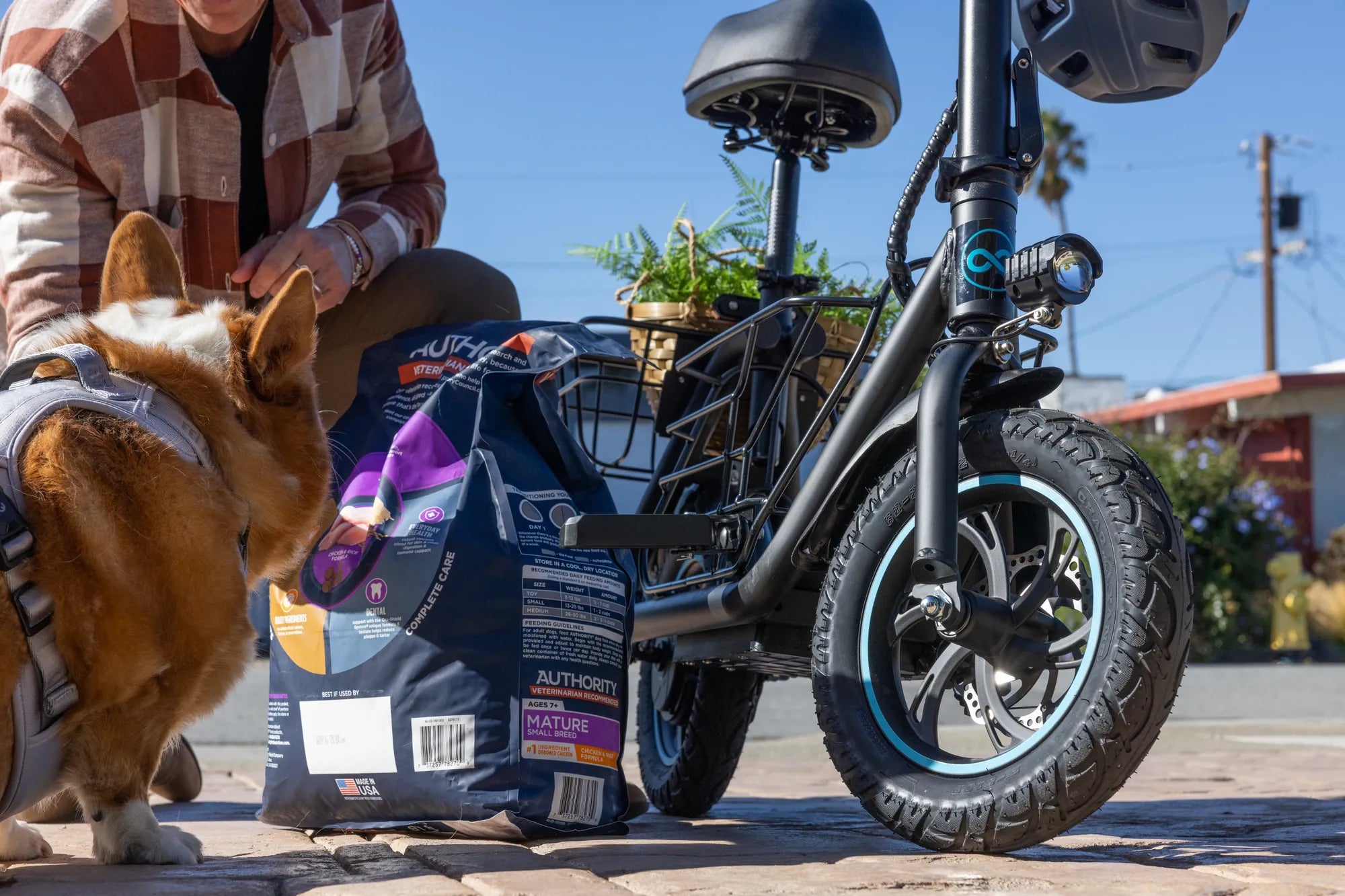
Your e-bike's potential is locked behind a simple status: the battery indicator. A genuinely fully charged ebike is more than just a full battery icon; it's your passport to the advertised range, peak motor performance, and the confidence to tackle your commute or adventure without range anxiety. This guide will dissect what a full charge truly means, how to achieve it consistently, and how to translate that 100% battery into maximum miles and years of reliable service. You'll learn the science behind your battery, master best practices, and understand how to troubleshoot when things don't go as planned.
The Power of a Full Charge – Why It Matters for Your E-Bike Experience
A fully charged ebike represents the complete mobilization of its electrical system. It's the state where the lithium-ion battery pack has reached its designed voltage capacity, typically around 54.6V for a standard 48V system. This isn't just about a number on a screen. It directly translates to the e-bike's ability to deliver consistent power to the motor across its entire performance curve, from hill climbs to sustained cruising speeds.
Starting a journey with a complete charge is the single most effective way to ensure you achieve the manufacturer's stated range. Battery capacity diminishes linearly under load; beginning at 100% gives you the entire usable capacity buffer. For commuters, this reliability is non-negotiable. It eliminates the stress of calculating if you'll make it to work and back, transforming the e-bike from a novelty into a dependable tool.
Beyond range, a full charge ensures optimal performance. Electric motors draw significant current during acceleration and incline climbs. A battery at 100% state-of-charge can deliver this current more readily and with less voltage sag than a depleted one. This means snappier acceleration and maintained power on hills, providing a safer and more enjoyable riding experience.
Finally, understanding and achieving a true full charge is foundational to battery longevity. How you charge—the environment, frequency, and equipment used—directly impacts the chemical health of the battery cells over hundreds of cycles. Proper charging habits, starting with knowing what "full" means, can add years to your battery's life, protecting your investment.
Understanding Your Gyroor E-Bike's Battery: The Heart of a Full Charge
At the core of every fully charged ebike is its battery system. Gyroor equips its e-bikes with advanced, UL-certified lithium-ion battery packs. This certification is critical, as it means the battery cells, BMS, and housing have passed rigorous safety tests for electrical, mechanical, and environmental hazards, offering peace of mind that's built into every charge cycle.
The Battery Management System (BMS) is the intelligent guardian of your battery. It's a circuit board that performs several vital functions during charging. It balances the voltage across individual cell groups to ensure they all reach full capacity uniformly. It also monitors temperature, cuts off power if a fault is detected, and communicates with the display to show an accurate charge level. A fully charged ebike is a declaration from the BMS that all cells are balanced and at peak voltage.
The charger and indicator lights are your interface with this process. A Gyroor charger typically has a red light when charging and switches to green when the battery is full and the BMS has terminated the charge. It's important to note that the green light indicates the bulk charge is complete, but the BMS may still be performing a final top-up or balance cycle. Leaving it plugged in for an extra 30-60 minutes after the light turns green can sometimes ensure a perfect balance.
Recognizing a complete charge cycle involves observing both the charger light and your e-bike's display. When both indicate 100% (or full bars), and the charger light has been green for a period, you can be confident you have a fully charged ebike. This integrated system—from UL-certified cells to the smart BMS—is designed for reliability across over 500 charge cycles while maintaining safety as the paramount concern.
How Long to Reach 100%? Charging Time Variables Explained
The time required to achieve a fully charged ebike is not a fixed number. It depends on three primary variables: battery capacity, charger output, and starting charge level. Battery capacity, measured in Amp-hours (Ah), is like the size of a fuel tank. A larger capacity (e.g., 48V 20Ah) takes longer to fill than a smaller one (48V 10Ah) when using the same charger.
Charger output, measured in Amps (A), is the flow rate. A standard charger might be 2A, while a fast charger could be 4A or 5A. Using a 4A charger will theoretically fill a battery twice as fast as a 2A charger, though fast charging may generate more heat. Always use the charger provided or a Gyroor-approved replacement to avoid damaging the BMS.
The starting point is equally crucial. Charging from 0% to 100% takes the longest. The charging process is also not linear; the final stage (from ~80% to 100%), known as the "absorption" or "trickle" charge, is slower as the BMS carefully balances the cells. For practical planning, here are estimates for common scenarios:
| Battery Capacity | Charger Output | Charge from 20% to 100% (Est.) | Charge from 0% to 100% (Est.) |
|---|---|---|---|
| 48V 10Ah (500Wh) | Standard 2A | ~4-5 hours | ~5-6 hours |
| 48V 15Ah (720Wh) | Standard 2A | ~6-7 hours | ~7-8 hours |
| 48V 15Ah (720Wh) | Fast 4A | ~3-4 hours | ~4-5 hours |
| 48V 20Ah (960Wh) | Standard 2A | ~8-9 hours | ~9-10 hours |
The Science of Optimal Charging: Best Practices for Battery Longevity
To keep your battery capable of reaching a true fully charged ebike state for years, adopt these science-backed practices. First, control the environment. Lithium-ion batteries charge most efficiently and safely at room temperature (approx. 50°F to 86°F / 10°C to 30°C). Avoid charging in direct sunlight, freezing garages, or hot cars, as extreme temperatures stress the cells and accelerate degradation.
The 80-90% rule is a valuable strategy for daily use. While it's perfectly safe to charge to 100% for a long trip, regularly storing the battery at full charge for extended periods can increase chemical stress. For daily commuting where you don't need the absolute maximum range, charging to 80-90% can significantly prolong overall battery lifespan. The Gyroor BMS helps manage this, but user habits make a difference.
For storage, such as during winter, the ideal charge level is around 50-60%. Store the battery (separate from the bike if possible) in a cool, dry place. Check the charge level every 1-2 months and give it a top-up if it drops below 30%. Never store a battery fully depleted, as this can lead to a deep discharge state that permanently damages cells.
Finally, the charger is non-negotiable. Always use the official Gyroor charger. Third-party chargers may not communicate correctly with the proprietary BMS, can apply incorrect voltage/current, and lack the necessary safety certifications. This one practice is the simplest way to protect your investment and ensure every cycle ends with a safe, fully charged ebike.
Maximizing Your Fully Charged Range: From Battery to Mileage
A fully charged ebike has a finite amount of energy, measured in Watt-hours (Wh). How far that energy takes you—your real-world range—is highly variable. Rider weight and cargo are the most significant factors after battery size. More mass requires more energy to accelerate and climb. Minimizing carried weight directly translates to more miles from your charge.
Terrain and elevation gain are massive power consumers. Riding on flat, paved paths is the most efficient. Every hill, however, consumes a disproportionate amount of battery. Using pedal assist strategically on inclines, rather than relying solely on the throttle, can dramatically conserve power. The motor's efficiency is also a factor; Gyroor's geared hub motors are designed for a good balance of torque and efficiency.
Your riding style has an immediate impact. Jackrabbit starts from stoplights and consistently riding at maximum speed (using the highest assist level or throttle) will drain the battery much faster than smooth, moderate acceleration and using a lower assist level (like PAS 1 or 2) on flats. Tire pressure is a simple yet often overlooked factor. Under-inflated tires create excessive rolling resistance. Keeping tires inflated to the maximum PSI indicated on the sidewall ensures you're not wasting battery power on friction.
External conditions like headwinds and temperature also play a role. Fighting a strong headwind is similar to climbing a gradual hill. Cold weather (below 50°F/10°C) reduces battery chemical efficiency, potentially cutting range by 15-25%. While Gyroor's IPX5 water-resistant rating ensures the electrical system is protected from rain and splashes, it's wise to account for these environmental drains when planning a long ride on a single charge.
Gyroor Models in Comparison: Expected Range on a Full Charge
Different e-bikes are built for different purposes, which is reflected in their motor power, battery size, and expected range. The following table provides a realistic comparison of what you can expect from a fully charged ebike from Gyroor's lineup under mixed conditions (some hills, variable assist use, average rider weight).
| Model Type | Example Model Specs | Battery Capacity | Motor Power | Realistic Range on Full Charge |
|---|---|---|---|---|
| City/Commuter | Gyroor C3 / M3 Series | 48V 10Ah - 15Ah | 500W - 750W | 25 - 45 miles |
| Folding E-Bike | Gyroor F1 Series | 48V 10Ah | 500W | 20 - 35 miles |
| Off-Road / All-Terrain | Gyroor X5 / X6 Series | 48V 15Ah - 20Ah | 750W - 1000W | 30 - 55 miles |
| Long-Range Commuter | Gyroor L1 Series | 48V 20Ah+ | 750W | 45 - 70+ miles |
The City/Commuter models, like the C3, prioritize a balance of range and practicality for daily urban use. Their efficient motors and moderate battery sizes deliver reliable performance for most round-trip commutes. The folding F1 series offers similar technology in a compact form, with range slightly impacted by smaller frame size and often a slightly smaller battery.
For adventure, the Off-Road X-series e-bikes feature more powerful motors (750W-1000W) to tackle steep trails and larger battery packs to sustain that power. While the powerful motor consumes energy quickly, the large battery capacity compensates, offering impressive range even in demanding conditions. The Long-Range L1 series is engineered for maximum distance, utilizing high-capacity batteries and efficient motor tuning to push the boundaries of what's possible on a single charge.
Remember, these ranges are brackets. A lighter rider using mostly PAS 1 on flat terrain could achieve the upper limit. A heavier rider using throttle-only in a hilly city will likely see the lower end. Knowing your model's potential helps you plan rides and manage your charging routine to always start with the power you need.
Troubleshooting and Maintenance: Ensuring a True Full Charge
Sometimes, your e-bike may not reach a full charge, or the range seems shorter than expected. Systematic troubleshooting can often identify a simple fix. First, check all physical connections. Ensure the charger is firmly plugged into both the wall outlet and the e-bike's charging port. Corrosion or dirt in the port can prevent a good connection. Gently clean with a dry cloth if needed.
Verify the power source. Try a different wall outlet to rule out a faulty circuit. Ensure the outlet is providing power by plugging in another device. If using an extension cord, ensure it is a heavy-duty cord rated for the charger's amperage, as thin cords can cause voltage drop and slow or interrupt charging.
Inspect the charger and cables. Look for any visible damage, fraying, or kinks in the cables. A charger that feels unusually hot, doesn't light up, or has a flickering light may be faulty. The Gyroor BMS is designed to halt charging if it detects an anomaly from the charger, so a faulty charger will prevent a fully charged ebike.
If basic checks don't resolve the issue, consult your e-bike's display for any error codes (like E-07, E-08 which often relate to battery/charging issues). Persistent problems, such as the battery not charging at all, losing charge extremely quickly, or showing inconsistent charge levels, should be addressed under Gyroor's 1-year warranty. Their US-based support team can provide diagnostics and, if necessary, facilitate a repair or replacement for the battery or charger, ensuring you regain that crucial full charge capability.
Safety First: Charging Your E-Bike with Confidence
Safety is the absolute priority when working with high-capacity lithium-ion batteries. Always charge in a dry, well-ventilated area at room temperature. An indoor location like a garage, mudroom, or dedicated storage area is ideal. Avoid charging in living spaces or escape routes, and never charge in direct sunlight, in a vehicle, or on flammable surfaces like carpet or bedding.
While Gyroor's UL-certified batteries and BMS include protections against overcharging, it is a best safety practice to avoid leaving your e-bike plugged in and unattended for extremely long periods, such as multiple days, or while you are asleep or away from home. The goal is to manage risk; being present or nearby allows for a quick response in the highly unlikely event of an issue.
Never attempt to disassemble, modify, or puncture the battery pack. The internal cells are under pressure and contain volatile electrolytes. Physical damage can lead to thermal runaway—a dangerous chain reaction. If you notice a damaged casing, a swollen battery pack, strange odors, or excessive heat during charging or use, stop immediately, disconnect the charger, and contact Gyroor support.
By combining Gyroor's engineered safety—UL-certification, robust BMS, and IPX5 water-resistant construction—with these responsible user habits, you create a secure ecosystem for charging. This allows you to focus on the result: a safely fully charged ebike ready for your next journey.
Frequently Asked Questions (FAQ) About E-Bike Charging
Q: Can I leave my e-bike plugged in overnight after it's fully charged?
A: While Gyroor's Battery Management System (BMS) will eventually stop the charge current to prevent overcharging, it is not recommended as a regular habit. For long-term battery health and optimal safety, it's best to unplug the charger once the battery is fully charged and the indicator light is green.
Q: How do I know if my battery is degrading and needs replacement?
A: The primary indicator is a noticeable and consistent reduction in maximum range on a full charge. If your e-bike used to get 35 miles and now struggles to reach 20 under the same conditions, the battery capacity has diminished. Proper charging and storage habits can significantly slow this natural degradation process.
Q: Is it bad to "top off" my e-bike after every short ride?
A> No, it's perfectly fine. Modern lithium-ion batteries have no "memory effect." Partial charges are actually less stressful on the battery chemistry than frequent deep discharges. It's better to keep the battery between 20% and 80% for daily use than to routinely drain it to near zero.
Q: Should I let the battery cool down before charging after a long ride?
A: Yes, this is a good practice. If the battery is warm or hot to the touch after a strenuous ride, allow it to cool to near room temperature (about 30 minutes) before plugging in the charger. Charging a hot battery increases internal stress and can accelerate capacity loss.
Q: Can I use a fast charger all the time to save time?
A> You should only use a fast charger if it is specifically approved and supplied by Gyroor for your model. While convenient, frequent fast charging generates more heat and can contribute to slightly faster long-term degradation compared to standard charging. For daily use, the standard charger is recommended; save the fast charger for when you truly need a quick boost.
The Full Charge – Your Ticket to Reliable, Everyday Adventure
Mastering the art and science of the fully charged ebike transforms your ownership experience. It moves you from hoping the battery lasts to knowing exactly what your machine is capable of achieving. By understanding the technology inside your Gyroor e-bike—from its UL-certified heart to its intelligent BMS—and pairing it with disciplined charging and riding habits, you unlock consistent performance, maximum range, and extended battery life.
This knowledge empowers you to plan longer adventures, trust your commute, and get the full value from your investment. The reliability is built-in through rigorous engineering, but the daily optimization is in your hands. Treat your battery well, and it will reliably deliver the freedom and fun that electric biking promises, ride after ride, for years to come.
Ready to experience the confidence of a powerful, long-range e-bike designed with these principles from the start? Explore Gyroor's full collection of UL-certified, high-performance electric bikes and scooters, trusted by over 100,000 riders. Find the perfect model for your journey and discover what true riding freedom feels like with a bike that's always ready to go. Browse the full Gyroor collection at gyroorboard.com.
Mini Dirt Bike for Teens: The Ultimate Guide to Safe, Fun Off-Road Riding
E Bike Tires 26 40: The Complete Guide to Fat Tire Performance