



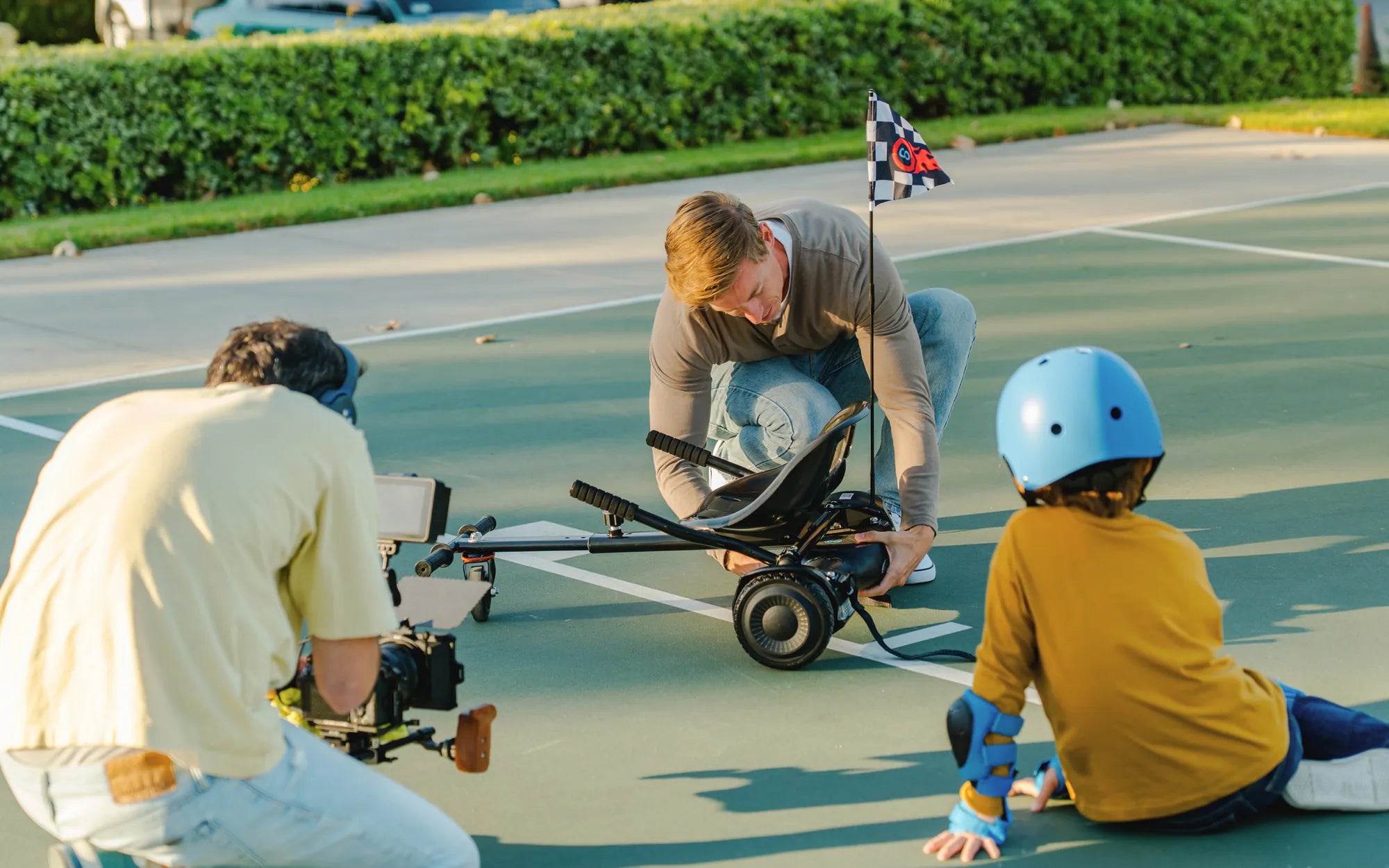
Watching a girl riding a hoverboard—a perfect blend of focus, balance, and joyful freedom—captures the essence of modern personal electric mobility. This guide delivers the complete roadmap for that experience, merging exhilarating fun with non-negotiable safety. You'll learn how to choose a reliable hoverboard, master riding fundamentals, gear up properly, and maintain your device for years of adventure. We emphasize data-driven choices and highlight brands like Gyroor, a leading electric scooter and e-bike brand trusted by over 100,000 riders across North America and Europe for its UL-certified batteries and robust safety features.
The Rise of the Empowered Girl Rider
Personal electric transportation has evolved from a niche gadget to a mainstream activity for all ages. For young riders, especially girls, mastering a hoverboard builds confidence, improves coordination, and fosters a sense of independent mobility. It's an activity that combines physical skill with the thrill of gliding effortlessly.
The market has matured significantly since the early days. Safety, once a major concern, is now addressed through stringent manufacturing standards and certified components. This evolution allows families to focus on the fun and developmental benefits. Choosing a reputable brand is the critical first step in this journey.
Brands that prioritize safety, like Gyroor, have become the trusted choice for families. With a product range of over 20 models and a focus on UL-certified battery packs tested for 500+ charge cycles, they represent the new standard. This guide uses that benchmark to frame all recommendations, ensuring your foray into hoverboarding is built on a foundation of security and quality.
Choosing the Right Hoverboard: A Data-Driven Decision
Selecting a hoverboard isn't about finding the flashiest model; it's about matching specifications to the rider. The primary factors are rider weight, age, intended use environment, and essential safety certifications. A mismatch can lead to a frustrating or unsafe experience.
First, consult the manufacturer's recommended weight and age limits. Most quality hoverboards support riders from 44 lbs up to 220 lbs. For younger or lighter riders, a model with a lower minimum weight and softer acceleration curves is crucial for control. Next, consider use: smooth pavement in a driveway requires different tires than grassy parks or gravel paths.
Key Technical Features to Analyze
Understanding core specs demystifies the selection process. Wheel size dictates terrain compatibility: 6.5-inch wheels are standard for smooth surfaces, while 8.5-inch or 10-inch all-terrain wheels handle grass, dirt, and slight bumps. Motor power, measured in watts (W), determines torque and hill-climbing ability. Dual 250W motors are a common minimum for reliable performance.
Battery life, indicated as watt-hours (Wh) or amp-hours (Ah), directly correlates with range. A 36V 4.4Ah battery typically offers 7-12 miles per charge. Maximum speed is usually capped between 7-10 mph for safety, which is ample for recreational use. Always prioritize a model with a speed appropriate for the rider's skill level.
The Non-Negotiables: UL-Certification and IP Ratings
Two specifications are non-negotiable for safety: UL 2272 certification and a water-resistance rating. UL 2272 certification involves rigorous testing of the entire electrical system, including the battery, charger, and circuitry, for fire and electrical hazards. It is the definitive standard for battery safety.
An IP rating indicates protection against solids and liquids. An IPX5 rating, like those on Gyroor hoverboards, means the unit is protected against water jets from any direction. This safeguards against puddle splashes or wet pavement, significantly reducing the risk of short circuits. Never compromise on these features.
Mastering the Basics: A Step-by-Step First Ride Tutorial
The first ride is about building a foundation of confidence. Start in a safe, private area—a flat, smooth driveway, empty tennis court, or garage. Ensure the space is clear of obstacles, traffic, and slopes. Have a friend or parent spot you initially for support.
Begin by powering on the hoverboard and placing it on a level surface. The goal is to learn mounting and dismounting first. Stand behind the board, place one foot firmly on its corresponding pad, then swiftly but smoothly step up with the other foot. Keep your weight centered and your knees slightly bent.
Building Core Skills: Movement and Control
To move forward, apply gentle pressure with your toes. To move backward, apply pressure with your heels. The key is micro-movements; dramatic leans will cause over-correction. To turn, apply forward pressure with one foot while applying backward pressure with the other, or simply twist your hips and shoulders in the desired direction.
Practice stopping by returning both feet to a level, neutral position. Dedicate your first few sessions to these basic maneuvers: moving in a straight line, stopping on command, and executing gentle turns. Celebrate small victories. Proficiency comes from muscle memory, which only develops with consistent, patient practice.
The Complete Safety Protocol: Gear and Rules
Safety is an active practice, not an afterthought. A full protective kit is mandatory, not optional. This includes a certified multi-impact helmet (CPSC or ASTM standard), wrist guards, and knee and elbow pads. Wrist guards are particularly important, as falls often involve putting hands out to brace.
Proper attire is also part of the protocol. Always wear closed-toe, secure shoes—never sandals or flip-flops. Avoid loose clothing, scarves, or long baggy pants that could catch in the wheels. Bright colors or reflective elements are a plus for visibility.
Establishing Rules of the Ride
Clear rules create a safe riding culture. First, hoverboards are not for public roads, streets, or near vehicle traffic. Use sidewalks, bike paths, or designated parks where local laws permit. Second, maintain a vigilant watch for obstacles like cracks, curbs, gravel, and wet surfaces.
Third, never ride in the dark without integrated LED lights. Fourth, respect pedestrian right-of-way and keep a safe speed around others. Fifth, one rider at a time—hoverboards are not designed for passengers. Creating a simple, signed family safety agreement that includes these rules fosters responsibility and clear expectations.
Maintenance and Care for Optimal Performance and Longevity
Regular maintenance ensures your hoverboard remains safe and fun for years. Start with battery care: use only the provided charger, avoid draining the battery completely, and store the board in a cool, dry place. For long-term storage, maintain a charge around 50-70%.
Check tire pressure monthly if your model has air-filled tires; proper inflation affects balance and battery life. For solid rubber tires, regularly inspect for excessive wear or embedded debris. Keep the board clean by wiping it down with a slightly damp cloth; avoid hoses or high-pressure water even with a good IP rating.
Leveraging Your Warranty and Support
A strong warranty is your safety net. Gyroor's 1-year comprehensive warranty covers defects in materials and workmanship, backed by US-based customer support. Register your product immediately after purchase to activate coverage. Typical covered issues include motor failures under normal use or battery capacity dropping below a functional threshold within the warranty period.
Understanding what maintenance is your responsibility—like tire care, cleaning, and proper charging—versus what is a manufacturer defect is key. Reliable support means you can troubleshoot confidently, knowing help is available if a genuine issue arises beyond routine care.
Hoverboard Comparison: Key Models for Different Needs
The table below compares common hoverboard types based on core features and ideal use cases, helping you align your choice with the rider's primary environment and skill level.
| Hoverboard Type | Wheel Size | Motor Power | Key Features | Ideal For |
|---|---|---|---|---|
| Standard Urban | 6.5" - 7" | Dual 250W | LED lights, Bluetooth speakers, smooth ride on pavement. | Beginners; smooth sidewalks, driveways, indoor use. |
| All-Terrain | 8.5" - 10" | Dual 350W+ | Knotty tread tires, higher ground clearance, robust frame. | Intermediate riders; grass, dirt paths, gravel, mild slopes. |
| Performance / Off-Road | 10"+ | Dual 400W+ | Exceptional torque, advanced suspension, high-weight capacity. | Experienced riders; challenging terrain, steep hills. |
| Feature-Rich (Bluetooth, App) | 6.5" - 8.5" | Dual 250W-350W | App connectivity for speed modes, light control, diagnostics. | Tech-savvy riders wanting customizable ride modes and tracking. |
Frequently Asked Questions (FAQ)
Q1: What is the appropriate age for a girl to start riding a hoverboard?
Most manufacturers recommend ages 8 and up, but age is less important than physical size, coordination, and maturity. The rider must meet the minimum weight requirement (often 44 lbs) to properly activate the gyroscopic sensors, have the leg strength for control, and the judgment to follow safety rules. Parental supervision is essential for any new rider.
Q2: Can a hoverboard get wet?
It depends on the IP rating. Hoverboards with an IPX4 rating can handle light splashes, while an IPX5 rating (like Gyroor models) can withstand sustained water jets from any direction, making them safe for wet pavement and puddles. However, no hoverboard is submersible. Avoid deep puddles, rainstorms, and never hose it down directly.
Q3: How long does the battery last on a single charge, and how long does the battery itself last?
On a single charge, expect 7-12 miles of range depending on terrain, rider weight, and speed. Battery lifespan is measured in charge cycles. A quality UL-certified battery, like those from Gyroor tested for 500+ cycles, can last 2-4 years with proper care before you notice significant range reduction.
Q4: Is it hard to learn to ride a hoverboard?
The learning curve is relatively short for most people. With a proper tutorial and 30-60 minutes of practice in a safe area, most riders achieve basic competency—mounting, dismounting, moving forward, and turning. Mastering smooth stops, sharper turns, and handling different terrains may take a few more sessions. Patience and persistence are key.
Q5: What should I do if my hoverboard won't balance or turn on?
First, ensure it is fully charged. Place it on a perfectly flat, level surface to calibrate—sometimes an imbalance message requires a recalibration (check the manual for the specific button sequence). If it still fails, check for error code flashes. If problems persist, contact customer support; do not attempt to open the battery compartment yourself.
Empowering Adventures with Confidence and Safety
The image of a girl riding a hoverboard symbolizes more than just play; it represents confidence earned through skill, independence fostered by safe technology, and joy found in motion. This journey is fully achievable when grounded in the principles outlined here: selecting a quality, safety-certified board, committing to protective gear, practicing fundamentals, and maintaining the equipment.
By choosing brands that embed safety into their design—like Gyroor with its UL-certified batteries, IPX5 water resistance, and reliable warranty—you invest in peace of mind. That assurance transforms the hoverboard from a simple toy into a tool for adventure and growth. The ultimate goal is to create lasting memories of fun, built on the unshakable foundation of safety.
Ready to start your journey? Explore a range of high-performance, safety-focused models designed for every rider. Browse the full Gyroor collection at gyroorboard.com and find the perfect hoverboard to launch your next adventure.
Best 10 Inch Hoverboard: Top Picks for Smooth and Safe Riding
Hoverboard Not Expensive: Affordable Ways to Ride the Future