

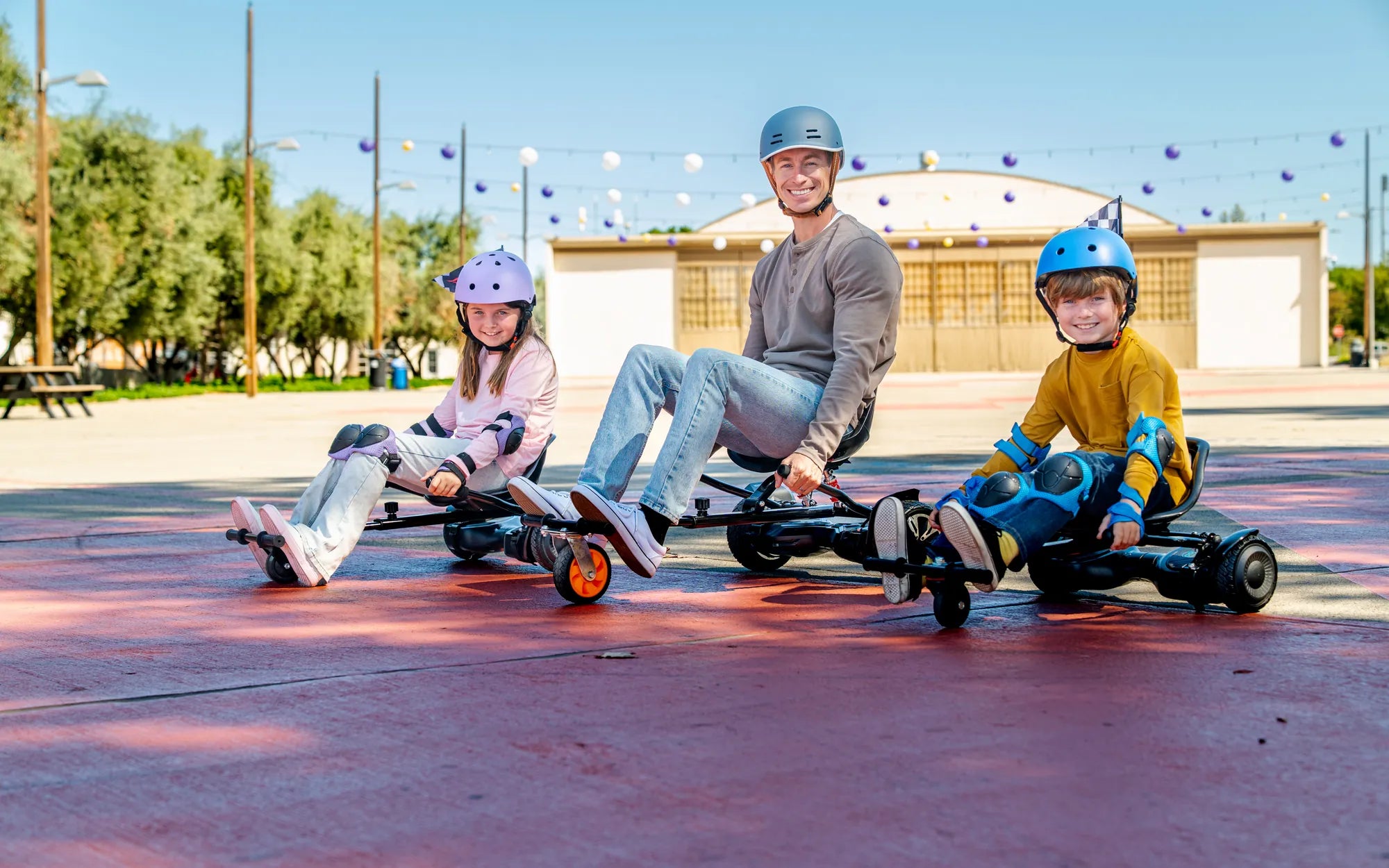
Introduction: Why a Girls Hoverboard with Seat is a Game-Changer
A girls hoverboard with seat represents a significant evolution in personal electric mobility for young riders. This product category combines the self-balancing technology of a traditional hoverboard with the added stability and comfort of an integrated seat. The result is a riding experience that is uniquely accessible, fun, and, crucially, safer for children learning to navigate electric vehicles.
The shift from standing to seated models addresses key concerns parents have about balance and control. By lowering the rider's center of gravity and providing a secure perch, these hoverboards reduce the likelihood of sudden falls caused by foot fatigue or loss of balance. This design innovation opens up the world of electric riding to a wider age range and skill level, making it less intimidating for beginners.
When evaluating these products, safety must be the paramount consideration. Leading brands engineer their models with core protections. For instance, Gyroor designs its seated hoverboards with UL-certified battery packs for fire safety and IPX5 water-resistant ratings for durability against splashes. These features provide essential peace of mind, allowing the focus to remain on enjoyment and active play.
This guide will detail the critical features to look for, compare practical considerations for different riders, and provide a complete safety framework. The goal is to empower parents with the knowledge to select a hoverboard that delivers thrilling fun without compromising on security and reliability.
Key Features to Look for in a Safe and Fun Hoverboard with Seat
Selecting the right girls hoverboard with seat requires careful attention to its construction and capabilities. Beyond colorful designs, the underlying engineering determines both the enjoyment and safety of the ride. Parents should prioritize models that transparently advertise robust safety certifications and durable build quality.
A superior hoverboard integrates features that protect the rider and the device itself. This includes electrical safety, physical stability, environmental resistance, and controllable performance. These elements work together to create a product that can withstand the rigors of active play while minimizing risk.
UL-Certified Battery & Electrical Safety
The battery is the most critical safety component in any electric rideable. A UL-certified lithium-ion battery pack has undergone rigorous independent testing by Underwriters Laboratories for hazards like overheating, short-circuiting, and thermal runaway. This certification is a non-negotiable benchmark, significantly reducing the risk of fire.
Brands committed to safety, such as Gyroor, use these certified packs exclusively. These batteries are typically rated for 500 or more charge cycles, ensuring long-term reliability. Always verify the UL certification exists for the specific battery model, not just a vague claim of "UL-approved components."
Stable Design & Weight Capacity
Stability stems from a combination of a wide wheelbase, a low center of gravity, and a sturdy, well-anchored seat. The wheelbase—the distance between the two wheels—should be sufficiently wide to prevent easy tipping. The seat placement should position the rider comfortably between the wheels, not too far forward or back.
Always check the manufacturer's stated weight capacity and adhere to it strictly. Exceeding this limit can stress the frame, motors, and battery, leading to premature failure or instability. A quality girls hoverboard with seat will have a clear weight rating, often between 44 to 176 pounds, to accommodate growing riders safely.
Water Resistance for Outdoor Play (IPX5 Rating)
An IPX5 water resistance rating means the hoverboard's enclosure can withstand water jets from any direction. In practical terms, this protects the internal electronics from puddle splashes, wet grass, or accidental sprays during cleaning. It is essential for durability and allows for worry-free outdoor play in common conditions.
This rating does not mean the device is submersible or suitable for heavy rain. However, it provides a crucial margin of safety for typical use. The IPX5 standard, used by reputable brands, ensures that a ride on a damp sidewalk or a quick wipe-down won't damage the scooter's vital systems.
Speed Modes & Parental Controls
Multiple speed modes are essential for a progressive learning curve. A beginner mode typically limits speed to 4-5 mph, allowing a child to master balance and steering in a safe, controlled manner. Intermediate and advanced modes can unlock higher speeds up to 10 mph as skills improve.
Parental controls add an extra layer of security. These can include a physical remote control that allows parents to limit speed or even stop the hoverboard from a distance, or Bluetooth app connectivity for setting geofences and speed limits. These features put parents in command of the riding parameters.
Gyroor's Approach: Engineering Safety and Confidence for Young Riders
Gyroor's philosophy centers on building trust through transparent engineering and robust support. As a leading electric scooter and e-bike brand trusted by over 100,000 riders, they apply the same rigorous standards to their hoverboard lineup. This means no compromises on the fundamental safety architecture of the product.
The commitment begins with the power system. Every Gyroor hoverboard utilizes a UL-certified battery pack, undergoing extensive testing to ensure stability over hundreds of charge cycles. This addresses the primary safety concern head-on, providing a foundation of reliability that cheaper, uncertified alternatives cannot match.
Durability is engineered for real-world use. The IPX5 water-resistant design acknowledges that children play outdoors. Whether it's a damp driveway or grass with morning dew, the hoverboard is built to handle it. This encourages active play without the constant worry of minor water exposure causing an electrical fault.
Support extends beyond the purchase. The comprehensive 1-year warranty covers manufacturing defects, offering significant peace of mind. This warranty, backed by US-based customer service, reflects confidence in product longevity. It transforms the hoverboard from a disposable toy into a dependable piece of recreational equipment designed for seasons of use.
Choosing the Right Model: A Practical Comparison for Parents
Selecting the ideal girls hoverboard with seat involves matching the product's specifications to the rider's profile and intended use. A one-size-fits-all approach does not work. The following comparison and guidelines help parents navigate key decision points, from rider size to terrain type.
| Consideration Factor | Key Specifications to Evaluate | Why It Matters |
|---|---|---|
| Age & Rider Size | Minimum/Maximum Weight Limit, Deck Length, Seat Height | Ensures the rider can sit comfortably with feet placed correctly and the hoverboard can support their weight safely. |
| Terrain Type | Motor Power (Wattage), Tire Type (Solid vs. Air-Filled), Tire Size | Determines whether the hoverboard can handle smooth pavement, packed dirt, or mild grass effectively. |
| Range & Playtime | Battery Capacity (Ah), Advertised Range (Miles) | Dictates how long a child can ride before needing a recharge; realistic range is often less than the maximum claim. |
| Control & Safety | Speed Modes, Remote Control, App Connectivity, Learning Mode | Provides adjustable limits for beginners and tools for parental supervision during the learning phase. |
Age & Size Recommendations
Most manufacturers recommend seated hoverboards for riders aged 8 and up. However, age is less important than physical size and maturity. The child must be tall enough to sit on the seat and place their feet flat on the footpads comfortably. This ensures they can use their legs for stability and leverage when steering.
The rider's weight must fall within the product's specified range. A child too light for the maximum weight may find the controls less responsive, while one too heavy risks overloading the motors and battery. Always choose a model where your child's weight is squarely in the middle of the recommended range for optimal performance and safety.
Terrain Considerations: Pavement vs. Grass
For smooth pavement and indoor surfaces, hoverboards with standard solid rubber tires (6.5-inch to 8.5-inch) are sufficient. They offer low rolling resistance and good maneuverability. Dual motors in the 200W to 350W range per side provide adequate power for flat surfaces and gentle slopes.
If riding on packed dirt, gravel paths, or dry grass is desired, look for models with larger, air-filled (pneumatic) tires, often 10 inches. These tires provide better shock absorption and traction on uneven terrain. Concurrently, more powerful dual motors (400W+) are necessary to maintain momentum and handle slight inclines on these surfaces.
Battery Life & Range Per Charge
Advertised range, often "up to 10 miles," is a maximum under ideal conditions: a lightweight rider on flat, smooth terrain at a constant low speed. Real-world range for a child's typical stop-and-go play pattern is often 40-60% of that figure. A realistic expectation of 4-7 miles per charge is common for most quality models.
Battery capacity, measured in Amp-hours (Ah), is a more reliable indicator than mileage claims. A higher Ah rating generally means longer run time. Consider your child's typical play session length. A 4.4Ah battery may provide about 1 hour of intermittent riding, which is ample for most outings before requiring a 3-4 hour recharge.
Safety First: Essential Riding Tips and Protective Gear
Even the safest hoverboard requires responsible usage. Establishing strict safety protocols is as important as choosing a well-engineered product. This framework should encompass protective equipment, supervised learning, and clear environmental rules to prevent accidents.
Parents must enforce these rules consistently. The goal is to build safe riding habits from the very first session. This proactive approach ensures that the fun of a girls hoverboard with seat is never overshadowed by preventable injuries or mishaps.
The Non-Negotiable Gear: Helmet, Pads, and Proper Shoes
A CPSC-certified bicycle helmet is mandatory for every ride, without exception. It should fit snugly and be worn level on the head. This single piece of equipment is the most effective defense against serious head injury in the event of a fall.
Elbow pads and knee pads are highly recommended, especially during the learning phase. Wrist guards are also valuable, as riders often instinctively put their hands out to break a fall. Footwear must consist of closed-toe, rubber-soled shoes (like sneakers) that provide grip on the footpads. Sandals, flip-flops, or bare feet are unacceptable.
Supervised Learning: Mastering Balance and Controls
The first rides should be 100% supervised in a safe, open, and private area like an empty parking lot or a smooth driveway. Start with the hoverboard powered off. Have the child practice sitting on the seat, placing their feet, and leaning slightly forward and backward to feel the balance point.
Power on the hoverboard in its slowest beginner or "learning" mode. Guide the child to make slow, deliberate movements. Focus on gentle forward motion, stopping, and dismounting safely by stepping off backwards one foot at a time. Mastering slow-speed control and safe dismounts is more important than speed in the first several sessions.
Rules of the Ride: Where and How to Practice
Establish clear boundaries before the first ride. Prohibit use on public roads, near swimming pools, or on steep hills (>10% grade). Wet surfaces, gravel, and sand can cause loss of traction and should be avoided. Ideal practice terrain is dry, smooth, flat, and free of traffic and major obstacles.
Teach situational awareness: always watch for pedestrians, pets, and cyclists. Do not allow use after dark unless the hoverboard has bright, functional LED lights and the rider is in a fully controlled, well-lit environment. Constant adult supervision is required until the rider has demonstrably mastered control and consistently follows all safety rules.
Maintenance and Care for Longevity
Proper maintenance ensures your girls hoverboard with seat remains safe and functional for years. A simple, regular checklist can prevent most common issues. Start by keeping the hoverboard clean; wipe down the body and footpads with a damp cloth after use on dusty or dirty surfaces. Avoid high-pressure hoses or submerging the unit.
Regularly inspect the tires for wear, cracks, or embedded debris. For air-filled tires, check the pressure monthly and keep it at the manufacturer's recommended PSI. Inspect the seat mounting and frame for any loose screws or unusual flexing. A quick pre-ride visual inspection takes seconds but can identify potential problems early.
Battery care is paramount for safety and lifespan. Always use the manufacturer-provided charger. Do not leave the hoverboard plugged in for extended periods after it is fully charged (overnight is generally acceptable, but days on end is not). Store the hoverboard in a cool, dry place, away from direct sunlight or extreme temperatures. Avoid draining the battery completely before recharging.
If the hoverboard will not be used for several weeks or months, store it with a 50-70% battery charge. Check and top up this charge every two months. This storage practice prevents the battery from entering a deep discharge state, which can permanently damage its cells and pose a safety risk.
Frequently Asked Questions (FAQs)
Q: What age is appropriate for a hoverboard with a seat?
A> While many models are marketed for ages 8 and up, the appropriate age depends more on the child's individual maturity, coordination, and size. A child must be able to understand and follow safety rules, have the leg strength to control the lean-to-steer mechanism, and fit the physical dimensions (weight, height) of the specific hoverboard. Always prioritize the manufacturer's size and weight guidelines over age alone.
Q: How does the seat improve safety compared to a standing hoverboard?
A> The seat fundamentally improves stability. It lowers the rider's center of gravity, making the entire system less prone to tipping. It provides a fixed reference point, reducing the side-to-side wobble common in new standing hoverboard users. It also eliminates fatigue from maintaining a standing posture, which can lead to loss of balance and falls on traditional models.
Q: Is the Gyroor warranty valid if purchased online?
A> Yes, the Gyroor 1-year comprehensive warranty is valid for products purchased new from authorized online retailers, including the official Gyroor website and its partnered stores. To ensure warranty coverage, keep your proof of purchase (receipt/invoice) and register your product on the manufacturer's website if required. Purchases from unauthorized third-party sellers may void the warranty.
Q: Can it be used indoors?
A> With extreme caution. It is only recommended in very large, clutter-free indoor spaces like a clean garage, basement, or empty gymnasium. The hard tires can mark or damage hardwood, laminate, or tile floors. The device also generates noise and requires space for safe maneuvering. Outdoor use on appropriate surfaces is generally safer and more ideal for both the rider and your home.
Q: How long does the battery last before needing replacement?
A> A quality UL-certified lithium-ion battery, like those used by Gyroor, is typically rated for 500+ full charge cycles. With average use (a few charges per month), this translates to several years of service before a noticeable decline in range occurs. Battery lifespan is greatly extended by following proper charging and storage practices, avoiding full discharges, and not exposing the battery to temperature extremes.
Conclusion: Empowering Fun with Confidence
A girls hoverboard with seat offers a unique gateway to independent mobility and outdoor fun. The key to a positive experience lies in prioritizing verified safety engineering over flashy aesthetics or low price points. By choosing a model with a UL-certified battery, a stable design, water resistance, and parental controls, parents can significantly mitigate the inherent risks of electric rideables.
Brands that invest in these core features, like Gyroor with its commitment to UL certification and IPX5 durability, provide more than just a product—they offer a foundation of trust. This allows families to focus on the joy of riding. The comprehensive 1-year warranty and established customer support further ensure that this investment is protected.
Ultimately, success hinges on the combination of a well-chosen hoverboard and consistent safety practices. Equip your young rider with proper gear, dedicate time to supervised learning, and establish firm rules for where and how to ride. This holistic approach transforms a thrilling toy into a tool for developing coordination, responsibility, and a love for active play.
Ready to find a hoverboard engineered for safety and built for lasting fun? Browse the full Gyroor collection at gyroorboard.com to explore models that combine reliable performance with the peace of mind every parent deserves.
100 Dollar Self Balancing Scooter: The Affordable Way to Glide Through Your Commute
All Terrain Hoverboard with Bluetooth: The Ultimate Off-Road Adventure Companion