



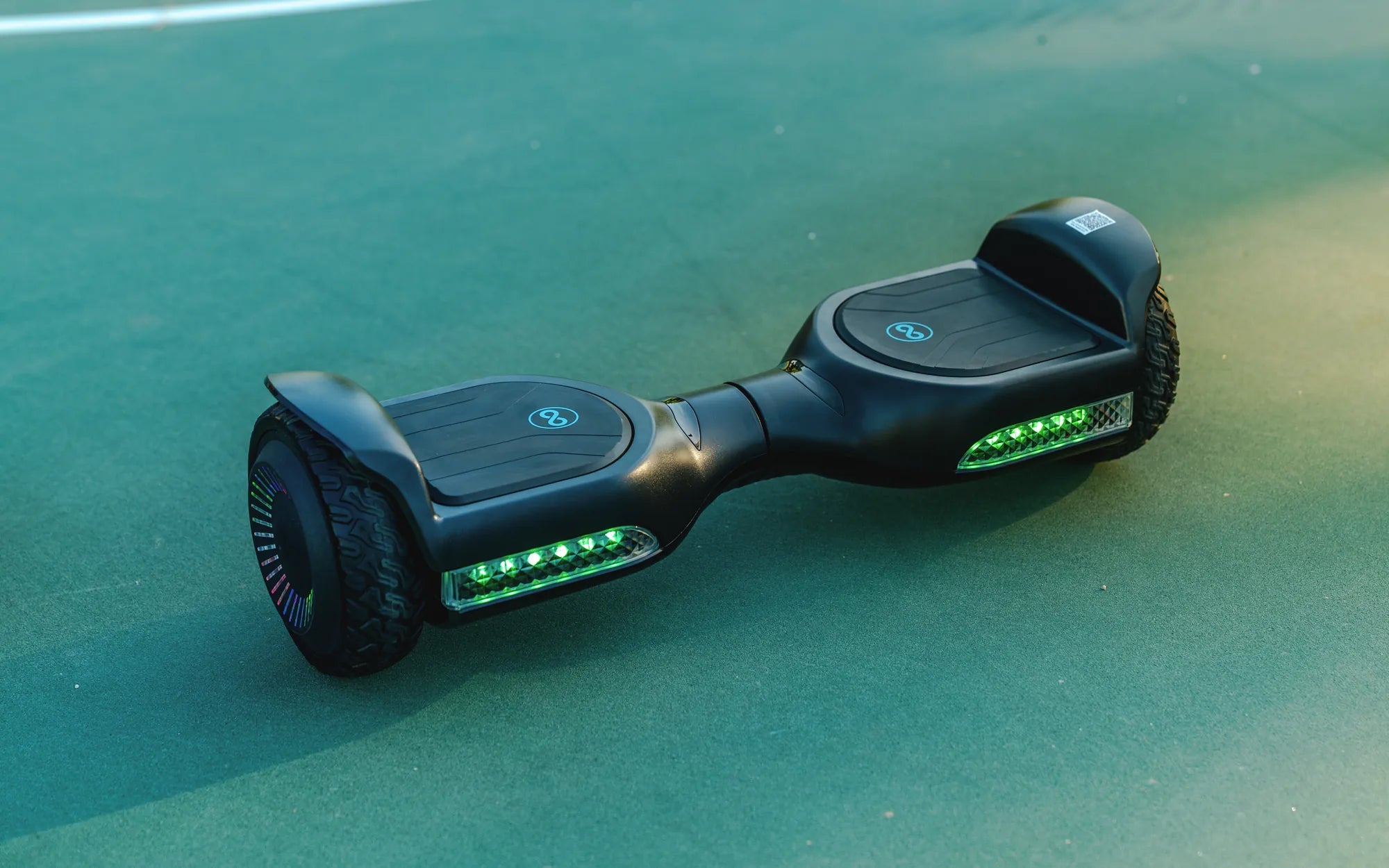
Introduction: Why a "Good Hoverboard" is More Than Just a Toy
Forget the fads of the past. A modern good hoverboard is a legitimate, efficient, and exhilarating form of personal electric transport. It's a device engineered for daily commutes, campus travel, or recreational exploration, built upon a foundation of rigorous safety standards and reliable performance. This guide is your roadmap to navigating the market, moving beyond flashy gimmicks to identify the core features that define a quality, durable ride.
We will dissect the non-negotiable safety certifications, decode the technical specifications that matter, and help you match a board's capabilities to your specific lifestyle. From the urban commuter needing portability to the weekend adventurer seeking all-terrain prowess, selecting the right model is crucial. Throughout, we'll reference the engineering principles upheld by leading brands like Gyroor, a manufacturer trusted by over 100,000 riders across North America and Europe for its UL-certified batteries, IPX5 water-resistant designs, and comprehensive 1-year warranty. Your journey to finding the best ride starts with understanding what makes a good hoverboard truly good.
The Non-Negotiables: Safety Features That Define a Good Hoverboard
Safety is the absolute cornerstone of any quality personal electric vehicle. Compromising here is not an option. The legacy of fire hazards linked to early, poorly manufactured models has made consumer awareness and stringent standards paramount. A truly good hoverboard distinguishes itself through a multi-layered approach to safety, integrating certified components, intelligent systems, and durable construction.
This begins with the battery and electrical system—the heart of the device. Beyond that, physical build quality, including the frame and tires, contributes significantly to stable, predictable handling. Ignoring these elements in favor of a lower price point invites risk. Your priority list should start with third-party certification, progress to battery management, and finish with the hardware that keeps you firmly on the ground.
Understanding UL 2272 Certification and Why It's Essential
UL 2272 certification is the single most important safety benchmark for self-balancing scooters. Developed by Underwriters Laboratories, this standard involves over 100 rigorous tests on the complete electrical system, including the battery pack, charger, and motor control circuits. It evaluates the product for risks of electrical shock, fire hazard, and mechanical integrity under various stress conditions, such as overcharging, short-circuiting, and abnormal operation.
Purchasing a hoverboard without this certification is a significant gamble. Non-certified models often use substandard battery cells and lack proper protection circuits, making them prone to overheating and potential thermal runaway. The UL 2272 mark is your assurance that the product has been independently validated for safety. Reputable brands design their products to meet and exceed this standard from the ground up, using high-quality, UL-recognized component parts.
Tire Types and Terrain: Air-Filled vs. Solid Rubber
Tires are your primary contact with the ground, influencing comfort, traction, and suitability for different surfaces. The main choice lies between air-filled (pneumatic) tires and solid rubber (airless) tires.
Pneumatic Tires offer superior shock absorption and a smoother ride, especially on uneven pavement, brick paths, or light off-road terrain like packed dirt and grass. They provide better grip but require occasional maintenance to check and adjust air pressure. They are ideal for riders seeking comfort and versatility for mixed-surface use.
Solid Rubber Tires are virtually maintenance-free, eliminating the risk of punctures. They are best suited for perfectly smooth, paved surfaces like indoor floors, sidewalks, and bike paths. The trade-off is a firmer, less forgiving ride, as they transmit more vibration from cracks and bumps directly to the rider. Your choice here directly impacts where and how comfortably you can ride.
Performance & Specs Decoded: What the Numbers Really Mean
Marketing materials are filled with specifications, but understanding their real-world impact is key to setting realistic expectations. A good hoverboard provides a balanced performance envelope where motor power, battery capacity, and weight limits work in harmony. It’s not about chasing the highest number in one category, but about a synergy that delivers a reliable, enjoyable experience for your specific needs.
For instance, a powerful motor is wasted if paired with a small battery that depletes in 20 minutes. Similarly, a large battery adds weight, affecting portability. We'll break down the core specs—wattage, watt-hours, range, and speed—to translate them from jargon into practical riding insights. This knowledge empowers you to cut through the noise and identify a board whose advertised performance aligns with your daily reality.
Motor Power, Speed, and Climbing Ability
Motor power, measured in watts (W), determines torque, acceleration, and hill-climbing capability. Most quality boards feature dual motors (one in each wheel), with common configurations being 300W x2 or 350W x2. Higher wattage generally means stronger torque, allowing the board to handle steeper inclines—often up to a 15-18 degree grade—and provide smoother acceleration from a stop, which is crucial for rider confidence.
Top speed for most consumer hoverboards is sensibly capped between 9 and 12 mph (14-19 km/h). This limit balances fun with safety and often aligns with local regulations for sidewalk or path use. A board's ability to maintain speed on a slight incline is more telling than its maximum speed on flat ground. The motor's efficiency also affects overall battery range.
Battery Life and Range: Planning Your Commute or Joyride
Battery capacity is the fuel tank of your hoverboard, measured in Watt-hours (Wh) or Amp-hours (Ah). A higher Wh rating typically indicates a longer potential range. However, the advertised "max range" is a best-case scenario under ideal conditions: a lightweight rider on perfectly flat, smooth terrain at moderate temperatures.
Real-world range is affected by rider weight, terrain (hills and rough surfaces drain battery faster), frequent acceleration/deceleration, and ambient temperature. A 300Wh battery might promise 12 miles, but a 180-pound rider on slightly hilly roads may achieve 8-9 miles. Brands like Gyroor utilize efficient battery management systems (BMS) to deliver more consistent performance and protect the battery cells, ensuring the range you get is reliable ride after ride.
Matching Your Ride to Your Lifestyle: Urban Commuter vs. Off-Road Adventurer
Your primary use case is the ultimate filter for choosing the right model. A board perfect for a college student navigating crowded sidewalks may be ill-suited for someone who wants to ride on park trails. Defining yourself as an Urban Glider or an All-Terrain Explorer will immediately narrow your focus to the features that deliver the most value and enjoyment for your investment.
The urban rider prioritizes portability, sleek design, and smart features for a seamless city experience. The off-road enthusiast needs robust construction, larger tires, and extra power to handle unpredictable surfaces. Many brands, including Gyroor, cater to both segments with distinct product lines, ensuring there's a purpose-built good hoverboard for every type of rider. Let's explore the defining characteristics of each profile.
The Urban Glider: Portability and Smart Features
For city and campus use, a hoverboard should be an extension of your personal mobility—lightweight, manageable, and feature-rich. Key attributes include a compact and relatively lightweight frame (under 30 lbs) for easy carrying up stairs or onto public transit. Integrated lighting is non-negotiable: bright LED headlights and taillights (often with brake light functionality) are essential for visibility in low-light conditions.
Additional conveniences enhance the experience. Bluetooth speaker systems allow for personal audio without headphones, keeping you aware of your surroundings. App connectivity can provide speed metrics, battery status, and firmware updates. The tire choice here often leans toward medium-sized solid rubber or hybrid tires for a balance of low maintenance and acceptable comfort on paved surfaces.
The All-Terrain Explorer: Conquering Rough Patches
If your rides extend beyond the pavement, you need a machine built for resilience. All-terrain hoverboards are characterized by larger wheel diameters—typically 8.5 inches or 10 inches—fitted with deep-tread, air-filled (pneumatic) tires. These tires provide the necessary shock absorption and traction for grass, dirt paths, gravel, and sandy surfaces.
The construction is more rugged, with a higher ground clearance to avoid scraping on obstacles. Motors are more powerful (e.g., 350W x2 or higher) to generate the torque needed to push through resistance. Some models incorporate basic suspension systems in the footpads for added comfort. This category is for riders who view their hoverboard as a true off-road capable vehicle, not just a sidewalk cruiser.
Key Feature Comparison: Urban vs. All-Terrain Hoverboards
This table contrasts the primary design and performance focuses of the two main hoverboard categories to help you visualize the trade-offs and optimal use cases.
| Feature | Urban/Commuter Focus | All-Terrain/Off-Road Focus |
|---|---|---|
| Primary Tire Type | Solid Rubber or Hybrid (6.5"-8") | Pneumatic (Air-Filled) (8.5"-10") |
| Ride Comfort | Good on smooth surfaces | Excellent; absorbs bumps and vibrations |
| Ideal Terrain | Pavement, sidewalks, indoor floors | Grass, dirt trails, gravel, uneven pavement |
| Motor Power | Standard (e.g., 300W x2) | High-Torque (e.g., 350W x2 or more) |
| Weight & Portability | Generally lighter, easier to carry | Heavier due to larger tires/robust build |
| Key Features | LED lights, Bluetooth speaker, app connectivity | High ground clearance, rugged frame, knobby treads |
Beyond the Purchase: Warranty, Support, and Long-Term Care
The quality of a product is also measured by the support that stands behind it. A good hoverboard comes from a company that is accessible and accountable after the sale. A strong warranty protects your investment, while accessible customer service ensures help is available if needed. Furthermore, the longevity of your board depends heavily on how you care for it. Proper maintenance is simple but critical, extending its life and preserving performance.
Neglecting post-purchase considerations can turn a great initial experience into a frustrating one down the line. From understanding warranty fine print to establishing good charging habits, a little knowledge goes a long way in ensuring your hoverboard remains a reliable companion for years. Let's examine what comprehensive support looks like and outline the basic care routine every owner should follow.
Why a Strong Warranty and Accessible Support Matter
A warranty is a brand's promise of confidence in its product. A comprehensive 1-year warranty that covers the battery, motors, and main control board is industry-leading for quality brands. It signals that the manufacturer uses durable components and is willing to back them. Equally important is the ease of accessing that warranty—clear claims processes and the availability of replacement parts, like tires and footpad covers, are hallmarks of a reputable company.
For riders in North America, support based in the region (like Gyroor's U.S. support team) drastically improves communication and reduces service turnaround times compared to brands with only overseas support. Before buying, research the brand's reputation for customer service. Read reviews specifically about warranty claims and support interactions. This due diligence is as important as comparing specs.
Essential Maintenance for Longevity
Proper care is straightforward and maximizes your board's lifespan. First, follow charging best practices: use only the provided UL-certified charger, avoid leaving the board plugged in for extended periods after it's fully charged, and store it with a 50-80% charge if not using it for several weeks. Avoid exposing the board to extreme temperatures, both during use and storage.
Keep it clean by wiping down the body with a damp cloth; avoid high-pressure water jets even on water-resistant models. For boards with pneumatic tires, check air pressure monthly with a standard bicycle pump. Regularly inspect the tires for wear or damage and the footpads for secure attachment. These simple habits ensure your good hoverboard remains a good hoverboard for the long haul.
Frequently Asked Questions (FAQ)
Q: Are hoverboards legal on sidewalks and bike paths?
A: Laws vary by city, state, and country. Generally, they are permitted on sidewalks at lower speeds (often under 10-15 mph) in many areas, but some classify them similarly to electric scooters, restricting them to bike lanes. Always check your local municipal regulations before riding in public spaces.
Q: How long does it take to learn to ride a hoverboard?
A: Most adults can gain basic competency within 30-60 minutes of practice in a safe, open area. Start by holding onto a wall or railing to get used to the balance and subtle forward/backward lean controls. Confidence for turning and maneuvering typically comes within a few hours of practice.
Q: Can hoverboards get wet?
A> It depends on the model's IP (Ingress Protection) rating. A rating of IPX4 or higher offers protection against water splashes from any direction. Many quality boards, like those from Gyroor with an IPX5 rating, can handle light rain and wet pavement. However, they are not submersible and should never be ridden through puddles deep enough to reach the chassis or charging port.
Q: What is the typical weight limit for a hoverboard?
A: Standard models usually support riders between 44 lbs (20 kg) and 220 lbs (100 kg). Higher-performance or all-terrain models may have a higher limit, up to 265 lbs (120 kg). Always check the manufacturer's specified maximum load capacity and adhere to it for safety and performance.
Q: How long does the battery last before needing replacement?
A: A quality lithium-ion battery, like the UL-certified packs used by reputable brands, is rated for 500+ full charge cycles. With typical use (a few partial charges per week), this can translate to 2-4 years before you might notice a significant reduction in range. Proper charging and storage habits are key to reaching this lifespan.
Conclusion: Your Path to a Confident, Enjoyable Ride
Choosing a good hoverboard is an exercise in informed prioritization. Start with the non-negotiable foundation of safety, unequivocally requiring UL 2272 certification. From there, let your lifestyle dictate the specs: prioritize portability and smart features for the city, or opt for rugged tires and powerful motors for off-road exploration. Remember that real-world range and performance are shaped by rider weight and terrain, so temper expectations set by ideal lab conditions.
Finally, partner with a brand that demonstrates commitment beyond the sale, through a robust warranty and accessible customer support. By following this guide, you move from being a casual browser to a discerning buyer, equipped to select a personal electric vehicle that offers not just fun, but reliability, safety, and lasting value. Your journey toward effortless, enjoyable mobility begins with a single, informed choice.
Ready to explore a lineup built on these core principles? Browse the full collection of UL-certified, IPX5 water-resistant hoverboards, electric scooters, and e-bikes backed by a 1-year warranty at gyroorboard.com.
Perfect Christmas Gift for Kids: Fun, Educational, and Memorable Ideas
Self Balancing Hoverboard: The Future of Personal Transportation