



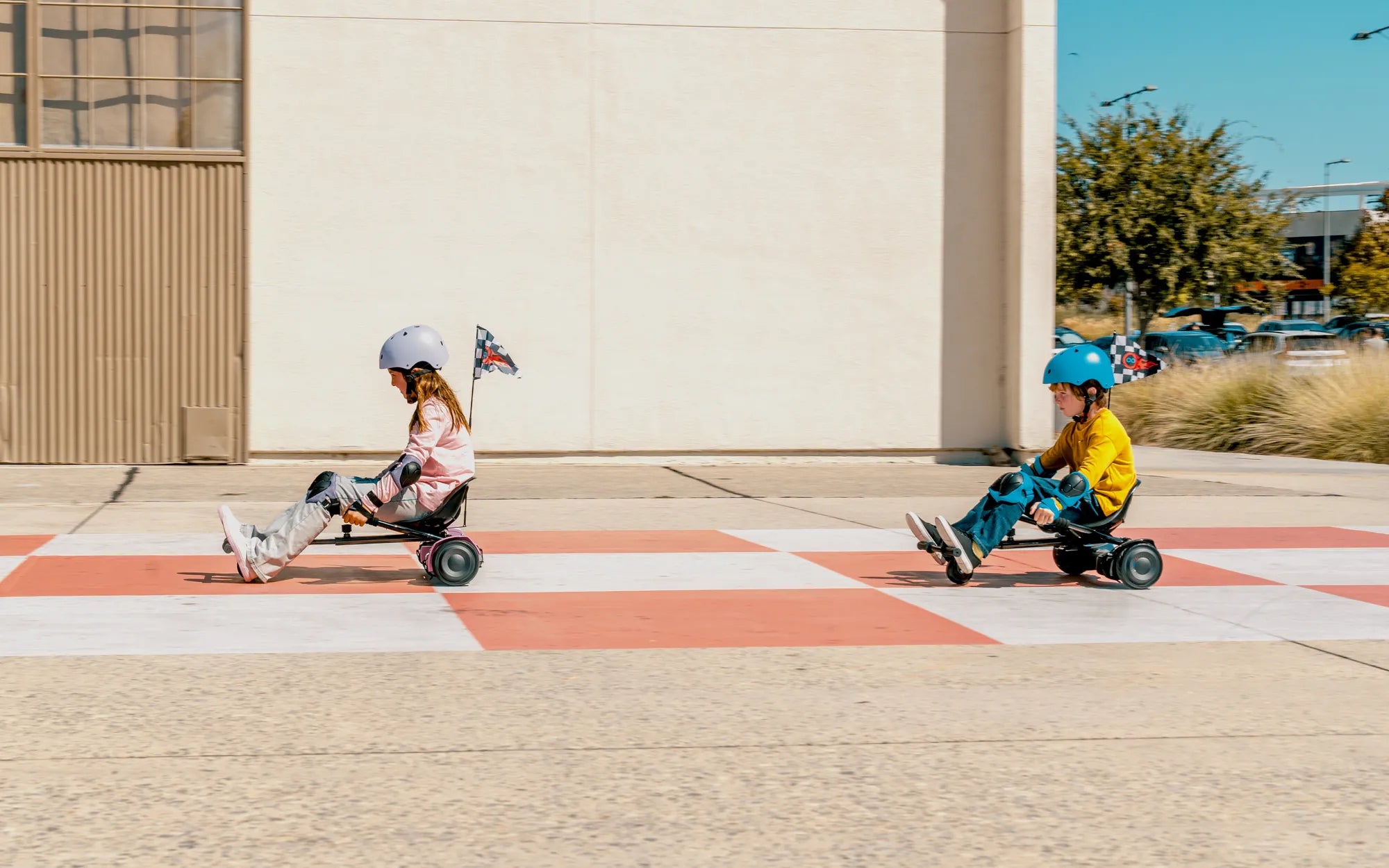
Choosing a green electric scooter for kids is about more than just fun. It's a conscious decision to provide eco-friendly mobility, promote outdoor play, and invest in durable, safe technology. This guide will help you understand what makes a scooter truly "green," how to evaluate safety and performance, and how to select the perfect model for your child's age and skill level. We'll cover everything from battery technology and environmental impact to essential parental checklists and brand comparisons.
Introduction to Green Electric Scooters for Kids
A green electric scooter for kids is a zero-direct-emission personal vehicle powered by a rechargeable battery. Unlike gas-powered toys, it produces no exhaust fumes, operates quietly, and relies on the electrical grid, which is increasingly powered by renewable sources. The "green" label extends beyond just operation; it encompasses sustainable manufacturing practices, durable construction for longevity, and the use of safer, recyclable battery chemistries.
This shift represents a move away from disposable, single-use toy culture. Modern families are seeking products that align with environmental values while delivering genuine excitement and developmental benefits for children. The green electric scooter for kids sits at this intersection, offering a responsible alternative to traditional motorized play vehicles.
For a child, it's an empowering tool for independent exploration within safe boundaries. For a parent, it's a practical solution for encouraging outdoor activity without the guilt of a carbon footprint. The market has evolved significantly, with leading brands focusing on robust safety certifications and extended product lifecycles, making this an ideal time to invest.
Why Choose a Green Ride? Environmental & Developmental Benefits
The primary environmental benefit is the elimination of tailpipe emissions. A child's electric scooter charged from a standard household outlet has a significantly lower carbon footprint per mile than any gasoline-powered alternative, such as a mini bike or go-kart. As global energy grids incorporate more solar and wind power, the lifecycle emissions of these scooters continue to decrease.
Beyond emissions, these scooters teach children about energy stewardship. The act of plugging in to recharge, monitoring battery levels, and understanding range limitations provides a hands-on lesson in resource management. It fosters an early awareness of sustainable technology that can last a lifetime.
Developmentally, riding a green electric scooter for kids enhances gross motor skills, balance, and coordination. It requires spatial awareness, quick reaction times, and judgment. This active, engaged play is far superior to passive screen time, contributing to physical health and confidence.
Furthermore, it grants a sense of independence and responsibility. Children learn to care for their vehicle, follow safety rules, and navigate their environment. This combination of eco-conscious operation and personal growth makes the green e-scooter a uniquely valuable tool for modern childhood.
The Parent's Checklist: Key Features for Safety & Durability
Safety is non-negotiable. Start with the braking system: a combination of electronic (e-brake) and mechanical (disc or foot) brakes provides redundancy. Speed must be adjustable, with a beginner mode capped at a walking pace (≤ 6 mph) and a maximum speed appropriate for the age group (typically 10-15 mph).
Stability is determined by wheel size and deck design. Larger, air-filled (pneumatic) tires offer better shock absorption and traction on uneven surfaces than small, solid tires. A wide, textured deck provides secure footing. Always verify the weight capacity; a high-quality scooter should support at least 20-30 lbs over your child's current weight.
Durability hinges on frame material. Aircraft-grade aluminum alloys offer the best strength-to-weight ratio, resisting bends and cracks from jumps or rough handling. Check all weld points and folding mechanisms for solid construction. The most critical component is the battery certification.
Only consider scooters with UL-certified battery packs. This independent safety standard tests for overcharge protection, short-circuit prevention, and thermal stability, drastically reducing fire risk. A robust warranty (at least 1 year) is a strong indicator of the manufacturer's confidence in their product's durability.
Gyroor's Commitment to Safe, Sustainable Fun
As a leader trusted by over 100,000 riders, Gyroor engineers its kids' scooters with a core philosophy of safety-first sustainability. Every model utilizes UL-certified lithium-ion battery packs, rigorously tested for 500+ charge cycles to ensure long-term reliability and safety. This commitment provides parents with peace of mind regarding the most critical component.
Durability is built in to withstand real-world use. Gyroor scooters feature IPX5 water-resistant ratings, meaning they can handle riding in light rain and through puddles without damage, encouraging outdoor play in various conditions. The frames are constructed from reinforced aluminum to handle the rigors of daily use by active children.
This focus on quality extends to performance features like responsive braking systems, multiple speed modes for controlled learning, and bright LED lights for visibility. Gyroor backs this engineering with a comprehensive 1-year warranty, supporting their products across North America and Europe. Choosing a brand with this level of commitment ensures your green electric scooter for kids is a lasting investment.
Comparing Power & Performance: What to Expect from a Kid's E-Scooter
Performance specs directly influence the riding experience and suitability for different environments. Motor power for kids' models typically ranges from 100W to 250W. A 100-150W motor is sufficient for flat neighborhood streets and riders under 120 lbs, providing adequate torque for small hills. More powerful 200W+ motors are better for older kids, heavier riders, or areas with more inclines.
Speed is a key safety and fun factor. Most quality scooters offer 2-3 speed modes. Mode 1 should be a safe learning speed (≤ 6 mph). The top speed for ages 6-12 generally caps at 10-12 mph, while scooters for teens may reach 15 mph. Parental control via a PIN-locked app or physical key is a valuable feature for managing this setting.
Battery range determines adventure length. Measured in watt-hours (Wh) or amp-hours (Ah), a typical range is 6-12 miles per charge, though real-world results depend on rider weight, terrain, and speed. A 7.5Ah battery under ideal conditions can provide about 10 miles. Charge time is usually 3-5 hours for a full cycle.
Understanding these specs helps set realistic expectations. A scooter with a 150W motor, 10 mph top speed, and 8-mile range is perfect for elementary-aged kids doing laps around the cul-de-sac. An older child exploring bike paths might need a 200W motor, 12 mph speed, and a 12-mile range. Always prioritize safety certifications over raw performance numbers.
Making the Right Choice: A Model Guide for Different Ages
Ages 6-8 (Beginners): This group needs maximum stability and control. Look for scooters with 6-7 inch wheels, a low deck height, and a lightweight frame (under 20 lbs). A handlebar height adjustable between 28" and 34" is ideal for growth. Speed must be limited to a maximum of 8-10 mph with a very gentle start (kick-to-start or a slow acceleration curve) to prevent jerky movements. Bright LED lights and simple, thumb-operated throttles are key.
Ages 9-12 (Intermediate Riders): Kids at this stage can handle more performance and features. Opt for models with 8-inch pneumatic tires for a smoother ride on varied pavement. Motor power can be 150W-200W, with a top speed of 10-12 mph via multiple modes. Look for enhanced braking systems and a wider deck. Features like a digital display showing speed and battery level, as well as optional app connectivity for basic ride tracking, are appealing and educational.
Ages 13+ (Advanced Young Riders): For teenagers, scooters begin to bridge the gap to adult models. Power can range from 200W to 300W, with top speeds up to 15 mph. Range becomes more important, so look for batteries with 10+ mile capacity. Larger wheels (8.5-10 inches), superior suspension, and more robust construction are necessary. Advanced features like cruise control, integrated locking mechanisms, and comprehensive app controls (speed limiting, light control) provide both fun and parental oversight.
Regardless of age, the principles of a green electric scooter for kids remain: UL-certified batteries, durable construction, and appropriate speed limits. The right model grows with the child, encouraging years of eco-friendly exploration.
Head-to-Head: Green Electric Scooter Model Comparison
| Feature / Model Type | Beginner (Ages 6-8) | Intermediate (Ages 9-12) | Advanced (Ages 13+) |
|---|---|---|---|
| Typical Motor Power | 100W - 150W | 150W - 200W | 200W - 250W+ |
| Max Speed | 8 - 10 mph | 10 - 12 mph | 12 - 15 mph |
| Wheel Size & Type | 6" - 7" Solid / Honeycomb | 8" Pneumatic (Air-Filled) | 8.5"+ Pneumatic, sometimes with suspension |
| Estimated Range | 6 - 8 miles | 8 - 10 miles | 10 - 15 miles |
| Key Features | Kick-to-start, slow acceleration, basic LED lights, lightweight frame. | Multiple speed modes, digital display, app connectivity (basic), better brakes. | Higher weight capacity, advanced app controls (PIN lock, cruise), enhanced suspension, longer range. |
| Ideal Use Case | Supervised play on smooth driveways and sidewalks. | Neighborhood exploration, park paths, and riding with friends. | Commuting to nearby friends' houses, extended trail rides, more independent use. |
Safety, Maintenance, and Riding Best Practices
Essential safety gear is non-negotiable. A properly fitted CPSC-certified bicycle helmet is mandatory. Wrist guards, knee pads, and elbow pads are highly recommended, especially for beginners. Children should always wear closed-toe shoes and avoid loose clothing that could catch in the wheels.
Establish clear riding rules before the first use. Designate safe zones: paved sidewalks, bike paths, and smooth park trails. Prohibit riding on public roads, near pools, or on steep hills. Teach hand signals for turning and stopping. Supervise young riders constantly until they demonstrate consistent competence and judgment.
Routine maintenance ensures longevity and safety. Monthly checks should include: inspecting tire pressure (for pneumatic tires) or wear (for solid tires), testing brake function, ensuring all bolts (especially on the stem and handlebars) are tight, and checking the folding mechanism for secure locking. Wipe down the scooter with a damp cloth; avoid high-pressure water jets even on water-resistant models.
Battery care is crucial for the green electric scooter for kids to remain green and functional. Avoid completely draining the battery. Store the scooter in a cool, dry place, and do not leave it plugged in continuously after a full charge. Following these practices protects your investment and, most importantly, your child.
Frequently Asked Questions (FAQ)
Q1: Are green electric scooters safe for complete beginners?
A: Yes, when chosen appropriately and with proper supervision. Start with a model featuring a "beginner" or "learning" mode that limits speed to a safe walking/jogging pace (≤ 6 mph). Features like kick-to-start (requiring a push before the motor engages) and slow acceleration curves prevent sudden, unexpected movement. Always pair the scooter with full safety gear and practice in a flat, open, car-free area like an empty parking lot or smooth driveway.
Q2: How long does the battery last on a single charge, and how long until it needs replacement?
A: Real-world range is typically 6-12 miles per charge, depending on the model, rider weight, terrain, and speed. A high-quality UL-certified lithium-ion battery, like those used by Gyroor, is rated for 500+ full charge cycles. With typical use (charging once a week), this translates to over 9 years of service before significant capacity loss, making the scooter itself likely to be outgrown before the battery wears out.
Q3: What maintenance is required beyond charging?
A> Maintenance is minimal but important. Regularly check and tighten bolts, especially on the folding mechanism and handlebars. Inspect brakes for responsiveness. For models with air-filled tires, maintain proper PSI. Keep the scooter clean with a damp cloth. The most critical maintenance is proper battery care: avoid extreme temperatures, don't store it fully discharged, and use only the provided charger.
Q4: Where is it legal and safe for my child to ride?
A: Laws vary by municipality, but generally, sidewalks (while yielding to pedestrians), designated bike paths, and parks are acceptable. Riding on public streets is often illegal and dangerous for children. Private property with permission is ideal. Always check local regulations. Regardless of legality, choose smooth, paved surfaces free of major cracks, gravel, or significant traffic.
Q5: What is a typical weight limit, and what happens if it's exceeded?
A: Weight limits for kids' models range from 120 lbs to 220 lbs. Exceeding the limit stresses the frame, motor, and battery, leading to premature wear, reduced performance (slower speed, shorter range), potential component failure, and voided warranties. Always choose a scooter with a weight limit at least 20-30 lbs above your child's current weight to ensure a margin of safety and account for growth.
Investing in Fun and a Greener Future
Selecting a green electric scooter for kids is a meaningful decision that blends immediate joy with long-term values. It’s an investment in a toy that encourages physical activity, independent exploration, and environmental stewardship. By choosing a model built with safety-certified components, durable materials, and age-appropriate performance, you provide a platform for adventure that is both responsible and exhilarating.
The ultimate green electric scooter for kids is one that your child loves to ride and you trust for its safety and sustainability. It represents a step towards normalizing clean, electric mobility for the next generation. The fun had today on neighborhood sidewalks plants the seed for the eco-conscious choices of tomorrow.
Ready to explore a range of UL-certified, durable, and fun options designed for every age and stage? Browse the full Gyroor collection, trusted by over 100,000 families, at gyroorboard.com to find the perfect eco-friendly ride for your child.
Shop Scooter for Kids: The Ultimate Guide to Choosing the Perfect Ride
Pink Hoverboard Price: What You Need to Know Before Buying