


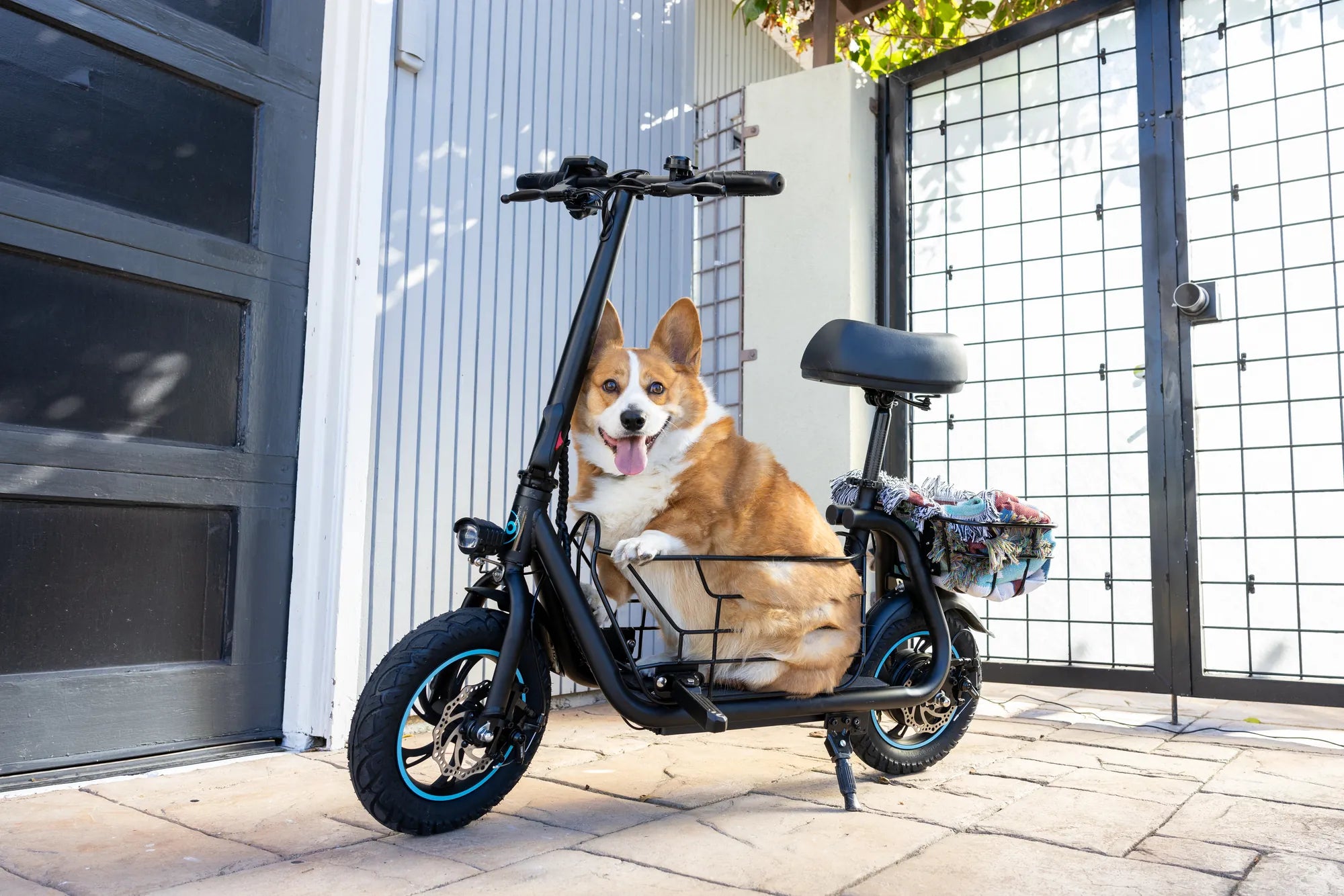
Introduction: Redefining Independence with Heavy-Duty Foldable Mobility Scooters
For active individuals requiring robust support, the heavy duty foldable mobility scooter represents a significant technological leap. It solves a core dilemma: the need for a powerful, stable platform that doesn't sacrifice the convenience necessary for travel, storage, and daily logistics. This category merges the durability of traditional Class 3 scooters with the practical portability of compact models.
Gone are the days of choosing between strength and convenience. Modern engineering allows these devices to support higher weight capacities, traverse varied terrain, and still fold down for easy transport. This guide will dissect what makes a scooter truly "heavy-duty," explore the critical engineering behind foldable designs, and provide a practical framework for selecting the right model for your lifestyle.
We will analyze key specifications, compare advantages, and offer essential maintenance advice. The goal is to empower you with the knowledge to select a scooter that offers unwavering reliability without locking you into a single location or vehicle. The fusion of strength and portability is no longer a niche feature but a fundamental expectation for full, unrestricted mobility.
What Defines a "Heavy-Duty" Foldable Mobility Scooter?
A heavy-duty foldable mobility scooter is distinguished by a set of enhanced specifications designed for greater demand. The primary differentiator is weight capacity. While standard foldable scooters often max out at 250-300 lbs, heavy-duty models are engineered to safely support users from 300 lbs to 500 lbs or more. This requires a fundamental reinforcement of the entire structure.
The increased capacity is supported by a more powerful motor, typically 500 watts or higher. This provides the necessary torque for confident acceleration, hill climbing, and maintaining speed with a heavier load. Battery systems are also upgraded, featuring higher voltage (often 48V) and amp-hour (Ah) ratings to deliver extended range despite the increased power draw.
Frame construction moves beyond standard aluminum alloys to incorporate reinforced steel in critical stress points, such as the main chassis, tiller stem, and seat post assembly. The folding mechanism itself is a focal point of durability engineering, designed to remain rigid and rattle-free under constant use and higher dynamic loads.
Finally, tire and wheel size contribute to the heavy-duty designation. Larger, often pneumatic (air-filled) tires, ranging from 10 to 12 inches in diameter, provide better stability, shock absorption, and traction on uneven surfaces compared to the smaller solid tires common on lightweight models.
Key Specifications to Prioritize
When evaluating a heavy duty foldable mobility scooter, prioritize these core specifications. Weight Capacity is the non-negotiable starting point; always choose a scooter rated for at least 50 lbs more than your weight to account for clothing, bags, and a safety margin. Motor Power, measured in watts (W), directly impacts performance; 500W is a common baseline for heavy-duty models, with some reaching 750W or 1000W for extreme terrain.
Battery Range is determined by Voltage (V) and Amp-hours (Ah). A 48V 20Ah battery will typically offer a longer potential range than a 36V 20Ah system. Real-world range varies with weight, terrain, and speed, but heavy-duty models should aim for a minimum of 15-20 miles per charge. Tire Type and Size are crucial for comfort and capability; pneumatic tires offer superior cushioning but require maintenance, while reinforced solid tires are puncture-proof but provide a firmer ride.
Overall Dimensions both unfolded and folded are critical for portability. Check the folded height, width, and depth to ensure it fits in your car trunk or storage space. The Unfolded Width should also be considered for navigating standard doorways and aisles. Finally, examine the Scooter Weight itself; a heavy-duty frame will weigh more, so look for features like folding handles or a suggested ramp weight limit to aid transport.
The Engineering Behind Gyroor's Durable & Portable Design
Gyroor applies its expertise in personal electric mobility to the heavy-duty foldable category, focusing on integrating safety, durability, and user-friendly design. The foundation of this approach is the use of UL-certified battery packs. These batteries undergo rigorous testing for over 500 charge cycles, ensuring stable power delivery and long-term reliability for the scooter's more demanding motor and higher capacity needs. This certification is a critical safety benchmark often overlooked in the market.
To protect the scooter's vital electronics and motor from real-world conditions, Gyroor incorporates IPX5 water-resistant design principles. This rating means the scooter can withstand water jets from any direction, safeguarding it against rain, puddles, and accidental spills. This is essential for a device meant for daily use outdoors, providing peace of mind and extending the lifespan of internal components.
The folding mechanism is engineered for both ease of use and structural integrity. Utilizing high-strength steel pins and locking latches, the design ensures a solid connection when unfolded, eliminating flex and wobble even under heavy-duty use. The frame is constructed from a reinforced aluminum alloy, optimizing the strength-to-weight ratio to support higher capacities without making the scooter impossibly heavy to maneuver when folded.
Attention is also paid to the user interface and comfort. Controllers are designed for smooth acceleration and braking, reducing stress on the motor and drivetrain. The seating system on compatible models features a reinforced post and a wide, padded seat designed for extended use, completing an engineering philosophy that balances robust performance with practical daily utility.
Unpacking the 1-Year Comprehensive Warranty
Gyroor's 1-year warranty provides tangible assurance for an investment in a heavy-duty product. This warranty comprehensively covers defects in materials and workmanship for core components, including the frame, motor, battery, controller, and electronic displays. For the battery specifically, the warranty backs the promised capacity and function, directly supported by its UL certification.
The value of this warranty is amplified by accessible support. With a customer base of over 100,000 riders across North America and Europe, Gyroor has established support channels to handle inquiries and claims efficiently. For a heavy-duty foldable mobility scooter—a product where reliability is paramount—this warranty mitigates the long-term risk of ownership. It signals the brand's confidence in the durability of its reinforced folding mechanisms and powertrains under normal, even demanding, use conditions.
Comparative Advantages: Heavy-Duty Foldable vs. Traditional Models
Understanding the landscape of mobility scooters requires a clear comparison. The heavy duty foldable mobility scooter occupies a unique middle ground, combining key benefits from two traditional categories. The following table outlines the critical differences.
| Feature | Heavy-Duty Foldable Scooter | Standard Foldable Scooter | Fixed-Frame Heavy-Duty Scooter |
|---|---|---|---|
| Max Weight Capacity | 300 - 500 lbs | 220 - 300 lbs | 350 - 550 lbs |
| Folded Size & Portability | Compact, car-trunk friendly | Very compact, highly portable | Not foldable; requires van lift/ramp |
| Approx. Range | 15-25 miles | 10-15 miles | 20-40 miles |
| Terrain Handling | Pavement, packed gravel, mild slopes | Pavement only, smooth surfaces | Pavement, gravel, grass, steeper slopes |
| Primary Best-For Use Case | Active users who travel, run errands, and need storage flexibility | Lightweight travel, occasional use, tight storage spaces | Full-time, outdoor-oriented use where portability is not a concern |
The heavy-duty foldable model's primary advantage is its versatility. It forfeits a small amount of the ultimate portability of a standard foldable and a slight margin of the ruggedness of a fixed-frame heavy-duty scooter. In return, it delivers 80-90% of the performance of each specialized category in a single, adaptable package. This makes it ideal for users whose daily life involves transitions—from home to car, from car to store, or even for occasional travel where a full-size scooter is impractical.
For urban and suburban dwellers, this hybrid design is often the optimal solution. It provides the stability and capacity for daily tasks and community navigation, while the folding function solves parking, home storage, and public transportation challenges that would disqualify a larger, non-folding unit.
Practical Guide: Choosing Your Heavy-Duty Foldable Scooter
Selecting the right heavy duty foldable mobility scooter is a process of matching specifications to your individual lifestyle and physical needs. Start by defining your non-negotiable requirements, such as minimum weight capacity and desired range, then layer on preferences for comfort and convenience. This step-by-step framework will help you navigate the decision.
First, be ruthlessly honest about the maximum combined weight the scooter will need to support—this includes your body weight, clothing, and any items you routinely carry (purse, backpack, groceries). Choosing a scooter with a capacity at least 50 lbs above this total ensures safety, longevity, and full performance. Next, map your typical daily mileage. If your routine involves trips under 10 miles, a moderate battery may suffice; for longer excursions, prioritize higher Ah ratings.
Consider your home and vehicle environment. Measure the space where the scooter will be stored folded, as well as the trunk or cargo area of your car. Check the folded dimensions against these spaces. Also, assess the weight of the scooter itself; can you lift it, or will you need a ramp? Many heavy-duty models weigh between 65 and 90 lbs, so a folding handle or a lightweight ramp may be essential accessories.
Assessing Your Primary Use Case
Your daily activities dictate the required features. For urban errands and shopping, prioritize a tight turning radius, a comfortable seat for longer sits, and a basket or storage option. The folding function is key for popping into a taxi or storing in a condo. If your use involves navigating community paths or park trails, focus on motor power (500W+), pneumatic tires for shock absorption, and higher ground clearance.
For those considering air travel, extreme caution is advised. While foldable, most heavy-duty scooters exceed airline size and weight limits for cabin storage and may have battery restrictions for cargo holds. Always check specific airline policies for medical mobility devices well in advance. For frequent car travel, the ease and speed of the folding mechanism become paramount—test how many steps are involved and how much physical effort is required.
The Folding Mechanism: Convenience Meets Reliability
The folding mechanism is the heart of this product category. There are several types: tiller-fold (the steering column folds down), frame-fold (the main deck hinges in the middle), and seat-post removal. The best designs often combine two methods, like a tiller-fold plus a quick-release seat, to minimize the folded volume.
When evaluating, look for mechanisms that use positive locking pins or latches rather than just friction or tension. There should be an audible "click" or a clear visual indicator when the scooter is securely locked in the open position. Test (or read reviews about) the mechanism's stability over time; it should not develop play or wobble. A reliable folding system feels robust and intentional, not like an afterthought added to a rigid frame.
Maintenance and Safety Tips for Long-Lasting Performance
Proactive maintenance preserves the performance and safety of your heavy-duty investment. Begin with battery care. Always use the manufacturer-provided, UL-certified charger. Avoid draining the battery completely; try to recharge when it reaches 20-30% capacity. For long-term storage, charge the battery to about 60% and store in a cool, dry place, topping it up every few months.
Tire maintenance is critical for safety and comfort. If your scooter has pneumatic tires, check the air pressure weekly with a gauge, inflating to the PSI rating listed on the tire sidewall. Proper inflation prevents premature wear, improves range, and ensures better traction. For solid tires, regularly inspect for deep cuts or excessive wear. Keep the wheel bearings clean and lubricated as per the manual to ensure smooth rolling.
The folding joints and frame hinges should be kept clean and free of debris. Periodically apply a small amount of manufacturer-recommended lubricant to moving pins and latches to prevent squeaking and ensure smooth operation. Electrical connections, especially at the battery terminals and motor connectors, should be checked periodically for corrosion and secured tightly.
For cleaning, respect the IPX5 rating. Use a damp cloth to wipe down the frame, avoiding high-pressure hoses or direct jets on display panels or the charging port. Never submerge any part of the scooter. Before each ride, perform a quick safety check: ensure the folding mechanism is locked, brakes are responsive, tires are inflated, and the throttle operates smoothly.
Frequently Asked Questions (FAQ)
Q1: What is the real-world range on a single charge for a heavy-duty model?
A1: The advertised range is based on ideal conditions (light rider, flat terrain, moderate speed). Real-world range for a heavy duty foldable mobility scooter is influenced by user weight, terrain hills, tire pressure, temperature, and riding style. A realistic bracket is 15-25 miles for a model with a 48V 15-20Ah battery under typical use. For maximum accuracy, consider the battery's watt-hour (Wh) rating (Volts x Amp-hours); a higher Wh number generally indicates a longer potential range.
Q2: Can it truly handle outdoor surfaces like gravel paths or grass?
A2: Capability varies by model. A true heavy-duty foldable scooter with a 500W+ motor, 10-inch or larger pneumatic tires, and adequate ground clearance can handle packed gravel paths, dry grass, and mild outdoor terrain confidently. It is not an all-terrain vehicle; it will struggle in deep soft sand, mud, or over large obstacles. For regular light off-road use, prioritize models with these enhanced specifications over those with small, solid tires.
Q3: How heavy is the scooter when folded, and is it manageable for lifting?
A3: Weight typically ranges from 65 to 90 lbs for the scooter itself. This can be challenging to lift repeatedly. Management strategies include: using a lightweight folding ramp to roll it into a vehicle, utilizing a scooter with a built-in folding handle that provides better leverage, or opting for a model where the battery (often the heaviest component) is removable to lighten the load for lifting. Always assess your own ability and consider accessories to aid transport.
Q4: How does the warranty handle wear and tear on heavy-duty components?
A4: A standard 1-year comprehensive warranty, like Gyroor's, covers defects in materials and workmanship. This includes the frame, motor, and battery if they fail under normal use. It does not cover "wear and tear" items expected to degrade over time, such as tire tread, brake pads, or the seat upholstery. Damage from accidents, misuse, neglect, or unauthorized modifications is also excluded. The warranty is a guarantee against premature failure of core components due to manufacturing flaws.
Q5: Are these scooters approved for use on public roads?
A5: Regulations vary by country, state, and municipality. In general, electric mobility scooters are designed for use on sidewalks, pedestrian paths, and in crosswalks at walking speeds. They are typically not legal for use on public roadways with vehicular traffic unless specifically designated as a Class 3 scooter (capable of 8-12 mph) and local laws permit it. Always check your local regulations. Most heavy-duty foldable models have speed settings (e.g., 4 mph for indoors, 6-8 mph for outdoors) to comply with common pedestrian area rules.
Conclusion: Empowering Mobility Without Compromise
The heavy duty foldable mobility scooter stands as a testament to intelligent design, effectively dissolving the old compromise between strength and portability. It empowers users to maintain an active, engaged lifestyle by providing a reliable platform for daily tasks while retaining the freedom to travel and store the device with ease. The key lies in understanding the specifications that define "heavy-duty" and matching them precisely to individual needs.
Choosing a model from a reputable brand that prioritizes safety certifications, durable construction, and reliable support is crucial for long-term satisfaction. Features like UL-certified batteries, IPX5 water resistance, and a robust warranty are not just marketing points but essential safeguards for your investment and well-being. This category is about more than just transportation; it's about reclaiming independence and navigating the world on your own terms.
By following the guidance on specifications, use-case analysis, and maintenance, you can select a scooter that will serve as a dependable companion for years. The engineering exists to provide power, comfort, and convenience in one package. The final step is to make an informed choice that aligns with your life, allowing you to move confidently and without limitation.
Ready to explore models that combine robust performance with practical portability? Browse the full Gyroor collection at gyroorboard.com to find the heavy-duty foldable mobility scooter engineered for your independence.
Mobility Scooter for Young Adults: A Modern Guide to Freedom & Practicality
105cc Mini Bike Top Speed: Realistic Performance, Factors & Upgrades