


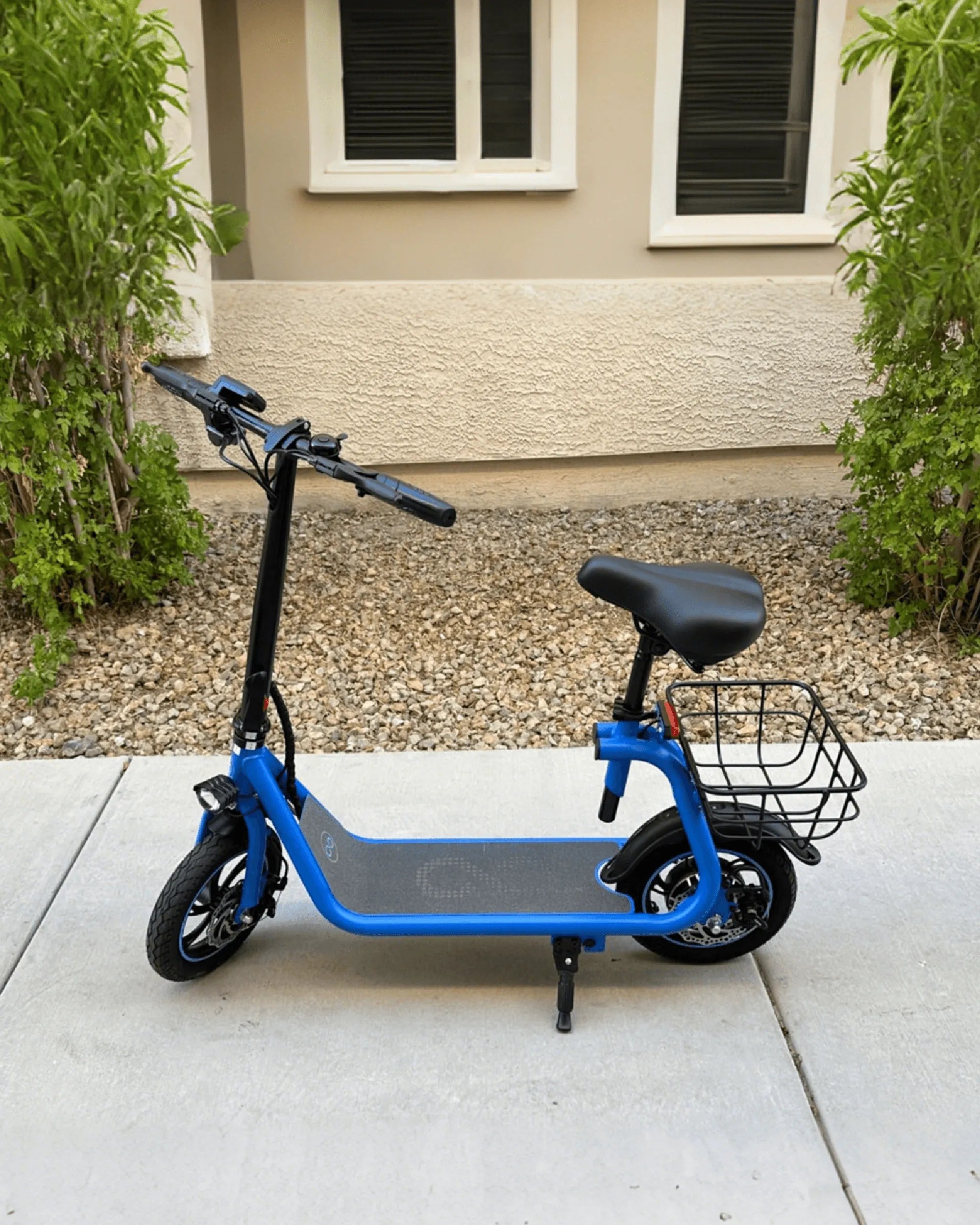
Introduction: Redefining Independence with Heavy-Duty Folding Mobility Scooters
For individuals seeking reliable mobility without sacrificing freedom, the heavy-duty folding mobility scooter represents a significant engineering achievement. This category solves a critical dilemma: how to obtain a stable, powerful scooter capable of handling diverse terrains and higher weight capacities, while still being practical for transport and storage. A heavy-duty folding mobility scooter is designed for daily, demanding use, merging the strength needed for shopping trips, outdoor paths, and household navigation with the convenience of a compact, foldable design.
This combination directly addresses real-world challenges. Users no longer must choose between a sturdy, long-range scooter and one that can fit in a car trunk or a closet. The integration of a robust frame, powerful motor, and a reliable folding mechanism creates a tool that genuinely expands personal independence. Brands like Gyroor, a leading electric mobility brand trusted by over 100,000 riders, engineer these solutions with a focus on certified safety, durability, and user-centric design, ensuring the vehicle is as reliable as it is powerful.
This article provides a comprehensive, data-driven analysis of heavy-duty folding mobility scooters. You will learn the defining specifications, understand the critical engineering behind the folding mechanism, and discover the non-negotiable safety features. We provide a detailed buyer's checklist and compare key specifications to empower your decision-making process for this important investment in mobility and freedom.
What Makes a Mobility Scooter "Heavy-Duty"? Key Specifications Explained
The term "heavy-duty" is defined by a set of concrete engineering specifications that collectively deliver superior performance, stability, and durability. Unlike standard or travel scooters, a heavy-duty model is built to handle more weight, tackle steeper inclines, and provide a smoother ride over uneven surfaces for extended periods. The core differentiators are weight capacity, motor power, battery range, and frame construction.
Weight capacity is the most immediate indicator. While light-duty scooters may support up to 250-300 pounds, true heavy-duty folding mobility scooters typically offer capacities between 300 and 400 pounds. This higher threshold isn't just about the user's weight; it accounts for additional cargo, such as groceries or bags, without compromising stability or motor strain. The frame is constructed from reinforced aluminum or steel alloys to handle this load consistently, ensuring the scooter's longevity and safe operation.
Motor power is the engine behind performance. Heavy-duty models are equipped with motors ranging from 500 watts to 800 watts or more. This increased wattage translates directly to better hill-climbing ability and maintained speed on inclines. A 500W motor can typically handle grades of 10-12 degrees, while more powerful motors manage steeper slopes. This power ensures the scooter remains effective in environments with curbs, ramps, and mild off-road conditions like packed gravel or grass.
Battery range and construction are equally critical. Heavy-duty use requires a larger energy reserve. These scooters feature high-capacity batteries, often 48V or 52V systems with 20Ah (Amp-hour) ratings or higher, enabling ranges of 15 to 30+ miles on a single charge under optimal conditions. The battery's quality is paramount; UL-certified battery packs, like those used by Gyroor, undergo rigorous testing for safety and are rated for 500+ charge cycles, ensuring long-term reliability and reducing fire risk.
Key Specifications Decoded: A Comparative Table
Understanding the difference between scooter classes helps clarify the value proposition of a heavy-duty folding model. The following table breaks down the typical specifications across categories.
| Feature | Light-Duty / Travel Scooter | Heavy-Duty Folding Scooter |
|---|---|---|
| Weight Capacity | Up to 250-300 lbs | 300 - 400 lbs |
| Motor Power | 250W - 350W | 500W - 800W+ |
| Typical Range | 10 - 15 miles | 15 - 30+ miles |
| Battery | 36V, 10-15Ah | 48V/52V, 20Ah+ |
| Frame Material | Standard Aluminum | Reinforced Alloy/Steel |
| Suspension | Basic or None | Front or Full Suspension Common |
| Primary Use | Indoor/Smooth Pavement | Indoor/Outdoor, Multi-Terrain |
The Critical Advantage: Engineering the Folding Mechanism
The folding mechanism is what transforms a capable heavy-duty scooter into a versatile tool for modern living. This feature is not an afterthought but a core component of the design, requiring robust engineering to ensure it remains secure when deployed and easy to operate. A well-designed fold allows the scooter to reduce its footprint by 50% or more, solving storage and transport challenges that often deter potential users from choosing a more powerful model.
There are generally two types of folding systems: manual and semi-automatic. Manual systems often involve a primary locking latch on the frame and a quick-release mechanism for the seat post. The user manually folds the handlebars and secures the chassis. Semi-automatic systems may use a single lever or button that, when engaged, allows the scooter to fold under controlled spring-assisted tension. Both systems aim for a process that takes less than 30 seconds and requires minimal physical effort, a crucial consideration for users with limited strength or mobility in their hands.
The durability of the folding joints and latches is paramount. On a heavy-duty folding mobility scooter, these components are subjected to significant stress from the weight of the frame and user. High-quality models use hardened steel pins, reinforced locking mechanisms, and protective covers to prevent dirt ingress. The goal is to achieve thousands of fold/unfold cycles without developing play or wobble, which could compromise riding safety and stability.
When folded, dimensions are key. An ideal heavy-duty folding mobility scooter collapses to a compact size, typically around 20-25 inches in width and 40-50 inches in length, with a height reduced by the folded handlebars and seat. This profile allows it to fit in the trunk of most mid-size and large sedans, SUVs, and vans. It also enables convenient storage in a closet, beside a desk, or in a small apartment, eliminating the need for a dedicated parking space or ramp.
Portability in Practice: From Home to Vehicle
The practical benefit of the fold is realized in daily scenarios. For transport, the process is straightforward: secure the brakes, fold the scooter, and lift it into the vehicle. Given the weight of a heavy-duty model (often 70-100 lbs), proper lifting technique is important. Users are advised to lift with their legs, not their back. Many models feature built-in handles or balanced weight distribution to aid lifting. For additional ease, accessories like lightweight ramps or lift-assist tools can be invaluable.
For home storage, the folded scooter can be wheeled (many have rear wheels that remain contact) or carried into a tight space. This eliminates tripping hazards and keeps the living area clear. For frequent travelers, some manufacturers offer heavy-duty travel bags with wheels, designed to protect the scooter during airline check-in or train travel, though users must always check specific carrier policies regarding lithium batteries.
The folding mechanism ultimately bridges the gap between home-based mobility and community engagement. It empowers the user to take their reliable, powerful scooter to the mall, the park, a friend's house, or on a road trip, ensuring their mobility solution is always at hand. This seamless integration into various aspects of life is the true value of a heavy-duty folding mobility scooter.
Safety, Reliability, and Peace of Mind: Non-Negotiable Features
When investing in a heavy-duty folding mobility scooter, safety and reliability are not mere features—they are foundational requirements. The scooter must perform predictably under load, in various weather conditions, and over time. Key safety systems include the braking system, lighting, stability features, and critically, the electrical and battery management systems. A failure in any of these areas can have serious consequences, making component quality and certification essential.
The braking system on a heavy-duty model must be robust. Most utilize a dual braking system, combining electronic (regenerative) brakes and mechanical (disc or drum) brakes. Regenerative brakes help slow the scooter while putting a small charge back into the battery, but mechanical brakes provide the definitive, fail-safe stopping power, especially important on declines or in wet conditions. The brakes should be responsive and require minimal hand pressure to engage fully.
Stability is engineered into the design. A longer wheelbase and a wider deck contribute to a stable platform. Many heavy-duty folding scooters include anti-tip wheels at the rear—small, swiveling wheels that deploy only if the scooter tilts too far backward, preventing a tip-over. Bright LED headlights, taillights, and turn signals (or reflective surfaces) are vital for visibility in low-light conditions, making the rider safer when crossing streets or in parking lots.
All-weather capability is enhanced by water resistance. A rating of IPX5, as found on Gyroor models, means the scooter can withstand water jets from any direction, making it safe to use in rain or to clean without damaging internal components. This protection guards against corrosion and electrical shorts, extending the scooter's lifespan and ensuring it's ready to use regardless of the forecast.
Why Certification and Warranty Matter
Certifications are objective validations of safety. The UL certification for the battery pack is perhaps the most critical. It signifies that the lithium-ion battery has been independently tested by Underwriters Laboratories for electrical, mechanical, and fire safety. It verifies protection against overcharging, short-circuiting, and thermal runaway. Using a scooter with a UL-certified battery, like those standard in Gyroor's lineup, drastically reduces the risk of battery-related incidents, a common concern with uncertified, generic alternatives.
A comprehensive warranty is a manufacturer's guarantee of reliability. A 1-year warranty that covers the frame, motor, battery, and electronic controller demonstrates confidence in the product's durability. It is important to understand what is included: labor, parts, and shipping. Brands with established customer service networks, like Gyroor with its support for over 100,000 riders, can provide quicker issue resolution, often with local service options or straightforward part replacements.
This combination of certified safety components and a strong warranty provides tangible peace of mind. It means the heavy-duty folding mobility scooter is an investment protected against premature failure, allowing the user to focus on mobility and independence rather than potential repair costs or safety worries.
Choosing Your Perfect Match: A Comprehensive Buyer's Checklist
Selecting the right heavy-duty folding mobility scooter requires a careful assessment of personal needs, lifestyle, and environment. This checklist is designed to guide you through the critical decision points, ensuring you match a scooter's capabilities to your specific requirements. Start by defining your primary use case: is it for indoor navigation, outdoor errands, recreational park paths, or a combination of all three?
Evaluate your daily terrain. Will you primarily be on smooth indoor flooring and paved sidewalks, or do you need to traverse cracked pavement, packed gravel, grass, or mild slopes? For rougher terrain, prioritize models with front or full suspension and pneumatic (air-filled) tires, which offer better shock absorption than solid tires. Also, consider the scooter's ground clearance; higher clearance prevents the undercarriage from scraping on bumps or transitions.
Calculate your required range. Consider the distance of your typical longest trip and add a 20-30% safety buffer. Manufacturer range estimates are for ideal conditions (smooth terrain, light load, moderate speed). Real-world range can be less. If your daily needs total 8 miles, a scooter with a 15-mile rated range is a safe minimum. For greater flexibility, aim for 20+ miles. Also, check the battery charge time; a 4-6 hour full charge is standard, but some offer faster charging options.
Assess comfort and adjustability. The seat is crucial. Look for a padded, swivel seat that is height-adjustable and has adjustable armrests. The tiller (steering column) should also be adjustable for angle and height to ensure a comfortable, ergonomic riding position. Test the controls: are the throttle and brake levers easy to reach and operate? Is the display console clear and readable? Finally, consider accessories you may need immediately, such as a storage basket, cup holder, or weather cover.
Gyroor's Heavy-Duty Folding Lineup: A Snapshot
As an example of engineering in this category, brands like Gyroor apply these principles across their models. Their heavy-duty folding scooters are designed to meet the demands of active users, incorporating the key features discussed. While specific models evolve, their design philosophy emphasizes the integration of UL-certified battery packs, IPX5 water-resistant construction, and robust folding mechanisms within a sturdy frame.
Typical specifications in their heavy-duty folding range include weight capacities meeting or exceeding 300 lbs, powerful motors for reliable hill climb, and ranges suited for extended daily use. The folding design is engineered for one-step operation, collapsing the scooter to a manageable size for transport. This approach reflects the brand's commitment to providing reliable, safe, and practical mobility solutions backed by a 1-year warranty and accessible customer support, trusted by a large community of riders.
Performance on Different Terrains and Conditions
A true test of a heavy-duty folding mobility scooter is its performance beyond smooth pavement. Its capability on various surfaces defines its utility. On packed gravel or dirt paths, the combination of power, torque, and tire type is key. Pneumatic tires provide necessary traction and cushioning, while the motor's torque ensures consistent power delivery without stalling. Suspension systems absorb vibrations, making the ride comfortable and controlled.
Grass poses a unique challenge due to rolling resistance. A heavy-duty scooter with a 500W+ motor can typically handle flat, dry grass. For damp or longer grass, more power is advantageous. It's important to maintain a steady, moderate speed and avoid sudden turns to prevent wheel slip. The scooter's weight and wide tires also help by providing better ground contact and stability on softer surfaces.
Incline performance is a core strength of heavy-duty models. The ability to climb slopes is measured in degrees or percent grade. A scooter capable of a 10-12 degree incline (approximately a 20% grade) can manage most standard curb ramps, driveway entrances, and gentle hills. More powerful models handle steeper grades. It's crucial to understand that climbing a hill will consume battery power at a significantly higher rate than flat travel, affecting your effective range.
Weather conditions demand specific features. As mentioned, IPX5 water resistance allows operation in rain. However, riders should exercise caution on wet surfaces as braking distances can increase. Tread patterns on tires help channel water away. In colder weather, lithium-ion batteries can experience reduced capacity. Storing and charging the scooter in a temperate environment (ideally between 50°F and 77°F) when not in use helps preserve battery life and performance.
Maintenance and Long-Term Care for Longevity
Proper maintenance ensures your heavy-duty folding mobility scooter remains a reliable companion for years. A simple weekly or pre-ride check can prevent most issues. Start with tire pressure if you have pneumatic tires; maintain the manufacturer's recommended PSI for optimal performance and battery efficiency. Inspect tires for wear, cuts, or embedded debris. Check that all lights and indicators are functioning correctly.
The braking system requires periodic inspection. Test the brakes at low speed in a safe area to ensure they engage smoothly and bring the scooter to a complete stop without pulling to one side. Listen for any unusual grinding or squealing noises, which may indicate worn brake pads. The mechanical brakes may need adjustment by a technician after extensive use.
Battery care is paramount for longevity. Use only the manufacturer-provided charger. Avoid depleting the battery to 0% regularly; try to recharge when it reaches 20-30%. For long-term storage (over a month), charge the battery to about 50-60% and store in a cool, dry place. Re-check the charge level every few months and top up if it drops below 30%. This practice helps preserve the battery's health over its 500+ cycle lifespan.
Keep the scooter clean, especially after use in wet or dirty conditions. Wipe down the frame, deck, and seat with a damp cloth. Avoid high-pressure water jets directly on connectors or the display. Periodically check the folding mechanism's latches and hinges for any signs of wear or looseness, and ensure they lock securely every time. Lubricate moving parts as recommended in the user manual. Following these steps will protect your investment and ensure consistent, safe operation.
Frequently Asked Questions (FAQ)
Q: What is the real-world range I can expect on a single charge?
A: Real-world range depends on load, terrain, speed, temperature, and battery age. As a rule of thumb, expect 70-80% of the manufacturer's stated range under typical mixed-use conditions. A scooter rated for 20 miles might reliably achieve 14-16 miles with a rider at average weight on a route with some inclines.
Q: How long does it take to fully charge the battery from empty?
A: Charging time is typically 4 to 8 hours for a full charge from 0% to 100%. Most heavy-duty models use 48V or 52V systems with larger batteries, hence the longer charge time compared to smaller scooters. Using the correct charger is essential; a faster, non-standard charger can damage the battery and void the warranty.
Q: Can a heavy-duty folding scooter be used on grass or gravel paths?
A> Yes, that is a key capability of a heavy-duty model. With sufficient motor power (500W+) and appropriate tires (pneumatic recommended), these scooters can handle firm, packed gravel and flat, dry grass. Performance on soft, wet, or uneven ground will be more limited, and speed should be reduced for safety and stability.
Q: What is the maximum incline it can handle safely?
A: Most heavy-duty folding mobility scooters can safely handle inclines between 10 and 15 degrees (approx. 18% to 27% grade). Always consult the specific model's manual for its rated incline capability. Climbing at the maximum grade will drain the battery quickly and should be done with caution, maintaining a steady speed.
Q: How do I maintain the folding mechanism to ensure it lasts?
A> Keep the latch points and hinges clean and free of dirt and debris. Periodically check that all locking pins engage fully and securely. If the mechanism has metal-on-metal contact points, a light application of a silicone-based lubricant (as per manual instructions) can prevent squeaking and wear. Avoid forcing the mechanism if it feels stuck; check for obstructions first.
Embrace Freedom Without Compromise
The evolution of the heavy-duty folding mobility scooter has effectively eliminated the historical compromise between strength and portability. Today's models offer the stability and power required for an active, engaged lifestyle while folding into a practical size for transport and storage. This dual capability makes them an unparalleled tool for reclaiming independence, enabling users to navigate their homes, communities, and beyond with confidence.
The decision to invest in such a device should be guided by data and an understanding of core engineering principles: weight capacity, motor power, battery certification, and a reliable folding design. Prioritizing safety features like UL-certified batteries, robust braking systems, and a solid warranty is non-negotiable, as these factors directly impact long-term satisfaction and security.
By applying the buyer's checklist and understanding the performance characteristics outlined, you are equipped to select a scooter that aligns perfectly with your individual needs and environment. The right heavy-duty folding mobility scooter is more than a vehicle; it is a gateway to greater participation in daily life, social activities, and personal adventures.
Explore engineered solutions that prioritize your safety and freedom. Browse the full Gyroor collection, featuring UL-certified, heavy-duty folding mobility scooters and other electric mobility vehicles, at gyroorboard.com to find the model that empowers your next journey.
500 cc Dirt Bike Top Speed: The Ultimate Power Analysis
Dirt Bike 250cc Top Speed: Real Data, Key Factors & Realistic Expectations