



Introduction: Understanding Hoverboard Age Appropriateness
Choosing a hoverboard isn't just about picking a color or the coolest model. The single most important factor is age appropriateness, a concept that blends manufacturer guidelines with a realistic assessment of a child's physical coordination, cognitive judgment, and safety awareness. This guide moves beyond simple age labels to provide a data-driven framework for parents and riders.
We will analyze how key product specifications—from certification to wheel size—directly impact safety for different developmental stages. The core thesis is clear: safe hoverboarding is achieved by pairing the right product features with the right level of parental guidance and supervision, tailored specifically to the rider's age and ability.
The Core Safety Pillars: What Makes a Hoverboard Suitable for an Age Group?
Before considering age, certain non-negotiable safety foundations apply to all hoverboards. Ignoring these pillars significantly increases risk, regardless of the rider's skill level. These are the technical benchmarks that separate reputable products from potentially dangerous ones.
UL 2272 Certification is Non-Negotiable. This standard, developed by Underwriters Laboratories, certifies that the electrical system and battery pack have passed rigorous tests for fire and electrical safety. Never purchase a hoverboard without this certification; it is the primary defense against the lithium-ion battery fires that plagued early models.
Wheel Size and Deck Design Dictate Stability. Larger wheels (8.5” or 10”) roll over cracks and bumps more easily, providing a stable ride for heavier or taller riders. Smaller wheels (6.5”) lower the center of gravity, which can benefit younger, smaller children but may struggle on rough terrain. A wide, textured deck is essential for secure footing.
Speed and Power Settings Must Be Manageable. A hoverboard with a maximum speed of 10 MPH is inappropriate for a beginner. Look for models with beginner or training modes that limit speed to 4-6 MPH. The motor's power (wattage) determines torque and hill-climbing ability; too much power for a light rider can lead to loss of control.
Age-Specific Recommendations & Parental Guidelines
Age is the primary filter for narrowing down hoverboard choices. The following recommendations are based on developmental milestones, average physical size, and risk-assessment capabilities. These are guidelines; individual maturity and experience must also be weighed.
Toddlers & Young Children (Ages 4-6): Generally Not Recommended
For most children in this age group, standard hoverboards are unsuitable. Their balance, core strength, and fine motor skills are still developing, making it difficult to master the subtle weight-shift controls. Furthermore, cognitive judgment and risk awareness are extremely limited.
Constant, direct supervision on a soft, enclosed surface like grass is an absolute must. The rare, specialized products marketed for this age are essentially low-speed (under 3 MPH), wide-based trainers with stabilization aids. Even then, the activity is less about transportation and more about balance practice under 100% adult control.
Kids (Ages 7-12): The Primary Market with Crucial Guardrails
This is the ideal starting age range for most children. They have developed the necessary coordination and can follow safety instructions. The focus here is on controlled introduction and skill-building.
Essential Product Features: Seek hoverboards with a dedicated beginner mode (≤ 6 MPH), smaller 6.5” or 8.5” wheels for a lower center of gravity, and a lower deck height. App connectivity for parental speed limiting and usage tracking is a highly valuable feature for this group.
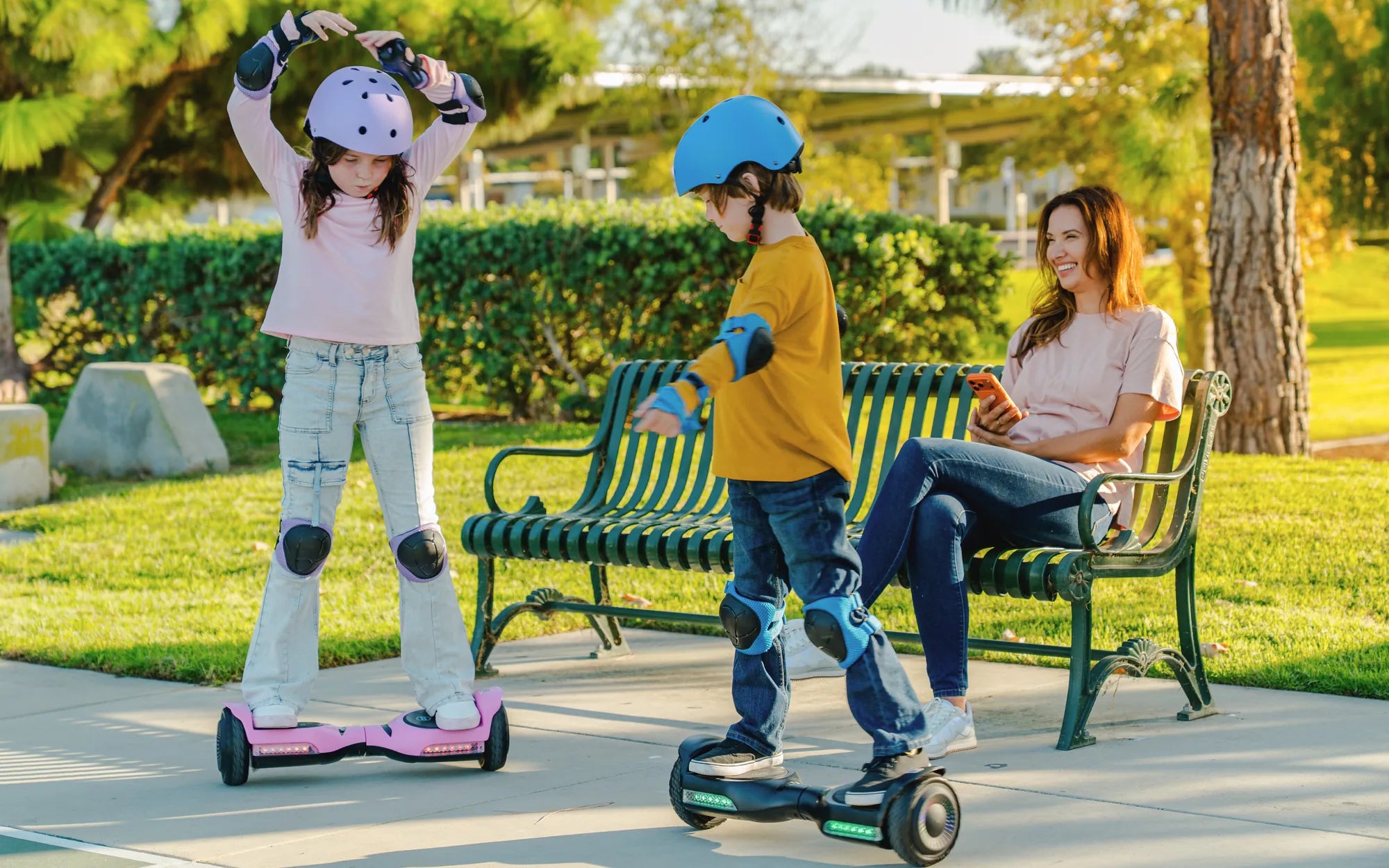
The Learning Protocol: Start with full safety gear—helmet, knee pads, elbow pads, and wrist guards. Practice in an open, flat, paved area free of traffic and obstacles. Hold the child's hands initially, focusing on mounting, dismounting, and gentle forward/backward movement before attempting turns.
Teens (Ages 13-17): Balancing Freedom with Responsibility
Teens can handle more capable hoverboards suited for commuting or recreation with friends. Speeds up to 10 MPH and larger 8.5” or 10” wheels for better terrain handling are appropriate. The parental role shifts from direct supervision to teaching responsibility.
Education must expand to cover road safety etiquette: obeying pedestrian rules, using sidewalks where legal and safe, avoiding roads with traffic, and using integrated lights and bells. They should also be taught proper battery management—charging on a hard surface, never leaving it charging unattended overnight, and storing it properly.
Consistent helmet use remains non-negotiable, even for short trips. A hoverboard at this age can be a tool for teaching accountability for one's own safety and the condition of the device.
Adults (18+): Commuters and Enthusiasts
For adults, hoverboards are legitimate personal transport devices. Key features shift toward performance and range: look for models with a 15+ mile range, higher weight limits (265 lbs+), all-terrain or off-road capabilities with pneumatic tires, and bright LED lighting systems for visibility.
Safety fundamentals do not disappear. UL 2272 certification is just as critical. Adults should model good behavior by wearing helmets, especially when commuting. Understanding local laws regarding where hoverboards are permitted (sidewalks, bike paths) is the rider's responsibility.
Beyond Age: Key Factors in Your Hoverboard Decision
Age is a crucial guideline, but it is not an absolute rule. A small 10-year-old may be better suited to a model recommended for a 7-9 year old, while a tall, athletic 12-year-old with skateboarding experience might safely handle a teen model. Consider these individual factors.
Physical Size and Weight: Always check the manufacturer's recommended weight range. A rider at the minimum weight may struggle to activate the sensors, while one near the maximum limit may experience reduced battery life and performance.
Individual Maturity and Risk Awareness: Does the child consistently follow safety rules with bicycles or scooters? Do they panic when they lose balance, or do they calmly recover? Judgment is as important as physical ability.
Prior Experience with Balance Sports: Children experienced in skiing, skateboarding, surfing, or even bicycling will typically adapt to a hoverboard's balance mechanism much faster than those with no such background.
Parental Preparedness Checklist: Have you identified a safe practice area? Have you purchased all necessary safety gear? Are you prepared to dedicate time to supervised practice sessions? Have you reviewed basic safety rules with your child?
Gyroor's Commitment to Safety Across All Ages
As a leading electric scooter and e-bike brand trusted by over 100,000 riders, Gyroor engineers its hoverboards with these age-specific safety challenges in mind. Our approach integrates critical safety features as core components of every model.
Every Gyroor hoverboard is powered by a UL-certified lithium-ion battery pack, rigorously tested for 500+ charge cycles. This addresses the fundamental fire safety concern for parents of all age groups, providing peace of mind from the inside out.
Recognizing that kids and commuters alike encounter puddles and dust, our hoverboards feature an IPX5 water-resistant rating. This design durability ensures the electronics are protected from water splashes, making the board more reliable for daily use by riders of any age.
We back our quality and safety engineering with a 1-year comprehensive warranty and US-based customer support. For parents investing in a quality product, this support system is essential, ensuring any issues are resolved promptly and safely.
Hoverboard Comparison: Key Specs by Age Group
The table below summarizes the primary specifications to look for when selecting a hoverboard for different age ranges. This serves as a quick-reference guide during your research.
| Age Group | Recommended Wheel Size | Max Safe Speed | Key Features to Prioritize | Parental Role |
|---|---|---|---|---|
| Ages 4-6 | Not Standardized | < 3 MPH (if any) | Extremely low speed, training wheels, wide base | Constant, direct supervision; balance aid |
| Ages 7-12 | 6.5” - 8.5” | 6 MPH (Beginner Mode) | UL 2272, beginner mode, app controls, lower deck | Active supervision; teaching protocol; gear enforcement |
| Ages 13-17 | 8.5” - 10” | 10 MPH | Larger wheels, brighter lights, good range | Teaching responsibility; road safety rules; charging oversight |
| Adults 18+ | 10” (All-Terrain) | 10-12 MPH | Long range (15+ mi), high weight limit, all-terrain tires | Modeling safe behavior; knowing/local laws |
FAQ: Hoverboard Age and Safety
Q: Can a 5-year-old use a hoverboard?
A: Generally, no. Standard hoverboards are not designed for toddlers. Their balance and judgment are not sufficiently developed. If considering an ultra-low-speed trainer, it requires 100% constant, hands-on adult supervision on a soft, enclosed surface.
Q: What is the safest hoverboard for a 10-year-old?
A: The safest hoverboard for a 10-year-old is one with UL 2272 certification, a beginner mode that limits speed to 6 MPH or less, robust parental controls via a companion app, and comes with a full set of safety gear. Brands like Gyroor that prioritize these certified safety features are a strong choice.
Q: Are hoverboards safe for teenagers to commute to school?
A> They can be a viable option with strict conditions. The teenager must wear a helmet, obey all pedestrian traffic rules, use sidewalks or bike paths only (never roads with cars), and the hoverboard must have adequate lighting for visibility. Parental assessment of the teen's responsibility and the safety of the route is essential.
Q: What safety gear is absolutely necessary?
A> A properly fitted helmet is the non-negotiable minimum for all ages. For beginners and children under 13, a full set—knee pads, elbow pads, and wrist guards—is strongly recommended to prevent common fall injuries. Wrist guards are particularly important as falls often involve putting hands out to brace.
Q: How do I know if my child is ready for a hoverboard?
A> Use the checklist in this guide. If your child is within the recommended age (7+), is physically coordinated (can ride a bike), demonstrates good judgment by following safety rules, and you are prepared to provide supervision, gear, and a safe practice area, they are likely ready to start learning.
Smart Choices for Safe Riding at Every Stage
The journey to safe hoverboarding begins with informed decision-making. Matching the rider's age, size, and maturity to a hoverboard with the right technical specifications—starting with UL 2272 certification—creates the foundation for enjoyment. Parental involvement, from hands-on teaching for kids to coaching responsibility for teens, is the critical element that brings this foundation to life.
Prioritize safety features like speed limits, app controls, and robust construction over flashy lights or extreme speed claims. The right hoverboard is a tool for fun and mobility, not a toy. By choosing wisely and establishing clear rules, you empower riders of all ages to enjoy this innovative form of personal transport safely and confidently for years to come.
Ready to find the right hoverboard for your rider's age and skill level? Explore a range of models engineered with certified safety, durability, and age-appropriate features. Browse the full Gyroor collection at gyroorboard.com.
Why Won't My Hoverboard Turn On After Charging? A Complete Troubleshooting Guide
Best Hoverboard Attachment: Transform Your Ride with Essential Upgrades