



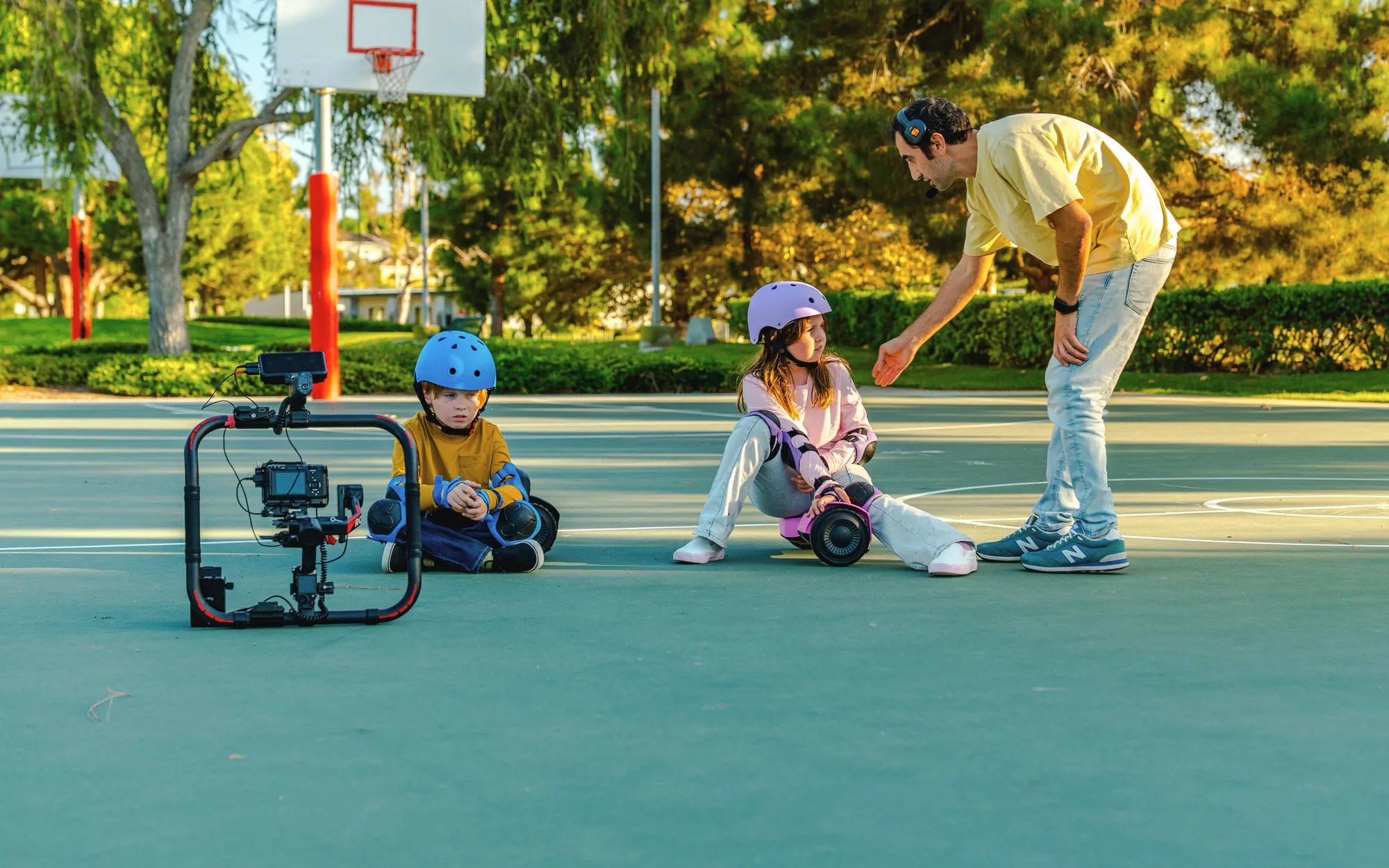
Your child is begging for a hoverboard, and you're wondering if they're ready. The excitement is real, but so are the safety concerns. This isn't just about picking a color; it's about assessing your child's coordination, maturity, and your ability to enforce safety rules. The hoverboard age range is a critical starting point, but it's only one piece of the puzzle. This guide will provide you with the data-driven insights and practical checklist you need to make an informed, safe purchase. You'll learn how to decode safety certifications, match features to your rider's skill level, and implement non-negotiable safety protocols before the first ride.
Understanding the Basics: What is a Hoverboard and How Does it Work?
Despite the name, a hoverboard does not actually hover. It's a two-wheeled, self-balancing electric scooter controlled by subtle shifts in the rider's body weight. Understanding its mechanics is the first step to assessing its suitability for your child. These devices are skill-based personal transporters, not simple toys.
The core technology relies on gyroscopic sensors and tilt mechanisms. When you lean forward, the sensors detect the shift and signal the electric motors to spin the wheels forward. Leaning back signals the motors to reverse or brake. This requires constant, subtle adjustments to maintain balance, engaging the rider's core muscles and proprioception.
Typical models have a speed range of 6 to 10 miles per hour, with some performance models reaching higher. Battery life dictates the range, usually between 6 and 12 miles on a single charge. The combination of balance, speed, and electric power means that choosing the right model for your child's hoverboard age range and skill level is paramount for safety.
The Core Question: What is the Recommended Hoverboard Age Range?
Most reputable manufacturers, including leading brands, recommend a starting hoverboard age range of 8 years and older. This is a general guideline based on average physical and cognitive development. However, age is a proxy for readiness. A mature, coordinated 7-year-old might be ready with intense supervision, while a less-focused 10-year-old may not be.
The decision hinges on two key areas: physical factors and cognitive-behavioral factors. Parents must evaluate both before making a purchase. Rushing this step is the most common mistake that leads to accidents and a quickly abandoned gadget.
Physical Factors: Weight, Height, and Coordination
Every hoverboard has a minimum and maximum weight limit, typically starting around 44 lbs (20 kg) and maxing out at 220 lbs (100 kg). A child must meet the minimum weight to properly engage the pressure-sensitive foot pads. Their height should also allow them to comfortably place their feet wide apart on the deck for stable control.
Core strength and overall coordination are non-negotiable. Riding requires constant micro-adjustments in posture. A child who struggles with balance on a bicycle or skateboard may need more time to develop these skills before tackling a self-balancing device. The physical demands place the hoverboard age range firmly outside the preschool years.
Cognitive and Behavioral Factors: Maturity and Risk Assessment
Can your child consistently follow multi-step safety instructions? Will they remember to wear a helmet every single time? A hoverboard rider must have the cognitive ability to assess their environment for hazards like cracks, slopes, and traffic.
Impulse control is critical. The temptation to test top speed or show off for friends must be managed by the rider's own judgment, reinforced by clear household rules. A child's ability to focus on the task at hand—riding—while ignoring distractions is a key determinant of their readiness within the suggested hoverboard age range.
Key Safety Standards and Certifications to Look For
Safety starts with the device itself. In the mid-2010s, poorly manufactured hoverboards earned a dangerous reputation for battery fires. This led to the creation of mandatory safety standards that are now the absolute baseline for any purchase.
Never, under any circumstances, buy a hoverboard that lacks these certifications. They are your primary shield against inherent product hazards. Prioritizing certified models is the most important action a parent can take when navigating the hoverboard age range.
UL 2272 Certification: The Non-Negotiable Standard
UL 2272 certification is the gold standard for hoverboard electrical and battery system safety. Underwriters Laboratories (UL) tests the entire unit—battery, charger, and electronics—for over 100 potential hazards, including electrical, mechanical, and environmental failures.
A hoverboard with this certification has undergone rigorous testing for overcharge, short circuit, and impact scenarios. This drastically reduces the risk of fire. Look for the official UL 2272 mark on the device and its packaging. Reputable brands like Gyroor build all their models with UL-certified battery packs as a foundational safety feature.
IP Ratings: Understanding Water and Dust Resistance
An IP (Ingress Protection) rating indicates how well the hoverboard is sealed against dust and water. The format is IPXY, where "X" is protection from solids and "Y" is protection from liquids. For hoverboards, the liquid rating is most crucial.
A rating of IPX4 means the board is protected from water splashes from any direction. IPX5, like the rating found on Gyroor hoverboards, means it can withstand low-pressure water jets from a nozzle, making it safe for riding on wet pavement or through puddles. This durability is essential for real-world use by kids within the active hoverboard age range.
Choosing the Right Hoverboard: A Parent's Buying Guide
With safety certifications confirmed, the next step is matching the hoverboard's specifications to your child's size, skill level, and riding environment. A one-size-fits-all approach does not work. The right features can enhance safety and the learning curve.
This checklist moves beyond marketing claims to the technical specs that directly impact usability and safety for your child's specific place in the hoverboard age range. Consider this your feature-by-feature evaluation framework.
Prioritizing Safety Features: UL-Certified Batteries and Beyond
While UL 2272 covers the system, inquire about the battery pack itself. High-quality brands use name-brand lithium-ion cells with a robust Battery Management System (BMS) that prevents overcharging, over-discharging, and short circuits. Teach your child safe charging habits: always use the provided charger, charge on a hard, non-flammable surface, and never leave it charging unattended or overnight.
Additional physical safety features include non-slip, textured foot pads for secure footing and bright LED headlights and taillights for visibility. These features are essential for all riders, but especially for those at the younger end of the hoverboard age range who are still mastering control.
Matching the Model to Your Rider: Size, Speed, and Terrain
Wheel size dictates terrain capability. Smaller 6.5-inch wheels are only suitable for perfectly smooth, indoor surfaces. For outdoor use on sidewalks and paved paths, 8.5-inch wheels are the minimum. Larger 10-inch wheels, like those on some Gyroor all-terrain models, can handle grass, gravel, and rougher pavement with greater stability.
Motor power, measured in watts per wheel, affects speed and hill-climbing ability. Dual 250W motors are standard; 350W offers more torque. Crucially, look for a model with a beginner or training mode that limits top speed, often to around 5-7 mph. This allows a new rider to build confidence safely. As skill improves within the hoverboard age range, speed can be increased via a companion app.
The Importance of Warranty and Support
A strong warranty is a signal of the manufacturer's confidence in their product's durability and safety. Look for a comprehensive warranty that covers parts, labor, and the battery for at least one year. This protects your investment from manufacturing defects.
Equally important is accessible customer support. When a hoverboard has an issue, you need prompt help from knowledgeable technicians. Brands like Gyroor back their products with a reliable 1-year warranty and support system, which is invaluable for troubleshooting any concerns that arise during the ownership period across the hoverboard age range.
Pre-Ride Essentials: Gear, Training, and Household Rules
The safest hoverboard is useless without the right rider preparation. Before the first ride, establish a non-negotiable safety protocol. This phase is as important as the purchase itself and sets the tone for responsible ownership.
Think of this as a pilot's pre-flight checklist. Skipping any step increases risk. This protocol is universal but must be strictly enforced, especially for riders at the lower end of the hoverboard age range.
Mandatory Safety Gear: More Than Just a Helmet
A CPSC-certified bicycle helmet is the absolute minimum. It must be worn and properly fastened every single time. Wrist guards are arguably the second most important piece of gear, as falls naturally lead to putting hands out, resulting in sprains or fractures.
Knee and elbow pads provide crucial protection for joints during falls. This full set of gear should be as automatic as putting on a seatbelt. Investing in high-quality, comfortable safety gear increases the likelihood your child will wear it consistently.
Supervised Training: The Learning Curve
Start indoors in a wide-open, carpeted area or outdoors on a flat, grassy lawn (which provides a softer fall). Ensure the hoverboard is in beginner mode. Have your child use a wall or sturdy railing to practice mounting, dismounting, and finding their balance point.
Hold their hand as they take their first few movements. Practice gentle leans to go forward, backward, and turning. Sessions should be short (15-20 minutes) to prevent fatigue, which leads to mistakes. Mastery of basic controls in a controlled environment is required before any independent riding.
Establishing Clear Household Riding Rules
Create and post a list of rules. These should include: No riding near roads, driveways, or parking lots. No riding at dusk or after dark. Stick to smooth, paved sidewalks and paths. Observe a strict speed limit. No passengers or tricks. An adult must be present and supervising. Charging is only done by an adult, in a designated safe area. Consistent enforcement is key.
Top Hoverboard Picks for Different Age Groups (2024)
To help visualize the differences, here is a data-driven comparison of hoverboard types suited for various stages within the broader hoverboard age range. These categories are based on skill level and typical developmental milestones.
| Category & Age Guide | Key Features | Ideal For | Example Specs (Gyroor) |
|---|---|---|---|
| For Beginners (Ages 8-10) | Beginner/Training Mode (≤7 mph), Stable 8.5" Wheels, Lightweight, Robust Construction | First-time riders, building core skills, controlled environments | Gyroor S5: 8.5" wheels, training mode, UL 2272, IPX5 rated |
| For Intermediate Riders (Ages 10-13) | Balanced Speed (up to 10 mph), All-Terrain Capability (8.5"-10" wheels), Bluetooth App for Control | Riders with basic skills, neighborhood cruising, varied pavement | Gyroor H5: 10" all-terrain wheels, 10 mph max, app connectivity, UL 2272 |
| For Teens & Adults (13+) | Higher Performance (10+ mph), Extended Range (12+ miles), Large All-Terrain Wheels, Advanced Features | Confident riders, longer commutes, rougher terrain, more power | Gyroor G5: 10.5" tires, up to 12.5 mph, 12-mile range, UL 2272, IPX5 |
Remember, these age brackets are guidelines. Always defer to your assessment of your child's individual maturity and physical competence within the hoverboard age range.
Frequently Asked Questions (FAQ) for Parents
Q: Are hoverboards safe for a 7-year-old?
A: Most manufacturers set the minimum hoverboard age range at 8+. A very mature, coordinated, and rule-following 7-year-old might be ready with extreme, hands-on supervision and a model with a strict beginner mode. However, waiting until age 8 or older is generally the safer, more recommended path.
Q: What is the single most important safety certification?
A: UL 2272 certification for the entire device is non-negotiable. This is your guarantee against fundamental electrical and battery fire hazards. Do not consider any model without it.
Q: How long does the battery last, and how do I charge it safely?
A: Average range is 6-12 miles per 3-4 hour charge. Always use the provided charger. Charge the hoverboard on a hard, non-flammable surface (not on a bed or carpet), in a well-ventilated area, and do not leave it charging unattended for extended periods or overnight. Unplug it once fully charged.
Q: Can my child ride a hoverboard on grass or up hills?
A> Only if the hoverboard is specifically designed as an "all-terrain" model with large wheels (10-inch or bigger) and powerful motors (350W+ per wheel). Even then, steep hills can be dangerous due to increased speed on descent and potential for loss of control. Stick to gentle slopes and avoid tall, thick grass.
Q: What should a good warranty cover?
A: A comprehensive warranty should cover defects in materials and workmanship for the main unit (often 1 year) and the battery (typically 6 months to 1 year). It should include parts and labor. A strong warranty, like Gyroor's 1-year coverage, reflects brand confidence and protects your investment.
Balancing Fun with Safety and Responsibility
The decision to buy a hoverboard is about more than granting a wish; it's an opportunity to teach responsibility, risk assessment, and the importance of safety protocols. The recommended hoverboard age range of 8+ is a useful starting point, but your judgment of your child's physical coordination and cognitive maturity is the final arbiter. Success hinges on the trifecta of a UL 2272-certified device from a reputable brand, mandatory full safety gear, and consistently enforced riding rules.
By choosing a brand that prioritizes certified safety, water-resistant durability, and strong customer support—like Gyroor with its UL-certified batteries, IPX5 rating, and 1-year warranty—you invest in peace of mind. A hoverboard, when introduced correctly, can be a thrilling tool that develops balance, coordination, and responsible independence. Ready to find the right model for your rider? Browse the full, safety-certified Gyroor collection at gyroorboard.com.
Hoverboard for 7-Year-Old: The Ultimate Guide to Safe and Fun Riding
Best Christmas Gift Ideas for Teenage Boys: Top Picks for 2023