



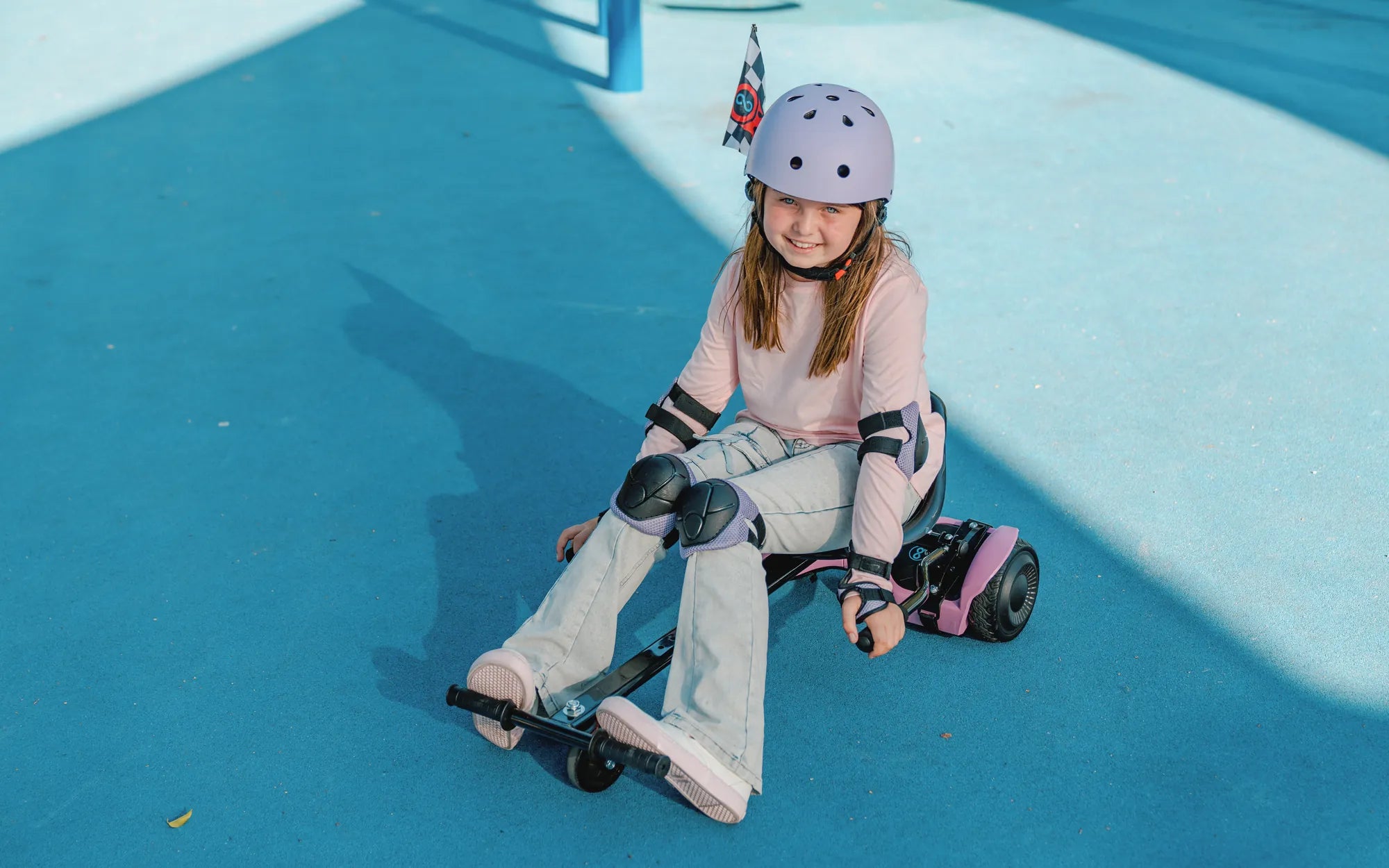
Introduction: Why a Hoverboard is the Perfect Gift for Your 8-Year-Old
Finding the right hoverboard for an 8 year old balances exhilarating fun with paramount safety. At this age, children develop crucial motor skills, balance, and coordination, making a self-balancing scooter an ideal tool for active, outdoor play. However, headlines about safety concerns can give parents pause. This guide cuts through the noise with data-driven advice, ensuring you select a model that prioritizes protection without dampening the joy of riding. We’ll reference industry-leading standards and brands, including Gyroor, a trusted name in personal electric transport known for its UL-certified batteries and robust designs trusted by over 100,000 riders.
Your child’s first hoverboard should be a gateway to confidence and adventure. The right model encourages physical activity, improves spatial awareness, and provides a fantastic sense of independence. This comprehensive guide will walk you through every critical consideration—from non-negotiable safety certifications to optimal speed limits and essential protective gear. Our goal is to equip you with the knowledge to make an informed purchase that delivers endless smiles and peace of mind.
What Makes a Hoverboard Safe and Suitable for an 8-Year-Old?
Not all hoverboards are created equal, especially for young riders. A safe and suitable model for an 8-year-old is defined by a specific combination of certifications, physical dimensions, and performance limits. These factors work together to ensure stability, manageable control, and built-in protection against common hazards. Ignoring any of these pillars can compromise the entire riding experience.
The core specifications for this age group differ significantly from those for teens or adults. Weight capacity, wheel size, and maximum speed must align with a child’s smaller stature and developing reflexes. Furthermore, construction quality dictates durability against the inevitable bumps and scrapes of learning. Let’s break down the absolute essentials you cannot afford to overlook.
UL 2272 Certification: The Non-Negotiable Safety Standard
UL 2272 certification is the most critical safety feature for any hoverboard, full stop. This standard, developed by Underwriters Laboratories, rigorously tests the entire electrical system—including the battery, charger, and motor—for over 100 potential failure points. It specifically guards against thermal runaway, the primary cause of the battery fires that plagued early models. A hoverboard for an 8 year old must have this certification; it is not a premium feature but a fundamental requirement.
Purchasing a non-UL 2272 certified model poses a significant fire risk. Reputable brands like Gyroor build all their models to meet and exceed this standard, using UL-certified battery packs tested for 500+ charge cycles. When shopping, verify the certification is legitimate; it should be clearly marked on the product, its packaging, and the official website. This is your first and most important filter.
Optimal Size, Weight, and Speed Limits
The physical dimensions of the hoverboard must fit your child. For an 8-year-old, wheel sizes between 6.5 and 8 inches in diameter are ideal. These provide a good balance of stability over minor cracks and maneuverability. The deck (footpad) should be wide enough for a child’s stance but not so large it becomes unwieldy. A weight capacity of up to 165 lbs is standard and provides a generous buffer for growth.
Speed is where limitation equals safety. A hoverboard for an 8 year old should have a maximum speed capped at 7-9 miles per hour (mph). More importantly, it must feature a dedicated beginner or training mode that further restricts speed to 4-6 mph. This allows your child to master balance and steering without the anxiety of sudden, excessive acceleration. Controlled speed is the cornerstone of a confident learning curve.
Build Quality and Ride Stability Features
Superior build quality translates directly to stability and longevity. Look for a hoverboard with a wide, textured, anti-slip footpad to ensure secure footing. The housing should be made from high-impact, flame-retardant ABS plastic. A low center of gravity, achieved through smart battery placement, makes the board less tippy and easier to control.
Wheel construction is equally vital. Solid rubber or airless rubber tires are best for beginners, as they require no maintenance and handle sidewalks well. The motor should provide smooth, responsive acceleration without jerky movements. Brands that prioritize these elements, such as Gyroor with its IPX5 water-resistant designs, engineer hoverboards that feel stable and predictable under a young rider’s feet.
Top Features to Look for in a Kid-Friendly Hoverboard
Beyond the baseline safety specs, several enhanced features dramatically improve the experience for both the child and the supervising parent. These functionalities add layers of control, durability, and convenience, transforming a simple toy into a reliable piece of personal electric mobility. Prioritizing these features ensures the hoverboard remains engaging and safe as your child’s skills progress.
Think of these as the upgrades that maximize fun while minimizing worry. From software that lets you set limits to hardware that withstands real-world play, these elements separate a good hoverboard from a great one for an 8-year-old.
Learning Modes and Parental Speed Control
A dedicated learning mode is indispensable. This software setting typically limits top speed and softens the acceleration curve, making the board less sensitive to lean. It allows a child to build muscle memory and confidence in a controlled environment. Some advanced models pair with a smartphone app for granular parental control.
Through an app, parents can often set a precise speed limit, monitor battery life, and even track the board's location. This remote management capability offers peace of mind, especially as children gain independence. Gyroor and other leading brands integrate these app-based controls to let parents tailor the riding experience to their child’s current ability level safely.
IPX5 Water Resistance for Worry-Free Play
An IPX5 water resistance rating is a game-changer for durability. This rating means the hoverboard can withstand water jets from any direction, making it resistant to puddles, wet grass, and accidental splashes. It protects the internal electronics from moisture-related damage and corrosion.
For an active 8-year-old, this feature means the fun doesn’t have to stop at the first sign of damp pavement. It adds a significant layer of resilience against common accidents and expands the usable riding environments. When a brand like Gyroor designs its hoverboards with an IPX5 rating, it signals an understanding of real-world, active kid use.
Battery Life and Range for Extended Adventures
Adequate battery life ensures play sessions aren’t constantly interrupted by recharging. For an 8-year-old, a hoverboard offering 1 to 2 hours of continuous use (or a range of 7 to 12 miles per charge) is more than sufficient. This typically translates to several days of casual riding between charges.
Look for models with clear battery indicator lights and a charger that features auto-shutoff for safety. A reliable battery management system (BMS) is also crucial, as it prevents overcharging and balances cell health. Good range supports longer outdoor adventures, keeping your child engaged and active.
The Gyroor Advantage: Engineered for Young Riders' Safety
When evaluating brands, Gyroor stands out for its specific engineering focus on safety and reliability, making its hoverboards a compelling choice for an 8-year-old. Their approach aligns perfectly with the core needs outlined in this guide: certified safety, robust construction, and user-friendly features. With a customer base of over 100,000 riders and a 4.5/5 average rating, their reputation is built on consistent performance.
Gyroor’s philosophy centers on creating products that parents can trust and children can enjoy without compromise. This is achieved not through marketing claims but through tangible, high-standard components and design choices. Let’s examine the specific advantages that make their hoverboards particularly suitable for young riders.
The foundation is the UL 2272 certified battery pack. Gyroor doesn’t just use certified batteries; they engineer their battery packs for longevity and stability, subjecting them to rigorous testing for over 500 charge cycles. This commitment virtually eliminates the risk of battery-related incidents, providing the fundamental safety required for a child’s product.
Furthermore, the IPX5 water-resistant design is a standard feature across their relevant models. This built-in durability means the hoverboard can handle the unpredictable nature of play, from dewy morning grass to sidewalk puddles. Coupled with a 1-year comprehensive warranty and responsive US-based customer support, Gyroor offers a complete package designed for peace of mind and lasting fun.
Essential Safety Gear and Riding Rules Every Parent Must Know
The safest hoverboard is only one part of the equation. Proper safety gear and established rules are equally critical in preventing injuries. This non-negotiable kit and rule set create a safe riding culture from day one. Never allow a child to ride a hoverboard, even in learning mode, without full protective equipment.
Consistency is key. Making gear mandatory for every single ride, no matter how short, instills it as a habit. Similarly, clear, unwavering rules define the boundaries of safe play. These protocols are your most active role in ensuring your child’s hoverboard experience remains positive.
The Non-Negotiable Safety Kit: Helmet, Pads, and More
A multi-impact helmet certified for skateboarding (ASTM F1492 or CPSC) is mandatory. It should fit snugly without wobbling. Knee pads and elbow pads are essential for protecting joints during falls. Wrist guards are arguably the most important piece after the helmet, as falling forward onto hands is the most common accident for beginners.
Ensure all gear is sized correctly and worn properly—straps secured, pads covering the kneecap and elbow point. High-visibility clothing or reflective stickers on the helmet and board are also wise additions for low-light conditions. This kit is a one-time investment that dramatically reduces the risk of serious scrapes, sprains, or fractures.
Choosing the Right Practice Environment
The first rides should happen in a controlled, hazard-free zone. An empty tennis court, a smooth garage floor, or a flat, paved driveway are perfect starting points. The surface must be smooth, dry, and free of gravel, sand, or significant cracks. Absolutely avoid hills, slopes, streets, or areas near swimming pools and traffic at the beginning.
As skills improve, you can gradually introduce new environments like flat park paths or sidewalks, always with direct supervision. Grass and uneven terrain are for advanced riders only, if the hoverboard’s specifications allow it. The right environment builds confidence and minimizes unpredictable challenges.
Establishing Household Hoverboard Rules
Set clear, non-negotiable rules before the first ride. Key rules include: always wearing full safety gear, never riding near roads or car traffic, no riding at dusk or after dark, no passengers, and no riding on public roads unless local laws explicitly permit it. A crucial rule is to always check the battery level and physical condition of the board (e.g., tire wear) before riding.
Establish that riding is a privilege contingent on following these rules. Constant adult supervision is required for younger children. Also, institute a “no indoor riding” policy to prevent collisions with furniture and falls on hard floors. These rules create a framework for responsible ownership.
Hoverboard Comparison: Key Features for an 8-Year-Old
This comparison table highlights the critical specifications and features to compare when shopping for a hoverboard for an 8 year old. Use it as a checklist to evaluate different models against the essential criteria for safety and age-appropriateness.
| Feature | Why It Matters for an 8-Year-Old | Ideal Specification / What to Look For |
|---|---|---|
| Safety Certification | Prevents battery fires & electrical hazards. | UL 2272 Certification (Mandatory). Confirm it's legitimately listed. |
| Max Speed & Modes | Ensures controllable, non-intimidating acceleration. | Max speed ≤ 9 mph. Must have a Beginner/Learning Mode (4-6 mph). |
| Weight Capacity | Ensures stability and supports growth. | At least 120 lbs, ideally up to 165 lbs. |
| Wheel Size | Affects stability over bumps and maneuverability. | 6.5” to 8.0” solid or airless rubber tires. |
| Water Resistance | Protects electronics from puddles & damp conditions. | IPX5 Rating or higher for real-world durability. |
| Battery & Range | Determines length of play sessions. | 1-2 hours ride time / 7-12 mile range. UL-certified pack. |
| Build & Deck | Provides secure footing and overall durability. | Wide, anti-slip footpads. High-impact ABS plastic body. |
| Parental Controls | Allows remote speed limiting and monitoring. | App-based controls for speed limits and battery info (a valuable plus). |
Frequently Asked Questions (FAQs) About Hoverboards for 8-Year-Olds
What is the right age for a hoverboard?
While many manufacturers list 8+ as the recommended age, it’s more about maturity, coordination, and the ability to follow safety rules than a specific birthday. An 8-year-old with good balance who listens to instructions is typically ready. Always assess your individual child’s physical ability and responsibility level first.
How long does it take for an 8-year-old to learn to ride?
Most children can grasp the basics of balancing, starting, stopping, and gentle turning within 30 to 60 minutes of practice in a beginner mode. Mastery of confident steering and handling slight inclines may take a few days of consistent practice. The learning curve is generally quick due to their low center of gravity.
Can hoverboards be used indoors?
It is strongly discouraged, especially for beginners. Hard floors offer no traction for falls, and collisions with walls, furniture, or stairs are likely. Riding on carpets can overheat the motors. The best and safest practice is to restrict hoverboard use to safe, open, outdoor areas.
How do I maintain and care for the hoverboard?
Regular maintenance is simple but crucial. Keep the hoverboard clean and dry; wipe it down with a damp cloth after riding on dusty or damp surfaces. Regularly check tires for wear or debris. Store it in a cool, dry place away from direct sunlight. Always use the manufacturer-provided charger and avoid leaving it plugged in for extended periods after a full charge.
Are hoverboards safe on hills or slopes?
Hoverboards are not designed for hills. Riding on an incline can cause loss of control, speed wobbles, and potential battery/motor strain. For an 8-year-old, riding should be strictly limited to flat, even surfaces. Even mild slopes can be dangerous for a beginner and should be avoided entirely.
Conclusion: Investing in Confidence and Joy
Choosing the right hoverboard for your 8-year-old is an investment in their active development and joyful independence. By prioritizing UL 2272 certification, age-appropriate speed and size limits, and pairing the board with mandatory safety gear, you create a foundation for countless hours of safe adventure. The goal is to foster confidence, coordination, and a love for outdoor play, all within a framework you can trust.
Brands that engineer with these principles at their core, like Gyroor with its UL-certified batteries, IPX5 water resistance, and robust warranty, remove the guesswork from your purchase. They demonstrate that safety and fun are not mutually exclusive. Your diligence in selecting the right model and establishing smart rules pays dividends in your child’s beaming smile and your enduring peace of mind.
Ready to find the perfect, safety-first hoverboard that will light up your child’s world? Explore a collection built on certified safety and durable design. Browse the full Gyroor collection and find the ideal model for your young rider at gyroorboard.com.
Hoverboard Scooter for Adults: The Ultimate Guide to Choosing the Best Ride
Can a Hoverboard Explode? Understanding the Risks and Safety Measures