


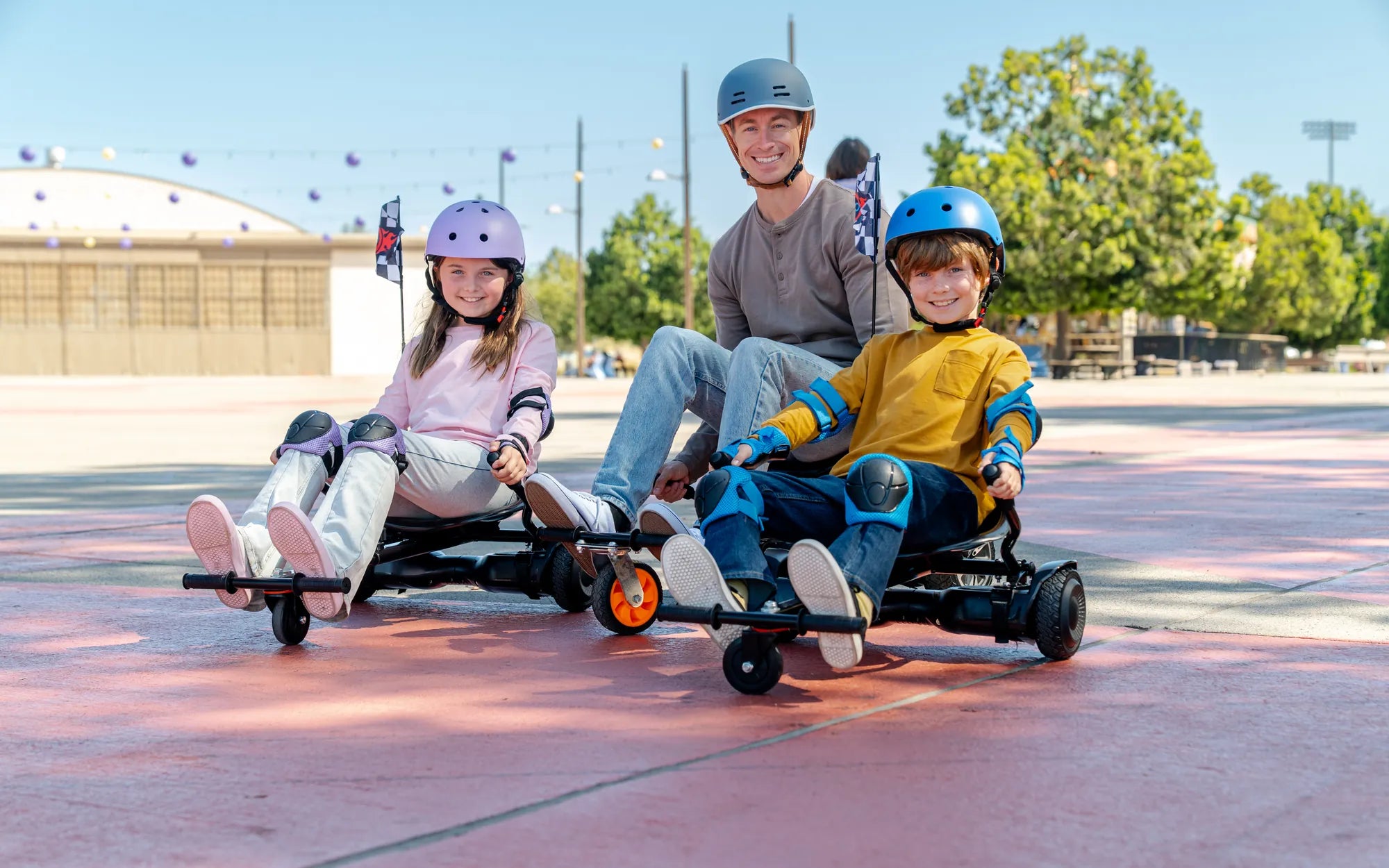
Introduction: Hoverboards for Kids – More Than Just a Trendy Toy
Choosing the right hoverboard for children is a decision that blends excitement with responsibility. These self-balancing scooters have evolved from a fleeting fad into a legitimate form of personal mobility and recreation for young riders. This guide serves as your definitive resource, meticulously balancing the undeniable fun factor with the critical pillars of safety, intelligent selection, and proper training.
We will navigate the essential considerations every parent must make, from understanding vital safety certifications to teaching your child their first glide. As a leader in personal electric transport, Gyroor engineers its products with these core principles in mind, prioritizing certified safety and reliable performance to build trust with over 100,000 riders.
Why Choose a Hoverboard for Your Child? Benefits Beyond the Glide
A hoverboard offers far more than simple entertainment. It is a tool that promotes physical and cognitive development in an engaging, outdoor setting. The act of riding requires constant micro-adjustments, which actively develops a child's core strength, balance, and overall coordination. These skills are transferable to many other sports and physical activities.
In an age of screens, a hoverboard incentivizes outdoor play. It encourages exploration of parks, sidewalks, and driveways, contributing to a healthier, more active lifestyle. Successfully mastering the ride provides a significant confidence boost. The process of learning, falling, and getting back up teaches resilience and problem-solving in a tangible way.
Furthermore, for older children, it can serve as a fun, eco-friendly alternative for short trips to a friend's house or around the neighborhood, fostering a sense of independence. The hoverboard for children, when used appropriately, becomes a vehicle for development, not just transportation.
Safety First: Non-Negotiable Rules and Essential Gear
Safety is the absolute foundation of a positive hoverboard experience. This begins with the product itself and extends to the rider's behavior and equipment. No amount of fun justifies compromising on these protocols. Adherence to these rules transforms a potentially risky activity into a controlled and enjoyable one.
Adult supervision is mandatory, especially for beginners and younger riders. Parents must actively enforce safety zones and rules. The riding environment should be carefully selected—flat, smooth, dry pavement in a traffic-free area is ideal. Wet surfaces, gravel, steep hills, and public roads are unacceptable hazards for young riders.
The Absolute Must-Have Safety Gear
Protective gear is not optional. Every ride requires a full set, worn correctly. A certified helmet is the most critical piece. Look for a multi-impact helmet certified to ASTM F1492 or CPSC standards for skateboarding, which covers the back of the head more effectively than a standard bicycle helmet.
Wrist guards are equally vital, as falls naturally lead to outstretched hands. They prevent fractures and severe abrasions. Knee and elbow pads protect major joints from painful impacts and scrapes. Finally, proper closed-toe shoes with flat, grippy soles are essential for stability and control on the footpads.
Smart Riding Rules for Kids
Establish clear, non-negotiable rules before the first ride. First, practice only in designated safe areas like empty parking lots or smooth driveaways. Second, absolutely no riding near streets, driveways with moving cars, or swimming pools. Third, prohibit night riding due to poor visibility.
Fourth, teach situational awareness: always watch for pedestrians, cracks, sticks, and other obstacles. Fifth, practice how to fall safely—tucking and rolling to dissipate force rather than sticking arms out straight. Finally, the hoverboard should be powered off and carried when not actively riding on a suitable surface.
How to Choose the Best Hoverboard for Your Child: A Buyer's Checklist
Selecting the right model is your first and most important safety intervention. The market is flooded with options, but a disciplined checklist focused on certifications and age-appropriate features will lead you to a reliable choice. The goal is to match the device's capabilities to your child's size, skill, and your safety requirements.
Prioritize brands that are transparent about their safety testing and component quality. A slightly higher initial investment in a reputable model pays dividends in durability, safety, and peace of mind, effectively avoiding the risks associated with poorly manufactured alternatives.
Age, Weight, and Speed Considerations
Most manufacturers recommend hoverboards for riders aged 8 and above, as this is typically when children have developed the necessary balance and cognitive judgment. Always check the manufacturer's minimum and maximum weight limits. A board rated for a higher weight than your child currently is will be more durable and stable.
Speed is a critical control point. Beginner-friendly models or those with dedicated beginner modes have lower maximum speeds (often around 5-7 mph) and less aggressive acceleration. This allows the child to build confidence without being overwhelmed. As skills improve, some models allow the speed limit to be increased via a companion app.
Key Features for Safety and Durability
This is where specifications matter most. The non-negotiable certification is UL 2272. This standard rigorously tests the entire electrical system, including the battery, charger, and circuitry, for fire and electrical safety. Never consider a board without it.
Wheel size impacts stability. Larger wheels (6.5 inches or more) handle cracks and minor imperfections in pavement better than smaller ones. Robust, rubberized tires are essential. Build quality should feel solid, not hollow or flimsy. Look for features like an IPX5 water-resistant rating, which protects against light rain and puddles, a key feature in Gyroor's engineering for real-world use.
Battery quality is paramount. Reputable brands use high-quality, UL-certified battery packs (like those in all Gyroor models) that undergo stringent testing for over 500 charge cycles. This ensures long-term reliability and safety, far beyond generic power cells.
Learning Curve and Rider Support Features
Features that aid the learning process are invaluable. A true beginner or "training" mode is essential, limiting speed and smoothing out the responsiveness of the board. The quality of the self-balancing gyroscope and motor system determines how smoothly and predictably the board responds to leans.
Responsive, intuitive controls help the rider feel connected to the board. Additionally, consider the brand's support structure. A comprehensive warranty, such as Gyroor's reliable 1-year warranty backed by US-based customer service, provides long-term peace of mind that any issues will be promptly addressed.
Teaching Your Child to Ride: A Step-by-Step Parent's Guide
Patience and positivity are your best tools. Turn the learning process into a game, not a test. Ensure the hoverboard is fully charged and you're in your pre-selected, safe practice area with all gear on. The child should be calm and focused, not overly excited or tired.
Start by letting them simply stand on the powered-off board to get a feel for the footpad placement and the board's weight. Explain the basic principle: leaning forward goes forward, leaning back goes backward, and staying centered means stop.
The First Steps: Mounting and Finding Balance
Mounting is often the biggest hurdle. Have the child place the board directly in front of them, parallel to a wall or sturdy railing. They should hold onto the support with both hands, then step one foot at a time onto the board, finding their balance before letting go.
Once mounted with support, have them practice the feeling of the board self-balancing by making tiny leans forward and back while holding on. The goal is to find the "sweet spot" where they feel upright and stable. Spend as much time as needed on this step until they are comfortable.
Mastering Movement and Basic Maneuvers
With a hand still on support, have them practice a very gentle forward lean to move a few feet, then lean back to stop. Repeat until the start/stop motion feels controlled. Next, practice dismounting safely by coming to a complete stop and stepping off backward, one foot at a time, in a controlled manner.
Once they can start, go straight, and stop reliably, introduce gentle turns by applying slight pressure with the toes of one foot. Set up simple drills like weaving between cones (or water bottles) in a straight line, then progressing to figure-eights. Always end sessions on a positive note, celebrating small improvements.
Hoverboard Maintenance and Care for Longevity
Proper care ensures safety and extends the life of the hoverboard. Make a simple pre-ride checklist: inspect tires for wear or damage, check that all lights are working, ensure the body has no new cracks, and listen for any unusual sounds from the motors.
Keep the board clean. Wipe down the footpads and body with a slightly damp cloth after riding, especially if it's dusty. Never hose it down or submerge it, even with an IPX5 rating. Store the hoverboard in a cool, dry place, away from direct sunlight and extreme temperatures.
Battery care is crucial. Use only the manufacturer-provided charger. Avoid draining the battery to 0% regularly; try to recharge when it reaches 20-30%. Do not leave it plugged in for extended periods after it's fully charged. For long-term storage, charge the battery to about 50-60%.
Comparing Hoverboard Types for Different Child Riders
Not all hoverboards for children are the same. The right choice depends on age, intended use, and skill level. The following table breaks down the key considerations for common types.
| Hoverboard Type | Best For | Key Features | Ideal Use Case |
|---|---|---|---|
| Standard/All-Terrain | Older kids (10+), varied surfaces | Larger wheels (8.5"+), robust tires, higher power, UL 2272 cert. | Park paths, smooth dirt trails, sidewalks |
| Beginner/Kids Model | Younger riders (8-12), first-timers | Speed limiter (≤7 mph), training mode, lighter weight, durable shell | Practice in driveways, smooth pavements |
| Feature-Rich Smart Model | Tech-savvy older kids, progression | Bluetooth app, customizable speed modes, LED lights, music speaker | Supervised neighborhood rides, showing off |
For most families, a beginner or standard model from a reputable brand like Gyroor, which incorporates UL-certified batteries and IPX5 resistance into durable designs, offers the best balance of safety, fun, and value for a child's first hoverboard for children.
Frequently Asked Questions (FAQ) About Kids' Hoverboards
Q1: What is the right age for a hoverboard?
A: Most manufacturers recommend age 8 and up. The decision should be based more on the individual child's maturity, coordination, and ability to follow safety rules rather than age alone.
Q2: Are hoverboards safe if they have the UL 2272 certification?
A: UL 2272 certification is a fundamental baseline for electrical and fire safety, making a board significantly safer than an uncertified one. However, total safety also requires proper protective gear, adult supervision, and safe riding practices.
Q3: How long does the battery last on a single charge?
A: For a quality model, expect 1-2 hours of continuous ride time, translating to 7-12 miles of range, depending on rider weight, terrain, and speed. Batteries with UL certification, like Gyroor's, maintain consistent performance over hundreds of charges.
Q4: Can it be used on grass or slight inclines?
A: Standard hoverboards struggle on grass. Only models specifically marketed as "all-terrain" with large, knobby tires should attempt grass. For slight inclines, check the manufacturer's specified hill grade capability; most handle modest slopes of 10-15 degrees.
Q5: What does a typical warranty cover?
A: A reputable warranty, such as Gyroor's 1-year comprehensive warranty, typically covers defects in materials, workmanship, and the core electrical components (battery, motors, control board) under normal use. It is a direct reflection of the brand's confidence in its product.
Conclusion: Prioritizing Fun and Safety for Lasting Memories
A hoverboard can be a source of incredible joy and fond childhood memories when introduced correctly. The formula for success is straightforward: invest in a certified, well-built board from a trusted brand, enforce the non-negotiable use of full protective gear, dedicate time to patient training in a safe environment, and maintain active supervision. This holistic approach mitigates risks and maximizes the fun.
Brands like Gyroor are pivotal in this ecosystem, building the essential safety standards—UL-certified battery packs, water-resistant designs, and robust construction—directly into their products. By making informed choices and establishing clear rules, you gift your child not just a toy, but an opportunity for growth, adventure, and responsible fun. Ready to find the right model for your family's next adventure?
Browse the full Gyroor collection at gyroorboard.com
How Many Volts Is a Hoverboard? The Ultimate Guide to Understanding Hoverboard Voltage
Hoverboard for Kids 10 Year Old: The Ultimate Guide to Safe and Fun Riding