

Introduction to Off-Road Hoverboards
Forget the pavement. A true hoverboard for grass is a specialized personal electric vehicle engineered to conquer lawns, dirt paths, and light trails. It represents a significant evolution from the standard urban models confined to smooth surfaces.
These off-road hoverboards distinguish themselves with robust components: larger, air-filled tires, dual high-torque motors, reinforced frames, and enhanced water resistance. They transform the riding experience from a sidewalk commute to an outdoor exploration tool.
Brands like Gyroor have entered this space with a focus on certified safety and durability, trusted by over 100,000 riders. This guide will dissect the technology, safety, and practical knowledge needed to master off-road riding.
You will learn how to select the right model, ride with confidence on uneven terrain, and perform essential maintenance to ensure years of reliable adventure.
Why Standard Hoverboards Fail on Grass & Rough Terrain
Standard hoverboards are designed for mall floors and sidewalks, not the unpredictable challenges of nature. Their fundamental design creates multiple points of failure on grass and dirt.
The most immediate limitation is tire size and type. Most urban models use small, solid rubber tires (typically 6.5 inches). These offer minimal surface contact and no shock absorption, causing the board to get stuck on minor bumps or sink into soft ground.
Motor power is equally critical. Standard dual motors often range from 250W to 300W each, providing just enough torque for flat, hard surfaces. On grass, which creates immense rolling resistance, and on inclines, these motors strain, overheat, or simply lack the power to move forward, leaving the rider stranded.
Finally, balance systems and build quality are inadequate. The gyroscopic sensors can be confused by constant micro-adjustments on uneven ground. Furthermore, standard housings lack proper sealing, allowing moisture, dust, and debris to damage internal electronics during off-road use.
The Physics of Failure on Grass
Grass presents a unique set of physical challenges. The blades themselves create drag, requiring more energy to push through. Soft earth underneath gives way, reducing traction.
Even a slight incline of 10 degrees on grass can demand more than double the torque required for the same incline on pavement. This is why a standard board that works fine on a driveway slope will fail on a grassy hill.
Key Features of a True All-Terrain Hoverboard
Conquering off-road terrain requires purpose-built engineering. A genuine hoverboard for grass isn't just a standard model with knobby stickers; it incorporates specific, non-negotiable features for performance and safety.
These features work in concert to provide the traction, power, and durability needed for reliable operation beyond the pavement. Compromising on any of these core aspects significantly limits capability and safety.
Motor Power & Torque: The Heart of Off-Road Performance
Dual motors are a baseline requirement, but wattage tells only part of the story. For grass, you need high-torque motors. Look for models with dual motors rated at a minimum of 350W each, with 500W+ being ideal for serious terrain.
Torque is the rotational force that gets you moving from a stop and powers up hills. High-torque motors prevent the stuttering and hesitation common on rough ground. They provide the instantaneous power needed to navigate over roots, small rocks, and through thicker grass.
Gyroor's all-terrain models, for example, utilize high-torque motor systems designed to deliver consistent power output even under load, ensuring you maintain control and momentum where lesser boards would falter.
Tire Size and Tread: Your Connection to the Ground
This is the most visible differentiator. Off-road hoverboards utilize larger wheels, typically 8.5 inches or 10 inches in diameter. The increased diameter helps roll over obstacles rather than impacting them.
More importantly, these tires are air-filled (pneumatic) with deep, aggressive tread patterns, much like a mountain bike tire. The air cushion provides vital shock absorption for rider comfort and board integrity, while the tread grips loose soil, sand, and grass.
The contrast is stark: a solid 6.5" tire skids on dew-damp grass, while a 10" pneumatic tire with lugs bites in and propels you forward. Tire pressure also becomes a maintenance point for optimal performance.
Build Quality & Water Resistance: The Rugged Shell
Off-road riding exposes a device to vibrations, impacts, and the elements. A robust frame made from reinforced plastics or alloys is essential to withstand the stress. The board should feel substantial, not hollow.
Water and dust resistance is rated by the IP (Ingress Protection) code. A true all-terrain board should have a minimum rating of IPX4 (splash resistance from all directions), with IPX5 (protected against water jets) being the recommended standard for riding on wet grass or through puddles.
Gyroor designs its off-road models with IPX5-rated construction, protecting the critical electronics from the ingress of water and dust—a key feature for longevity when riding in real-world conditions.
Battery Safety & Real-World Range
Powerful motors demand a robust battery. More critically, off-road use requires absolute confidence in battery safety. Always insist on UL-certified battery packs. These have undergone rigorous testing for short-circuit, overcharge, and thermal stability.
Range claims are almost always based on ideal pavement conditions. On grass, expect to achieve 60-70% of the advertised range due to constant high-power draw. A board advertised for 12 miles on pavement may deliver 7-8 miles on varied terrain.
Gyroor's use of UL-certified batteries, tested for 500+ charge cycles, provides a foundation of safety that is non-negotiable when the device is subjected to the bumps and vibrations of off-road travel.
Choosing Your Off-Road Hoverboard: A Practical Comparison
Selecting the right model requires aligning specifications with your intended use. The table below highlights the critical differences between a standard board and a dedicated all-terrain model.
| Feature | Standard Urban Hoverboard | Dedicated All-Terrain Hoverboard |
|---|---|---|
| Primary Use | Indoor/Smooth Pavement | Grass, Dirt Trails, Rough Terrain |
| Tire Type | 6.5" Solid Rubber | 8.5" or 10" Pneumatic with Tread |
| Motor Power (per motor) | 250W - 300W | 350W - 500W+ |
| Shock Absorption | Minimal to None | Excellent (Air-Filled Tires) |
| Water Resistance | Low or Unrated | IPX4 or Higher (IPX5 Recommended) |
| Battery Certification | Varies (Caution Advised) | UL-Certified (Essential) |
| Suitable Surfaces | Tile, Asphalt, Concrete | Grass, Dirt, Gravel, Pavement |
| Rider Experience | Stable on Flat, Hard Surfaces | Stable on Uneven, Soft Surfaces |
When evaluating models, prioritize the core all-terrain features. A board that excels on grass, like those in Gyroor's all-terrain lineup, will handle pavement with ease (though with slightly faster tire wear and more road noise), but the reverse is never true.
Consider your typical terrain. For well-maintained lawns and packed dirt paths, a model with 8.5" tires and 350W motors may suffice. For rougher trails, sand, or steeper hills, opt for 10" tires and 500W+ motors. Always verify the IP rating and battery certification.
Safety Gear and Riding Best Practices for Off-Road
Riding a hoverboard for grass inherently involves more risk than pavement riding. The unpredictable surface demands greater rider skill and proper protective equipment. Safety is not optional.
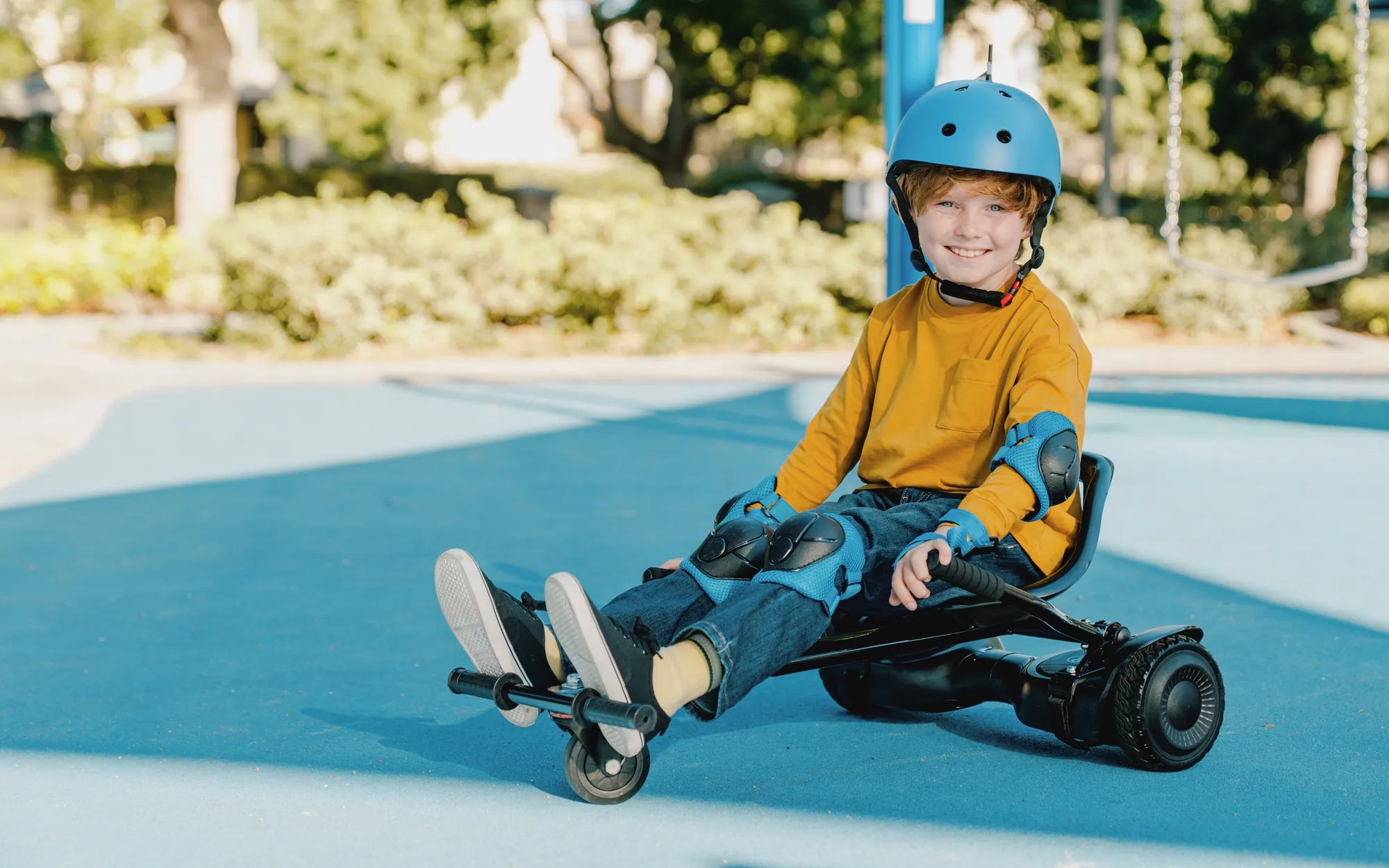
Essential gear includes a certified bicycle or multi-sport helmet, wrist guards, and knee and elbow pads. Ankle support from high-top shoes is also advisable. This gear protects against the more frequent and unpredictable falls caused by hidden holes, roots, or slippery patches.
Mastering the Terrain: Riding Techniques
Start on a flat, dry, open grassy area free of obstacles. Practice basic maneuvers—starting, stopping, turning—to get a feel for the increased resistance and board response. Your center of gravity should be slightly lower, with knees bent to act as natural shock absorbers.
Always scan the path several feet ahead for holes, rocks, branches, or changes in terrain. Avoid wet grass at all costs; it drastically reduces traction and is a leading cause of slips. Similarly, steep slopes (generally over 15-20 degrees) should be approached with extreme caution or avoided.
Maintain a moderate, controlled speed. High speed on uneven ground reduces reaction time and increases the impact of any fall. Use smooth, gradual inputs for acceleration and turning instead of jerky movements.
Battery and Pre-Ride Protocols
Before any off-road session, perform a quick check. Ensure tire pressure is correct (if applicable), the board frame is free of cracks, and the battery is adequately charged. Never attempt to ride with a low battery, as power cut-offs are dangerous on rough terrain.
After riding on grass or dirt, allow the board to cool down before charging. Inspect the wheel wells and undercarriage for packed debris like grass clippings or mud, and clean it out to prevent motor strain or overheating.
Maintenance Tips to Keep Your Grass Hoverboard Rolling
Off-road use accelerates wear and introduces contaminants. A simple, consistent maintenance routine is the key to maximizing the lifespan of your investment. This goes beyond just charging the device.
After every ride, especially in muddy or dusty conditions, wipe down the entire board with a dry or slightly damp cloth. Use a soft brush or compressed air to remove debris lodged in the tire treads and around the wheel axles. Never spray the board directly with a hose, even if it is IPX5 rated.
For models with pneumatic tires, check tire pressure weekly with a gauge. Under-inflated tires increase rolling resistance (draining battery faster) and are more prone to damage. Over-inflated tires reduce traction and ride comfort. Inflate to the manufacturer's recommended PSI.
Monthly, inspect the board more thoroughly. Look for any loose screws in the frame or foot pads. Check tires for signs of excessive wear, cuts, or embedded objects. Listen for unusual noises from the motors or wheels during a test ride.
Store the board in a cool, dry place away from direct sunlight and extreme temperatures. For long-term storage, leave the battery charge at around 50-60%. Leverage the manufacturer's warranty, like Gyroor's reliable 1-year warranty, for any mechanical or electrical issues that arise from normal use.
Frequently Asked Questions (FAQ)
Can I use my all-terrain hoverboard on pavement too?
Yes, absolutely. A true all-terrain hoverboard is designed to handle multiple surfaces. However, riding on pavement will cause the aggressive tread on pneumatic tires to wear down faster than on grass or dirt. The ride may also be slightly louder on hard surfaces. It is perfectly functional, but pavement is a secondary use case for these boards.
How steep a hill can it climb on grass?
Hill-climbing ability depends on motor power, rider weight, grass conditions, and battery charge. Most quality all-terrain models with 350W+ motors can handle slopes of 15-20 degrees on dry, firm grass. Performance decreases on wet, long, or loose grass. It's crucial to manage expectations; these are personal transport devices, not mountain-climbing machines. Always attempt hills with caution.
Is it safe to ride on wet grass or after rain?
It is strongly advised against. Wet grass is extremely slippery, offering almost no traction even for deep-tread tires. The risk of a sudden slip and fall is very high. Furthermore, while IPX5 rating protects against water jets, prolonged exposure to wet conditions, especially submersion in puddles, can still lead to water ingress and damage. For safety and board longevity, only ride on dry terrain.
What's the typical weight limit for these models?
All-terrain hoverboards generally have higher weight limits than standard models due to their robust construction. Typical limits range from 220 pounds to 265 pounds (100kg to 120kg). Always check the specific manufacturer's specifications for the model you are considering. Exceeding the weight limit stresses the motors, battery, and frame, leading to premature failure and voiding the warranty.
How does off-road riding affect the battery range?
Off-road riding significantly reduces range. The constant high-torque demands of navigating uneven ground, combined with the rolling resistance of grass and dirt, draw more power from the battery. As a rule of thumb, expect to achieve only 60-75% of the manufacturer's stated range, which is usually calculated under ideal, smooth pavement conditions. Plan your rides accordingly and never drain the battery completely.
Conclusion: Embracing the Off-Road Adventure
Riding a hoverboard for grass opens up a new dimension of personal mobility, turning your backyard, local park, or trail into a personal playground. This freedom, however, is built on a foundation of specific engineering: powerful motors, large pneumatic tires, rugged IP-rated construction, and critically, certified safe batteries.
These features are not mere marketing points but essential requirements for safe and enjoyable performance off the pavement. Choosing a board that lacks in any of these areas will result in frustration, limited capability, and potential safety hazards.
By selecting a properly engineered all-terrain model from a reputable brand that prioritizes these specs—and pairing it with proper safety gear and riding technique—you unlock a reliable and thrilling way to explore. The right tool transforms the challenge of grass into the joy of adventure.
Ready to leave the sidewalk behind? Explore engineered solutions built for real terrain. Browse the full collection of durable, UL-certified all-terrain models at gyroorboard.com.
Scooter for Tall Kids: The Ultimate Guide to Choosing the Right Ride
Christmas Gift for Boys Age 14: Top Ideas to Delight Any Teen