


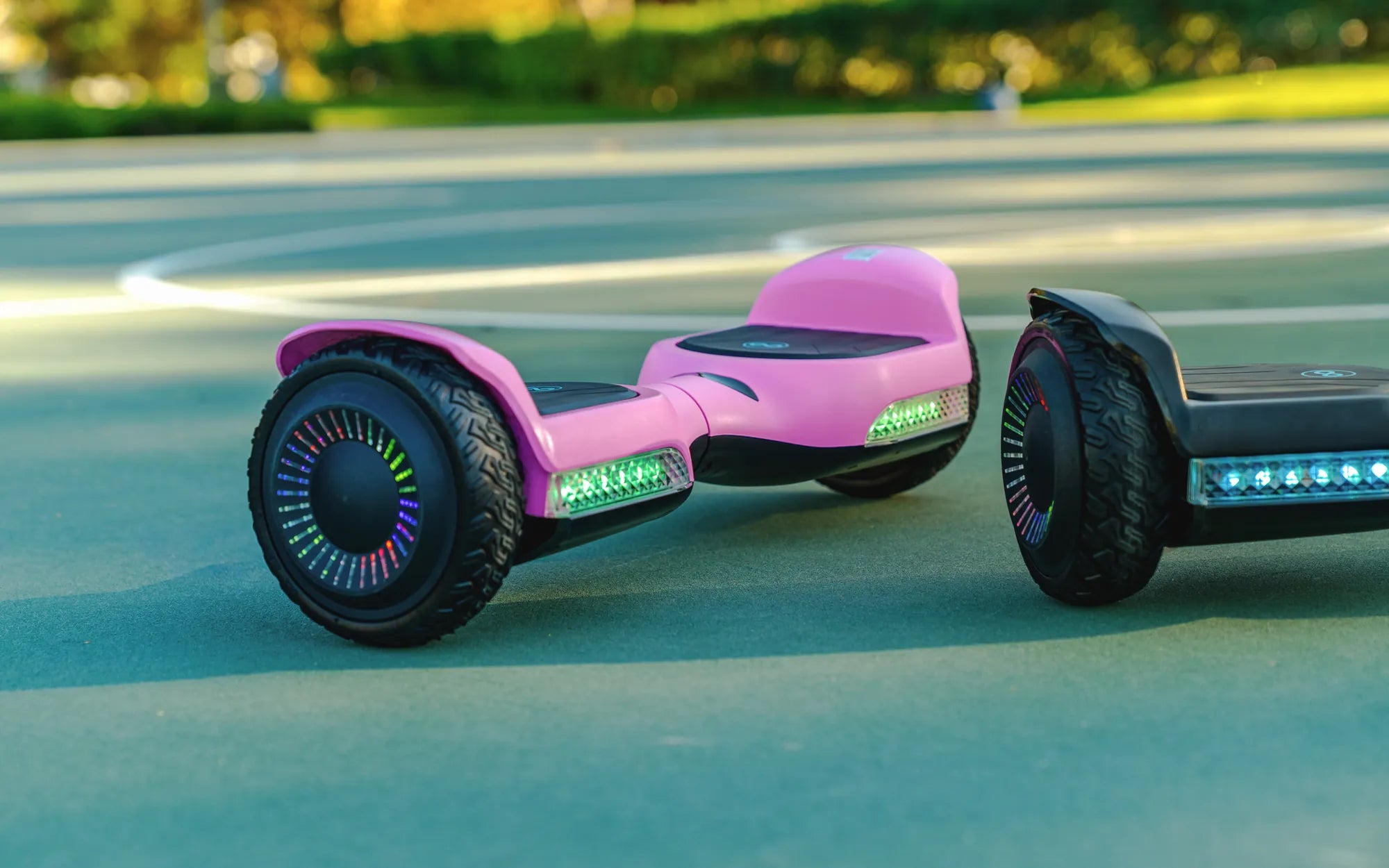
Introduction: Navigating the World of Kids' Hoverboards
Choosing a hoverboard for kids 4 years old involves balancing excitement with essential safety. Parents' primary concerns are legitimate: battery safety, age-appropriate speed, and durability for inevitable bumps. This guide cuts through the marketing to provide a factual, data-driven roadmap.
We will analyze if a four-year-old is developmentally ready and what specific features mitigate risk. You'll learn how to interpret safety certifications and evaluate product specifications. Leading brands like Gyroor engineer for these concerns, utilizing UL-certified battery packs and IPX5 water-resistant designs trusted by over 100,000 riders.
This ultimate guide delivers the clarity you need to make an informed decision. We provide a practical buyer's checklist, a detailed teaching protocol, and comparative data. The goal is to foster fun through confidence and meticulous care, ensuring the first riding experience is both thrilling and secure.
Is a Hoverboard Suitable for a 4-Year-Old? A Developmental and Safety Analysis
The core question isn't just about age, but a combination of physical readiness and product specifications. A typical four-year-old is developing gross motor skills, balance, and the ability to follow simple two-step instructions. These are foundational for learning to ride.
However, cognitive understanding of cause-and-effect is still emerging. This makes parental supervision and product safety features non-negotiable. The right hoverboard for kids 4 years old must be an extension of this supervision, with built-in limits.
Key considerations include the child's weight (most models require a minimum of 44 lbs) and height for comfortable stance. Coordination to lean for movement and balance while stationary are prerequisite skills. Not every four-year-old will be ready on the same timeline.
Therefore, suitability is a conditional "yes." It depends on pairing a child with demonstrated balance and listening skills with a hoverboard engineered for extreme beginner use. The product must have stringent speed governors, robust construction, and proven electrical safety.
Understanding the 4-Year-Old Rider: Motor Skills and Coordination
At this age, children can typically run, jump, and climb with coordination. They can stand on one foot for a few seconds. These skills translate to the basic balance required for a hoverboard. However, the fine motor control for nuanced weight shifting is still developing.
The learning curve involves translating a natural lean into a deliberate control mechanism. This requires practice and patience. A hoverboard with a very gentle response curve and a slow maximum speed is critical to match this developmental stage.
Non-Negotiable Safety Features for This Age Group
Specific features are mandatory for this young age bracket. First, a speed limiter capping maximum velocity at 5 mph or, preferably, lower. A dedicated beginner mode that restricts speed to 2-3 mph is ideal for initial practice.
Second, sturdy, wide foot pads with a textured, non-slip surface are essential for secure footing. Third, bright LED front and rear lights are crucial for visibility, even during daytime play. Finally, a robust frame design can withstand the tumbles expected during the learning process.
The Essential Buyer's Checklist: How to Choose the Best Hoverboard
Evaluating options requires a systematic approach focused on safety and durability. This checklist prioritizes features that protect your child and ensure the product lasts through the learning phases and beyond. Price should be a secondary consideration to verified safety credentials.
Always verify specifications from the manufacturer's official documentation, not just marketplace listings. Look for clear statements about certifications, weight limits, and speed settings. A reputable brand will make this data easily accessible.
The following table compares critical features parents must evaluate, using general industry standards and the benchmark set by trusted brands like Gyroor.
| Feature | Minimum Requirement for Age 4 | Why It Matters | Gyroor Example/Standard |
|---|---|---|---|
| Safety Certification | UL 2272 (Mandatory) | Ensures electrical system and battery pass rigorous fire & safety tests. | All models use UL-certified battery packs tested for 500+ cycles. |
| Maximum Speed | ≤ 5 mph, with beginner mode (≤ 3 mph) | Matches developmental coordination; reduces impact force from falls. | Models feature speed settings adaptable to skill level. |
| Weight Limit | Minimum capacity ~44 lbs; Max ~120 lbs | Must accommodate the child's low weight while allowing room to grow. | Designs accommodate a range from young beginners to older kids. |
| Wheel Size | 6.5 inches (optimal for stability & control) | Smaller wheels offer lower center of gravity and easier control for small riders. | Utilizes durable 6.5" or similar sized wheels for stable ride. |
| Water Resistance | IPX4 rating (splash-proof) minimum | Protects against wet driveways, morning dew, and accidental puddles. | IPX5 water-resistant design for greater protection against elements. |
| Warranty & Support | Minimum 1-year warranty | Provides recourse for manufacturing defects; sign of brand confidence. | Reliable 1-year warranty on all products. |
Prioritizing Safety Certifications: UL 2272 as the Baseline
The UL 2272 certification is not a premium feature; it is an absolute necessity. This standard, developed by Underwriters Laboratories, tests the entire electrical system—battery, charger, and circuitry—for overcharge, short circuit, and mechanical abuse.
It directly addresses the fire risks associated with early hoverboard models. Never purchase a hoverboard for kids 4 years old without this certification. Gyroor's commitment to using UL-certified battery packs in all models provides a fundamental layer of trust and safety.
Optimal Size, Weight Limits, and Adaptive Speed Settings
A hoverboard for a young child should have a lower deck height and smaller wheel diameter (like 6.5") to make mounting and dismounting easier and improve stability. The product's minimum weight activation must be lower than the child's weight—often around 44 lbs.
Speed settings are paramount. Look for models with at least two modes: a beginner/training mode (2-3 mph) and a standard mode (up to 5-6 mph). The ability to lock the device into the slowest mode via a parental control app or physical button is a significant advantage.
Durability and Weather Resistance for Real-World Play
The frame should be made of reinforced ABS plastic or composite materials capable of absorbing shock. An IP rating for water and dust resistance is critical. An IPX4 rating protects against splashes, but an IPX5 rating (like Gyroor's) is better, offering protection against sustained water jets from a nozzle.
This means the hoverboard can handle a damp sidewalk, a wet driveway, or an unexpected puddle without immediate risk of damage. Durability ensures the product survives the learning curve, providing long-term value.
The Gyroor Advantage: Engineering Trust for Young Beginners
When selecting a hoverboard for kids 4 years old, the brand's engineering philosophy is as important as the specs. Gyroor designs with a safety-first approach that directly addresses parental concerns. This builds a foundation of trust before the first ride even begins.
Their product development prioritizes the scenarios of real-world use by children. From the certification of core components to the resilience of the exterior, each feature is purpose-driven. This results in a product that supports both the child's fun and the parent's peace of mind.
With a customer base of over 100,000 riders and a 4.5/5 average rating, the proof is in sustained user satisfaction. This track record across North America and Europe demonstrates reliability that goes beyond marketing claims.
Certified Safety for Peace of Mind
The cornerstone is the UL-certified lithium-ion battery pack. This certification process involves extreme stress testing, effectively mitigating the foremost worry about battery-related incidents. It's a tangible investment in risk reduction that defines a responsible brand.
This is coupled with smart battery management systems that prevent overcharging and optimize battery life across 500+ charge cycles. For a parent, this means the power source of their child's toy is held to the highest available safety standard.
Built to Withstand the Learning Process
An IPX5 water-resistant rating is a practical feature for a child's hoverboard. It acknowledges that play happens outdoors, where conditions can change. This design protects the internal electronics from moisture during typical use.
Furthermore, the robust construction and reliable 1-year warranty signal a product built for longevity. It's engineered not just for the first successful glide, but for the hundreds of practice runs, gentle falls, and adventures that follow, ensuring the hoverboard is a lasting source of joy.
A Parent's Step-by-Step Guide to the First Rides
Preparation is key to a successful and safe introduction. This process is as much about building the child's confidence as it is about teaching mechanical skills. Rushing leads to frustration and increased risk. Plan for multiple short, positive sessions over several days.
Always begin with a full battery charge and a pre-ride inspection of the hoverboard (checking for loose parts or wheel damage). Ensure the device is set to its slowest beginner mode. Your calm, encouraging demeanor will set the tone for the learning experience.
The following steps provide a structured progression. Move to the next step only when the child demonstrates comfort and control at the current level. Mastery is not the goal of day one; familiarity and fun are.
Essential Safety Gear: The Non-Negotiable Kit
Protective gear is mandatory, not optional. The kit must include a properly fitted CPSC-certified bicycle helmet. Wrist guards are arguably the next most important, as instinct leads to putting hands out during falls.
Knee pads and elbow pads complete the set. Invest in quality gear designed for action sports; it will offer better protection and comfort. Make wearing the full kit an unbreakable rule before the hoverboard is even turned on.
Finding the Perfect Practice Environment
Choose a smooth, flat, and private hard surface. Ideal locations include:
- An empty tennis or basketball court.
- A smooth garage or basement floor.
- A wide, flat section of driveway or sidewalk with no traffic.
The area should be free of slopes, gravel, sand, and cracks. Grass is unsuitable for beginner hoverboard use, as it disrupts balance and can strain the motors. A controlled environment minimizes variables and allows the child to focus on balance.
Teaching Basic Controls and Building Confidence
Step 1: Mounting & Dismounting. With the board off, have the child practice stepping onto the foot pads, finding their stance (feet shoulder-width apart, near the wheels), and stepping off backward. Use a fence or your hands for stable support.
Step 2: Finding Balanced Power-On. Turn the board on in beginner mode. Help the child mount while you hold their hands. Have them focus on looking forward, not down, while they get a feel for the board's active balancing.
Step 3: Gentle Forward and Backward. Holding their hands or a waistband, guide them to make tiny leans forward to go, and tiny leans back to stop and reverse. Emphasize slow, deliberate movements. Practice stopping until it becomes instinctive.
Step 4: Introducing Turns. Explain that turning comes from pressing one toe down slightly. Practice gentle, wide turns. Avoid sharp spins initially. Celebrate small successes to build positive association and confidence.
Maintenance and Care for Longevity and Safety
Regular maintenance ensures the hoverboard remains safe and performs optimally. This is a shared responsibility between parent and, as they grow, the child. Simple, consistent habits prevent major issues.
After each use, wipe down the hoverboard with a dry cloth to remove dirt and debris. Periodically, check the wheel axles and undercarriage for wrapped hair, string, or large debris that could impede rotation. Inspect the tires for wear or damage.
Store the hoverboard in a cool, dry place, away from direct sunlight and extreme temperatures. Avoid storing it with a fully depleted or a 100% charged battery for extended periods; a charge level of around 50-70% is ideal for storage.
Battery Care and Charging Best Practices
Use only the manufacturer-provided charger. Charge the hoverboard on a hard, non-flammable surface in an open area—never on a bed, couch, or carpet. Do not leave it charging unattended for extended periods or overnight.
Allow the battery to cool down after a long ride before charging. Avoid completely draining the battery before each charge; partial, regular charges are healthier for lithium-ion batteries than full deep cycles. Following these steps preserves the battery's health and safety over its lifespan.
Frequently Asked Questions (FAQs)
Q1: What is the youngest recommended age for a hoverboard?
While some models are marketed for ages 4+, chronological age is less important than individual readiness. The child should meet the minimum weight requirement (usually 44+ lbs), have developed basic balance and coordination, and be able to understand and follow simple safety instructions. Always prioritize the product's safety features over age labels.
Q2: How fast do hoverboards for 4-year-olds typically go?
The safest models have a maximum speed capped at 5 mph or less. Crucially, they should include a beginner or training mode that limits speed to approximately 2-3 mph. This slow speed is essential for initial learning and allows for controlled practice in a safe environment.
Q3: How long does the battery last on a single charge?
For hoverboards designed for younger, lighter riders, expect a range of 6-10 miles per charge. In practice, this translates to about 60-90 minutes of intermittent playtime, which is typically ample for a young child's attention span and physical energy.
Q4: Can my child ride a hoverboard on grass or gravel?
No, especially not for beginners. Hoverboards require a smooth, hard surface for stable operation. Riding on grass, gravel, or uneven terrain can cause loss of balance, sudden jerks, and motor strain. Strictly limit riding to pavement, concrete, smooth asphalt, or indoor hard floors.
Q5: Are hoverboards with Bluetooth speakers safe for kids?
While not a safety hazard themselves, Bluetooth speakers can be a distraction. For a young beginner, focus should be entirely on balance and surroundings. It is advisable to disable the speaker function during learning phases. For older, experienced riders, keeping volume low to maintain environmental awareness is critical.
Conclusion: Building a Foundation for Safe and Joyful Riding
Selecting the right hoverboard for kids 4 years old is a significant decision that merges thoughtful product research with engaged parenting. The journey from unboxing to confident riding is built on pillars of certified safety, appropriate gear, supervised practice, and patient encouragement.
By choosing a hoverboard from a reputable brand that prioritizes UL-certification, durable construction, and age-appropriate speed limits, you invest in more than a toy—you invest in a safe platform for development and fun. The data-driven approach outlined here empowers you to move beyond marketing and evaluate true safety and value.
Gyroor exemplifies this philosophy, engineering products that meet rigorous standards to earn parent trust. The result is a riding experience where thrills are underpinned by security, allowing young children to explore movement and independence within a carefully constructed safety framework.
Ready to find the perfect, safety-first hoverboard for your young rider? Browse the full Gyroor collection, featuring UL-certified models designed for beginners, at gyroorboard.com.
Wide Scooter for Kids: The Ultimate Guide to Safety and Fun
Kids Scooter Event Stand Outdoor: A Fun-Filled Adventure for Young Riders