


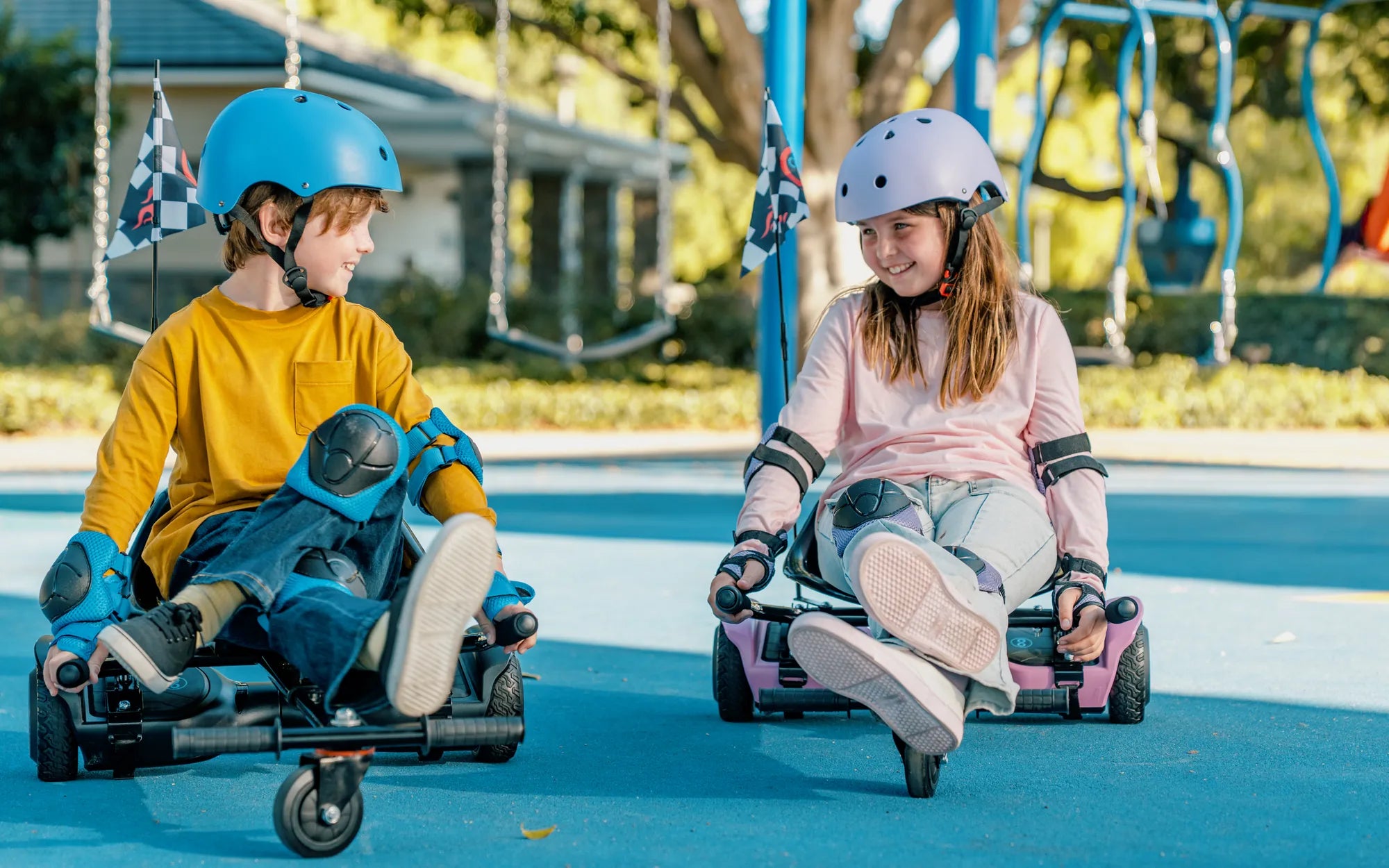
Choosing the right hoverboard for kids and adults means balancing exhilarating fun with uncompromising safety. This guide cuts through the hype to deliver the facts you need. We'll explore how self-balancing scooters work, provide a detailed buyer's framework, teach you to ride confidently, and establish essential safety rules. Whether you're a parent researching a first board or an adult seeking convenient personal transport, understanding the technology, key features, and safe practices is crucial for a rewarding experience. This is the ultimate guide to fun and safety for riders of all ages.
The Hoverboard Renaissance: From Novelty to Mainstream Mobility
The modern hoverboard, technically a self-balancing scooter, has evolved dramatically. Early models faced scrutiny, but today's devices from reputable brands represent a mature category of personal electric transport. They offer a unique blend of convenience, fun, and practicality for short commutes, neighborhood exploration, or recreational use.
This resurgence is driven by improved battery technology, advanced gyroscopic systems, and stringent safety standards. Riders now enjoy smoother control, longer ranges, and more durable designs. The market caters to distinct audiences, with specialized models for young learners and performance-oriented options for teens and adults.
Brands like Gyroor have been instrumental in this shift, focusing on UL-certified components and robust construction. Trusted by over 100,000 riders across North America and Europe, such brands prove that with the right engineering and safety focus, hoverboards are a viable and enjoyable mobility solution for a wide age range.
The key to embracing this technology lies in informed selection and proper education. Moving beyond its novelty phase, the hoverboard now stands as a testament to how micro-mobility can be both accessible and safe when approached correctly.
What is a Modern Hoverboard? Beyond the Sci-Fi Hype
A modern hoverboard is a two-wheeled, battery-powered, self-balancing personal transporter. Despite the name inspired by science fiction, it does not actually hover. Instead, it uses a complex system of sensors and motors to maintain balance and respond to the rider's movements. The rider stands on two foot platforms situated between the wheels.
Direction and speed are controlled entirely by body lean. Leaning forward engages the motors to propel the board forward; leaning back causes it to reverse. Turning is achieved by applying differential pressure—pushing one foot forward slightly more than the other causes the board to pivot. This intuitive control mechanism is what makes learning both challenging and rewarding.
The core technology relies on gyroscopic sensors and tilt sensors. These components detect the minute changes in angle and pressure from the rider's feet hundreds of times per second. This data is processed by a central logic board, which instantly commands the electric motors in each wheel to adjust speed and rotation accordingly to maintain balance.
Understanding this fundamental operation is the first step to safe riding. It dispels the magic and reveals the engineering, emphasizing that the device responds to deliberate, controlled input. This knowledge builds respect for the machine and forms the foundation for all subsequent riding skills and safety considerations.
Key Components and How They Work
Every hoverboard is built around several critical components that work in unison. The gyroscopic sensors are the core of the self-balancing system. They measure the board's orientation and angular velocity, providing constant data on its tilt. The pressure pads on the foot platforms contain sensors that detect where and how much force the rider is applying.
The main logic board or motherboard acts as the brain. It receives data from the gyroscopes and pressure pads, calculates the necessary adjustments, and sends commands to the motors. The electric motors, one housed inside each wheel, are brushless DC motors. They receive power from the battery and provide the torque needed for movement, braking, and balancing.
The battery pack is the power source, typically a lithium-ion configuration. Its capacity, measured in watt-hours (Wh), directly determines the board's range. High-quality boards use battery cells from reputable manufacturers with built-in protection circuits. The LED lights serve both as visibility features for safety and aesthetic elements. The outer shell, or chassis, protects all these internal components from impacts and the elements.
This synergy creates the riding experience. When you lean forward, the pressure pads and gyroscopes signal the logic board, which commands the motors to spin faster, moving the board forward to "catch" you and keep you upright. It's a continuous, dynamic process of micro-adjustments that creates the sensation of effortless gliding.
Choosing the Right Hoverboard: A Buyer's Guide for Every Age
Selecting a hoverboard is not a one-size-fits-all decision. The ideal model depends primarily on the rider's age, weight, skill level, and intended use. A wrong choice can lead to frustration, increased risk, or a device that is quickly outgrown. A structured evaluation based on clear criteria ensures the board is a source of joy, not concern.
First, consider the rider's age and weight. Manufacturers specify minimum and maximum weight limits and recommended age ranges for a reason. Exceeding the weight limit strains the motors and battery, reducing performance and safety. For children, a board designed for lighter riders offers more appropriate power delivery and control sensitivity.
Second, define the primary use case. Will it be used mostly on smooth indoor surfaces, paved sidewalks, or occasionally on grass and gravel? Wheel size and motor power are key here. Larger wheels (8.5-10 inches) handle minor terrain irregularities better than smaller ones. Dual motors with higher wattage (e.g., 350W per wheel) provide more torque for slopes and uneven ground.
Finally, prioritize certified safety features above all else. This is non-negotiable. Look for explicit mention of a UL 2272 certification for the entire board, which includes rigorous testing for the electrical system and battery. This certification is your best defense against the safety issues that plagued early-generation boards. Complement this with a robust warranty from a known brand.
For Kids (Ages 6-12): Safety and Manageable Power
When shopping for a child, safety and control are paramount. Seek models specifically marketed for kids or as beginner boards. These typically have a lower maximum speed, often capped at 6-7 mph, which can be further limited by a beginner mode activated via a companion app or button. This allows them to learn in a controlled environment.
The construction should be durable to withstand the inevitable learning tumbles. A reinforced ABS plastic shell and rubberized bumpers can absorb minor impacts. Softer, rubberized tire materials provide better grip and a slightly smoother ride on driveways and playground asphalt. Look for a board with a wide, stable wheelbase to make balancing easier for smaller riders.
Parental control features are a significant advantage. Some models offer apps that allow parents to set a permanent speed limit, monitor battery level, and even create a geofence. While not a substitute for supervision, these tools provide an extra layer of management. The board should also be appropriately sized; a overly large board will be difficult for a child to control or carry.
The goal is to build confidence. A kid-friendly hoverboard should feel responsive but not twitchy, powerful enough to be fun but not intimidating. It should be a tool for developing coordination and responsibility, with all the necessary safeguards built into its design from the start.
For Teens and Adults: Performance and Range
Older riders generally seek more performance, range, and advanced features. For teens and adults, look for a higher speed capability, typically between 9-12 mph, which is suitable for keeping pace with bicycle traffic on paths. More powerful dual motors (400W+ each) are essential for handling steeper inclines and providing a more responsive ride.
Range becomes a critical factor. Adults using a hoverboard for commuting or longer recreational rides should look for a battery providing 12-18 miles of range per charge. Remember that real-world range is affected by rider weight, terrain, temperature, and riding style. A larger battery capacity (measured in Wh) is the primary indicator of potential range.
Additional features enhance the experience. Bluetooth speaker systems allow for music playback, while smartphone app connectivity can provide diagnostics, firmware updates, and customizable LED light patterns. Some premium models offer all-terrain capabilities with knobby, air-filled tires that can tackle grass, dirt paths, and gravel.
The build quality must match the increased demands. The board should feel solid and well-put-together, with minimal flex. A clear IP water resistance rating (like IPX5) is highly recommended for real-world use, protecting against puddles and light rain. For this demographic, the hoverboard transitions from a toy to a legitimate personal transport device, and its specifications should reflect that purpose.
The Gyroor Difference: UL-Certification and Built-to-Last Design
As a leading electric mobility brand, Gyroor exemplifies the standards consumers should demand. The cornerstone of their approach is the use of UL-certified battery packs. This certification means the battery has undergone extensive testing for electrical, mechanical, and environmental safety, including overcharge, short circuit, and crush tests. It is the single most important feature for preventing fire hazards.
Beyond the battery, Gyroor designs for real-world durability. An IPX5 water-resistant rating means the board's casing can withstand low-pressure water jets from any direction. This protects the internal electronics from splashes, puddles, and light rain, significantly expanding where and when you can ride safely. It's a feature that distinguishes serious transportation tools from fair-weather toys.
Their commitment is backed by a reliable 1-year warranty on the entire vehicle, providing peace of mind and reflecting confidence in their manufacturing quality. With over 100,000 riders trusting their products, Gyroor's focus on safety-certified components, robust construction, and rider-centric design offers a clear blueprint for what a high-quality, responsible hoverboard should be.
When evaluating any brand, use these benchmarks: certified battery safety, meaningful water resistance, clear warranty terms, and a reputation for quality. These factors collectively contribute to a product's longevity and, more importantly, the rider's safety day after day.
Mastering the Ride: A Step-by-Step Learning Progression
Learning to ride a hoverboard is a skill that requires patience and practice. The key is to progress through stages in a safe, controlled environment—a flat, smooth, open area like an empty parking lot, tennis court, or garage is ideal. Never attempt to learn on grass, gravel, or near traffic. Always wear full protective gear during every practice session.
Start by simply turning the board on and getting a feel for its balance mechanism while holding onto a wall, fence, or sturdy chair. Place the board on level ground and step back to observe how it self-corrects and stays level. This initial familiarity reduces the intimidation factor. The first goal is not to travel, but to understand the point of balance.
Commit to short, frequent practice sessions rather than long, frustrating ones. Fifteen to twenty minutes of focused practice is often more productive than an hour of struggle. Celebrate small victories, like successfully mounting or taking two consecutive steps forward. Confidence builds incrementally with each successful maneuver.
Remember that adults and children learn differently. Children often have a lower center of gravity and less fear, which can help, but they may also have less leg strength for control. Adults may overthink the process. The fundamental steps, however, remain the same for all first-time riders, emphasizing safety and gradual skill acquisition.
Mounting, Dismounting, and Finding Your Balance
Mounting is the first major hurdle. Place the board on level ground. With one hand on your support (wall/chair), place one foot firmly on the corresponding footpad. The board may wiggle—this is normal. Keep your weight on your grounded foot. When ready, quickly but smoothly transfer your weight onto the board and bring your second foot up to its pad. Stand upright, looking forward, not down at your feet.
Initially, hold onto your support and simply feel the board's balancing act. Try shifting your weight slightly from your toes to your heels. The board will respond with small forward and backward motions. The goal here is to find the "sweet spot" where the board is stationary and balanced. Your ankles and lower legs are the primary control points, not your entire body.
To dismount safely, always step off backwards. Choose which foot will move first. Shift your weight to the opposite foot, then lift and step backwards onto the ground with your chosen foot. Follow immediately with your other foot. Stepping off forwards is a common cause of falls, as the board may continue moving forward. Practice mounting and dismounting dozens of times until it becomes a fluid, confident motion.
This foundational stage is about building muscle memory and trust in the device. Spend ample time here. Once you can mount, stand balanced without support for 30 seconds, and dismount safely, you have conquered the most critical phase of learning.
Basic Maneuvers: Going Forward, Backward, and Turning
With balanced standing mastered, initiate forward movement. While looking ahead, gently lean forward from your ankles. Imagine your chest moving slightly over your toes. The board will begin to roll. Start with tiny, controlled leans. To stop, simply return to an upright, neutral stance. The board will decelerate and stop. Practice going forward 10 feet and stopping smoothly.
For backward movement, the process is the same but in reverse. Lean back slightly from your ankles, keeping your back straight. Look over your shoulder frequently to ensure your path is clear. Again, return to neutral to stop. Many learners find going backward more challenging initially, so practice in a very open space.
Turning is the skill that unlocks true maneuverability. To turn right, apply gentle forward pressure with your left toe (or push your right heel slightly). This causes the left wheel to spin faster than the right, pivoting the board. To turn left, apply pressure with your right toe. Start with wide, gradual turns. The key is subtle, isolated foot movement—avoid leaning your whole body sideways.
Drill these basic maneuvers in a large, open square. Move forward, execute a wide turn, move forward again, turn, etc. Then incorporate backward movement. The objective is to develop fine control over speed and direction, making the board an extension of your body's subtle commands.
Advanced Skills: Spinning and Safe Stopping
Once you are completely comfortable with forward, backward, and turning, you can try a spin or pivot. With the board stationary, push one foot forward and the other foot backward simultaneously. The wheels will rotate in opposite directions, causing the board to spin in place. Start with quarter-turns, then half-turns. This maneuver is useful for quick direction changes.
Safe stopping in all scenarios is the most important advanced skill. The primary method is always to return to a neutral, upright stance to allow the board to come to its own controlled stop. In situations requiring a quicker stop, a combination of a slight backward lean and stepping off backwards (the "emergency dismount") is effective. Practice this at slow speeds.
Learn to control your speed on gentle slopes. When going down a slight incline, a very slight backward lean can act as a brake to prevent unwanted acceleration. When going up an incline, maintain a steady forward lean; the more powerful the motors, the steeper the incline you can tackle. Always test slopes at very low speed first.
Mastery is evidenced not by reckless speed, but by precise, effortless control at any speed. A skilled rider can navigate crowded spaces smoothly, handle minor terrain changes, and stop predictably. This level of control is the ultimate safety feature, and it only comes with dedicated, mindful practice.
Safety First: Non-Negotiable Rules and Essential Gear
Safety is the absolute prerequisite for fun. Treating a hoverboard as a casual toy is the fastest route to injury. It is a personal electric vehicle that travels at meaningful speeds and requires the same respect as a bicycle, skateboard, or scooter. A comprehensive safety strategy combines personal protective equipment (PPE), informed riding practices, and proper device maintenance.
The most common injuries from hoverboard falls are fractures, sprains, and abrasions to the wrists, arms, and head. These are almost entirely preventable with the correct gear. Beyond gear, environmental awareness is critical. Surfaces, obstacles, pedestrians, and traffic all present hazards that must be actively managed by the rider.
Furthermore, the safety of the device itself cannot be outsourced. The rider or guardian is responsible for following charging protocols, performing pre-ride checks, and storing the board correctly. A safety-first mindset transforms riding from a risky activity into a confident and enjoyable form of mobility. This section outlines the non-negotiable components of that mindset.
Instill these rules from the very first ride. For children, clear, consistent rules enforced by adults are essential. For adults, self-discipline is key. The rules are simple, but their consistent application is what prevents accidents and ensures the long-term enjoyment of your hoverboard.
Mandatory Protective Equipment
A certified helmet is non-negotiable for every ride, regardless of age or skill level. For the best protection, choose a multi-impact helmet certified for skateboarding or cycling (CPSC standard in the US). It should fit snugly and be worn level on the head, covering the forehead. This single piece of gear is the most effective defense against serious head injury.
Wrist guards are arguably the second most important item. In a fall, the instinct is to put hands out, making wrists highly vulnerable to fractures and severe sprains. Quality wrist guards with sturdy splints can absorb this impact. They should be worn every time, especially during the learning phase but also for routine riding.
Knee and elbow pads complete the essential set. They protect large, complex joints that are painful and slow to heal when injured. For beginners, full sets are mandatory. As skill increases, some adult riders may forgo elbow pads on smooth, predictable pathways, but knee pads and wrist guards remain a strong recommendation for all.
Invest in quality gear that fits well and is comfortable enough to wear without complaint. Ill-fitting or uncomfortable gear will be abandoned. Make putting on safety gear an automatic part of the "pre-flight" routine, as essential as turning on the board itself. This habit is the cornerstone of a safe riding culture.
Riding Etiquette and Environmental Rules
Know and obey local laws. Hoverboard regulations vary by city, state, and country. Commonly, they are treated similarly to electric scooters and are permitted on sidewalks, bike paths, and parks, but prohibited on public roads. Always check your local ordinances before riding in a new area. Ignorance of the law is not a valid excuse.
Be a courteous path user. On sidewalks, yield to pedestrians—slow down, give a wide berth, or step off if necessary. Use a bell or your voice to politely announce your presence when approaching from behind. On bike paths, stay to the right and maintain a predictable line. Never ride in a manner that startles others.
Conduct a pre-ride terrain check. Avoid wet, oily, sandy, or gravel-covered surfaces, even with all-terrain tires, as traction is severely reduced. Watch for cracks, potholes, and seams in pavement. Grass and dirt can hide holes and rocks. Stick to smooth, dry, paved surfaces for routine riding until you are highly experienced.
Never use headphones at a volume that blocks ambient noise. You need to hear approaching vehicles, cyclists, pedestrians, and other potential hazards. Ride defensively, assuming that drivers and others may not see you. Make eye contact with drivers at intersections. Your awareness is your primary navigation and collision-avoidance system.
Battery Care and Maintenance Best Practices
Battery care is a critical safety practice. Always use the manufacturer-provided charger. Using an incorrect charger can damage the battery's management system and create a fire risk. Charge the board on a hard, non-flammable surface in a well-ventilated area, away from direct sunlight, beds, or sofas. Do not leave it charging unattended for extended periods or overnight.
Avoid draining the battery to 0%. Try to recharge when the board indicates 20-30% charge remaining. Similarly, if storing the board for more than a few weeks, store it with a charge between 40-60% in a cool, dry place. Check and top up this storage charge every 1-2 months. Long-term storage at full or empty charge degrades battery health.
Perform regular physical inspections. Check the tires for wear, cracks, or punctures. Ensure all shell screws are tight and the casing has no major cracks. Listen for unusual grinding or clicking noises from the wheels. Before each ride, give the board a quick test: does it power on smoothly? Do the lights work? Does it balance properly when you step on?
Recognize warning signs. If the board refuses to charge, the battery depletes extremely quickly, the casing becomes unusually hot, or you smell a chemical or burning odor, stop using it immediately. Contact the manufacturer's support. These can be indicators of a failing battery or electrical fault. Proactive maintenance and vigilant observation are key to long-term, safe operation.
Hoverboard FAQs: Your Questions, Answered
Prospective and new riders often have common questions. Clear, factual answers help build confidence and ensure proper usage. This FAQ addresses the most frequent concerns regarding legality, age suitability, performance, and durability.
Are hoverboards legal?
Laws governing hoverboards vary significantly by jurisdiction. In the United States, they are generally not allowed on public roads but are often permitted on sidewalks, bike paths, and in parks, similar to bicycles and electric scooters. Some cities or states have specific age restrictions, speed limits, or require helmet use. Some countries, like the UK, classify them as "Personal Light Electric Vehicles" (PLEVs) and restrict them to private property. It is the rider's responsibility to check local regulations before riding in any public area.
What is the ideal age for a hoverboard?
Most reputable manufacturers recommend a minimum age of 8 years old. However, the true metric is not just age but the child's size, coordination, strength, and maturity. A child needs sufficient leg strength to control the board, the coordination to balance, and the maturity to follow safety rules. A lightweight, speed-limited beginner model can be suitable for a coordinated 6 or 7-year-old under constant, direct adult supervision. For independent use, 8-10 is a more common and safer starting point.
How long does the battery last, and what's the range?
Battery life (per charge) and total lifespan are different. Range per charge typically varies from 8 to 18 miles, depending on battery capacity, rider weight, terrain, speed, and temperature. A heavier rider on hilly terrain will get less range. The battery's total lifespan is measured in charge cycles. A quality UL-certified battery, like those used by Gyroor, is tested for 500+ full charge cycles while retaining significant capacity. With typical use, this translates to several years of service before range noticeably diminishes. Charging time is usually 2-4 hours for a full charge.
Can it get wet?
This depends entirely on the device's IP (Ingress Protection) rating. A board with no rating should be kept completely dry. Many modern boards, including Gyroor models, carry an IPX5 rating. This means they are protected against low-pressure water jets from any direction. They can safely handle wet pavement, puddles, and light rain. However, they are NOT waterproof or submersible. You should never ride through deep puddles, submerge any part of the board, or use a hose or pressure washer to clean it. Always dry the board after riding in damp conditions.
What is UL 2272 certification, and why is it important?
UL 2272 is a rigorous safety standard established by Underwriters Laboratories specifically for self-balancing scooters (hoverboards). Certification involves extensive testing of the entire electrical system—battery, charger, and motor drive circuits—for overcharge, short circuit, imbalance, drop, crush, and water exposure. A hoverboard with a genuine UL 2272 certification mark has passed these tests, dramatically reducing the risk of electrical fire or failure that was associated with uncertified, early-generation models. It is the most critical safety feature to look for when purchasing a board.
Hoverboard Comparison: Key Features at a Glance
| Feature / Use Case | Kids / Beginners | Teens / Adults (Urban) | All-Terrain / Performance |
|---|---|---|---|
| Recommended Age | 6-12 years | 13+ years | 16+ years |
| Max Speed | 6-8 mph | 9-12 mph | 10-12 mph |
| Motor Power (per wheel) | 200W - 300W | 350W - 400W | 400W+ |
| Wheel Size & Type | 6.5" - 8.5" Solid Rubber | 8.5" - 10" Solid Rubber | 10"+ Air-Filled, Knobby Tires |
| Max Range | 8-10 miles | 12-15 miles | 10-14 miles* |
| Key Safety Feature | Beginner Mode, Speed Limit | UL 2272 Certification, IPX5 Rating | UL 2272, Robust Frame, High Torque |
| Ideal Use Surface | Smooth Pavement, Indoors | Sidewalks, Bike Paths, Pavement | Grass, Dirt Trails, Gravel, Pavement |
| *Range may be lower on demanding terrain. | |||
Your Journey to Confident Riding Starts Here
The world of personal electric mobility is exciting, and a hoverboard offers a uniquely intuitive way to be part of it. The path to enjoyment is built on three pillars: selecting an age-appropriate, safety-certified model from a reputable brand like Gyroor; committing to a structured, patient learning process in a safe environment; and adopting an unwavering commitment to protective gear and smart riding practices. When these elements align, the hoverboard transforms from a simple gadget into a tool for freedom, fun, and efficient short-distance travel.
Remember that the specifications matter—the UL certification, the motor power, the battery range—but they are secondary to the rider's knowledge and attitude. The most advanced board in the world is not safe in the hands of an unprepared rider. Conversely, a well-prepared rider can safely enjoy even a basic model. Your focus should be on building skill and safety consciousness first; the performance capabilities of your board will naturally follow as you upgrade.
We've covered the essential technology, provided a detailed selection framework, outlined a step-by-step learning progression, and established non-negotiable safety rules. This comprehensive knowledge empowers you to make smart choices, ride with confidence, and introduce others to the activity safely. The thrill of gliding effortlessly is within reach, and it's a thrill that lasts when it's built on a foundation of safety and understanding.
Ready to start your journey with a brand that prioritizes safety and performance? Explore a range of UL-certified, durable models designed for every age and skill level. Browse the full Gyroor collection at gyroorboard.com and find the perfect hoverboard to begin your adventure in personal electric mobility.
Why Won't My Hoverboard Turn Off: Troubleshooting and Solutions Guide
Most Popular Kids Scooter: The Ultimate Guide for Parents