


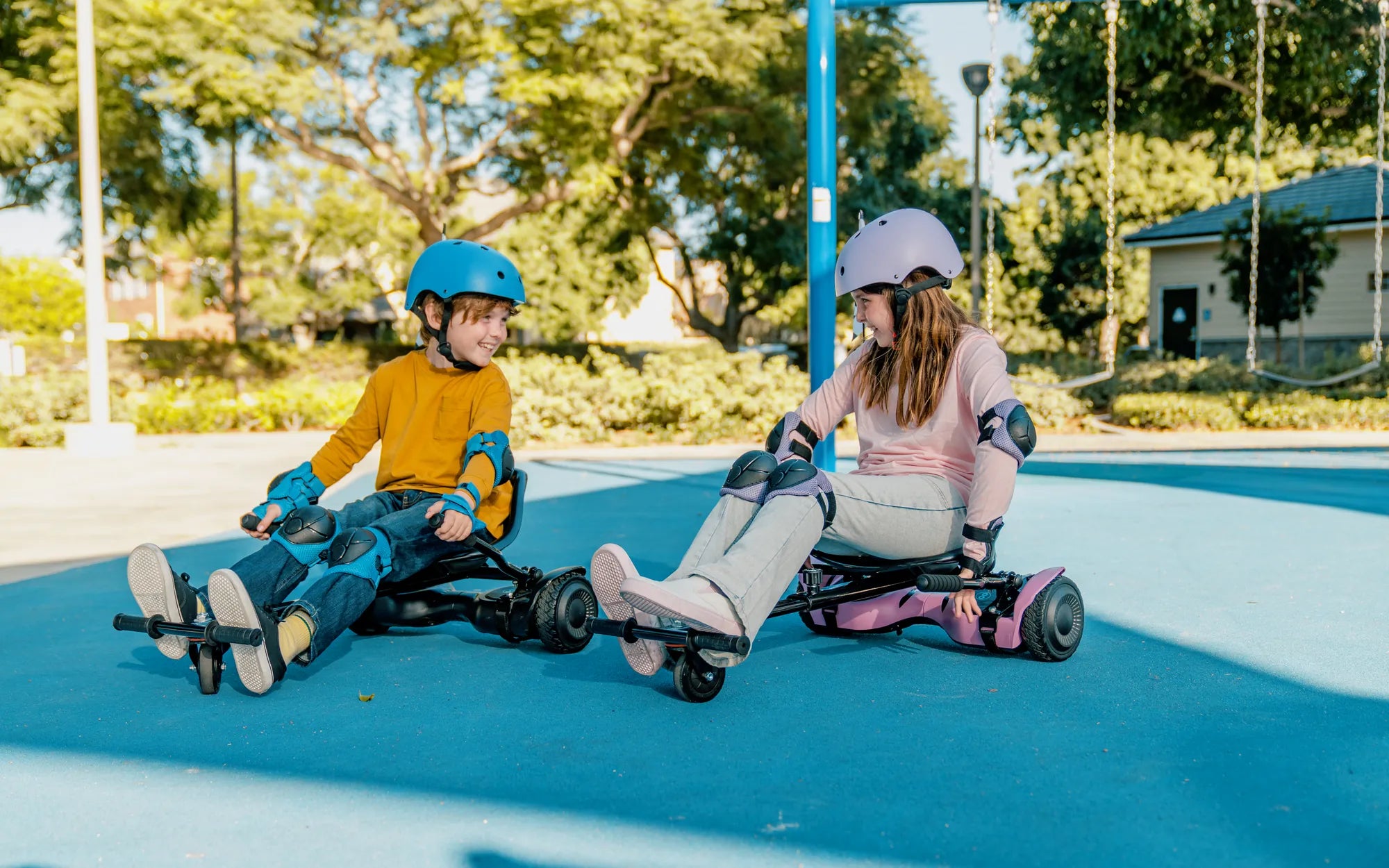
Introduction to Kids' Hoverboards: More Than Just a Toy
Finding the right hoverboard for kids target involves balancing excitement with essential safety. A modern hoverboard, or self-balancing scooter, is a two-wheeled, battery-powered personal transporter controlled by subtle shifts in body weight. These devices have evolved from novelty items into sophisticated activity platforms that promote balance, coordination, and outdoor play for children. This guide is your ultimate resource for navigating the purchase, learning curve, and safe operation of a hoverboard for your child.
As a leading electric scooter and e-bike brand trusted by over 100,000 riders across North America and Europe, Gyroor designs hoverboards with a fundamental principle: fun must be built on a foundation of safety. The right knowledge, combined with a quality product, transforms a hoverboard from a simple toy into a tool for adventure and skill development. We will cover how to select a board, gear up properly, master riding basics, and maintain the device for years of reliable use.
This guide is structured to answer every question a parent might have. We move from understanding non-negotiable safety standards to comparing technical features that impact performance. You will find actionable tutorials for teaching your child and straightforward maintenance advice to protect your investment. The goal is to empower you with data-driven information, eliminating guesswork and ensuring confidence in every step of the journey.
By prioritizing verified safety features and proper riding habits, you unlock the true potential of a hoverboard for kids. It becomes a source of active play, outdoor exploration, and joyful childhood memories. Let's begin by exploring why specific engineering and brand commitments make all the difference in creating a safe riding experience.
Why Choose a Gyroor Hoverboard for Your Child?
Selecting a hoverboard requires looking beyond flashy colors and marketing claims. For parents, the primary concerns are inevitably safety, durability, and long-term reliability. Gyroor addresses these core concerns directly through certified engineering, robust construction, and strong customer support. This focus transforms the hoverboard experience from a source of anxiety to one of assured fun.
Every Gyroor hoverboard is engineered with multiple layers of protection. From the battery cell to the outer shell, each component is selected and tested to meet high standards. This results in a product that parents can trust in the hands of their children. The brand's reputation is built on delivering consistent performance and peace of mind, evidenced by a 4.5/5 average customer rating across a broad user base.
The benefits of choosing a purpose-built hoverboard from a reputable manufacturer are tangible. Children enjoy smoother rides, better responsiveness, and the freedom to ride on various surfaces. Parents gain confidence from visible safety certifications, clear weight and speed limits, and accessible warranty support. This synergy between child enjoyment and parent approval is the hallmark of a well-designed product.
Investing in a hoverboard from a brand like Gyroor is an investment in safe, active play. It mitigates the risks associated with poorly made alternatives and ensures the device is a lasting part of your child's activities. The following sections break down the three pillars of this approach: certification, durability, and warranty support.
The Gold Standard in Safety: UL 2272 Certification
UL 2272 certification is the most critical safety benchmark for any hoverboard. This standard, developed by Underwriters Laboratories, rigorously tests the entire electrical system—including the battery pack, charger, and motor circuitry—for fire and electrical shock hazards. A hoverboard that passes this certification has undergone dozens of tests for overcharging, short-circuiting, and mechanical stress.
Choosing a hoverboard without this certification poses a significant and avoidable risk. Non-certified boards may use inferior battery cells or lack proper battery management systems, leading to potential overheating. All Gyroor hoverboards are designed to meet and exceed the UL 2272 standard, ensuring the electrical system's integrity from the first ride to the last.
For parents, this certification is a non-negotiable filter when shopping. It is a clear indicator that the manufacturer prioritizes user safety over cutting corners. When you see the UL 2272 mark, you know the product's safety claims are backed by independent laboratory verification. This certification directly addresses the primary safety concern surrounding hoverboards and provides foundational peace of mind.
Beyond the battery, the certification process also evaluates the construction and materials for safety. This holistic approach means every Gyroor hoverboard for kids is built as a complete, safe system. It is the first and most important feature to verify, forming the bedrock upon which all other fun and features are built.
Built for Real-World Adventures: IPX5 Water Resistance
Children's play is inherently messy, involving puddles, damp grass, and unexpected spills. An IPX5 water-resistance rating means a hoverboard can withstand water jets from any direction, making it resistant to splashes from wet pavement or light rain. This feature is crucial for durability and real-world usability, preventing minor moisture from causing internal damage or electrical failure.
Gyroor incorporates IPX5-rated designs into its hoverboards, allowing kids to enjoy riding in more conditions without immediate worry. This protection extends the play environment from just the dry driveway to the sidewalk after a light shower or slightly dewy grass in the morning. It is a practical feature that acknowledges how children actually use their toys and gear.
This level of water resistance also simplifies cleaning and maintenance. Parents can wipe down the board with a damp cloth to remove dirt and grime without fearing damage to the electronics. The sealed design helps protect the critical internal components from everyday debris and moisture ingress, contributing to the product's overall longevity and reliability.
When comparing features, IPX5 resistance is a key differentiator for durability. It signifies a more robust construction designed for active, outdoor use. For a hoverboard for kids target, this feature is invaluable, as it ensures the product can withstand the rigors of enthusiastic play and varied weather conditions.
Confidence in Your Purchase: The 1-Year Comprehensive Warranty
A strong warranty is a manufacturer's promise of quality and commitment to customer satisfaction. Gyroor backs its hoverboards with a comprehensive 1-year warranty covering defects in materials, workmanship, and the core electrical components. This warranty is a safety net for parents, protecting their investment and ensuring access to support should any issues arise.
The scope of this warranty typically includes parts and labor, providing a full repair or replacement service for qualifying issues. It reflects confidence in the product's build quality and durability. For a hoverboard for kids target, this long-term support is essential, as it covers the period when the device will see the most frequent and enthusiastic use.
Having a clear, accessible warranty also simplifies the ownership experience. Parents are not left searching for solutions online or attempting risky repairs themselves. Instead, they can contact professional, US-based customer support for guidance. This service transforms a potential problem into a managed process, reducing stress and downtime.
This warranty is more than a document; it's a partnership between the brand and the family. It underscores that Gyroor is invested in the product's performance throughout its usable life. When evaluating options, a transparent and substantial warranty is a strong indicator of a brand that stands behind its products and its customers.
Key Features to Compare When Shopping
Understanding key specifications demystifies the shopping process and leads to a better-matched purchase. Technical features directly influence the riding experience, safety, and suitability for your child's age and environment. A data-driven comparison ensures you select a hoverboard that aligns with your child's skill level and intended use, rather than being swayed by cosmetic appeal alone.
Focus on features that impact performance and safety: motor power, speed control, battery life, and physical construction. These elements determine how the board handles hills, how long a play session can last, and what kinds of surfaces are rideable. Using Gyroor's models as a benchmark provides a clear picture of what quality, safety-focused engineering looks like in practice.
Parents should create a simple checklist based on their child's profile. Consider weight, typical riding terrain (pavement vs. packed dirt), and the need for beginner-friendly speed restrictions. Matching these needs to the product specifications prevents frustration and ensures a positive first experience. A well-chosen hoverboard grows with the child, offering more advanced features as their skills develop.
The following breakdown of motor power, battery life, and wheel specifications will equip you with the vocabulary and knowledge to make an informed decision. This practical analysis moves beyond marketing terms to explain what each spec means for your child's ride.
Motor Power & Speed Settings
Motor power, measured in watts (W), determines a hoverboard's torque and hill-climbing ability. Most quality hoverboards for kids feature dual motors, one in each wheel, typically ranging from 250W to 350W. A higher wattage, like the 300W motors found in many Gyroor models, provides more power to tackle gentle inclines on driveways or sidewalks without straining the system.
More important than maximum power for young riders are programmable speed settings. Beginner modes limit top speed to a safe 4-5 mph (6-8 km/h), allowing children to learn balance and control without excessive velocity. As proficiency increases, parents can unlock intermediate and advanced modes, often capping at a responsible 7-9 mph for older kids. This graduated approach is crucial for safe skill development.
The combination of adequate motor power and restrictive speed modes offers the best of both worlds: enough torque for real-world use without uncontrollable speed. It ensures the board remains responsive and fun while operating within safe parameters. Always verify that the hoverboard has these distinct, password-protectable riding modes to maintain parental control.
When evaluating a hoverboard for kids target, prioritize models with clear, adjustable speed limits over those boasting only high maximum speeds. This feature is a direct contributor to safety during the learning phase and beyond, giving you the tools to manage the experience as your child's confidence grows.
Battery Life & Range Per Charge
Battery specifications translate directly into playtime. Key metrics are voltage (V), amp-hours (Ah), and the resulting watt-hours (Wh). A common configuration for kids' models is a 36V, 4.0Ah battery. This typically provides 1 to 2 hours of continuous riding, translating to a range of approximately 8 to 12 miles on a single charge, depending on rider weight, terrain, and speed.
The quality of the battery cells is as important as the capacity. Gyroor uses UL-certified battery packs tested for over 500 charge cycles, ensuring consistent performance and longevity. A certified battery maintains its charge capacity longer and is far less likely to experience issues related to overheating or rapid degradation, which is a core safety and value concern.
For parents, practical battery life means fewer interruptions and more enjoyment. It's important to manage expectations: advertised "maximum" ranges are achieved under ideal laboratory conditions. Real-world use by an active child will yield slightly less. Teaching kids to recognize the board's low-battery warnings and to stop riding promptly is part of responsible ownership and protects the battery's health.
Consider charging time as well. A full charge usually takes 2-4 hours. A hoverboard with a reliable battery and efficient charger ensures the device is ready when your child is, maximizing its utility as a source of active play. Always use only the manufacturer-provided charger to maintain safety and battery health.
Wheel Size, Terrain, and Rider Weight
Wheel size and type dictate where a hoverboard can ride comfortably. Smaller wheels (6.5 inches) are standard and perform well on smooth, hard surfaces like pavement, indoor floors, and sidewalks. Larger, all-terrain wheels (8.5 inches or more) with deeper treads provide better stability and shock absorption on rougher surfaces like packed dirt, gravel paths, or dry grass.
Matching the wheel type to your child's primary riding environment prevents frustration. A standard wheel on grass will struggle and drain the battery quickly, while an all-terrain wheel on smooth pavement is unnecessary. Gyroor offers models in both configurations, allowing you to choose based on your local landscape and where your child will ride most often.
Adhering to the manufacturer's stated rider weight limit is critical for safety and performance. Exceeding the limit can overstress the motors, drain the battery rapidly, and compromise the structural integrity of the board. Limits typically range from 44 lbs (20 kg) minimum to 220 lbs (100 kg) maximum, encompassing a wide range of children and even allowing for safe use by lightweight adults.
| Feature | Standard Model (e.g., 6.5" Wheels) | All-Terrain Model (e.g., 8.5" Wheels) |
|---|---|---|
| Best For | Smooth pavement, indoor courts, sidewalks | Packed dirt, gravel, dry grass, uneven surfaces |
| Ride Comfort | Firm, responsive | Soother, better shock absorption |
| Battery Impact | Standard drain | Higher drain on rough terrain |
| Typical Weight Limit | 44 - 220 lbs | 44 - 220 lbs |
Always check the product specifications for the exact weight limit and wheel details. Choosing the right combination of wheel size and model for your child's weight and terrain ensures optimal performance, safety, and hours of enjoyable riding. This careful matching is a final, crucial step in the selection process for your hoverboard for kids target.
The Essential Pre-Ride Safety & Gear Checklist
Safety is an active process, not a passive feature. Before any riding session begins, a consistent pre-ride routine must be followed. This checklist ensures both the rider and the equipment are prepared, minimizing risks and setting the stage for a fun, incident-free experience. Making this routine a non-negotiable part of hoverboard use instills lifelong safety habits in young riders.
The routine involves two core components: gearing up the rider and inspecting the environment. Skipping steps in the name of convenience compromises safety. Parents should supervise this process until the child demonstrates consistent, responsible adherence on their own. This hands-on approach in the early stages reinforces the importance of each step.
Consistency is key. Just as wearing a seatbelt is automatic in a car, putting on a helmet and checking the riding area should become automatic before stepping on a hoverboard. This discipline transforms safety from a lecture into a practical, empowering ritual. The following sections detail the essential protective gear and environmental preparations required for every ride.
Non-Negotiable Protective Gear
Full protective gear is mandatory, not optional. The minimum required kit includes a certified multi-impact bicycle or skateboard helmet, knee pads, elbow pads, and wrist guards. Each piece serves a specific purpose in protecting the most vulnerable areas during a fall, which is a common part of the learning process.
The helmet must be properly fitted—snug but not tight, sitting level on the head and covering the forehead. Knee and elbow pads should stay securely in place over joints without restricting movement. Wrist guards are particularly important, as instinct leads to putting hands out during a fall; they support the wrist and prevent sprains or fractures.
Quality gear is an investment in injury prevention. Look for gear with hard plastic shells, ample padding, and adjustable straps for a secure fit. Involve your child in selecting their gear, choosing colors and designs they like, to increase their willingness to wear it every time. Properly fitted, high-quality gear dramatically reduces the severity of any potential accident.
Establishing the rule "no gear, no ride" is fundamental. This clear boundary removes negotiation and ensures safety is never compromised. Over time, wearing the gear becomes second nature, allowing your child to ride with greater confidence, knowing they are well-protected.
Choosing and Preparing a Practice Area
The ideal learning environment is flat, smooth, spacious, and free from traffic and obstacles. An empty tennis or basketball court, a smooth driveway, or a quiet cul-de-sac are perfect starting locations. The surface should be pavement or another hard, level material that provides good traction for the wheels.
Before riding, conduct a visual sweep of the area. Remove any sticks, stones, or debris that could cause a wheel to slip or catch. Ensure there is a clear, open space of at least 15-20 feet in diameter for practicing basic maneuvers without the risk of colliding with walls, parked cars, or landscaping.
It is critical to avoid areas with slopes, hills, or inclines during the learning phase. Even a slight grade can make balancing and controlling speed significantly more difficult for a beginner. Also, strictly prohibit riding near streets, driveways with active vehicle traffic, swimming pools, or staircases.
Once the area is cleared and deemed safe, define its boundaries with your child. Explain why staying within this space is important. This preparation might take a few minutes, but it creates a controlled, secure laboratory for learning. A good practice area builds confidence by removing environmental variables, allowing the rider to focus solely on mastering the board.
Step-by-Step Learning to Ride Tutorial
Learning to ride a hoverboard is a skill best broken down into small, manageable steps. Rushing the process leads to frustration and increases the risk of falls. This tutorial provides a progressive method for parents to guide their children from first mount to confident steering. Patience and positive reinforcement are the most important tools during this phase.
Begin with the hoverboard turned off and placed next to a sturdy support, like a wall or a railing. The child should be in full protective gear. The goal of the first session is not to ride but to become familiar with the board's feel and basic mechanics. Celebrate small successes to build confidence and keep the experience positive and fun.
Each step should be mastered before moving to the next. The sequence is: mounting/dismounting with support, finding a balanced stance, powering on and feeling the board's self-balancing mechanism, initiating gentle forward/backward movement, and finally, learning to turn. This structured approach ensures a solid foundation of skills and safety awareness.
Follow this guided sequence, allowing your child to set the pace. Some may progress quickly through steps, while others may need to repeat one step several times. The focus is on building competence and comfort, not speed.
Mounting, Dismounting, and Finding Balance
Start with the hoverboard on a flat surface, turned off, and against a wall. Have your child place their dominant foot firmly on the footpad, keeping it parallel to the board. Then, using the wall for support, they should smoothly bring their other foot up to stand on the board, positioning their feet as wide apart as possible, near the wheel arches.
In this position, have them practice shifting their weight slightly from heels to toes and side to side while holding the wall. This helps them feel the board's pivot points. Next, practice dismounting by stepping backward off the board one foot at a time, again using the wall for stability. Repeat mounting and dismounting until it feels fluid and controlled.
Once comfortable, turn the hoverboard on. It will hum and activate its self-balancing gyroscopes. With the board powered and the child holding the wall, have them step on as before. They will feel the board actively trying to stay level under their feet. Encourage them to stand upright, look forward (not down at their feet), and relax their knees slightly.
The key to balance is a wide, stable stance and a relaxed posture. Tense, locked legs make balancing harder. Spend ample time in this stage, allowing your child to build muscle memory and trust in the board's self-balancing technology. Confidence in simply standing on the powered board is the prerequisite for all movement.
Mastering Movement and Steering
To move forward, the rider must lean forward very slightly from the ankles, not the waist. To stop, they return to an upright, neutral stance. To move backward, they lean back slightly. The movements are subtle. Have your child practice this while still holding the wall, feeling how tiny shifts in pressure translate to the board's motor response.
Once they understand the lean-to-go principle, it's time to try a short, straight-line journey. Have them mount, find balance, and then look at a point 10 feet away. A gentle forward lean should start a slow, controlled glide. To stop, they simply straighten their posture. Practice going 10 feet and stopping smoothly until it feels natural.
Steering is controlled by differential pressure. To turn right, apply gentle pressure with the toes of the right foot (or the heel of the left foot). To turn left, apply pressure with the toes of the left foot (or the heel of the right foot). It is a twisting motion, like wringing a towel. Start with wide, gradual turns before attempting tighter maneuvers.
Combine these skills in a simple drill: move forward in a straight line, execute a wide turn, come back, and stop. Practice this pattern repeatedly. Mastering slow, controlled movement and wide turns is the goal. Speed and sharp turns come much later. Emphasize control over velocity, and always end a practice session on a successful note to maintain enthusiasm.
Maintenance Tips for Longevity and Performance
Regular, simple maintenance keeps a hoverboard running safely, extends its lifespan, and ensures consistent performance. These routines are straightforward and can often be performed with the child, teaching them responsibility for their belongings. Proper care protects your investment and minimizes the chance of malfunctions that could lead to unsafe situations.
Maintenance focuses on three areas: the battery, the physical structure, and the wheels. Establishing a monthly check-up routine is sufficient for casual riders, while more frequent use might warrant bi-weekly inspections. Always turn the hoverboard off and disconnect it from the charger before performing any inspection or cleaning.
Ignoring maintenance can lead to degraded performance, such as reduced range, wobbly wheels, or unresponsive controls. Proactive care is simple, fast, and far preferable to dealing with a major repair. The following best practices for battery care and physical inspection will help ensure your hoverboard for kids remains a reliable source of fun for years.
Battery Care and Charging Best Practices
Always use the manufacturer-provided charger. Third-party chargers may not have the correct voltage or safety cut-offs, posing a fire risk and damaging the battery. Charge the hoverboard on a hard, non-flammable surface in a well-ventilated area, away from direct sunlight, bedding, or other flammable materials.
Avoid overcharging. While most modern chargers and battery management systems have auto-shutoff features, it's good practice not to leave the board plugged in for extended periods (e.g., over 24 hours) after it's fully charged. Similarly, avoid completely draining the battery to 0%. Try to recharge when the battery indicator shows one light remaining.
If the hoverboard will not be used for an extended period (a month or more), store it with a 50-70% charge in a cool, dry place. Check the charge level every few months and top it up to the 50-70% range if needed. Long-term storage at full charge or at 0% charge can permanently reduce the battery's capacity and lifespan.
Proper battery care is the most important maintenance task. It ensures safety, maximizes the board's range and power, and preserves the value of the product. These habits, once established, are easy to maintain and pay significant dividends in performance and peace of mind.
Routine Cleaning and Inspection
Regularly clean the hoverboard with a soft, slightly damp cloth to remove dirt, dust, and grime. Do not use a hose, high-pressure water, or submerge any part of the board. The IPX5 rating protects against splashes, not full immersion. Ensure no moisture enters the charging port or seams between footpads and the body. Dry the board thoroughly before charging or storing.
Conduct a monthly physical inspection. Check that all screws, especially those on the wheel axles and footpad edges, are tight. Gently wobble each wheel side-to-side to check for bearing wear or loose axles. Inspect the tires for significant wear, cuts, or embedded debris that could affect traction and balance.
Test the board's basic functions periodically. Ensure it powers on and off correctly, that the battery indicator lights work, and that the self-balancing activates smoothly. Listen for any unusual grinding, clicking, or whining noises from the motors during operation, as these can indicate an issue that needs attention.
This simple inspection and cleaning routine takes only a few minutes but can identify small issues before they become big problems. It keeps the hoverboard looking good, functioning properly, and, most importantly, operating safely for your child. Consistent care is a hallmark of responsible ownership.
Frequently Asked Questions (FAQs)
Q: What is the right age for a hoverboard?
A>There is no universal "right age," as it depends more on a child's maturity, coordination, and ability to follow safety rules than on a specific birthday. Most manufacturers, including Gyroor, recommend their products for riders ages 8 and up. The key factors are whether the child is comfortable with the board's weight minimum (usually ~44 lbs), can understand and execute steering commands, and will consistently wear all protective gear.
Q: Are hoverboards safe for indoor use?
A>They can be used indoors in large, open, clutter-free spaces like basements or community halls, but only after the rider has mastered control outdoors. Indoors, the risks of colliding with furniture, walls, or hard surfaces are higher. Always ensure the flooring is smooth and not slippery. Outdoor use on safe, prepared surfaces is generally recommended as the ideal and safest environment for riding.
Q: How long does it take to learn?
A>Most children grasp the basic mechanics of moving forward, stopping, and making wide turns within 30 to 60 minutes of focused practice over one or two sessions. However, building true confidence, mastering tighter turns, and developing instinctive balance can take several days or weeks of regular, short practice rides. The learning curve is individual, so patience and encouragement are essential.
Q: What should I do if the hoverboard gets wet?
A>If your hoverboard has an IPX5 rating like Gyroor models, light splashes or wet pavement are not an immediate concern. However, if it gets significantly wet, immediately power it off. Wipe it down thoroughly with a dry cloth, paying special attention to the wheel wells, charging port cover, and seams. Allow it to air-dry completely in a warm, dry place for at least 24-48 hours before attempting to turn it on or charge it. Never charge a wet hoverboard.
Q: Can the speed limit be locked for younger riders?
A>Yes, this is a critical safety feature. Quality hoverboards like those from Gyroor have multiple speed modes that can be set and locked via a smartphone app or a button sequence. Parents can set the board to a beginner mode (e.g., limited to 4-5 mph) and use a PIN code to prevent the child from switching to a faster mode without permission. This allows the hoverboard to grow with the rider safely.
Conclusion: Prioritizing Fun Through Safety
The journey to finding the perfect hoverboard for kids target culminates in a simple truth: the most enjoyable experiences are built on a foundation of security. By choosing a hoverboard with verified safety certifications like UL 2272, robust features like IPX5 water resistance, and backed by a strong warranty, you invest in more than a toy—you invest in peace of mind. This proactive approach allows the focus to remain where it belongs: on the joy of riding, the development of new skills, and the creation of happy memories.
Safety is an ongoing partnership between quality equipment, proper gear, supervised practice, and responsible habits. The steps outlined in this guide—from the pre-ride checklist to the step-by-step learning tutorial and routine maintenance—provide a comprehensive framework for that partnership. When these elements are in place, the hoverboard transforms from a potential source of worry into a powerful tool for outdoor activity, coordination, and independent play.
Gyroor's commitment to engineering safe, reliable, and fun personal transportation is reflected in every detail of its hoverboards for kids. Trusted by a community of over 100,000 riders, the brand's focus on UL-certified batteries, durable construction, and accessible customer support provides a benchmark for what parents should look for in the market. The ultimate goal is to provide children with a platform for adventure that parents can confidently endorse.
Ready to find the ideal hoverboard that matches your child's spirit and your safety standards? Browse the full Gyroor collection of UL-certified, feature-rich hoverboards, electric scooters, and e-bikes at gyroorboard.com. Discover the model that will unlock a world of safe, balanced fun for your family.
Princess Scooter for Kids Girls: The Ultimate Ride for Little Royalty
Electric Scooter for Kids 13 Years: The Ultimate Guide to Fun and Safety