



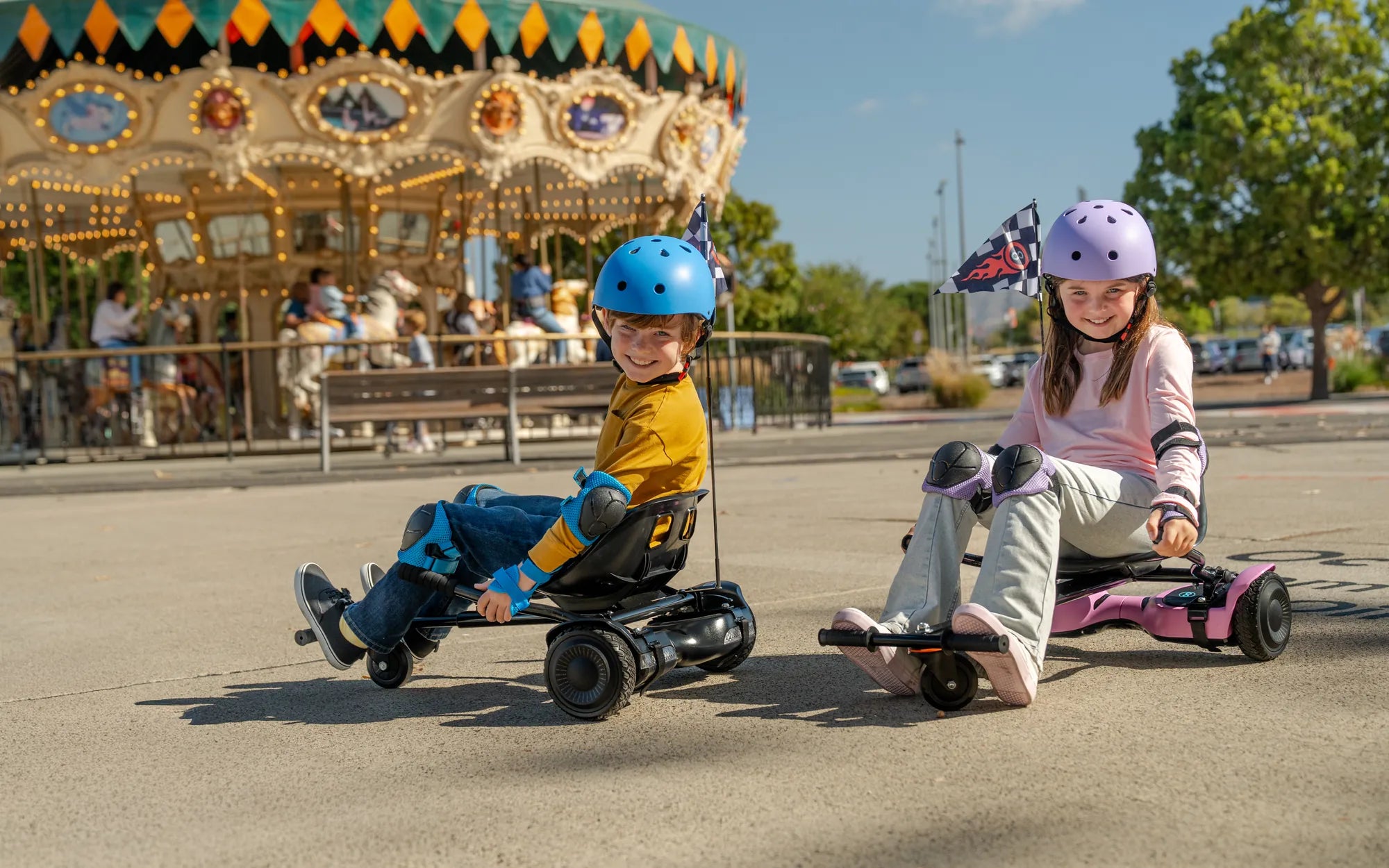
Introduction: The Quest for Safe, Affordable Fun
Every parent wants to see their child's face light up with joy, and a hoverboard can deliver that thrilling experience. The search for a hoverboard for kids under $60 is driven by a desire to provide fun without breaking the bank. However, this price point sits at a critical crossroads where budget constraints can directly conflict with essential safety standards.
This comprehensive guide will navigate the complex market of ultra-budget self-balancing scooters. We will dissect what you can realistically expect, highlight the non-negotiable safety features you must prioritize, and provide practical tips for making the smartest possible choice. Understanding that brands like Gyroor set the standard for safety with UL-certified batteries and robust warranties gives us a crucial benchmark for evaluating any lower-cost option.
Your child's safety is paramount. While the initial price tag is important, the true cost of a hoverboard includes the peace of mind that comes from knowing it won't pose a fire hazard or fail during use. We will equip you with the knowledge to distinguish between a dangerous gadget and a responsibly engineered toy, even when shopping with a strict budget.
Let's begin by demystifying the market and setting realistic expectations for what a hoverboard for kids under $60 truly entails in terms of components, certifications, and long-term value.
The Reality of Hoverboards Under $60: Market Analysis & Compromises
A quick online search reveals numerous listings for hoverboards priced under $60, often with enticing graphics and promises of high performance. The stark reality is that producing a safe, reliable self-balancing scooter with quality materials and certified electronics costs significantly more than this price point typically allows. When you encounter a hoverboard for kids under $60, it's almost always a product of severe cost-cutting measures.
These compromises directly impact safety and durability. Common issues include the use of generic, uncertified lithium-ion battery cells that have not undergone rigorous stress testing. Such batteries are the primary cause of the infamous hoverboard fires from years past. The motor and gyroscope systems are often the cheapest available, leading to poor balance, sluggish response, and sudden cut-outs that can throw a rider.
The construction materials are another major concern. Frames may be made from brittle, low-grade plastics that can crack under stress or from a minor fall. Tire quality is poor, offering little grip and prone to punctures. The internal wiring is often haphazard, with inadequate insulation and poor solder joints, creating further electrical hazards.
Perhaps the most significant red flag is the absence of legitimate safety certifications. A legitimate hoverboard for kids under $60 that also carries authentic UL certification is exceptionally rare. Many listings may feature fake logos or misleading claims. The manufacturing savings come from skipping the expensive but essential testing processes that ensure the product won't overheat, short-circuit, or combust.
Ultimately, the sub-$60 market is a high-risk zone. While the initial purchase seems affordable, the potential costs—in terms of safety incidents, immediate product failure, and complete lack of warranty support—are unacceptably high. Parents must view this price bracket with extreme caution and prioritize verification over impulse.
Non-Negotiable Safety Certifications: UL 2272 and Beyond
When evaluating any hoverboard, especially a budget model, safety certifications are your most important filter. These are not mere marketing stickers; they are evidence of independent laboratory testing. The absolute minimum standard for any hoverboard you consider is the UL 2272 certification.
UL 2272 is a comprehensive safety standard for self-balancing scooters. It tests the entire electrical system—including the battery, charger, and motor—for overcharge, short circuit, temperature, and imbalance. A hoverboard that passes UL 2272 has undergone rigorous abuse testing to ensure it won't catch fire during normal use or reasonable misuse. You must verify this certification on the product itself and the manufacturer's website.
Equally critical is the battery certification, UL 2271. This standard applies specifically to the lithium-ion battery pack. It involves crush, shock, vibration, and overcharging tests. Reputable brands, such as Gyroor, build all their models with UL-certified battery packs as a foundational principle, providing a baseline of trust that is often missing in the ultra-budget segment.
Other certifications to look for include FCC (for electromagnetic interference) and CE (a European safety mark). However, UL 2272 remains the gold standard in North America. A genuine hoverboard for kids under $60 with authentic UL 2272 certification is a unicorn. If you find one, scrutinize the seller and product reviews with extra care, as counterfeit labels are common.
Never purchase a hoverboard that lacks these verifiable certifications. The risk of fire or electrical failure is simply too great. This single criterion will eliminate most options in the sub-$60 range, rightly steering you toward models that may cost more upfront but are engineered for safety first.
Why Battery Safety is Paramount
The battery is the heart and most hazardous component of a hoverboard. Low-cost models use anonymous battery cells from unverified factories, with no protection circuits or with poorly made ones. These can overheat during charging or use, leading to "thermal runaway"—a rapid, uncontrolled increase in temperature that results in fire or explosion.
Certified batteries from reputable cell manufacturers (like Samsung, LG, or Panasonic) include multiple layers of physical and electronic protection. They are housed in sturdy packs with proper ventilation and management systems. The peace of mind that comes from a certified battery is invaluable and is a core reason why brands like Gyroor invest in this technology across their lineup.
Essential Features for Young Riders: What You're Sacrificing Under $60
Beyond critical safety certifications, a good hoverboard for a child needs specific design features to ensure a positive and secure riding experience. These features are typically absent or poorly executed in sub-$60 models, contributing to frustration and increased risk of injury.
Stable, Beginner-Friendly Design: A good learner hoverboard has a slightly wider wheelbase and responsive but not overly sensitive gyroscopes. Ultra-cheap models often have erratic calibration, making them "twitchy" and hard to balance on, which can lead to immediate falls and a scared child.
Appropriate Speed and Weight Limits: Quality hoverboards for kids often have a speed cap (e.g., 7-8 mph) and a beginner mode. Budget models may advertise high speeds but with unstable control systems. Their weight limits are often inflated; a board rated for 220 lbs made of flimsy plastic will flex dangerously and fail quickly.
Durable Construction: This includes reinforced fenders, scratch-resistant body shells, and decent rubber tires. Inexpensive models use hard, brittle plastic that shatters on impact and plastic "rubber" tires that offer no traction, especially on slick surfaces.
Reliable Controls and Indicators: Features like battery level indicators, non-slip foot pads, and responsive power buttons are basic expectations. On cheap boards, indicators are inaccurate, foot pads are slick, and power buttons can be unreliable. A feature like Gyroor's IPX5 water-resistant rating, which protects against light splashes, is unthinkable in this price tier but adds real-world durability.
When you pursue a hoverboard for kids under $60, you are almost certainly sacrificing every one of these user-experience and durability features. The product may function for a few days, but it will not provide the stable, enjoyable, and lasting fun that a well-made board can offer.
Gyroor: The Quality Benchmark for Safe Kids' Mobility
To understand what you should be looking for in a hoverboard, it's essential to examine the standards set by reputable manufacturers. Gyroor, as a leading brand in personal electric transport, exemplifies the commitment to safety and quality that parents should seek. While their products represent an investment above the $60 range, they provide a clear benchmark for evaluation.
Every Gyroor hoverboard and electric scooter is built around a UL-certified battery pack. This is a non-negotiable part of their design philosophy, ensuring the highest level of protection against fire and electrical hazards. Their batteries are tested for over 500 charge cycles, promising longevity and consistent performance.
Beyond the battery, Gyroor incorporates robust safety engineering. This includes stable frame designs, reliable BMS (Battery Management Systems), and components that meet strict durability standards. Their IPX5 water-resistant rating on many models means the electronics are protected against light rain and splashes, a practical feature for real-world kid use.
Gyroor backs its products with a comprehensive 1-year warranty and has a track record of supporting over 100,000 riders. This contrasts sharply with the zero-support norm for disposable, ultra-budget hoverboards. The brand's focus is on delivering affordable fun and safety tips through product reliability, not just a low initial price.
Using Gyroor as a benchmark teaches us that true affordability considers total cost of ownership: safety, durability, warranty, and support. When evaluating any hoverboard, ask if it meets these fundamental principles of a trustworthy brand, even if on a more modest scale.
Smart Shopping Guide for Budget-Conscious Parents
If your budget is firm, but safety cannot be compromised, you need a strategic approach. Here are actionable steps to maximize your chances of finding a safe, functional hoverboard without taking unreasonable risks.
1. Stretch Your Budget Slightly: The difference between a $50 unknown board and a $90-$120 board from a known value brand is monumental in terms of safety. Saving for a few more weeks to reach this price tier is the single most effective safety decision you can make. It dramatically increases the likelihood of finding a model with legitimate certifications.
2. Buy from Reputable Retailers: Avoid unknown marketplace sellers on large e-commerce platforms. Instead, look at established toy stores, sporting goods stores, or the official websites of known brands. These retailers have more stringent quality controls and offer legitimate return policies.
3. Verify, Don't Trust: If a listing claims UL 2272 certification, search for the certification number. Check the official UL product database (UL Product iQ) to confirm its authenticity. Look for real user reviews that mention long-term use, not just unboxing.
4. Safety Gear is Non-Negotiable: The cost of a helmet and knee/elbow pads is part of the total hoverboard cost. Never consider a ride without them. A proper multi-impact helmet is essential. Factor this $30-$50 safety gear cost into your overall budget from the start.
5. Inspect Thoroughly Upon Arrival: Before letting your child ride, inspect the board. Check for solid construction, a legitimate certification mark on the board and charger, and clear instructions. Charge it for the first time in a safe, non-flammable area and monitor it for excessive heat.
By following this guide, you shift from being a passive bargain hunter to an informed consumer. You may not find the mythical safe hoverboard for kids under $60, but you will find the safest possible option within a responsible budget framework.
Comparison: Ultra-Budget vs. Value-Tier Hoverboards
The table below illustrates the stark differences between a typical sub-$60 product and a value-tier hoverboard from a reputable company. This comparison makes clear where the compromises are and why the price difference exists.
| Feature | Typical Sub-$60 Hoverboard | Value-Tier Hoverboard ($90-$160) |
|---|---|---|
| Price Point | Under $60 | $90 - $160 |
| UL 2272 Certification | Almost always absent or falsified | Genuine and verifiable |
| Battery Type | Uncertified, generic cells | UL 2271 certified pack |
| Build Quality | Brittle plastic, weak joints | Reinforced ABS plastic, metal components |
| Warranty | 30 days or none; no real support | 6 months to 1 year; actual customer service |
| Max Speed & Modes | Unstable, often too fast for beginners | Capped speed (e.g., 7 mph), beginner mode |
| Tire Quality | Hard plastic or low-grade rubber | Proper rubber tires with tread |
| Brand Reputation | Nonexistent; seller disappears | Established name with reviews (e.g., Gyroor's market presence) |
| True Cost of Ownership | High risk of failure, no support, safety hazard | Longer lifespan, support, safety assurance |
This comparison shows that the value-tier option, while a higher initial investment, provides verified safety, durability, and support. It represents a responsible purchase where the hoverboard for kids under $60 model represents a significant and potentially dangerous gamble.
Frequently Asked Questions (FAQ)
Q1: Are there any truly safe hoverboards for kids under $60?
A: It is highly unlikely. The cost of materials, proper engineering, and legitimate safety certification exceeds this price point. Any product claiming to be both safe and under $60 should be met with extreme skepticism. Always prioritize verifiable UL 2272 certification over price.
Q2: What is the most important thing to check before buying?
A> The single most important factor is authentic UL 2272 certification for the entire device. Check for the mark on the hoverboard and its packaging, and verify the certification number in the official UL database. This is your primary defense against fire risk.
Q3: My child's friend has a cheap hoverboard that works fine. Why shouldn't I buy one?
A> The risks are often hidden. The battery may be a ticking time bomb, or the board could fail catastrophically during a turn. Anecdotal luck does not equal safety. Certified products undergo testing to ensure they are safe not just initially, but over time and under stress.
Q4: Can I just buy a cheap one and replace the battery with a better one?
A> This is not recommended. The entire electrical system (charger, BMS, wiring) is designed for the specific, low-quality battery. Swapping in an uncertified aftermarket battery or mismatched certified one can create new hazards. The frame and motor quality remain poor.
Q5: Where is the best place to buy a hoverboard for a beginner?
A> Purchase from established brick-and-mortar retailers like Target or Walmart (checking carefully for certifications), or directly from the website of a reputable brand known for safety. Avoid third-party sellers with no history or reviews. Always read the return policy.
Q6: What age is appropriate for a hoverboard?
A> Most manufacturers recommend ages 8 and up, but this depends more on the child's coordination, maturity, and ability to follow safety rules. Regardless of age, full protective gear and supervised practice in a safe, open area are mandatory.
Conclusion: Investing in Safe Memories, Not Just a Toy
The journey to find a hoverboard for kids under $60 often leads to a sobering realization: authentic safety has a minimum cost. While the allure of a low price tag is strong, the potential consequences of choosing wrong are severe. A hoverboard should create memories of fun and freedom, not anxiety or danger.
By understanding the critical role of UL certifications, the benchmarks set by quality-focused brands, and the smart shopping strategies outlined here, you are empowered to make a choice that protects your child. The true affordability of a hoverboard is measured in years of safe operation, not just the initial purchase price.
When you prioritize verified safety and durable construction, you invest in uninterrupted fun and priceless peace of mind. Let the joy of riding come from a place of security, engineered into the product from the start. For those ready to explore models that embody these principles of safety, performance, and reliability, the journey toward confident riding begins with trusted engineering.
Ready to explore a range of personal electric vehicles built with certified safety and durability from the ground up? Browse the full Gyroor collection, featuring UL-certified batteries, robust warranties, and designs trusted by over 100,000 riders, at gyroorboard.com.
Price Electric Scooter for Kids 12 Years: A Complete Buying Guide
Hoverboard Charged But Won't Turn On: Troubleshooting Guide and Fixes