



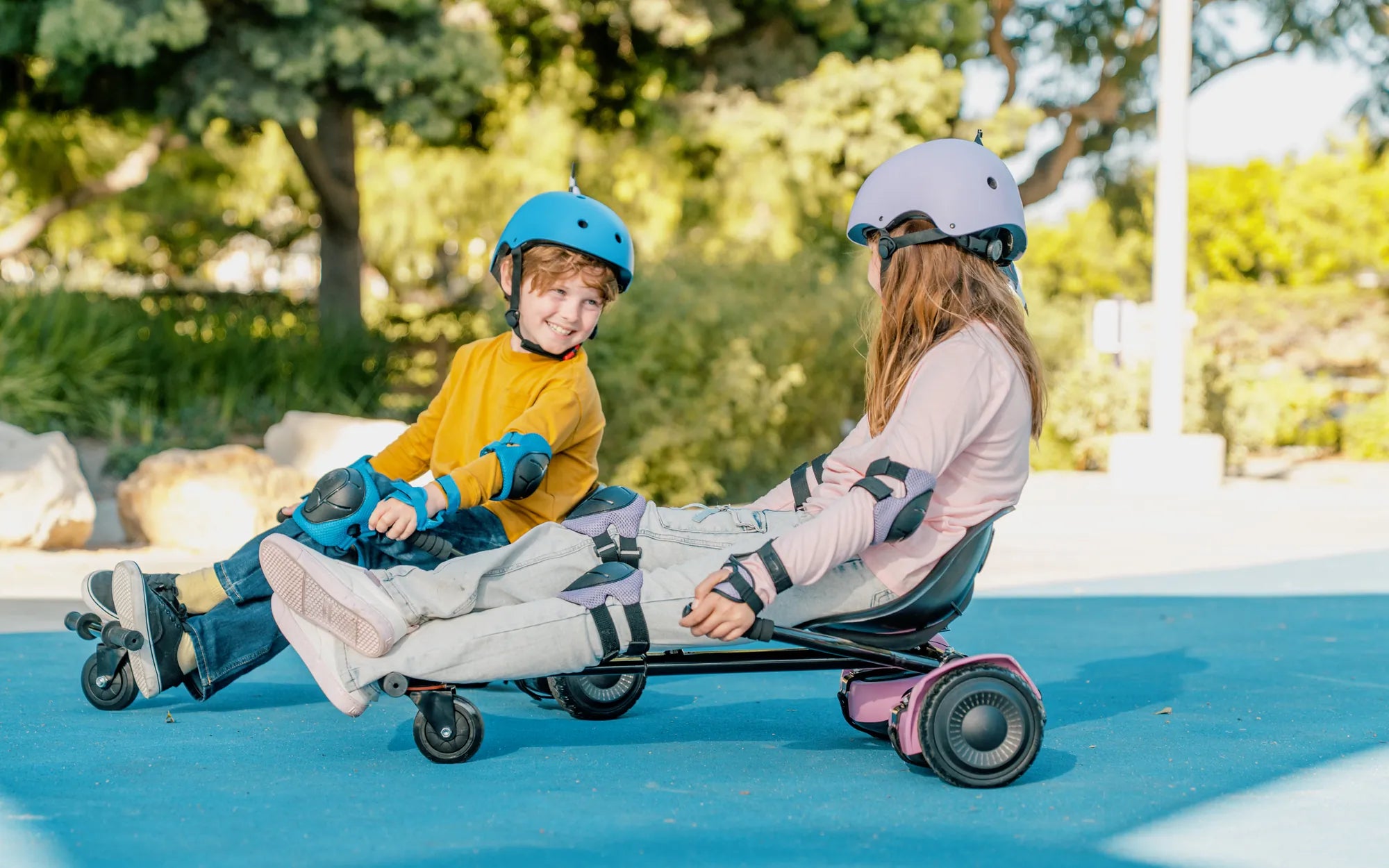
Ignoring your hoverboard's minimum weight limit isn't just a suggestion—it's a significant safety risk. Many riders focus solely on the maximum capacity, but being under the specified weight can be just as dangerous as exceeding it. This guide will explain the critical engineering and safety reasons behind hoverboard minimum weight specifications, how to find and interpret them, and the steps you must take to ensure a safe, stable ride. You'll learn why this specification is non-negotiable for both performance and personal safety.
Introduction to Hoverboard Weight Limits
Hoverboard minimum weight requirements exist for fundamental engineering and safety reasons, not as arbitrary guidelines. Every self-balancing scooter is precisely calibrated to operate within a specific weight range. When a rider falls below the minimum threshold, the board's core systems—gyroscopes, sensors, and motors—cannot function as designed.
This mismatch between rider mass and system calibration leads directly to instability, unpredictable behavior, and a heightened risk of falls. Conversely, exceeding the maximum weight strains motors and batteries, leading to potential failure. Understanding and adhering to both limits is the first and most critical step in responsible hoverboard ownership. It ensures the technology works for you, not against you.
The hoverboard minimum weight: what you need to know before riding is that this figure is a hard requirement for safe operation. It's especially relevant for parents considering a hoverboard for a child or for lightweight adults. Assuming any board will work can lead to accidents and damage. This parameter is as essential as checking the battery certification or warranty terms before you buy.
Reputable brands like Gyroor design and test their models against strict weight parameters to uphold their safety promises. Their commitment to UL-certified batteries and robust construction is complemented by clear performance specifications, including weight limits. Trusting a brand that is transparent about these details is key to a secure riding experience.
Why Minimum Weight Limits Exist: Engineering and Safety Explained
The self-balancing magic of a hoverboard is a delicate dance of sensors, software, and motors. This system requires a minimum amount of downward pressure to calibrate correctly and respond to your movements. Without sufficient weight, the board receives inaccurate data, leading to a cascade of potential failures.
At its core, a hoverboard uses gyroscopic sensors and tilt sensors to detect the rider's center of gravity. When you lean forward, the sensors interpret the shift in pressure and angle, signaling the motors to move. If the rider is too light, the pressure on the footpads is insufficient for the sensors to make accurate, fine-tuned readings. This can cause delayed, jerky, or exaggerated responses.
Furthermore, the motors rely on torque to propel the rider. A certain amount of resistance (provided by rider weight) is necessary for smooth acceleration and braking. An underweight rider provides less resistance, which can cause the motors to over-spin or respond too aggressively to minor inputs. This often feels like a sudden lurch or a loss of control, particularly when starting or stopping.
The Role of Gyroscopes and Sensors
Internal gyroscopes are the hoverboard's balance organ. They measure orientation and angular velocity. For calibration, these systems assume a baseline weight. When the actual weight is significantly lower, the gyroscopes can misinterpret small shifts as commands, leading to wobbling or an inability to maintain a stable, level position.
The pressure-sensitive footpads are equally critical. They contain switches that must be fully engaged for the board to activate and remain operational. A very light rider may not consistently depress these switches, potentially causing the board to power off unexpectedly during a ride—a extremely hazardous situation.
This sensor fusion—gyroscopes, tilt sensors, and pressure pads—must work in harmony. An underweight rider disrupts this harmony, forcing the control board to make decisions based on noisy, unreliable data. The result is a board that behaves erratically rather than predictably.
Motor Power and Terrain Response
Motor performance is directly tied to load. Hoverboard motors are engineered to deliver optimal torque and speed within a specific weight range. Outside this range, performance degrades. For a rider under the minimum weight, the motors may exhibit a phenomenon called "cogging" or jerky movement, as they struggle to apply power smoothly to a very light load.
This issue is magnified on uneven terrain or inclines. Climbing a slope requires consistent torque. An underweight rider might cause the motors to pulse or stall because the control system cannot accurately gauge the power needed. Similarly, going downhill, regenerative braking may not engage properly without sufficient mass, reducing control.
Ultimately, riding under the minimum weight doesn't just risk a fall; it places abnormal stress on the motor windings and electronics. Over time, this can lead to premature wear, overheating, and component failure, voiding warranties and creating long-term reliability issues.
Gyroor's Standards: How We Ensure Rider Safety
At Gyroor, safety engineering extends beyond battery certification and water resistance. It encompasses holistic performance validation, including rigorous weight parameter testing. Each model in our lineup undergoes extensive trials to ensure it operates safely and reliably across its entire advertised weight spectrum.
This process involves dynamic testing with calibrated weights to simulate riders at the minimum, maximum, and mid-point of the specified range. We evaluate starting torque, braking distance, balance stability, and sensor response at each weight. This data-driven approach ensures that when we state a hoverboard minimum weight, it is backed by empirical evidence, not just a theoretical calculation.
Our commitment to over 100,000 riders across North America and Europe is built on this foundation of transparency and rigorous testing. We understand that trust is earned through consistent, safe performance. That's why our 1-year comprehensive warranty is supported by this depth of engineering validation—we stand behind our products because we know how they are built and tested.
UL-Certified Battery and System Stability
The heart of a Gyroor hoverboard is its UL-certified lithium-ion battery pack. Safety here isn't just about preventing fires; it's about consistent, stable power delivery. These battery packs are engineered to provide a steady voltage and current output that matches the demands of the motor control system.
This stable power is crucial for the precise operation of gyroscopes and sensors. Voltage fluctuations can cause sensor drift or miscalibration. By using a high-quality, certified battery, Gyroor ensures the entire system receives clean power, which is especially important for riders at the edges of the weight spectrum where system tolerance is lower.
The battery's performance is calibrated alongside the motor and sensor suite. For a rider at the minimum weight, the system draws power in a specific, predictable pattern. A substandard battery might not maintain the required voltage under this load, leading to sudden power loss or reduced performance, compromising safety.
Rigorous Testing for All Riders
Gyroor's testing protocols simulate real-world conditions. We don't just test on flat laboratory floors. Our hoverboards are tested on slight inclines, over small obstacles, and during turning maneuvers at various weights. This ensures that the hoverboard minimum weight: what you need to know before riding is a guideline proven under diverse conditions.
We also test for durability across the weight range. The frame, axle, and wheel bearings must withstand the forces generated during riding. Even a lighter rider can generate significant force during a turn or when going over a bump. Our IPX5 water-resistant design is also tested across these parameters, ensuring seals and integrity are maintained regardless of the rider's weight within the specified range.
This end-to-end validation is what allows us to offer clear, reliable specifications and support them with strong customer service. It’s the difference between a product that merely meets basic standards and one that is engineered for real-world reliability and safety.
Finding the Right Fit: Checking Your Hoverboard's Specifications
Before allowing anyone to ride, you must verify the specific weight limits for your hoverboard model. Never assume that a board is appropriate based on brand or appearance alone. Specifications can vary dramatically even within a single brand's product line, depending on motor size, wheel diameter, and intended use.
The process is straightforward but essential. Taking five minutes to confirm these details can prevent an accident. This is a critical part of the hoverboard minimum weight: what you need to know before riding protocol. Always prioritize the manufacturer's stated limits over third-party retailer descriptions, which may contain errors.
If you are purchasing a new board, especially for a child or lightweight adult, check these specifications *before* buying. Use them as a key filter in your decision-making process. A reputable seller will have this information readily available and unambiguous.
Where to Look: Manuals, Websites, and Product Labels
Your first resource should be the official user manual, either the physical copy included in the box or a digital PDF available on the manufacturer's website. The specifications page will list both the minimum and maximum rider weight, often under headings like "Rider Requirements," "Specifications," or "Safety Information."
The manufacturer's official product webpage is the second most reliable source. Look for a detailed specs tab or section. For Gyroor models, this information is prominently displayed on each product page at gyroorboard.com, ensuring transparency for our customers.
Finally, inspect the hoverboard itself. Many models have a sticker or embossed label on the underside or near the charging port that states key ratings, including weight limits, voltage, and battery capacity. This label provides a quick, on-the-spot reference.
Interpreting the Numbers: Minimum vs. Maximum
When you find the specifications, you'll typically see a range (e.g., 44 lbs to 220 lbs). The lower number is the minimum weight, and the higher number is the maximum capacity. Both are absolute limits for safe operation.
Minimum Weight (e.g., 44 lbs/20 kg): This is the lightest a rider can be for the board to activate its sensors properly and maintain stable operation. Riding under this weight is unsafe.
Maximum Weight (e.g., 220 lbs/100 kg): This is the heaviest a rider can be without risking motor overload, battery strain, or structural damage to the frame and wheels.
The optimal riding experience is typically found in the middle of this range. A rider at the absolute minimum may experience a board that feels slightly less responsive or stable than a rider in the middle, but it should still be safe if the limit is met. The key takeaway is that the minimum limit is a floor, not a suggestion.
Special Considerations: Young Riders and Lightweight Adults
Children are the most common group affected by minimum weight limits. A parent's natural question is whether their child is "big enough" for a hoverboard. The answer has two parts: meeting the physical weight requirement and possessing the necessary coordination and judgment.
For lightweight adults—often those under 100 pounds—the same principles apply. The market for standard hoverboards often assumes a higher minimum weight (typically around 44 lbs). Petite adults must be diligent in checking specs to find a model that lists a minimum weight at or below their body weight.
It is never advisable to "guesstimate" or allow a rider who is close to but under the limit to try the board. The systems are binary in their calibration; being 2 or 5 pounds under is enough to cause instability. Patience is key—wait until the rider unequivocally meets the requirement.
Is Your Child Ready? Age vs. Weight vs. Skill
Weight is the first and non-negotiable filter. If your child does not meet the minimum weight, they should not ride that model, regardless of age or perceived skill. Their physical mass is required for the machine to function.
Assuming the weight requirement is met, age and skill become relevant. Most manufacturers recommend hoverboards for ages 8 and up. This recommendation considers not just weight but also developmental coordination, balance, and the ability to understand and follow safety rules. A child who meets the minimum weight but is very young or easily distracted may not be ready.
Start in a safe, controlled, flat, and open environment like an empty driveway or basketball court. Supervise closely and ensure they master basic operations—mounting, dismounting, starting, stopping, and gentle turning—before attempting any complex maneuvers.
Safety Gear is Non-Negotiable
For all riders, especially those at the lower end of the weight spectrum where instability is a higher risk, full safety gear is mandatory. This is not an area for compromise. A proper kit includes a certified multi-impact helmet, wrist guards, and knee and elbow pads.
Wrist guards are particularly important, as falls from a hoverboard often involve putting hands out to break the fall, leading to sprains or fractures. The gear should be worn correctly—snugly fastened and properly positioned—every single time the hoverboard is used, even for a "quick test."
Instilling the habit of wearing safety gear from the very first ride sets a critical precedent. It protects the rider and reinforces the serious nature of operating a self-balancing electric vehicle. Safety is an integral part of the fun, not a barrier to it.
Hoverboard Model Comparison: Weight Limits and Key Features
Choosing the right hoverboard requires comparing key specifications. The table below outlines how different classes of self-balancing scooters cater to varying rider weights and needs. This comparison highlights why checking the hoverboard minimum weight is essential for matching a product to its intended rider.
| Model Type | Typical Min. Weight | Typical Max. Weight | Wheel Size | Best For | Key Feature Highlight |
|---|---|---|---|---|---|
| Kids / Beginner Models | 44 lbs (20 kg) | 165 lbs (75 kg) | 6.5" | Younger riders, first-time users | Lower top speed, beginner-friendly modes |
| Standard All-Terrain | 44 lbs (20 kg) | 220 lbs (100 kg) | 8.5" - 10" | Teens & adults, park paths, grass | Larger tires, more powerful motors, IP54/IPX5 rating |
| High-Performance / Pro | 55 lbs (25 kg) | 265 lbs (120 kg) | 10"+ | Heavier adults, rugged use, longer range | Dual motors (500W+ each), advanced suspension, extended range |
| Gyroor Representative Model (e.g., Gyroor C1) | 44 lbs (20 kg) | 220 lbs (100 kg) | 8.5" | Versatile use for most riders | UL-certified battery, IPX5 waterproof, 1-year warranty, robust frame |
As shown, a "one-size-fits-all" approach doesn't work. A child weighing 42 pounds would not be safe on any model in this comparison, as they are under the typical minimum. A lightweight adult weighing 100 pounds would be well-suited to a Standard or Gyroor model, operating safely in the middle of its range. Always cross-reference the rider's weight with the specific model's official specs.
Frequently Asked Questions (FAQ)
Q: What happens if I ride a hoverboard under the minimum weight?
A: Riding under the minimum weight can cause several dangerous and damaging issues. The hoverboard may fail to self-balance properly, leading to constant wobbling. Acceleration and braking can become jerky and unpredictable. The pressure-sensitive footpads might not register the rider consistently, causing the board to shut off unexpectedly. Over time, this forces the motors and control board to operate outside their design parameters, potentially leading to premature electronic failure and voiding the warranty.
Q: Can I adjust a hoverboard for a lighter rider?
A: No, hoverboards are not user-adjustable for weight calibration. The sensitivity of gyroscopes and pressure sensors is set at the factory and integrated into the main control board's firmware. Attempting to modify these settings is not possible for an end-user and would require specialized equipment and software. Any physical modification to the board will almost certainly void the manufacturer's warranty, such as Gyroor's 1-year coverage, and could create serious, unforeseen safety hazards.
Q: My child is slightly under the limit but a good rider. Can they use it?
A: It is strongly not recommended. The minimum weight limit is an engineering requirement for the safe electromechanical function of the device, not a reflection of riding skill. A skilled rider who is too light still cannot provide the necessary physical input (pressure) for the sensors to work correctly. The risk of erratic behavior and falls remains high. The safest course is to choose a model specifically designed with a lower minimum weight or wait until the child meets the requirement for your chosen model.
Q: Where can I find the weight limit for my Gyroor hoverboard?
A: You can find the official rider weight limits in three places: 1) In the printed user manual included with your hoverboard, 2) On the official product page for your specific model at gyroorboard.com, and 3) On a physical label or sticker located on the hoverboard itself, often on the underside or near the charging port. If you cannot locate it, our US-based customer support team can assist you with your model's exact specifications.
Q: Does the minimum weight include clothing and a backpack?
A: Yes, the rider's total weight—including clothing, shoes, and any carried items like a backpack or school books—should be considered. The hoverboard's sensors respond to the total downward force applied to the footpads. When verifying if a rider meets the minimum requirement, it is prudent to add a few pounds to their naked body weight to account for typical clothing and footwear. This ensures a margin of safety and guarantees the rider is truly within the operational range.
Conclusion: Safe Riding Starts with the Right Specifications
Understanding and respecting your hoverboard's minimum weight limit is a fundamental pillar of safe operation. It is a specification rooted in physics and engineering, designed to protect both the rider and the device. From ensuring proper gyroscope calibration to enabling smooth motor response, this number is as critical as the maximum limit.
Before any ride, take the responsible step: verify the rider's weight against the manufacturer's stated range. Equip every rider, without exception, with appropriate safety gear. Choose products from reputable brands like Gyroor that invest in rigorous testing, clear communication of specs, and build quality backed by strong warranties and certified components.
The joy and convenience of hoverboarding are best experienced on a foundation of safety. By making informed choices based on accurate specifications, you ensure that every ride is not only fun but secure. For a range of hoverboards engineered with these safety principles in mind, browse the full Gyroor collection at gyroorboard.com to find the perfect match for your weight and riding style.
Kids Scooter 5-8 Years: The Ultimate Guide for Parents
What to Do If Your Hoverboard Gets Wet: Essential Steps to Save Your Device