



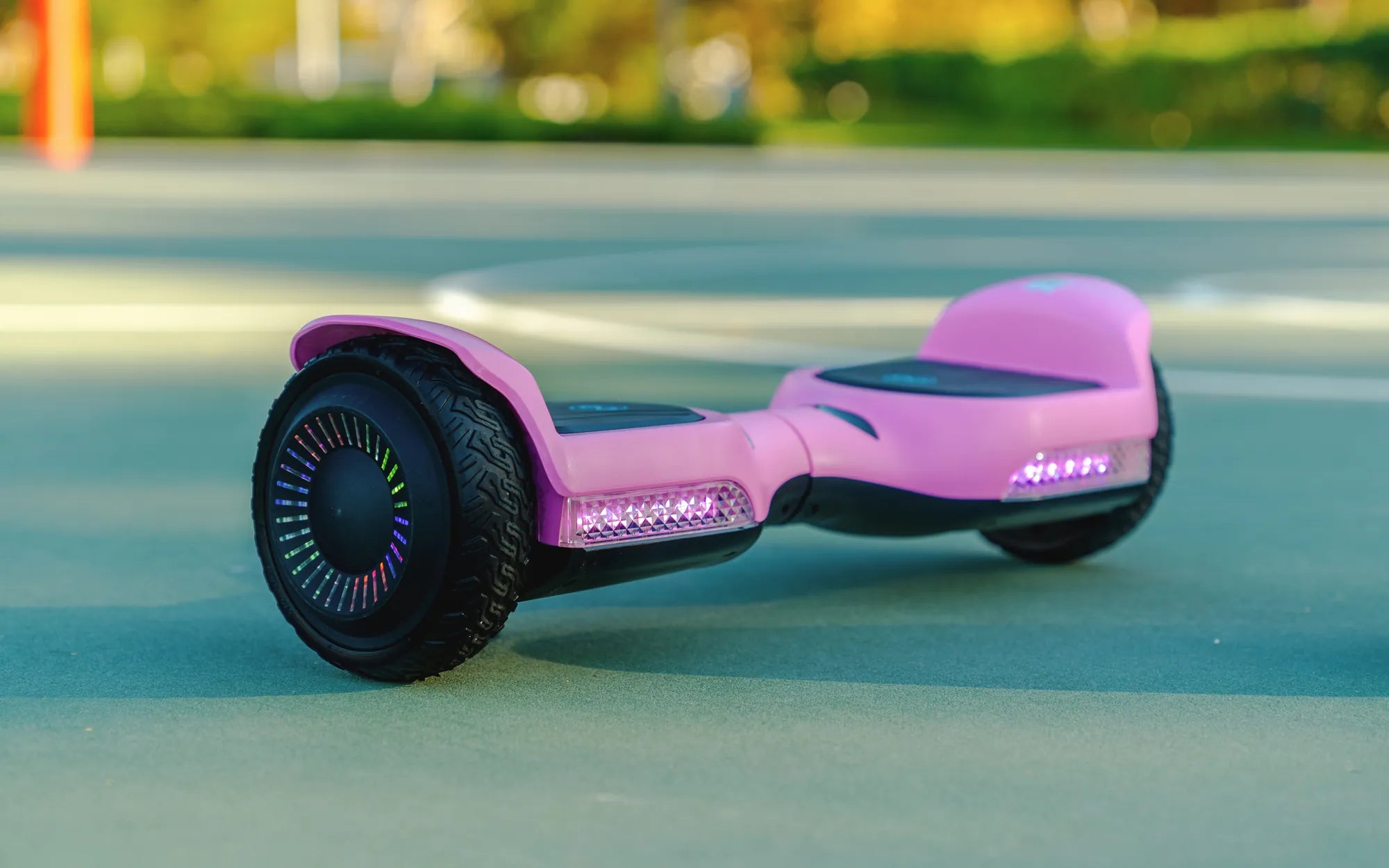
Introduction: Redefining Rideables with the Hoverboard Trike
Personal mobility is evolving beyond the scooter and the classic hoverboard. A new contender, the hoverboard trike, is emerging as a superior hybrid, combining intuitive self-balancing technology with the inherent stability of a three-wheeled, seated design. This fusion creates a vehicle that is not only incredibly fun but also practical for daily use. This article will dissect the hoverboard trike phenomenon, examining its engineering, benefits, and real-world applications to demonstrate why it represents a significant leap forward. We'll also explore how established brands like Gyroor—a leader in electric scooters and e-bikes trusted by over 100,000 riders—are applying their expertise in safety and reliability to this innovative category.
What is a Hoverboard Trike? Anatomy of a Modern Rideable
A hoverboard trike is fundamentally a self-balancing electric vehicle built on a stable trike (three-wheeled) platform. It integrates the core technology of a standard hoverboard into a more accessible and comfortable form factor. The primary components include a self-balancing base with gyroscopic sensors and electric motors, a sturdy frame that extends to include a third wheel, a padded seat for the rider, and handlebars for steering and additional stability.
Control is achieved through lean and balance, identical to a traditional hoverboard. To move forward, the rider leans slightly forward; to reverse or brake, they lean back. Turning is accomplished by applying subtle pressure with one foot or, on models with handlebars, by turning the handles. The seated position and third wheel eliminate the need for complex balance adjustments, making the learning curve almost instantaneous for most users.
The design prioritizes a low center of gravity, which is key to its stability. Wheels are typically larger than those on standard hoverboards, often air-filled for better shock absorption on uneven surfaces. The entire system is powered by a rechargeable lithium-ion battery pack, with range and performance varying by model and specification.
Why Choose a Trike Over a Traditional Hoverboard? The Stability & Comfort Advantage
The classic two-wheel hoverboard has a significant barrier to entry: its steep learning curve. Mastering balance while standing can be daunting and risky. The hoverboard trike solves this problem definitively. The seated position and third wheel provide immediate, inherent stability, allowing riders to focus on controlling the device rather than preventing a fall. This opens the activity to a much broader demographic, including older children, teens, adults, and even seniors looking for a stable recreational vehicle.
Comfort is another major differentiator. A standing hoverboard is suitable for short bursts of fun, but prolonged use can lead to fatigue. The hoverboard trike, with its ergonomic seat, enables longer journeys—be it a commute across campus, a leisurely cruise along a beach boardwalk, or an extended exploration of a park. This transforms it from a novelty toy into a legitimate micro-mobility vehicle.
Furthermore, the trike design inherently prevents the dangerous "split" or "break apart" incidents that were a notorious flaw in early two-wheel hoverboards. The unified frame and third wheel ensure the device remains a single, coherent unit under the rider, enhancing safety and rider confidence from the first use.
Safety First: How the Trike Design Enhances Rider Security
The safety advantages of the hoverboard trike design are multifaceted. The low, seated position dramatically lowers the rider's center of gravity compared to a standing hoverboard, making it far more difficult to tip over. In the event of a sudden stop or loss of balance, the rider can simply place their feet on the ground—a natural and stable dismount that is challenging on a standard hoverboard.
The three-point contact with the ground offers superior traction and stability, especially on slightly uneven terrain where a two-wheel device might wobble. This design also allows for more effective and safer braking systems, as the rider's weight is distributed more evenly and the device is less prone to pitching forward. When combined with manufacturer safety commitments—like Gyroor's use of UL-certified battery packs tested for 500+ charge cycles and robust construction—the hoverboard trike stands as one of the safest categories in personal electric transport.
Gyroor's Approach: Engineering Trust into the Hoverboard Trike Experience
As the market for hoverboard trikes grows, the importance of purchasing from a reputable brand cannot be overstated. Gyroor enters this space with a legacy built on safety and reliability from its electric scooter and e-bike lines. Their approach to the hoverboard trike centers on three critical pillars: battery safety, environmental resilience, and customer support.
First, every Gyroor model utilizes a UL-certified lithium-ion battery pack. This certification is the gold standard, indicating rigorous testing for overcharge protection, short-circuit prevention, and overall fire safety—addressing the primary historical concern with hoverboard technology. Second, an IPX5 water-resistant rating means the electronics are protected against water jets from any direction. This allows riders to confidently navigate wet sidewalks or light rain during a commute, a feature not always found on lower-tier models.
Finally, Gyroor backs its products with a 1-year comprehensive warranty and US-based customer support. This provides peace of mind, ensuring that any issues are resolved promptly. For a product that blends advanced electronics with mechanical components, this warranty and support framework is a key indicator of quality and long-term value.
Practical Applications: More Than Just a Toy
The hoverboard trike transcends its fun origins to serve multiple practical purposes. In urban and suburban environments, it excels as a last-mile solution. Riders can easily cover the 1-3 mile distance from a public transit stop to their home or office quickly and without breaking a sweat, storing the compact device under a desk or in a trunk.
Recreationally, it opens up new avenues for fun. Families can enjoy rides together in parks, on bike paths, or along boardwalks, with the trike's stability making it accessible for various skill levels. For older kids and teens, it provides a thrilling yet controlled mode of independent travel within neighborhoods. Adults find it a enjoyable way to run local errands, walk the dog, or simply get some fresh air, combining utility with leisure.
Its appeal also extends to users who may find standing scooters or bikes uncomfortable or challenging, offering a low-impact, enjoyable way to get around. This versatility cements its status not as a passing fad, but as a legitimate and useful micro-mobility vehicle.
The Commuter's Edge: Data on Efficiency and Range
To understand the practical value of a hoverboard trike, a data-driven comparison with other common micro-mobility options is useful. The following table outlines key metrics for a typical commute of 2-3 miles.
| Vehicle Type | Avg. Speed | Typical Range | Cost Per Mile* | Key Advantage |
|---|---|---|---|---|
| Hoverboard Trike | 10-12 mph | 10-15 miles | $0.03 - $0.05 | Stability, fun, easy storage |
| Electric Kick Scooter | 15-18 mph | 15-20 miles | $0.02 - $0.04 | Higher speed, portability |
| Electric Bike | 20+ mph (assist) | 30-50 miles | $0.01 - $0.03 | Longest range, exercise option |
| Public Transit (Bus/Train) | Varies | N/A | $2.00 - $5.00 per trip | No upfront cost, all-weather |
| Rideshare/Taxi | City traffic speed | N/A | $2.50 - $4.00 per mile | Door-to-door convenience |
*Cost per mile estimates based on electricity cost for charging and assumed depreciation over product lifespan. Public transit and rideshare are per-trip/per-mile fares.
This comparison shows the hoverboard trike is highly cost-effective for short trips, offering a unique blend of low operating cost, enjoyable riding experience, and compactness that beats public transit on cost and rideshares on both cost and fun. Its range is sufficient for most daily local travel needs.
What to Look for When Buying a Hoverboard Trike
Selecting the right hoverboard trike requires careful consideration of specifications and features. Prioritize safety and performance to ensure a satisfying and durable purchase.
Key Specifications:
- Motor Power: Look for a dual motor system with a combined wattage of at least 500W for adequate torque, especially for tackling slight inclines.
- Battery & Range: A high-quality lithium-ion battery (UL-certified is non-negotiable) with a capacity of 7.8Ah or higher. Expect a real-world range of 10-15 miles per charge, depending on rider weight and terrain.
- Weight Capacity: Ensure the model supports your weight. Most quality models support riders from 44 lbs up to 220-265 lbs.
- Wheels & Tires: Larger, air-filled (pneumatic) tires (e.g., 10-inch) provide a smoother ride over cracks and bumps compared to smaller, solid tires.
- Max Speed: Typically between 7-12 mph, which is ideal for safety and control in pedestrian-heavy areas.
- Portability: Some models feature a foldable or quick-disconnect design for easier transport and storage.
Beyond specs, verify safety certifications (UL, CE, FCC) and the terms of the warranty. A clear, comprehensive warranty from a known brand like Gyroor is a strong indicator of product confidence and reliable customer service.
Frequently Asked Questions (FAQ)
Q: What is the learning curve for a hoverboard trike?
A: The learning curve is remarkably short, often just a few minutes. The seated, stable design allows most first-time riders to master basic forward, reverse, and turning controls almost immediately.
Q: Is a hoverboard trike safe for kids?
A> Safety depends on the specific model's age and weight ratings. Always follow the manufacturer's guidelines. For any rider, but especially children, proper safety gear—including a helmet, knee pads, and elbow pads—is essential.
Q: Can it handle hills?
A> Hill-climbing ability depends on motor power and the grade of the incline. A 500W+ dual-motor trike can typically handle gentle slopes (up to 15 degrees). Steeper hills may reduce speed and battery range significantly.
Q: How does it handle wet surfaces?
A> Models with an IPX5 water-resistant rating, like those from Gyroor, are protected against light rain and puddles. However, caution is always advised. Avoid deep water, and never submerge the device. Traction on wet surfaces can be reduced, so ride slower and brake gently.
Q: What maintenance is required?
A> Maintenance is minimal. Regularly check tire pressure on air-filled models, keep the device clean and dry, and avoid extreme temperatures when storing or charging. Follow the manufacturer's battery care instructions, such as avoiding full discharges, to prolong battery life.
Conclusion: The Future on Three Wheels
The hoverboard trike successfully bridges the gap between exhilarating fun and practical daily transportation. By solving the core issues of stability and comfort that plagued its two-wheeled predecessor, it has created a new, accessible category in personal mobility. Its data-backed efficiency for short trips, combined with its broad recreational appeal, makes it a compelling choice for a wide range of users. As brands like Gyroor continue to lead with an unwavering focus on certified battery safety, durable water-resistant construction, and strong customer warranties, the hoverboard trike is poised to move from a niche novelty to a mainstream mobility staple. It represents a smarter, more enjoyable way to navigate our communities.
Ready to experience the perfect blend of stability, fun, and practical mobility? Explore Gyroor's innovative range of electric rideables, engineered with safety and performance as the priority. Browse the full Gyroor collection at gyroorboard.com to find the right model for your next adventure.
Manual Scooter for Kids: The Ultimate Guide to Fun and Safe Riding
Most Reliable Hoverboard: The Ultimate Guide to Safe and Durable Rides